

Last Updated on June 25, 2025 by George Pavlopoulos
Florence, the absolute gem of the Renaissance, is one of the most stunning cities in Europe. Located in the heart of Italy, Florence often feels like a gigantic open-air museum. However, despite being one of the most visited European cities, several facts about Florence remain unknown. While places like the Duomo of Florence or famous people like Leonardo da Vinci are strongly connected to the city, other interesting Florence facts somehow stay in the shadows.
In this article, you will read some of the lesser-known facts about Florence, accompanied by some photos I took when I visited the city as part of my Tuscany road trip. Moreover, every Florence fact will be associated with one boutique hotel. Apart from elevating your Florence experience, these boutique hotels are rich in history. Some of them used to be palazzos, while others were once the homes of famous Florentines.
So, let’s start with the facts about Florence and the finest boutique hotels in this beautiful Italian city.
*Some of the links are affiliate links. This means that if you make a purchase, I may earn a small commission at no additional cost to you.
Facts about Florence & the best boutique hotels
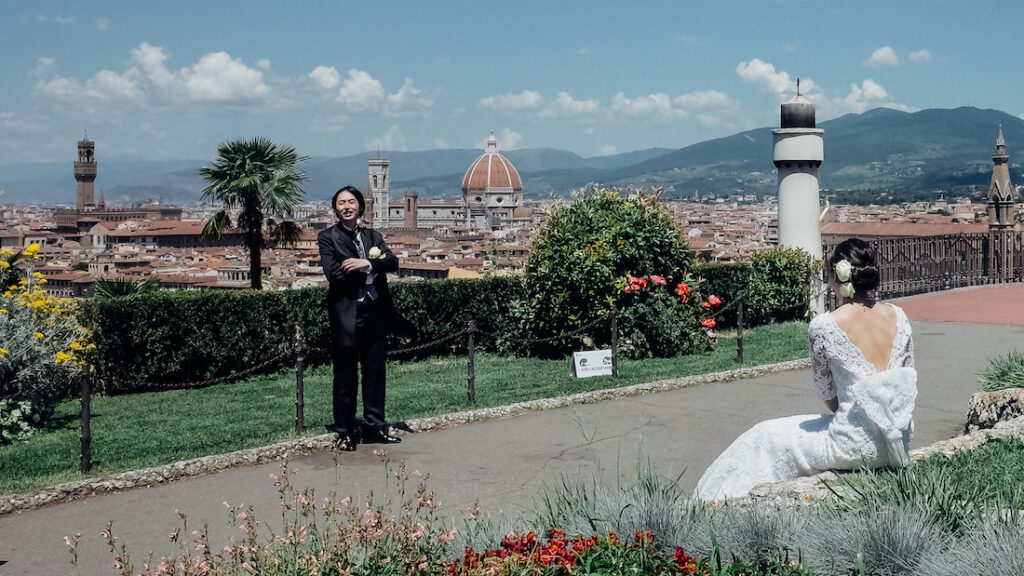
So, here’s what you need to know about the stunning Italian city. The facts you’ll discover below are intended to give you a better overview of the city’s importance and contribute to your Italian experience. In addition, since Florence is the most prominent city in the Tuscany wine region, make sure to check my handpicked selection of winery tours from the city.
Florence is built like an army camp
While Florence is known as the cradle of the Renaissance, little is known about how it was initially built. The founder of Florence was Julius Caesar, who established the city in 59 BC. However, there was nothing about art in his mind. Instead, the idea behind Julius Caesar’s plan was to build a city that would host war veterans. Initially, Florence’s name was Fluentia because the town is set between two rivers.
Since the whole city served as a tribute to veterans, Florence’s urban planning mimics the plan of an army camp. Specifically, its main streets comprise cardos and decumanus. In ancient Roman cities, the cardos are wide streets spreading from north to south. On the other hand, the decumanus is a street spreading from east to west. As one can imagine, the straight lines resemble those of army camps.
The Best Florence Boutique Hotel in the heart of the city: Hotel del Corso
Established in a 16th-century palazzo, Hotel del Corso offers luxurious rooms in the historic center of Florence. It’s less than 300 m away from the Cathedral, Piazza della Repubblica, and Palazzo Vecchio. If you want to stay in the heart of Florence, that’s probably one of the best options.
Book your room at Hotel del Corso here.
The Medici Family and Florence

With a population of more than 60,000 inhabitants, Florence was one of the most prominent cities during the 15th century. At this time, the Medici family became the most influential family in Florence. Cosimo de’ Medici was the first family member to gain control of the city. Since the Medicis had a long tradition in banking, they had the means to support various aspects of local life.
For example, one of Cosimo’s successors, the renowned Lorenzo Medici, became one of the most notable art patrons of all time. He commissioned works by Botticelli, Michelangelo, and Leonardo da Vinci, among others. The Medici influence grew stronger over time, and in 1531, Florence became a monarchy under Alessandro de’ Medici. The Medici family ruled the area for more than two centuries until 1737.
A Florence Boutique Hotel with 16th-century charm: Porcellino Gallery Art Boutique
Established in a 16th-century building and a great location in Florence’s historical center, Porcellino Gallery Art Boutique is an impressive boutique B&B. What makes this B&B stand out from the crowd is that it’s also an art gallery. The Porcellino is a few steps from the Signoria Square, Uffizi Gallery, and Ponte Vecchio bridge. All its rooms are refurbished and feature air conditioning, as well as exquisite Florentine design.
Book your room at Porcellino here.
The two biggest floods of the Arno River happened on the same date
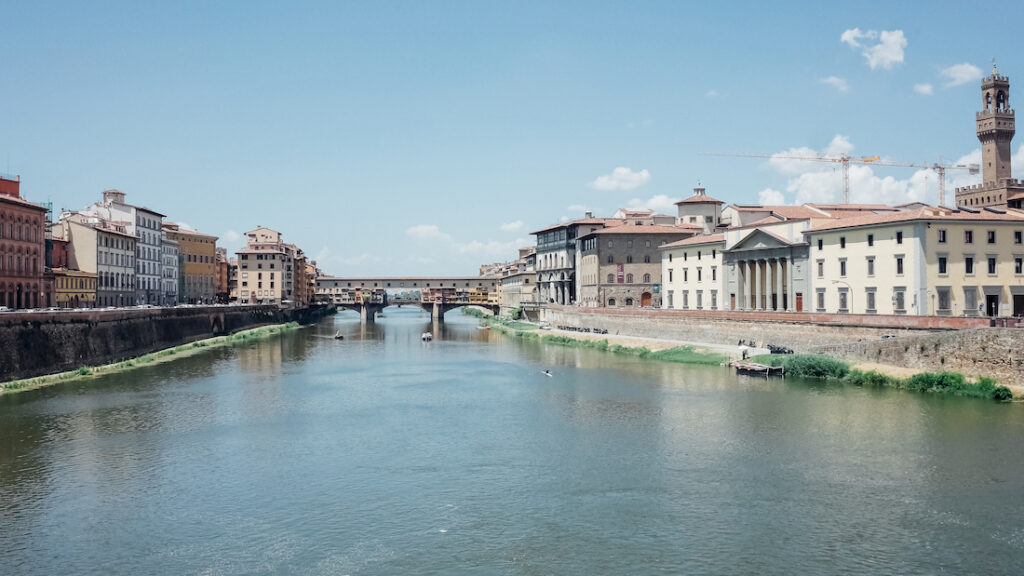
One of the most morbid yet interesting facts about Florence has a solid connection to the floods. The Arno River, which runs through the city, was always one of the most important elements of local life. While Arno was always the route of commerce, connecting Florence with the rest of Italy and Europe, it was also responsible for two major floods. Oddly enough, both of them happened on the same date.
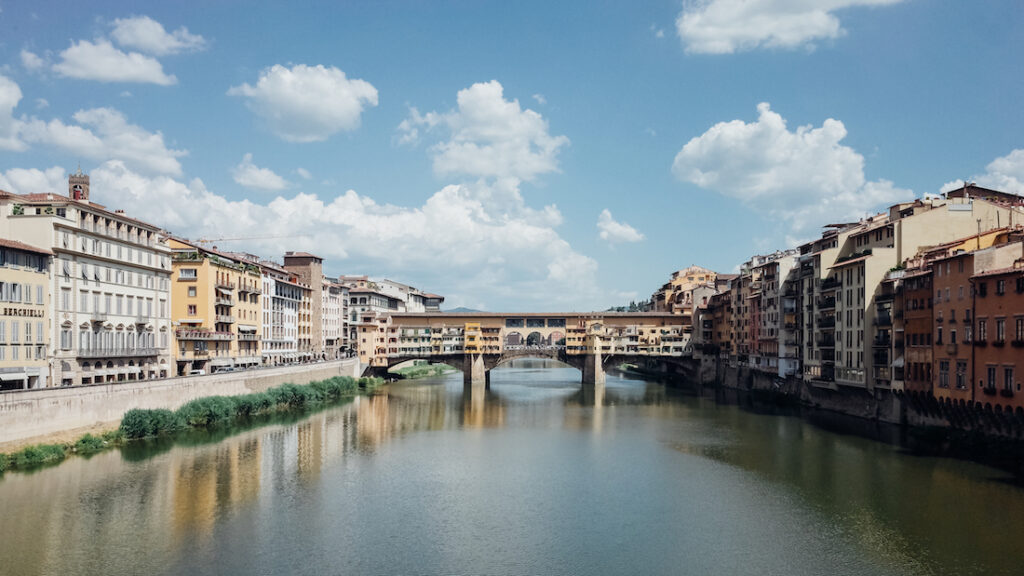
The first flood occurred on November 4th, 1333. According to the historian Giovanni Villani, the 1333 Florence flood killed more than 3,000 people. It was so strong that the glorious bridge of Ponte Vecchio was destroyed, apart from the two central piers. The second flood happened in 1966, again on November 4th. This time, 101 people died, but the flood destroyed millions of art masterpieces and rare books.
A Florence Boutique Hotel with a view over the Arno: Riva Lofts
Located straight at Cascine Park, the great Riva Lofts overlook the Arno River. This boutique hotel offers award-winning design apartments and a swimming pool set in its beautiful garden.
Book your room at Riva Lofts here.
The Stendhal Syndrome first occurred in Florence
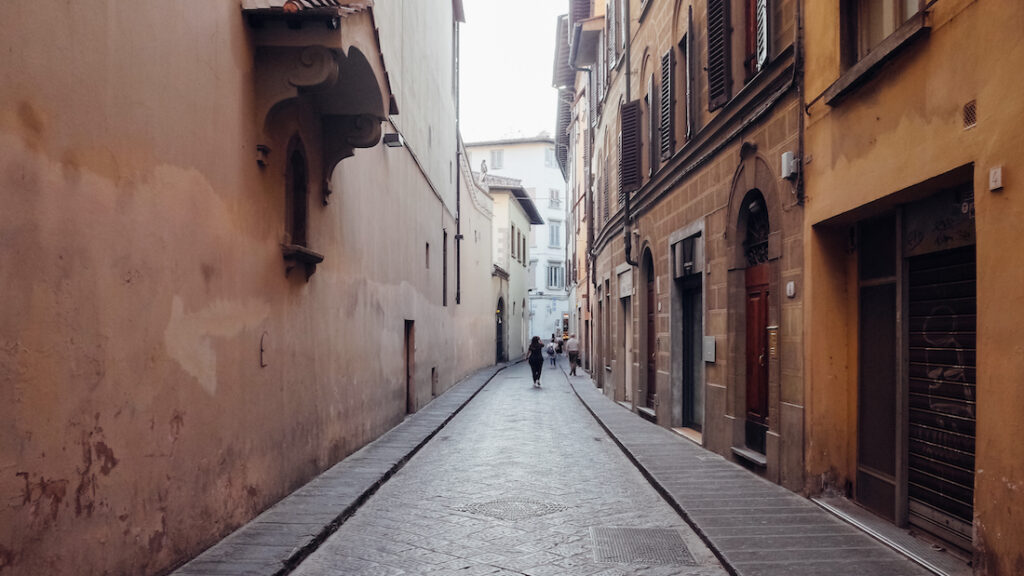
One of the lesser-known facts about Florence is the one about the so-called Stendhal Syndrome. Also known as the Florence syndrome, this is a psychosomatic condition occurring when people see objects or artworks of great beauty. The first person to experience the syndrome was the acclaimed 19th-century French author Stendhal, who visited the Basilica of Santa Croce in Florence in 1817.
In his own words, Stendhal experienced some ecstasy accompanied by heart palpitations. Despite the debate between psychologists, the Stendhal Syndrome can cause rapid heartbeat, fainting, confusion, or even hallucinations. The latest Stendhal syndrome case occurred in 2018: a visitor to the Uffizi Gallery in Florence suffered a heart attack while admiring The Birth of Venus by Botticelli.
A Florence Boutique Hotel for Stendhal lovers: Loft Boutique Suite at Santa Croce
Situated in a property dating back to the 14th century, this luxurious apartment is close to the Basilica and less than 2 km away from the Uffizi Gallery. It’s rare to find it free, but don’t miss the chance to book it if you do. The design is beautiful, and the prices are competitive for such standards.
Book the Loft Boutique Suite at Santa Croce here.
Pinocchio, Gelato, and Piano
It’s not surprising that among the fun facts about Florence, one can also find names or words originating from Florence. For example, Florence is home to the famous Gelato, the Italian ice cream. The contemporary history of gelato started in Florence during the Renaissance. We owe it to the alchemist Cosimo Ruggieri, who created the first gelato at the court of the Medici family in Florence.
Apart from being a UNESCO World Heritage Site, Florence is Pinocchio’s hometown. The Florentine writer, Carlo Collodi, wrote The Adventures of Pinocchio between 1881 and 1883. And yet, to another Florentine, we owe the Piano: Bartolomeo Cristofori. Although Cristofori was born in Venice, he was commissioned -surprise, surprise- by Ferdinando de’ Medici, Grand Prince of Tuscany, and was offered a studio in Florence. Bartolomeo Cristofori invented the piano around 1700, with the exact date still unknown.
A Florence Boutique Hotel for history lovers: AdAstra Suites
This is hands down one of the most luxurious properties in Florence. Add that AdAstra occupies the first and second floors of an ancestral family mansion, and you have the full image. An iconic building with spacious rooms, AdAstra Suites overlooks the biggest private garden in Europe.
Book your room at AdAstra Suites here.
The bread in Florence has no salt
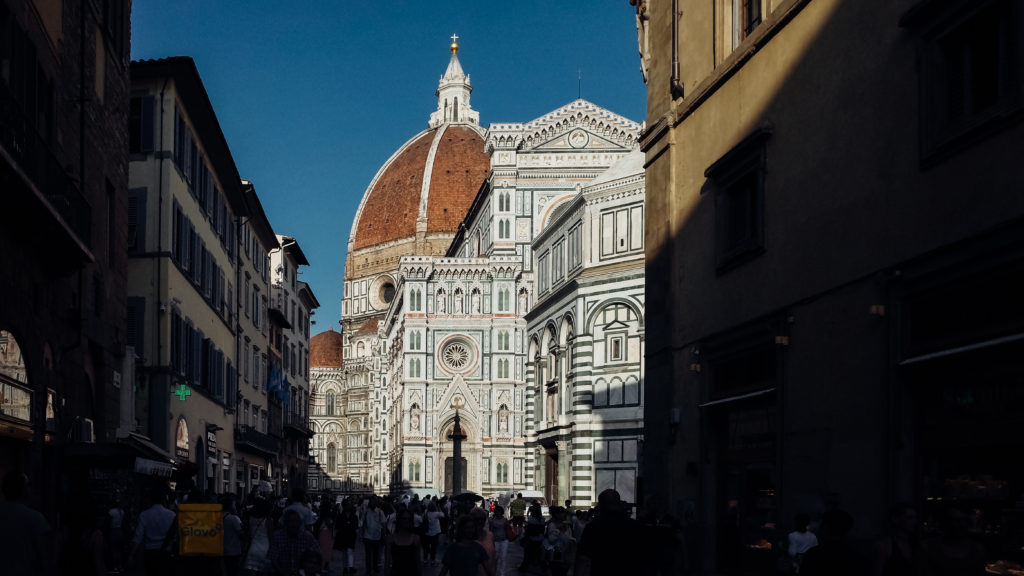
Whenever you visit Florence, don’t miss the chance to taste some local bread. The famous Pane Toscano— or Tuscan bread —tastes different. Or, to be more precise, weird. The reason is that the bread in Florence is intentionally unsalted. Several theories are attempting to explain this choice, but no one is certain what is really happening. But here’s what locals say.
One theory is that during the Middle Ages, salt was extremely expensive and subsequently highly taxed. Although Florence will always be considered the cradle of the Renaissance, the truth is that many people were impoverished. Since they couldn’t afford anything expensive, they skipped the salt and started baking bread without it.
Another theory takes us a bit further. Florence and Pisa were involved in several conflicts throughout the centuries. During one of these conflicts, the army of Pisa blocked the Arno River. They wanted to prevent salt provisions from reaching the city of Florence. However, the Florentines didn’t surrender; instead, they preferred to bake their bread without salt, and they kept doing this for centuries.
A Florence Boutique Hotel for oldtimers: Al Palazzo del Marchese di Camugliano
The beautiful Al Palazzo del Marchese di Camugliano is situated in a 16th-century building with original frescoes and an internal garden. Located in central Florence, this property is just 450 m from the Cathedral, and both the Piazza della Signoria Square and the Ponte Vecchio bridge are 700 m away. This breathtaking palazzo is one of the most sophisticated options for your accommodation in Florence.
Book your stay at Al Palazzo del Marchese di Camugliano here.
Facts about Florence: Final Thoughts
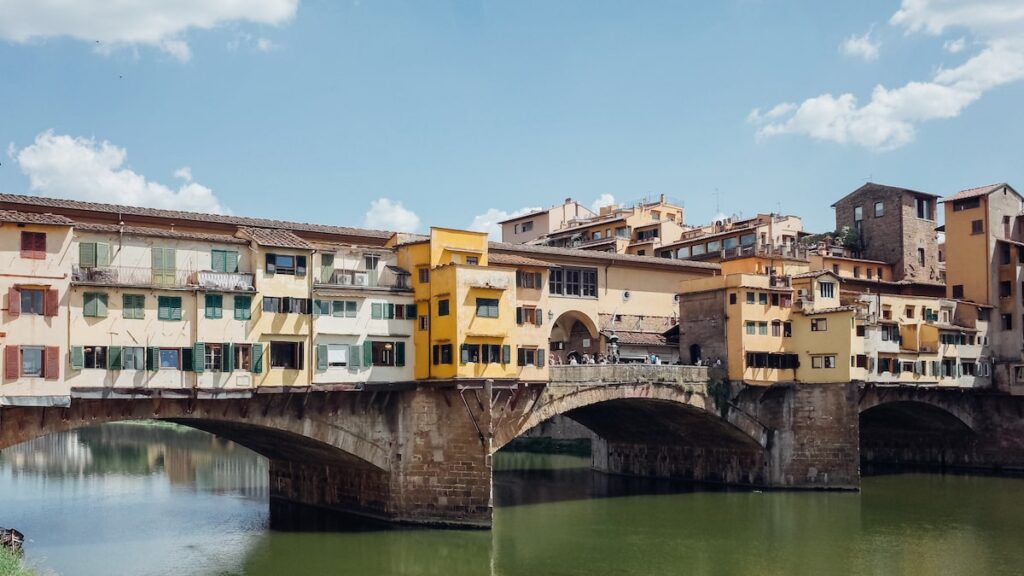
Florence is one of the must-see places in Europe. While you have probably seen way too many photos and learned about its past, the city won’t stop impressing you. Apart from visiting the Duomo and the Uffizi, you will come across various smaller or bigger places of interest and details. From the explorer Amerigo Vespucci or Florence Nightingale to the bistecca alla Fiorentina (a massive steak, browned on the outside, rare on the inside), in Florence, you will hear all kinds of stories.
If it’s your first time in Europe, don’t miss the chance to visit Florence. The same goes if it’s your first time traveling to Italy. Florence is a must. Visit the city, choose one of the best boutique hotels for your stay, and see why this Italian city has remained famous throughout the centuries.
More about Florence: Winery Tours from Florence, The best art tours in Florence, My Travelogue
Bonus: A day trip from Florence to the ideal city of the Renaissance.

Pin it for later
Did you enjoy these fun facts about Florence, Italy? Feel free to share them with your friends 🙂