

Last Updated on June 20, 2025 by George Pavlopoulos
Piazza del Campo is one of the most famous Italian squares. Located in Siena’s city center, the piazza is more than a landmark: it’s the epicenter of daily and cultural life. Unlike the majority of European squares, in Piazza del Campo, you won’t find benches. Throughout the day, people sit either on the stairs leading to the square or straight on the square’s floor. The connection of the Sienese to the iconic piazza is strong, and they simply call it “il Campo.”
On a recent journey to Siena, I was so impressed by the square that I decided to dig deeper into its century-long history. Therefore, in the following lines, you’ll read some Piazza del Campo facts accompanied by my photos. Moreover, I will share the Piazza’s notable buildings and how you can visit them. Even if you’re on a day trip to Siena from Florence or any other Tuscan city, make sure to spend some time at il Campo. Apart from its undeniable architectural beauty, you’ll also get an insight into the city’s daily life.
So, let’s see what makes Piazza del Campo so popular and what you can see on the square.
*Some of the links are affiliate links. It means that if you buy something, I might earn a small commission at no additional cost to you.
Piazza del Campo: What you need to know

Once one of the most important trade centers in medieval Europe, Siena is home to the oldest bank in the world, the Monte dei Paschi, which remains operational. However, the city also had a significant cultural life, and Renaissance painters like Ambrogio Lorenzetti, Duccio, and Simone Martini were born here.
That said, Siena’s daily life was always closely tied to strong cultural and commercial activities, which also explains the city’s remarkable architectural beauty. The Piazza del Campo is, apparently, Siena’s gem, and here’s what you need to know about it.
When was Piazza del Campo built?
There’s no exact date for the piazza’s construction. However, the site was used as a marketplace already before the 13th century. On the other hand, Siena’s Gothic architecture developed between the 12th and 15th centuries, and the intersection of three significant streets formed what is today the Piazza del Campo.
The piazza was formed under the rule of Noveschi, who governed the city between 1287 and 1355. According to historians, this was Siena’s most prosperous period. Unfortunately, the thriving era ended, like in many cities, due to the outbreak of the Black Death, the bubonic plague pandemic that reached the town in 1348.
The square was paved in 1349, and that’s a cornerstone event because it concluded il Campo’s appearance. The fishbone red bricks, accompanied by 8 lines of travertine, are a trademark of the piazza’s style, dividing it into nine sections. The latter is a tribute to the Noveschi (which stands for Governo dei Nove, or the Rule of Nine in English).
What is the shape of Piazza del Campo?
The Piazza del Campo has a hemicycle form that resembles the shape of a shell.
What does Piazza del Campo mean in English?
Piazza del Campo translates to “public square” in English.
What are the main sights of Piazza del Campo?

The square is full of architectural gems, including several palazzos. However, the most iconic spots are the Palazzo Pubblico, with its attached Torre del Mangia, and the nearby Fonte Gaia.
Let’s see a few more things about them.
Palazzo Pubblico
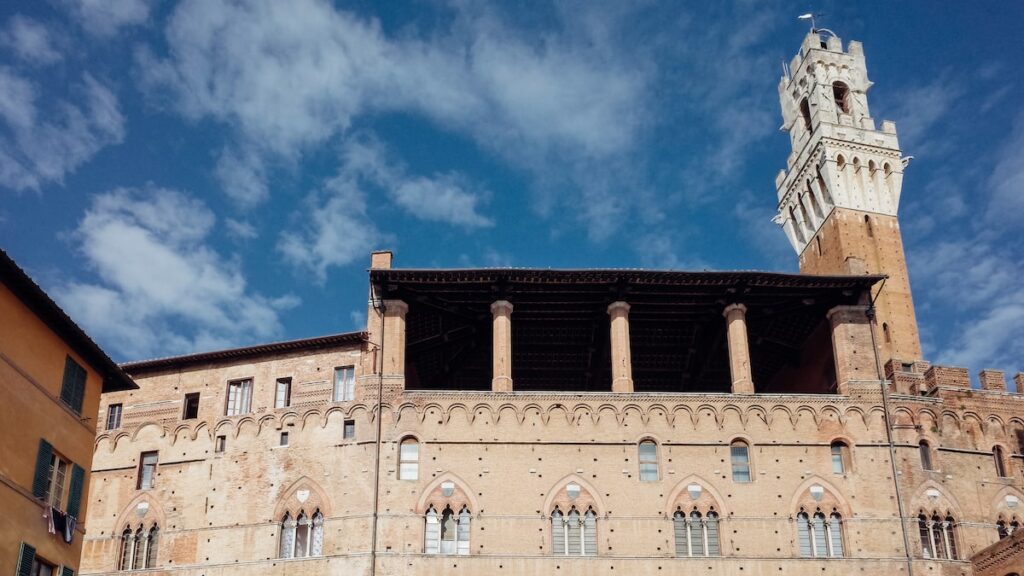
The Palazzo Pubblico (Town Hall) served as the seat of the local government. It is an excellent example of Gothic architecture and hosts several frescoes. On the front side, it overlooks the Piazza del Campo, while on the back side, it faces the Piazza del Mercato. In addition, it’s home to the Civic Museum, one of the most famous museums in Siena.
Torre del Mangia
The Torre del Mangia refers to the bell tower located adjacent to the Palazzo Pubblico. Its construction began in 1325 and was concluded almost twenty years later, in 1344. Since this was a time of rivalry between Italian cities, the Sienese constructed it to be taller than the tower in Florence. However, the 102-meter-tall tower doesn’t exceed the height of the Siena Cathedral: this was a remark that church and state should have equal power.
Fonte Gaia
Fonte Gaia (or “The Joyous Fountain”) is on the opposite side of Palazzo Pubblico. Its name supposedly derives from the joy it brought to the citizens. Despite being constructed in 1342, Fonte Gaia wasn’t completed until much later. Its current decoration was erected in 1419 by Jacopo della Quercia, an Italian Renaissance sculptor and precursor of Michelangelo.
Does the Palio di Siena take place in Piazza del Campo?
The Palio di Siena is a horse race that takes place twice yearly, on July 2 and August 16. It doesn’t take place at Piazza del Campo; however, it circles the square. The three-lap horse race lasts no more than one and a half minutes and is one of the major Siena events.
Is il Campo a UNESCO site?
The whole Siena historical center is a UNESCO World Heritage Site, and the iconic square is, of course, included. According to the organization, “the historic city of Siena is the embodiment of the medieval city.” You can read more on the UNESCO website here.
How does Piazzo del Campo look today?
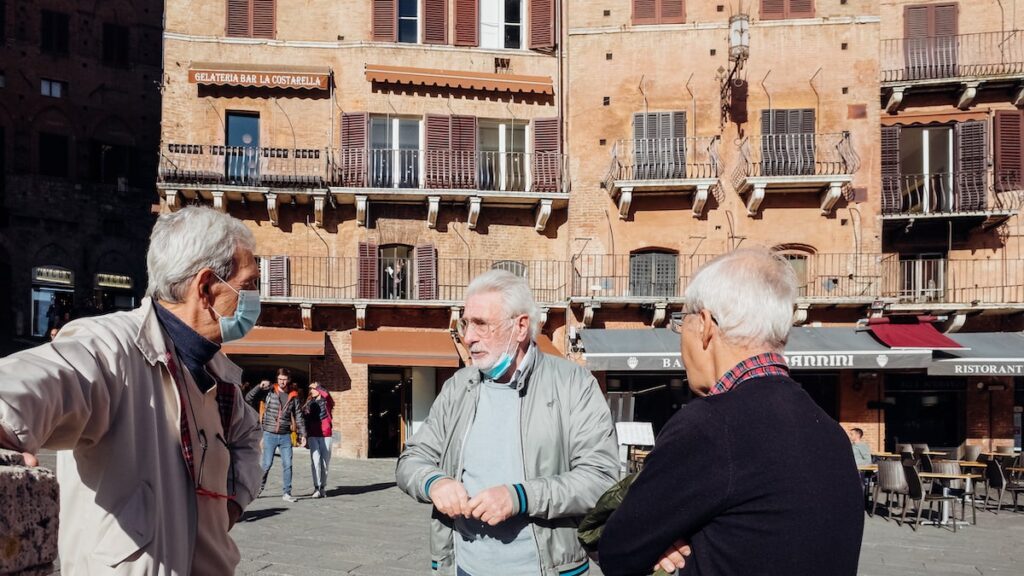
Nowadays, Piazza il Campo’s other buildings host cafes, restaurants, and various shops. The city might feel quiet on its side streets, but il Campo remains vibrant throughout the day. People hang out or dine at the eateries, but the most important thing is to enjoy the public space.
That said, a piazza whose name means “public square” is filled with people sitting in groups on the red bricks and talking. After all, public space means enjoying free time in open-air locations.
Where to stay in Piazza del Campo, Siena
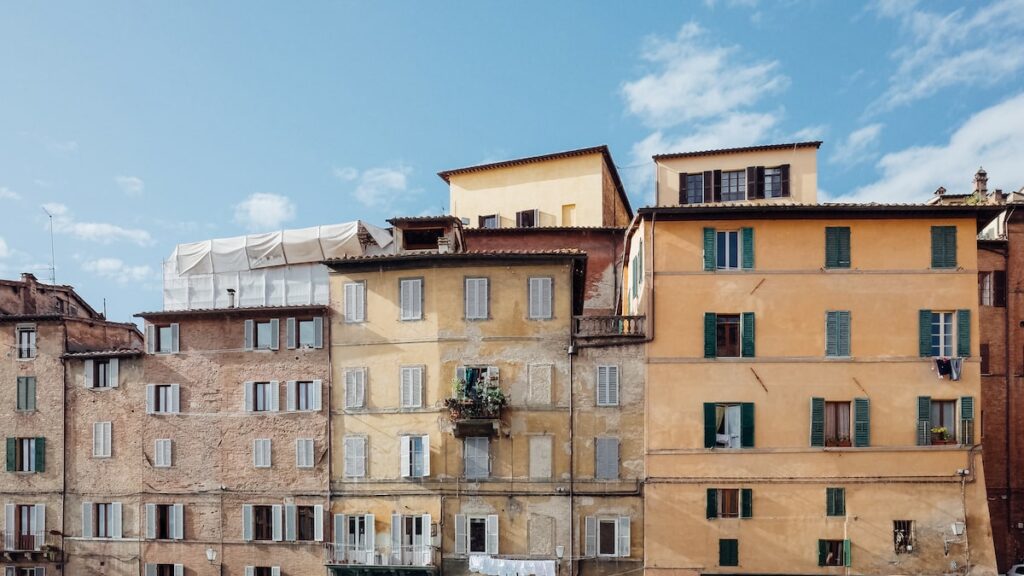
This travel guide section intends to add value if you are genuinely interested in Siena and want to enhance your stay. While most of the buildings at il Campo are restaurants and cafes, some offer accommodation. The places you’ll see below are palazzos that have been converted into private rooms available for rent. These are the only places to stay straight at Piazza del Campo, enjoying splendid views and beautiful interiors.
Palazzo Chigi Zondadari. Situated in Siena’s heart, in Piazza del Campo, this apartment has three bedrooms, two bathrooms, and a kitchen. Palazzo Chigi Zondadari is just a few steps from San Cristoforo Church and offers free WiFi, a shared lounge, and air conditioning. See prices and availability for Palazzo Chigi Zondadari.
Palazzo Lenzi. Overlooking Piazza del Campo, Palazzo Lenzi offers one bedroom, a bathroom, and a spacious living room. The decoration is elegant, and the view over the square is magnificent. See prices and availability for Palazzo Lenzi.
Palazzo Giorgi. That’s one more excellent accommodation at Piazza del Campo. Palazzo Giorgi features two bedrooms and a fully equipped kitchen, serving a continental breakfast. See prices and availability for Palazzo Giorgi.
For all other accommodation options, please use the interactive map below.
From Piazza del Campo to Tuscany
Siena has numerous attractions, such as the Duomo and the historic hospital Santa Maria della Scala, located around the legendary Piazza del Campo. However, if you’re traveling on this side of Italy, the city is an excellent base for further discovering the region. In this final section of this article, I’ll add some links to my other Tuscany travel guides. These are must-sees for your holiday in Tuscany, and all of them are less than an hour away from Siena.
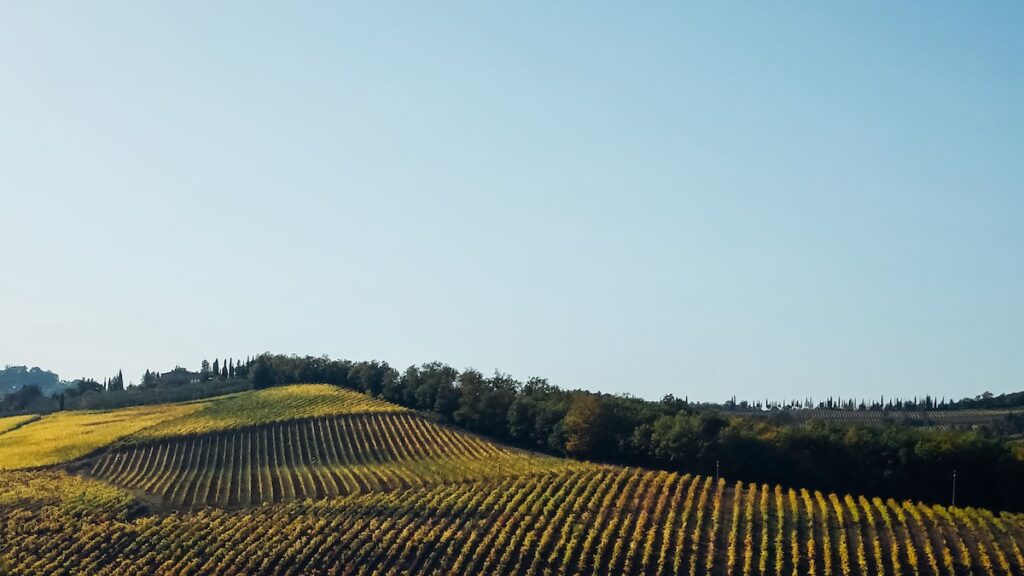
Wine tours in the Chianti region. The Chianti region is one of the most famous wine regions in the world. Starting from Siena, you can visit numerous wineries and enjoy the area’s best wines. You can read my guide about the best wine tours from Siena here.
Pienza. What appears to be a sleepy little town nowadays was once the ideal city of the Renaissance. Several European cities followed Pienza’s urban planning, and without this town, most of our cities wouldn’t have their current shape. Read my Pienza travel guide.
San Gimignano. That’s probably the most famous small city in Tuscany. People refer to it as “Medieval Manhattan” due to its medieval towers. It’s just a short drive from Piazza del Campo, Siena, and a must-see for your Tuscan road trip. Read my San Gimignano travel guide here.
Florence. The cradle of the Renaissance is just an hour’s drive from Siena. Italy’s most iconic city is an open-air museum and one of the world’s most beautiful cities. I wrote two guides about Florence: the first one contains several interesting facts about the city, while the second one focuses on the best art tours in the city.
Arezzo. Finally, the last guide on this list is about Arezzo. Once a famous Etruscan city, Arezzo attracts an increasing number of visitors due to its stunning architecture and laid-back atmosphere. You can learn more about Arezzo here.
Piazza del Campo: Final Thoughts
Piazza del Campo is a must-see for your journey in Italy. While medieval cities often feel claustrophobic, Siena’s il Campo will fascinate you. Hanging out among locals and enjoying the open space will be on your mind for a long time. Piazza del Campo is undoubtedly one of the most beautiful squares in Europe.
Even if you’re on a day trip to Siena, make sure to have enough time for strolling around the piazza and visit at least the Palazzo Pubblico.
More Tuscany: How to plan an epic road trip to Tuscany

Pin it for later
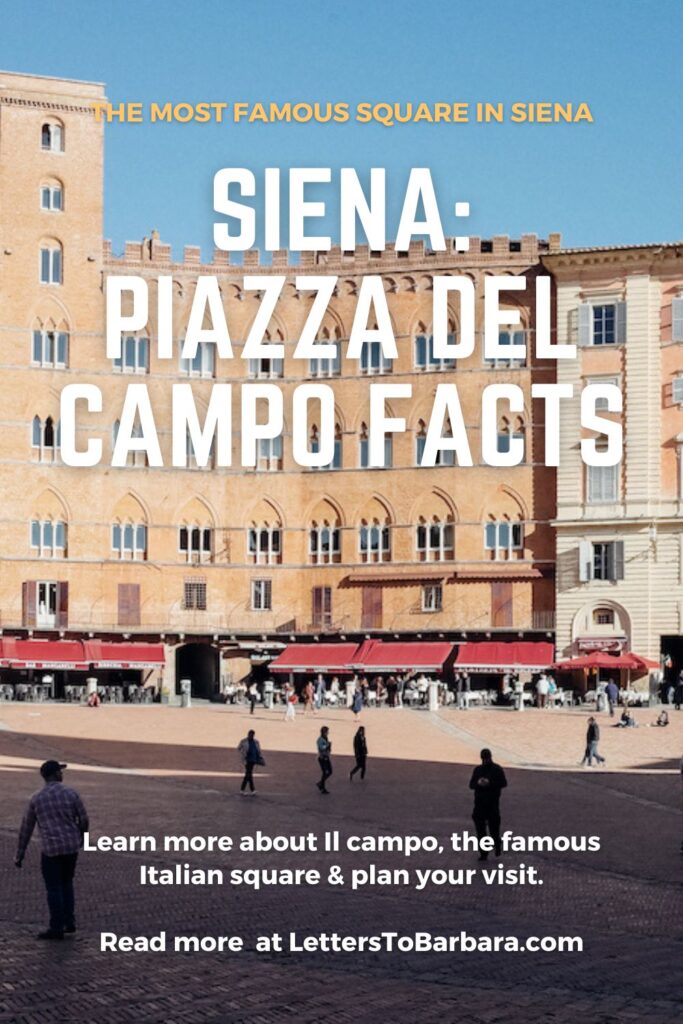
Sharing is caring. Share this article about Piazza del Campo in Siena, Italy, with your friends.