

Last Updated on June 20, 2025 by George Pavlopoulos
I have always loved waterfront cities: the proximity to the sea always adds an extra layer of depth to the journey. When I decided to visit Bergen, one of the first things I checked was whether the city had a maritime museum. And I was glad it did. The Bergen Maritime Museum made it to the top of my to-do list in Norway’s second-biggest city.
Not that long ago, I wrote about the Nautical Museum of Galaxidi, located in a small Greek town. However, Bergen is significantly bigger, and as expected, its maritime museum is more extensive. The Norwegians are a seafaring nation over the course of thousands of years, and the museum tells exactly that story: how the inhabitants of Norway are forever tied to the ocean and how the city of Bergen developed its character next to the sea.
Therefore, in this article about the Maritime Museum of Bergen (Norwegian: Bergens Sjøfartsmuseum – Museum Vest), you’ll read a few things about its exhibits and see plenty of photos. Moreover, you will find practical info about your visit and see why it’s one of the best things to do in Bergen, Norway.
Let’s start.
Bergen Maritime Museum: a walk through history

Throughout its maritime history, the Norwegian fjords have seen countless boats sail their waters. The sea was -and still is- a window to the rest of the world for the picturesque Norwegian city.
The Bergen Maritime Museum is housed in a beautiful building on the edge of the city center, and it’s easy to access. Despite the wealth of information it hosts, the museum is relatively compact. It spans two floors, where the visitors can explore various periods of the country’s nautical history.
After entering the wooden door, you’ll come across the small museum shop, where you can buy your ticket. The building is minimal and consists mainly of large windows overlooking Bergen.
One thing I loved about the Maritime Museum of Bergen is that it offers a slow immersion into the exhibitions. At first, you’ll only see a couple of figureheads, the decorative figures that used to stand on the ship’s bow. The figureheads were supposedly believed to bring good fortune and adorned the boats until the late 19th century.
And then, you slowly immerse yourself in the millennia-long seafaring tradition.
The Ancient Ships
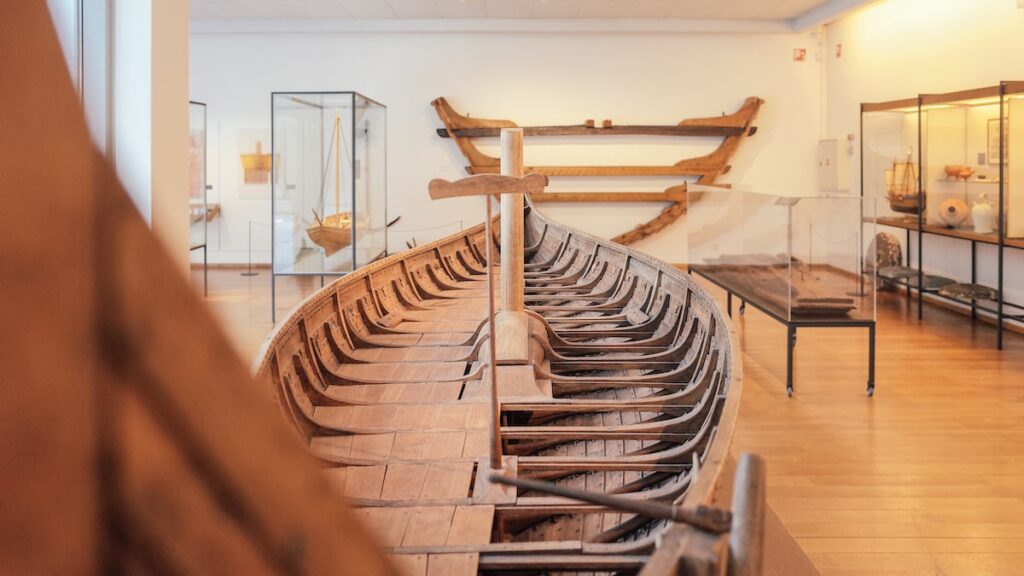
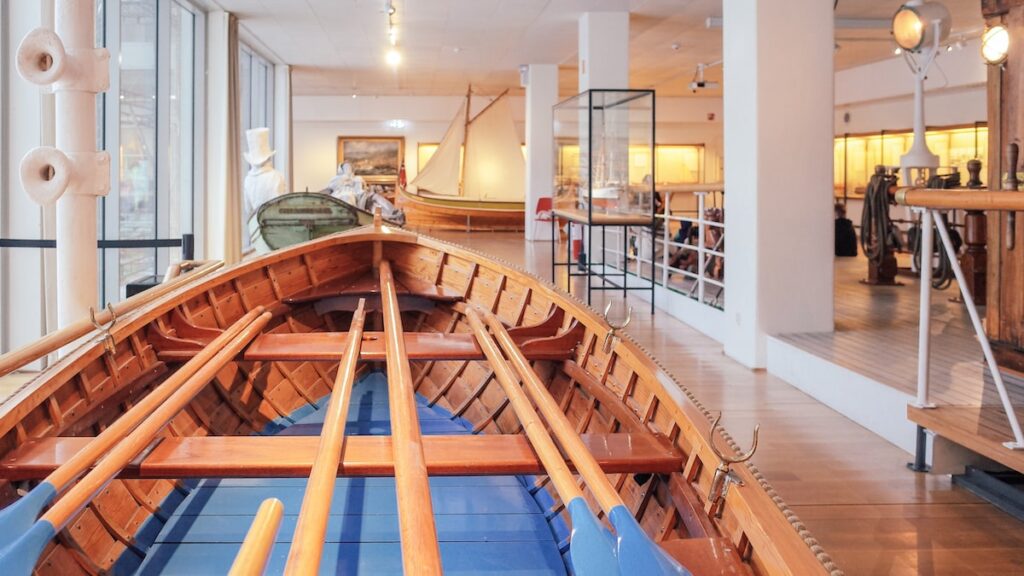
The exhibits follow a chronological order. In the initial steps on the museum’s ground floor, you will see the ancient vessels. It covers the period from the country’s ancient times up to the medieval ages. Most of the things you’ll see here are models on a smaller scale than the originals, of course. However, there are findings from ancient times on display to give you a better idea of the maritime history of the nation. The Kvalsund ship (8th century AD) is one of the most notable things to see here.
The Hanseatic League era
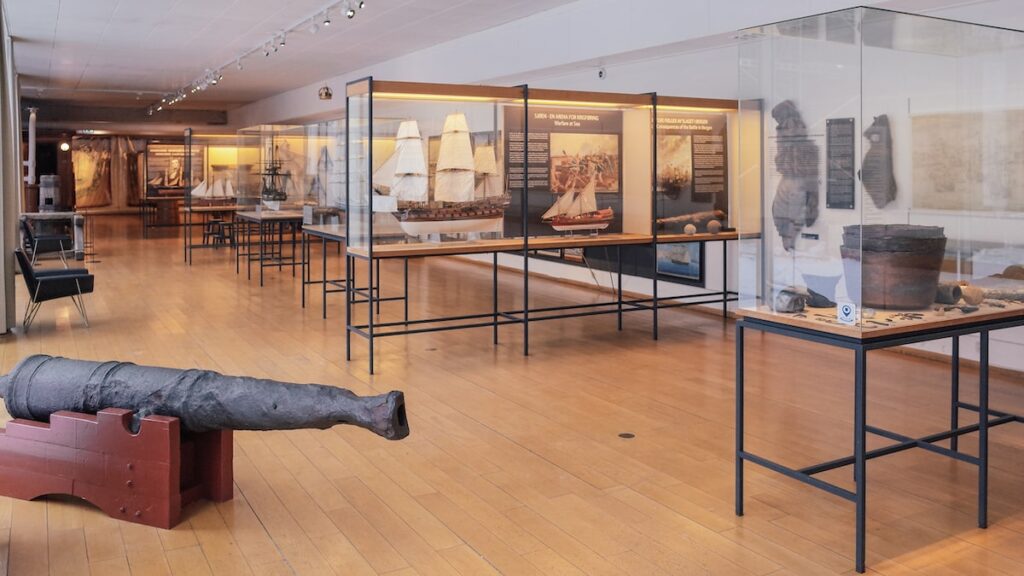
During the 15th and 16th centuries, the Hanseatic League played a crucial role in the trade routes of Northern Europe. The so-called Hanseatic cog is featured in various models in this museum section, where a range of objects are displayed. You can also see maps and objects used in daily life onboard.
Plus, you will also see some of the cannons used during the famous “Battle of Vågen.”
Sailing ships
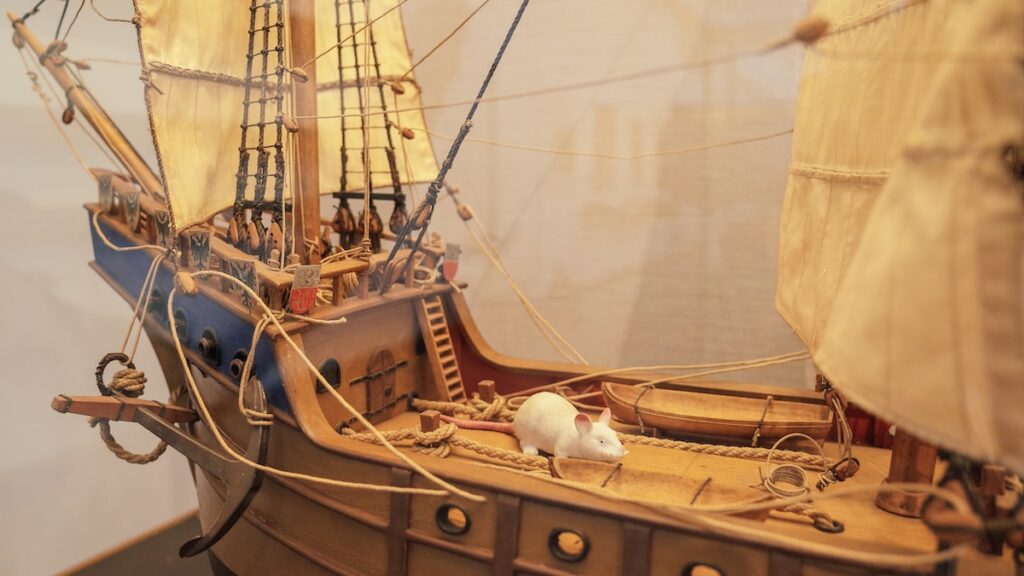
A significant portion of the museum is dedicated to the nineteenth century, which makes sense. That’s the era when sailing boats began traveling extensively around the world due to technological improvements in construction. Seen from a distance, the 19th century can be dubbed the golden era of sailing ships.
A big part of the Norwegian population chose a career in the sea, and various objects are on display. From paintings and ships in a bottle to objects interconnected with sea journeys.
Modern times
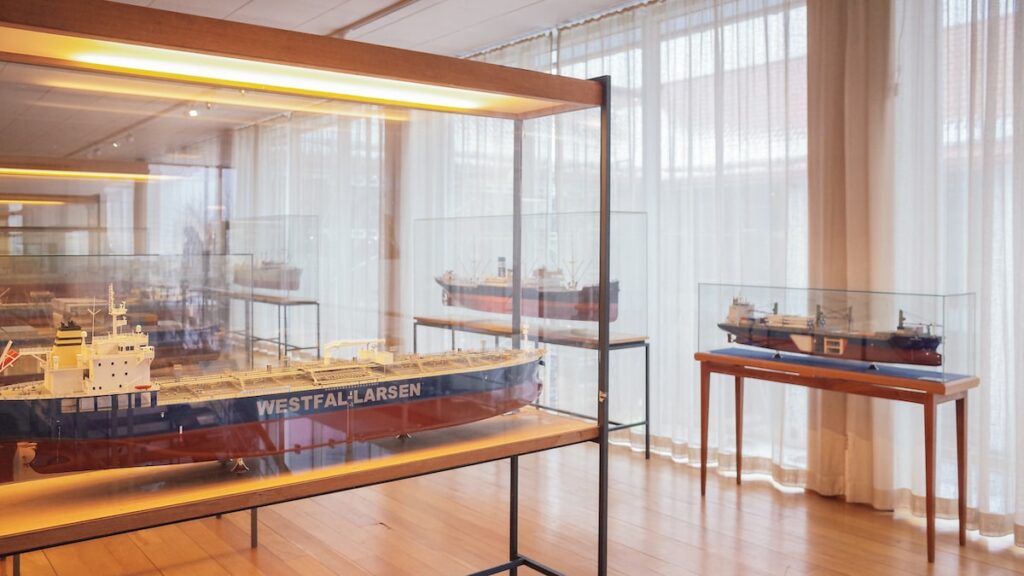
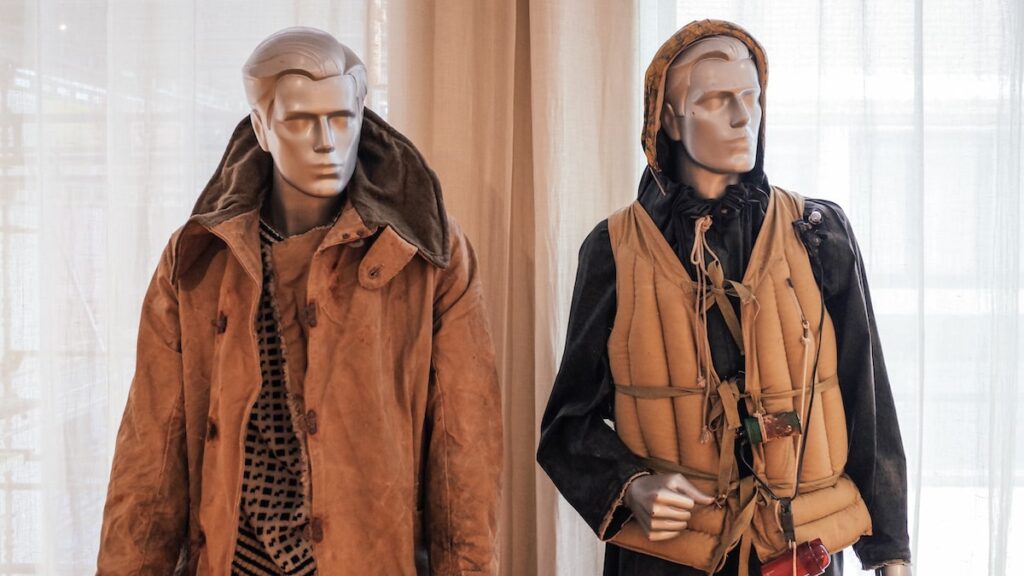
The 19th-century boom of sailing vessels influenced the era that followed -and it still does to this day. A good part of the exhibition deals with training ships, but also with cruise and passenger boats. Models of ships used for national and international services to and from Bergen are on display. Moreover, you will see traditional sailors’ clothing from the old times and also the 1st class smoking lounge of the Hurtigruten ship, dating back to 1912.
The promenade deck (or ship deck)
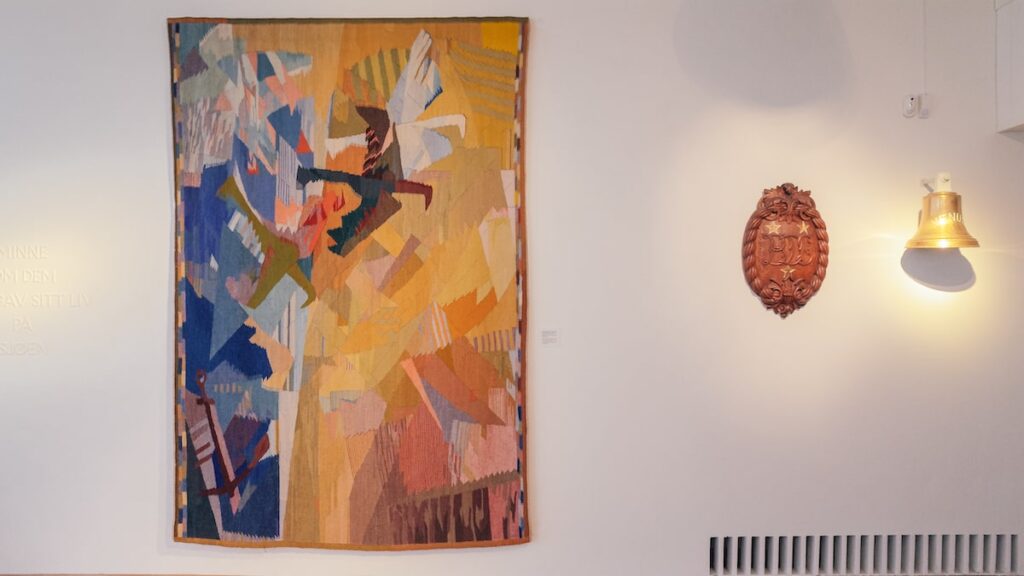
One of the most impressive spots on the Bergen Maritime Museum is located on the upper floor (see the article’s cover image). The so-called Promenade Deck (or Ship Deck) imitates the deck of an old boat. There you can relax on comfortable, old-fashioned chairs and enjoy the view from the big windows over Puddefjorden and the modern port of Bergen.
Right next to it, you will see one impressive tapestry by Else Christie Kielland, dating back to 1963. It honors the people who lost their lives at sea, and the main motive is that birds bring death messages. A truly stunning and highly emotional depiction.
The deck house
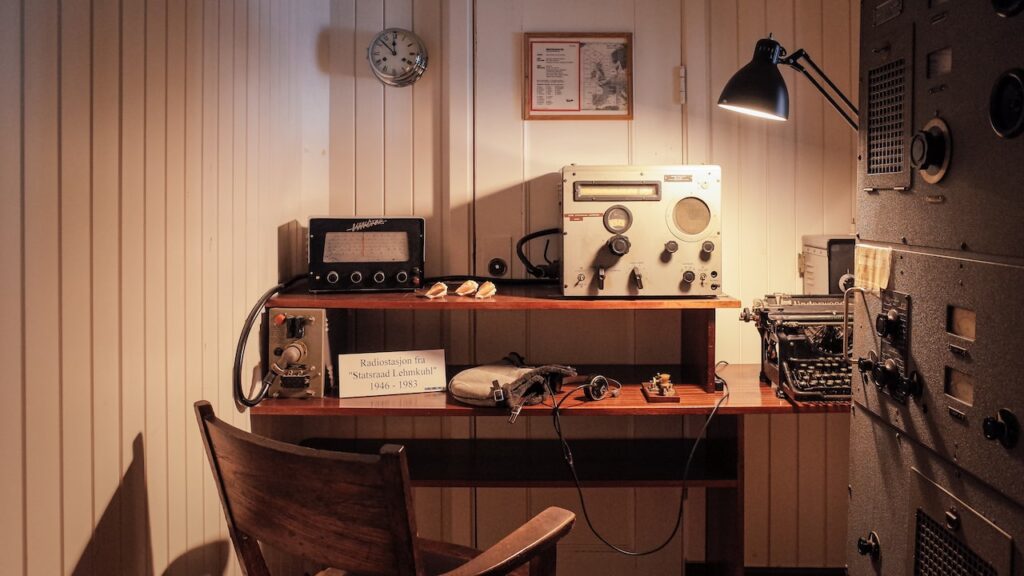
How does it feel to be a sailor in the 1950s? Well, the museum has an answer: an original deck from Statsraad Lehmkul dating back to the 50s! Inside the rooms of the small deckhouse, you can see photos and original furniture from the era. Definitely an eye-catching spot and one of the unique things to see while visiting the museum.
Special exhibition: Queer at Sea
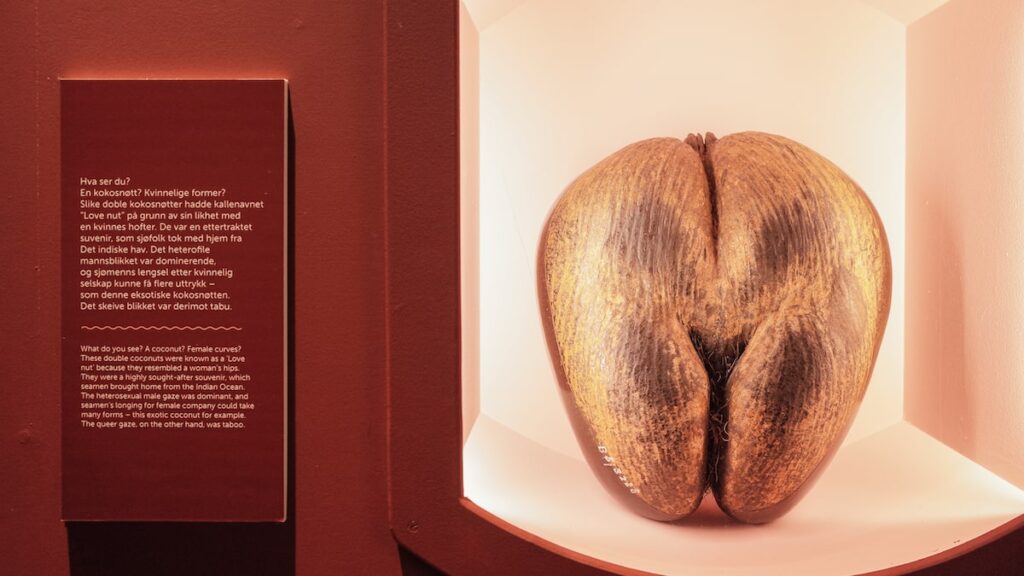
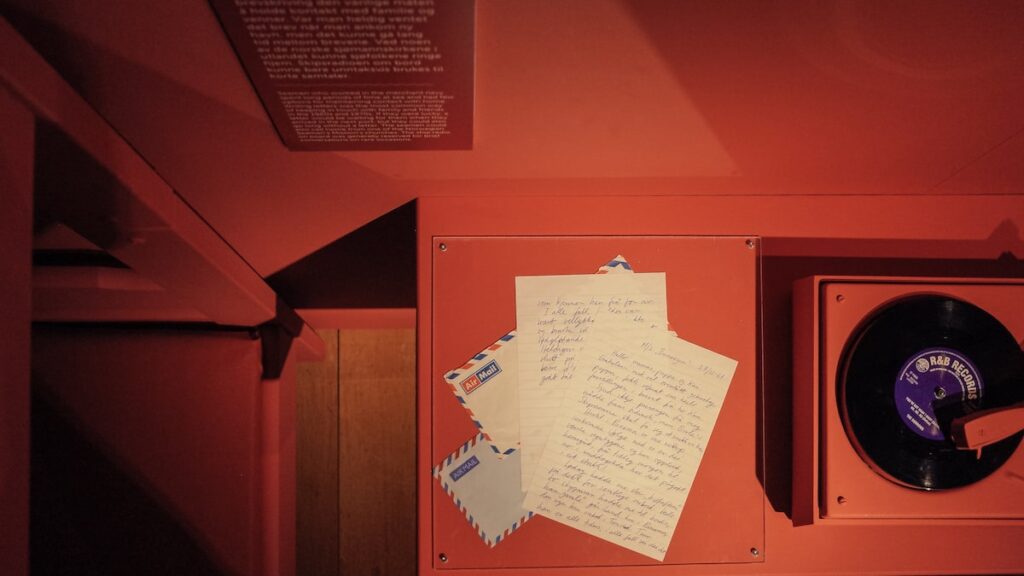
The Bergen Maritime Museum hosts various temporary exhibitions. At the time of writing, there was an extremely interesting exhibition under the title “Queer at Sea.” In former decades, queerness at sea was not only an overlooked theme, but it was also taboo. The exhibition is the result of thorough research, during which valuable material was gathered. Life at sea for queer individuals back in the 1960s-1980s was not easy, and the exhibition about it was both touching and informative.
The exhibition “Queer at Sea” opened in October 2022 and is still on display. You can find it on the museum’s upper floor, and it features original materials from people who traveled in the past. I highly recommend a visit.
Practical info for your visit to the Bergen Maritime Museum
In this section, you’ll find practical information for your visit to Bergen’s Maritime Museum.
Opening hours
The museum is open daily. Between September 1st and April 30th, it’s open from 11 am to 3 pm. On the other hand, from May 1st to August 31st, the museum is open from 10:00 a.m. to 4:00 p.m., and on weekends from 10:00 a.m. to 5:00 p.m.
Tickets
The tickets cost 160 NOK for adults and 80 NOK for students; children enter for free.
You can visit the museum for free if you have the Bergen Card.
Location
The Bergen Maritime Museum is at Haakon Sheteligsplass 15. You can see its exact location on Google Maps here.
For more information about current exhibitions, visit the Sjøfartsmuseum website here. There you can also find some guided tours that the museum offers for its guests.
Bergen Maritime Museum: Final thoughts
In my opinion, the Bergen Maritime Museum is a must-see. On its two floors, you will get great background info about the maritime city of Bergen, and you will gain a deeper understanding of the town’s development and Norwegian seafaring over thousands of years. It doesn’t matter if you visit Bergen in winter or summer: the Maritime Museum on the city center’s edge is a great place to see.
Don’t miss it: it will enhance your Bergen trip.
More about Bergen: Bergen itinerary, Bergen Aquarium, Mostraumen Fjord Cruise, Bergen airport to the city center
Pin it for later
Sharing is caring. Share this photo report from the Bergen Maritime Museum of Bergen, Norway, with your friends.