

Last Updated on April 4, 2026 by George Pavlopoulos
Yayoi Kusama was a name familiar to me in the art world, but I had never seen an exhibition dedicated solely to her. However, when I visited Basel, I discovered that there was a major retrospective of her oeuvre at the Fondation Beyeler. I didn’t think twice, and I set aside a good part of that gloomy afternoon to visit the museum and see Kusama’s cosmos up close. As it turned out, the exhibition about Yayoi Kusama at Fondation Beyeler offered a unique insight into the artist’s work.
The exhibition at Fondation Beyeler is actually the first ever in Switzerland devoted to the artist. Yayoi Kusama, born in 1929, is considered one of the most visionary artists of our era. Moreover, the exhibition was developed in close collaboration with the artist and her studio, which, in a sense, meant the artist was present throughout. Spanning more than seven decades of work, this extensive presentation will take you from postwar Japan to New York in the 1960s and to her current creations.
The exhibition about Yayoi Kusama at Fondation Beyeler will remain on show until January 25, 2026, before moving to Cologne, Germany, in mid-March.
In the following lines, you will read my notes from the exhibition, along with information about the artist and her work, paired with my photographs. Let’s begin.
*Some links are affiliate links. It means that if you purchase something, I might earn a small commission at no additional cost to you.
Yayoi Kusama at Fondation Beyeler in Basel
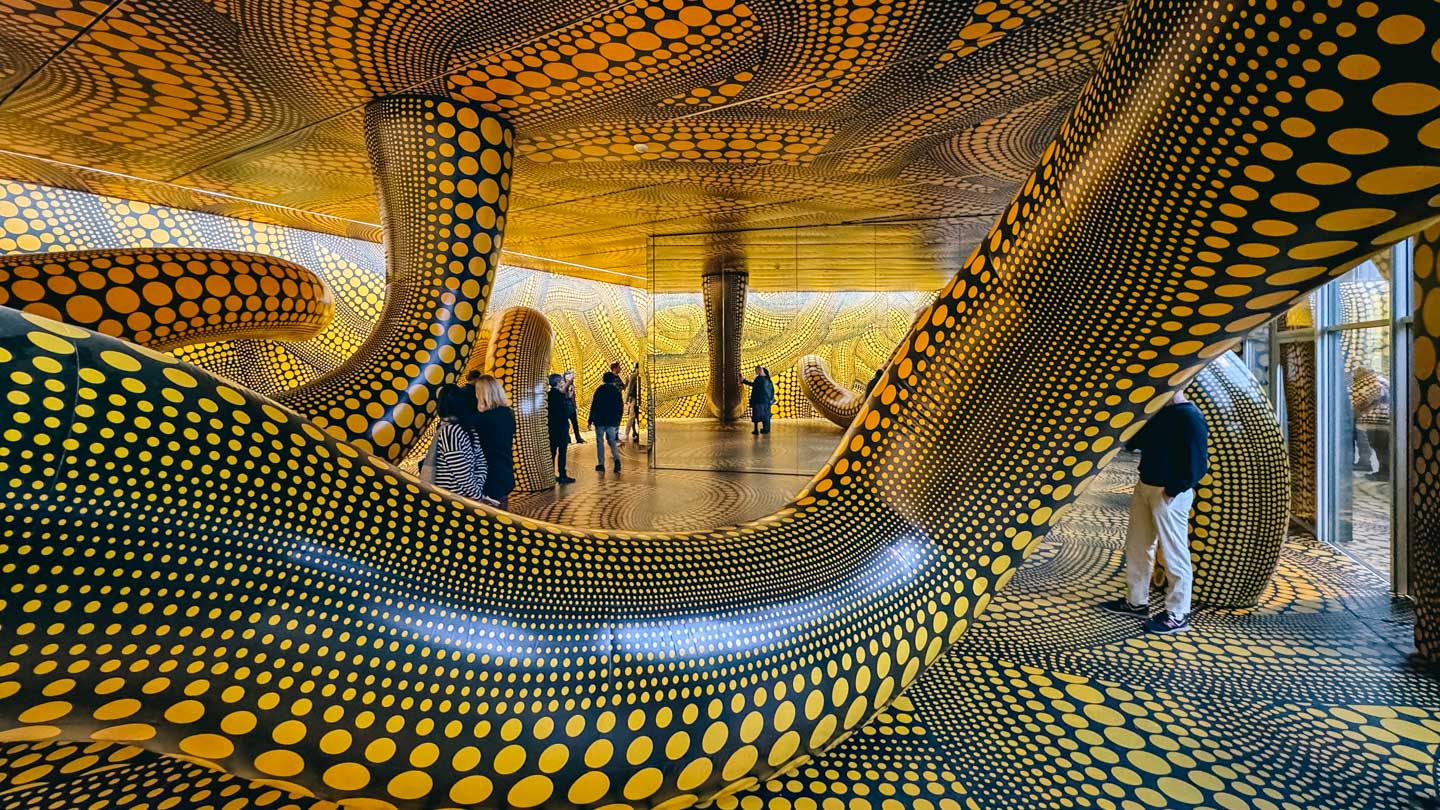
Although the Fondation Beyeler is slightly outside Basel city center, it has become a true epicenter of the arts. While it’s completely different in style, the museum reminds me of Louisiana in Denmark: it feels like half museum and half park, with the natural environment fully integrated, creating a sense of breathing space for the art.
Coinciding with Kusama’s exhibition, the museum devoted its premises to “A Brief Art History of the Dot.” A smaller section before entering Kusama’s world is dedicated exactly to that: the dot. Through a classic collection display centered on the dot (featuring artists such as Louise Bourgeois, Paul Cézanne, Max Ernst, Wassily Kandinsky, Paul Klee, and Roy Lichtenstein), the history of the dot serves as a prelude to Kusama’s work.
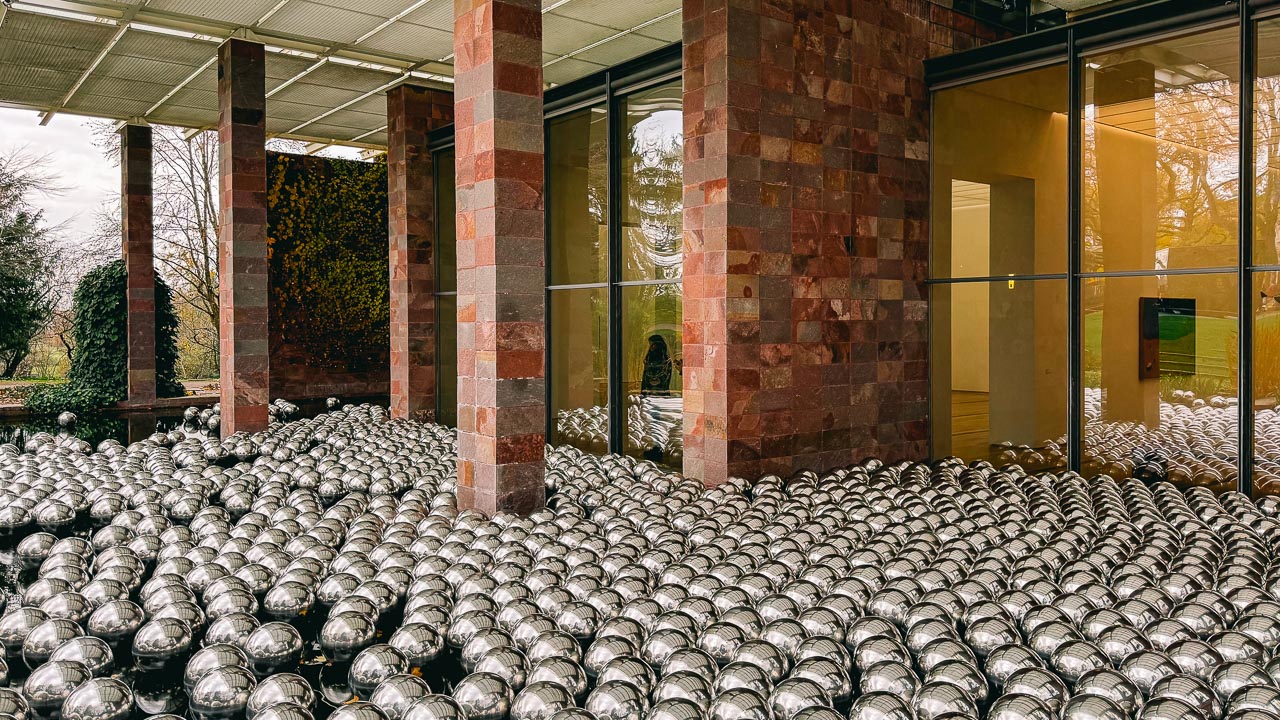
According to the museum’s wall texts, the dot is “A very small round mark, a spot, speck or splatter, the dot is the smallest pictorial element, a basic geometric concept and can be both a sign and a symbol of creative and spiritual significance.”
After a stroll through the introductory section, entering the Kusama exhibition feels like a permanent echo of the importance of the dots.
Into Yayoi Kusama’s Universe: Dots, Mirrors and Pumpkins
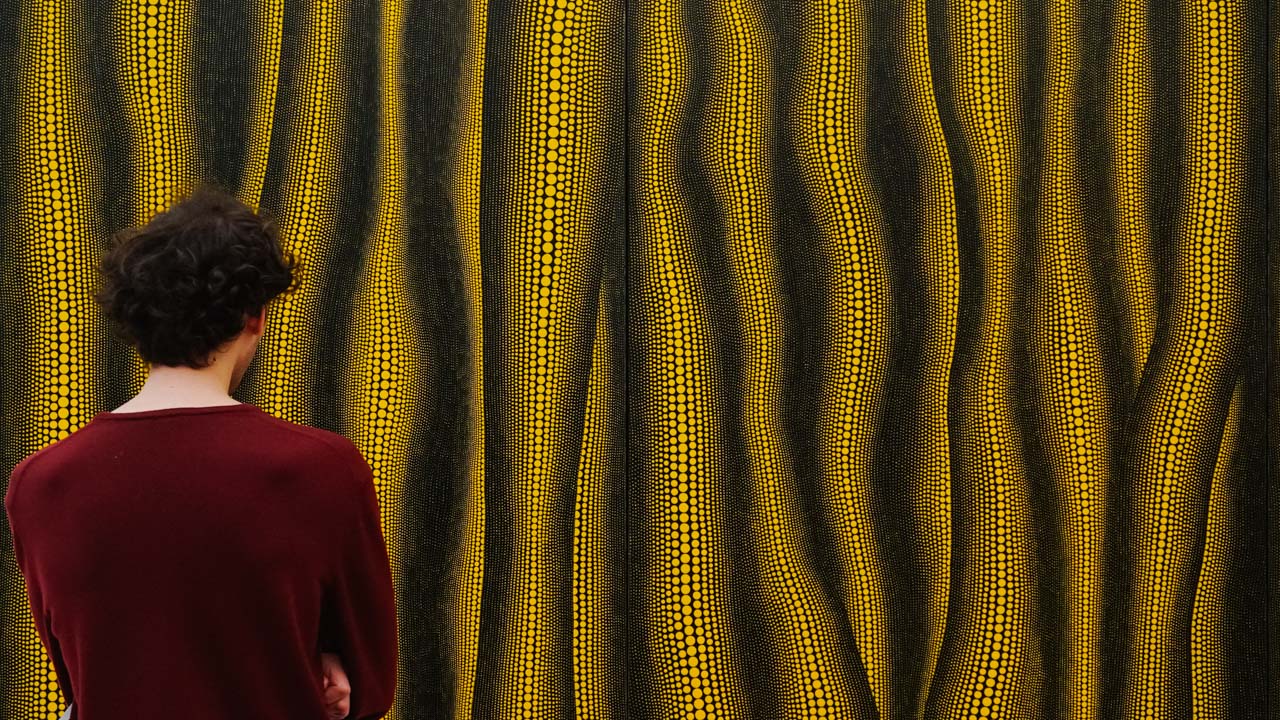
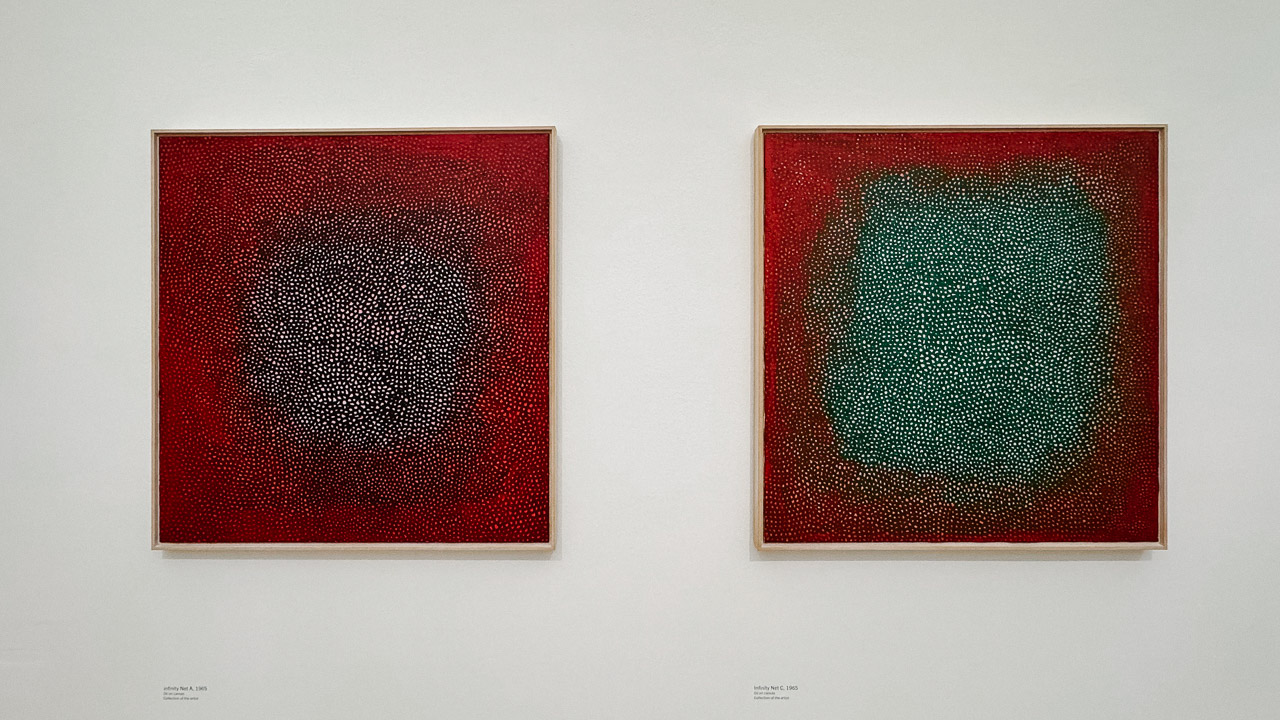
The exhibition of Yayoi Kusama at Fondation Beyeler feels like an explosion of colors and gigantic installations. The scale is often impressive, but what surprised me the most was the artist’s repetitions until she achieved a sense of infinite space. And all that, based on the simple concept of the dot.
There are polka dots, nets, and mirrored surfaces that seem to multiply and expand, creating Kusama’s visual language. That figurative vocabulary encompasses her means of expression, and while strolling through the exhibition, it becomes apparent that the artist is in an ongoing dialogue with herself to push the limits of her creation.
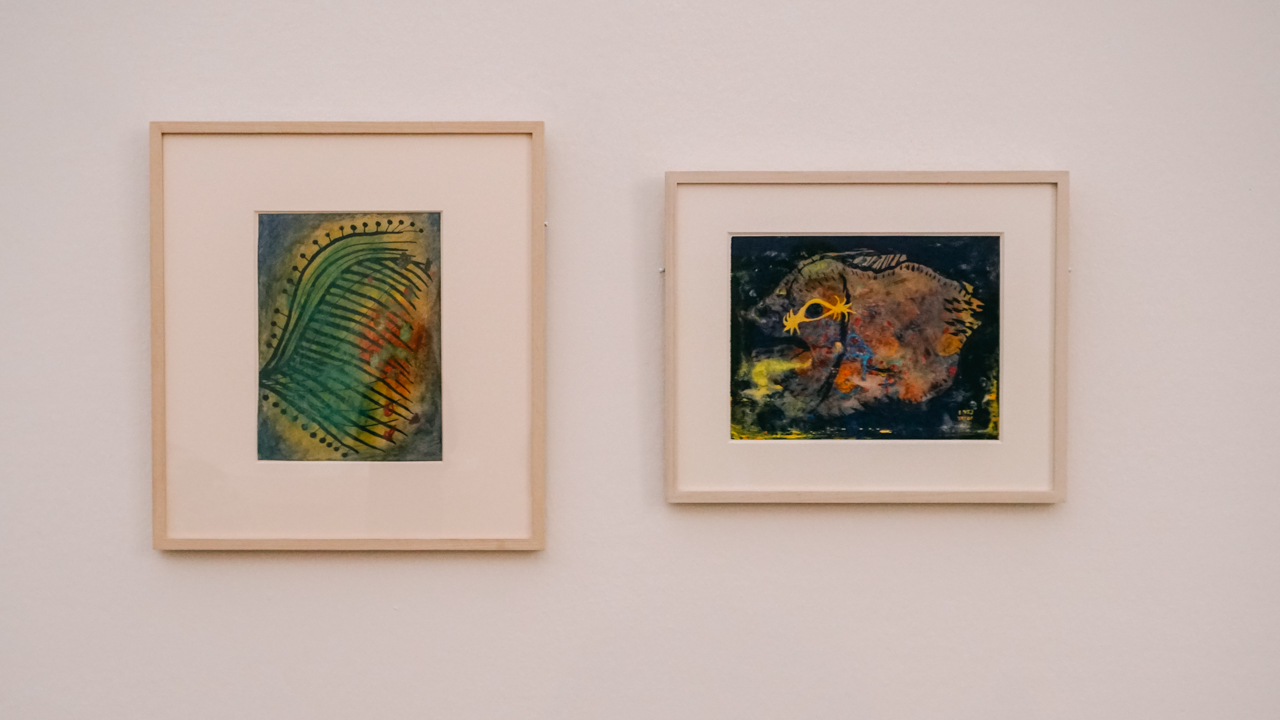
The Kusama exhibition at Beyeler is extensive, providing visitors with ample space and time to question many things. One of the first things that I reflected upon was when a point stops being a humble spot and becomes a world. The large (and very photogenic) installations surrounded by infinity mirrors feel like parallel universes inhabited by dots and destined to expand forever.
Are these just dots? Or are they something bigger?
The Infinity Mirrored Rooms
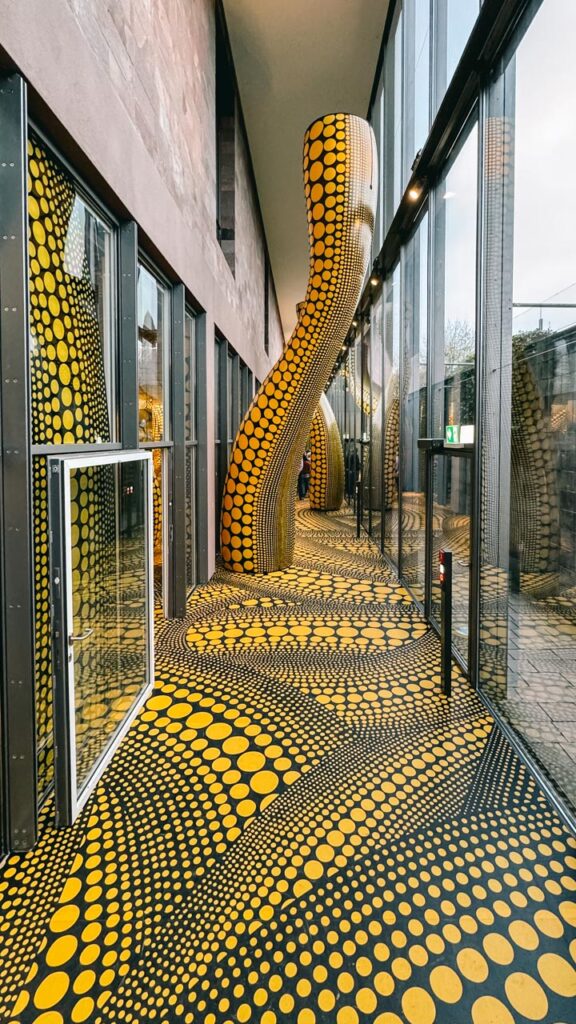
I want to write a few more things about what is arguably the exhibition’s most impressive part. The Infinity Mirrored Rooms are primarily dark spaces, featuring mirrors on all sides. Through the flickering of light, though, you suddenly feel multiplied into a giant grid. For a few seconds (that’s the time you are allowed to stay in one of the rooms), you become one more dot among millions, like a piece of data inside a visual installation.
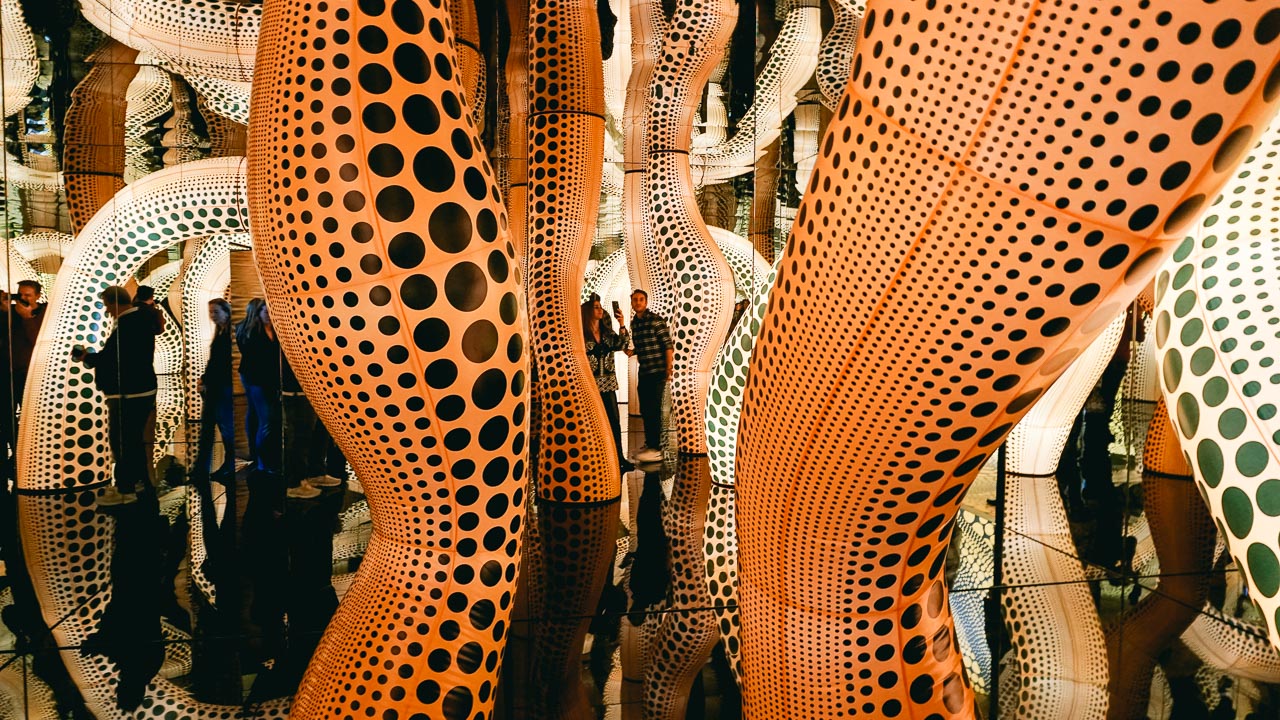
The labyrinth created by the installation feels unsettling, but the goal is precisely that: to inhabit for a bit Kusama’s thought loop and exit straight before fully comprehending what is going on. I felt like being granted for a few seconds a glimpse into Kusama’s imaginary world, and being kicked out soon enough made me question the purpose, the mirrors, and the expansion.
And even though I wanted to stay longer inside the room, I realized that too much time inside it would make this a spectacle and not a room for reflection. I’m pretty sure that Yayoi Kusama wanted to share, for a short 45 seconds, a glimpse of her cosmos and raise questions for the viewer, not let them fully inhabit the space, and leave with just impressions.
Kusama’s Pumpkins
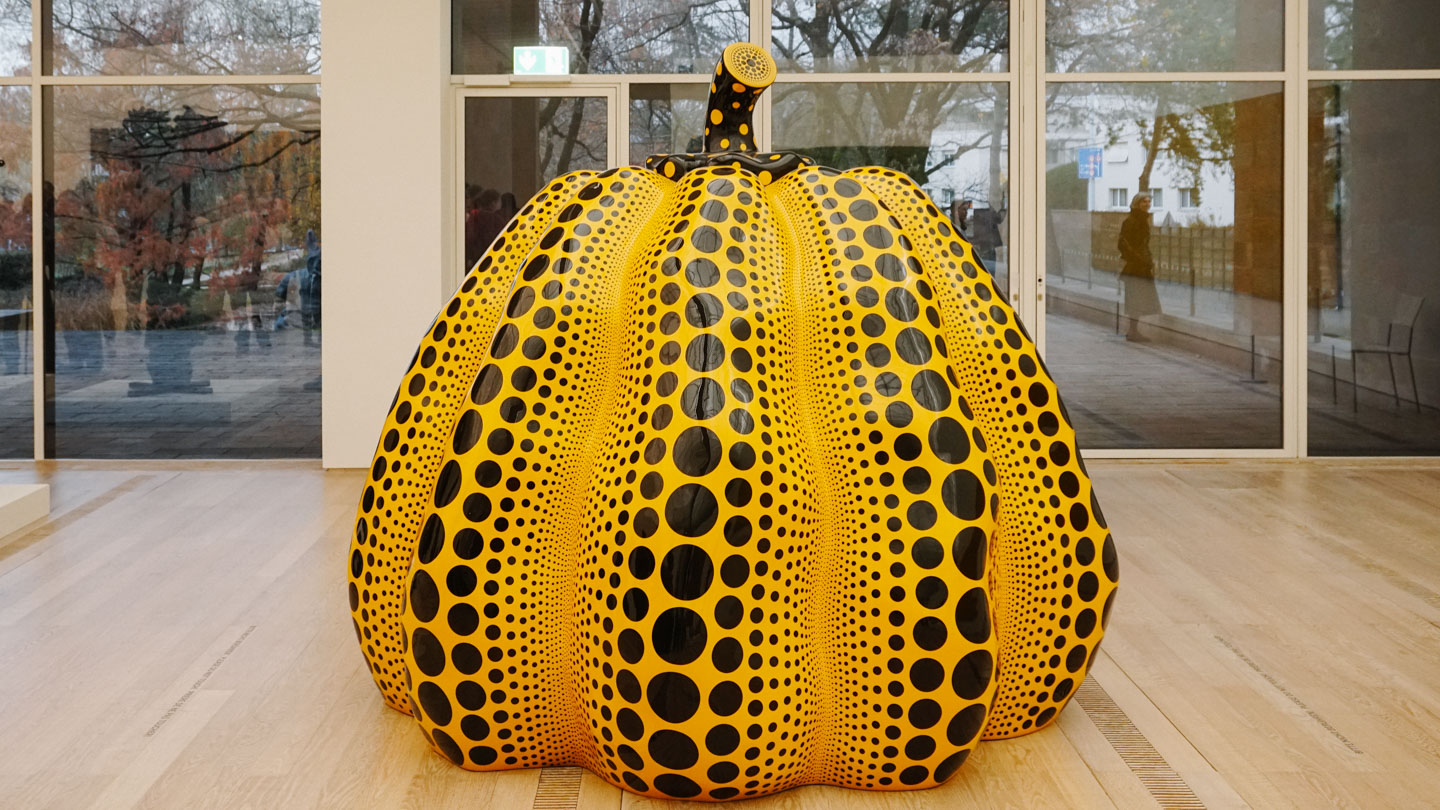
While her iconic pumpkins might feel like a completely different story, after visiting the exhibition, I realized that they are fully aligned (and justified) by her artistic vision. There are paintings of them, as well as installations. Through Kusama’s thought flow, I perceived the colorful pumpkins as a more grounded form of her work.
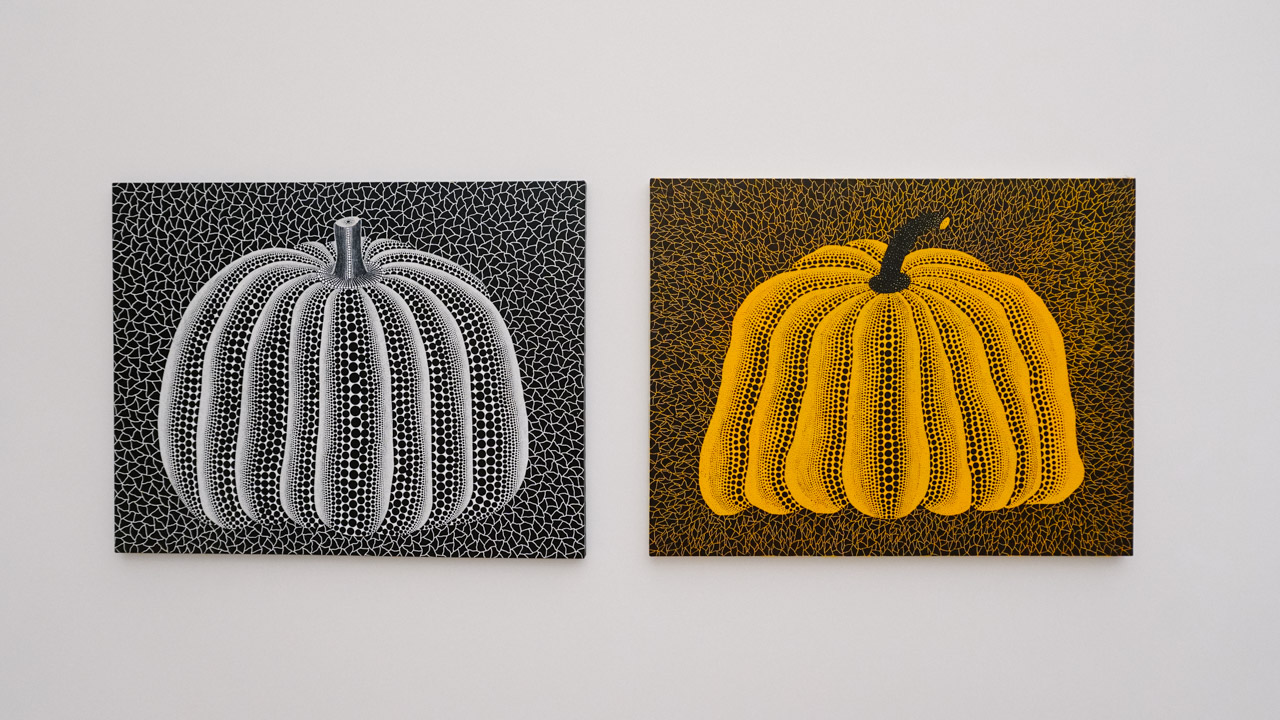
The imaginary world of the mirrors and dots isn’t present here. I felt like those pumpkins were (somehow) anchors, giving the exhibition a sense of stability. While they also seem out of the world, they also seem like a shelter. They aren’t toys, those bizarre pumpkins, but more cosmic objects. They don’t mirror to infinity; the bodies are alive, their skins are full of dots, in the sense of memory carriers. Their thick shadows remind us of their presence and underscore a more down-to-earth element, despite their shapes.
A General Note about the Exhibition of Yayoi Kusama at Fondation Beyeler
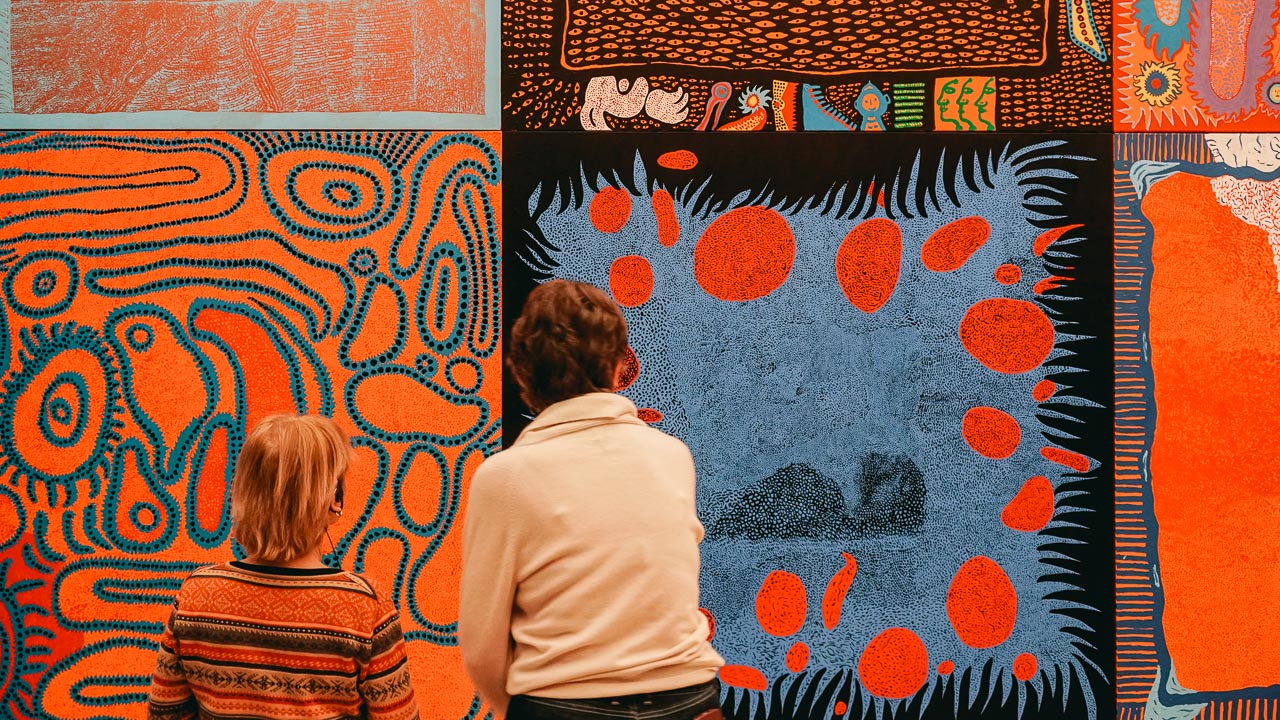
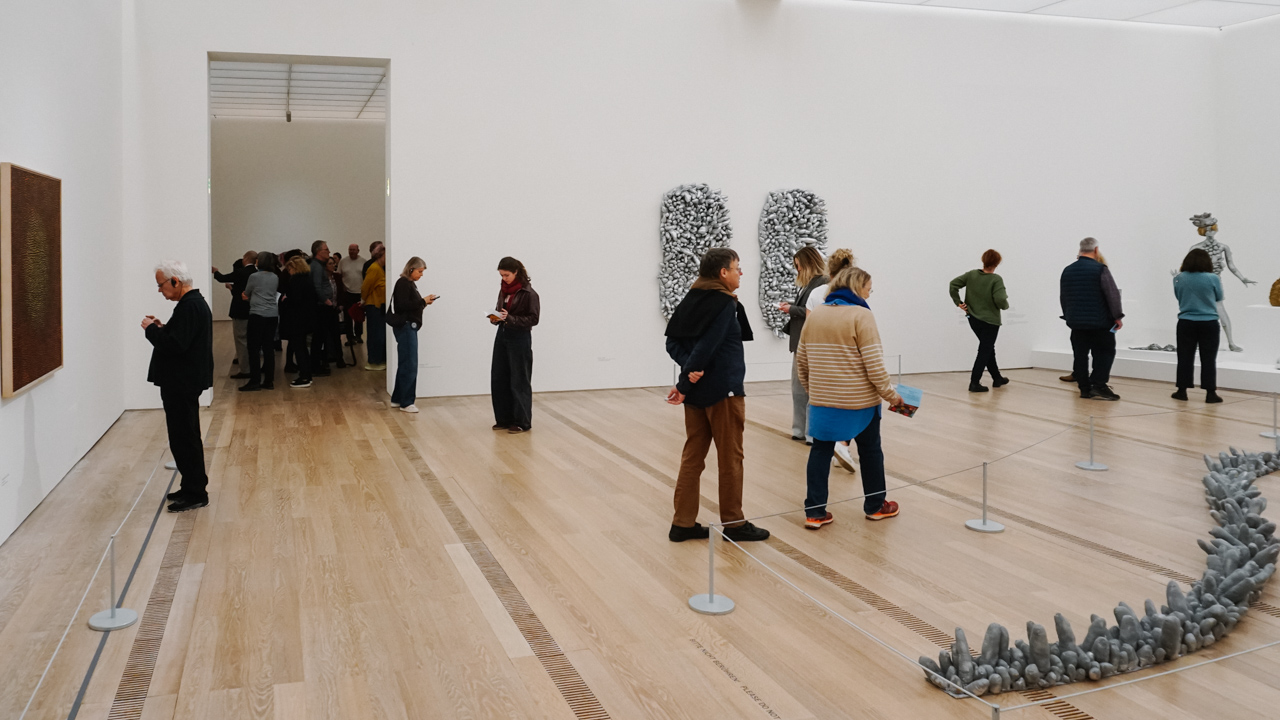
I found the Kusama exhibition at Beyeler very well arranged. After the introductory space on the history of the dot, entering the Kusama exhibition feels like entering a dark space. The order is chronological, and the artist’s personal struggles seem to be a matter of light and shadow. The first rooms are dark, and the paintings seem colorless, especially compared with what the artist is known for.
As I proceeded to the next rooms, colors started to appear. There were monothematic paintings of large canvases with dotted motifs, and slowly, one gets into the work that made Kusama famous. When I first saw the pumpkins, I knew the exhibition was about to “explode” and create a more colorful universe.
In the end, I ended up at the Infinity Mirror Rooms, and I thought this was the trademark of Yayoi Kusama: these rooms encompass all her previous works and materials, bringing together what she has been creating throughout her artistic life.
Practical Information for your visit to Fondation Beyeler
In this section, I will share practical information for your visit to Fondation Beyeler. Please navigate through the sections and always cross-check the museum’s official website for up-to-date information or scheduled changes.
Opening Hours
The Fondation Beyeler is one of the few museums that remains open 365 days per year. The Kusama exhibition is open Monday, Tuesday, Thursday, Friday, Saturday, and Sunday from 9 a.m. to 6 p.m., and on Wednesdays from 9 a.m. to 8 p.m.
Ticket prices
The ticket for the Yayoi Kusama exhibition costs 30 CHF.
The museum encourages visitors to buy their tickets online due to significant demand. Only a limited number of tickets will be available on site.
The Restaurant at Fondation Beyeler
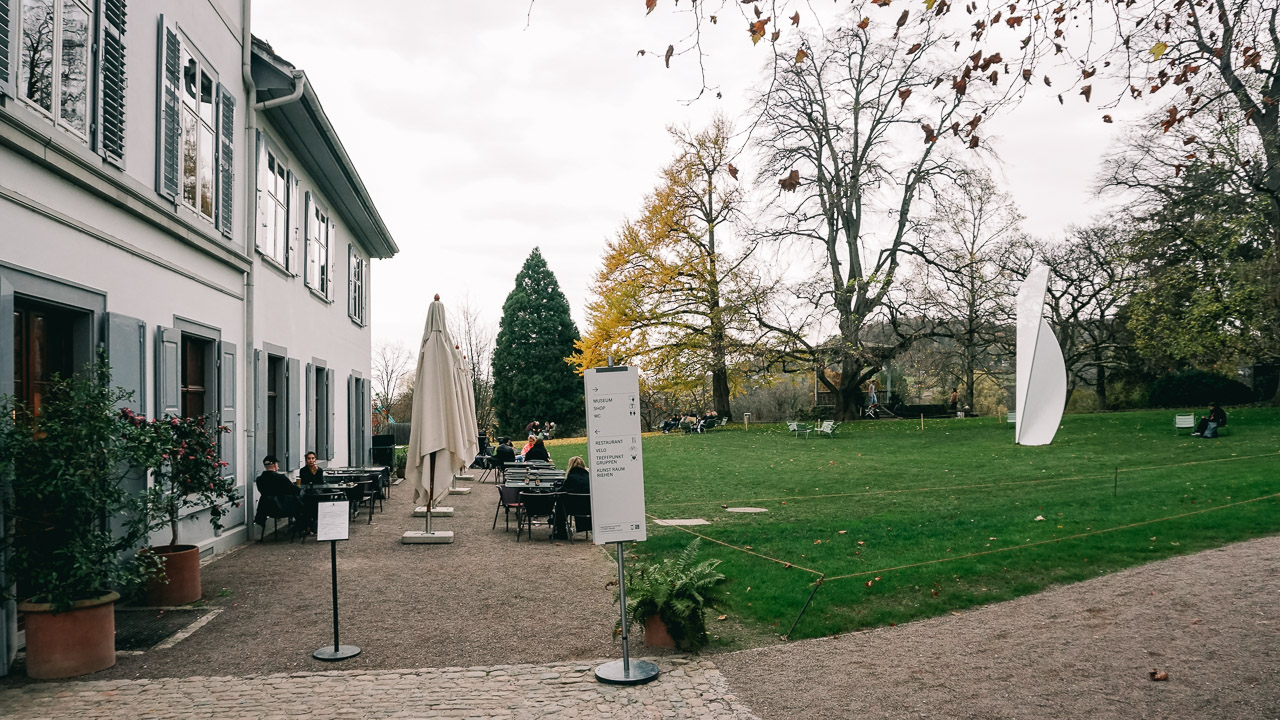
Straight after you enter the museum’s premises, you will see the restaurant on your left. It offers hot and cold dishes made with local ingredients. What was also very touching was that Kusama’s work inspired most of the dishes; that said, you will find, among others, pumpkins on the menu.
How to reach Fondation Beyeler
As I wrote earlier, the museum is located slightly off the city center of Basel. Public transport (Tram lines 2 and 6) will bring you conveniently to the Fondation Beyeler in approximately 10-15 minutes from the city center, depending on your starting location. The “Fondation Beyeler” stop is just around the corner, and from there you can get to the museum in a minute.
There’s also a parking lot outside the museum for people arriving by car.
Where to stay in Basel
If you are planning to stay in Basel for a day or two, there are several accommodations close to the city center and close to Fondation Beyeler. Please use the interactive map below to discover the best places to stay during your trip to Basel.
Yayoi Kusama at Fondation Beyeler: Final Thoughts
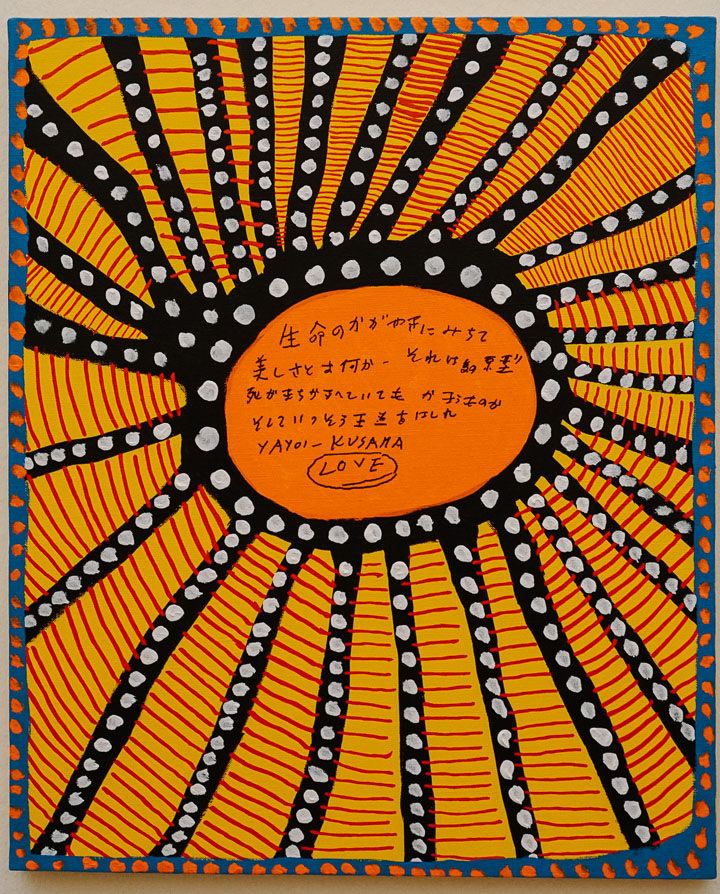
The Yayoi Kusama exhibition at Fondation Beyeler was a memorable experience. The exhibition brought together a mixture of her most famous and seldom-seen pieces. Meanwhile, her Infinity Mirrored Rooms, which set visitors in loops of repetition and self-reflection, are among the most impressive things I’ve seen this year.
Despite its mostly chronological order, this Yayoi Kusama retrospective didn’t feel like a dull walk through past decades, one after the other. On the contrary, you constantly think the turning points are determined by the artist’s medium of expression, not by calendars. Her personal crisis is, therefore, often transformed into a collective memory and experience.
Despite its photogenic elements, which often lead viewers to assume everything is a spectacle, the exhibition is full of questions about what we see, how we see it, how we perceive it, and how we can limit all of these -or not.
If you can’t make it to Basel, I can only encourage you to mark the dates for the 2026 Cologne exhibition. Yayoi Kusama’s universe is unique and celebrates imagination despite personal struggle. And that is enough reason to attend it.
More about art: The Museum of Innocence, NYC Guggenheim, Language/Text/Image at Draiflessen, A Visit to the MoMA in New York
Pin it for later
Sharing is caring. Share this article about the Yayoi Kusama exhibition at Fondation Beyeler in Basel with your friends.