

Last Updated on August 1, 2026 by George Pavlopoulos
The day I walked into MoMA in New York City, it felt like a dream come true. Although the museum’s exterior will make you feel that this is another tall building in Manhattan, entering the MoMA is an experience of its own. It’s not often that you can discover such a wide array of art in a museum. When I left the museum, I tried to process everything I saw: Abstract Expressionism, Political Art, Surrealism, Installations, graphic and product designs.
No matter how much I love museums, I believe it’s impossible to write a complete MoMA guide. Therefore, that’s not the point of this article. But since I want to make this as visual as possible, I decided to write about the artworks that amazed me and stayed with me. That being said, this is more of a visual diary. Quite obviously, visiting the Museum of Modern Art is one of the top things to do in New York, and you should definitely add it to your NYC itinerary.
So, let’s start with the MoMA artworks that fascinated me.
*Some of the links are affiliate links. It means that if you make a purchase, I might earn a small commission at no additional cost to you.
10+1 Artworks that amazed me at the MoMA in New York
I walked up and down MoMA several times. Sometimes I was searching for something specific, while at other times I just wanted to revisit an artwork I thought I hadn’t paid much attention to. The Museum of Modern Art in New York is definitely a place where one can wander for hours (or even days), but I soon realized I couldn’t see everything in one visit.
Why am I writing this note? It’s because I first want to convince you to visit MoMA, even if it’s just for two hours (that’s the bare minimum, I believe), and to tell you that, obviously, the way I’ll present the artworks is totally random.
F-111 by James Rosenquist
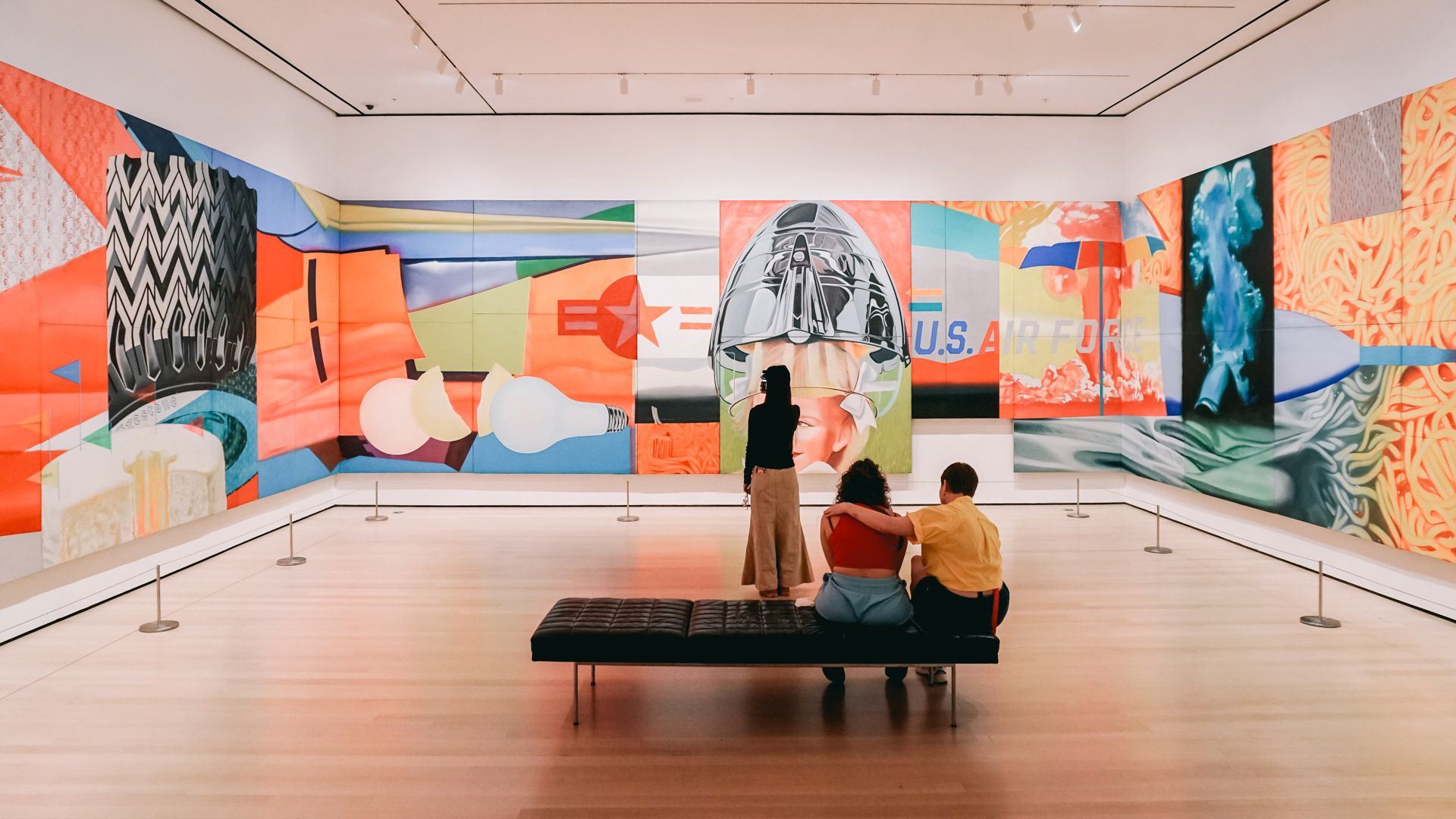
I’ll start from F-111. This goes beyond being just a painting. I felt that the F-111 was more like a room filled with a lot of noise. Even though you can’t tell from the photo, these fragments of American life are both bright and chaotic. The fighter jet will make you shiver, and overall, I found it unsettling. When I saw it up close, I thought that this was MoMA’s overwhelming energy in a nutshell.
Add by Sarah Grilo
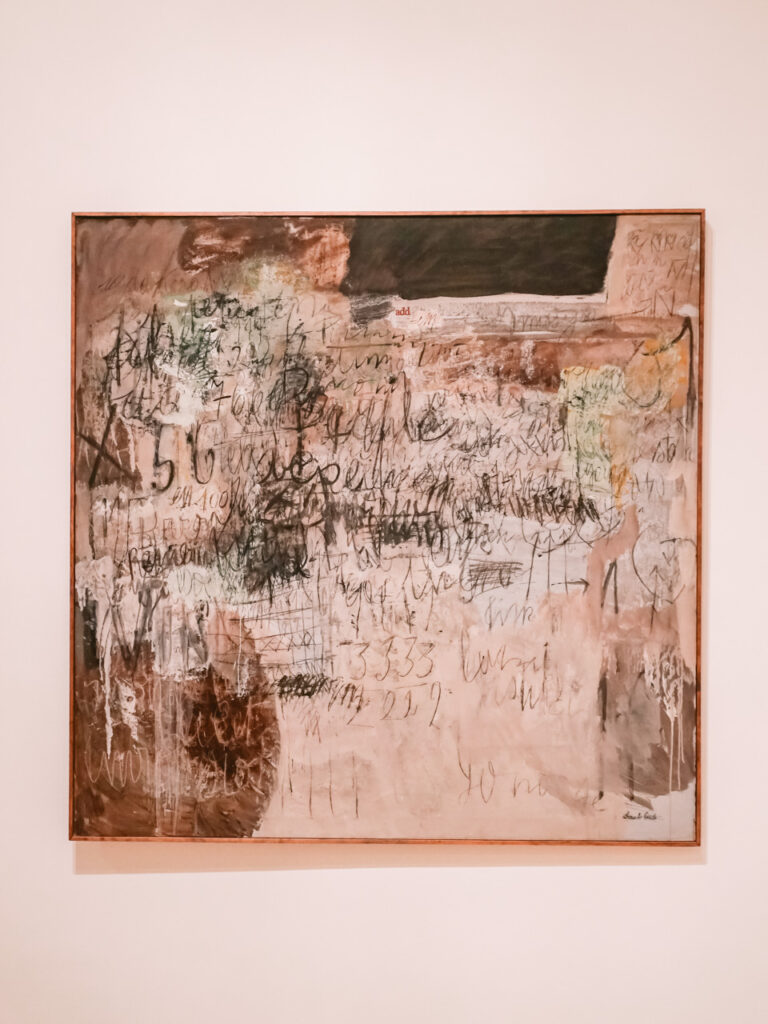
Even though this is not a new work, Add looked like a wall of encrypted symbols and patterns. It was a very New York moment for me, especially because I felt I had to constantly focus on different elements. Refocusing and repeatedly trying to retrieve new information made me think that, at some point, I didn’t have to see this painting; I had to read it instead. Numbers, symbols, and letters were paired in different layers. It was as if I had to dig deeper every time I changed my focus.
Cadence by Otobong Nkanga
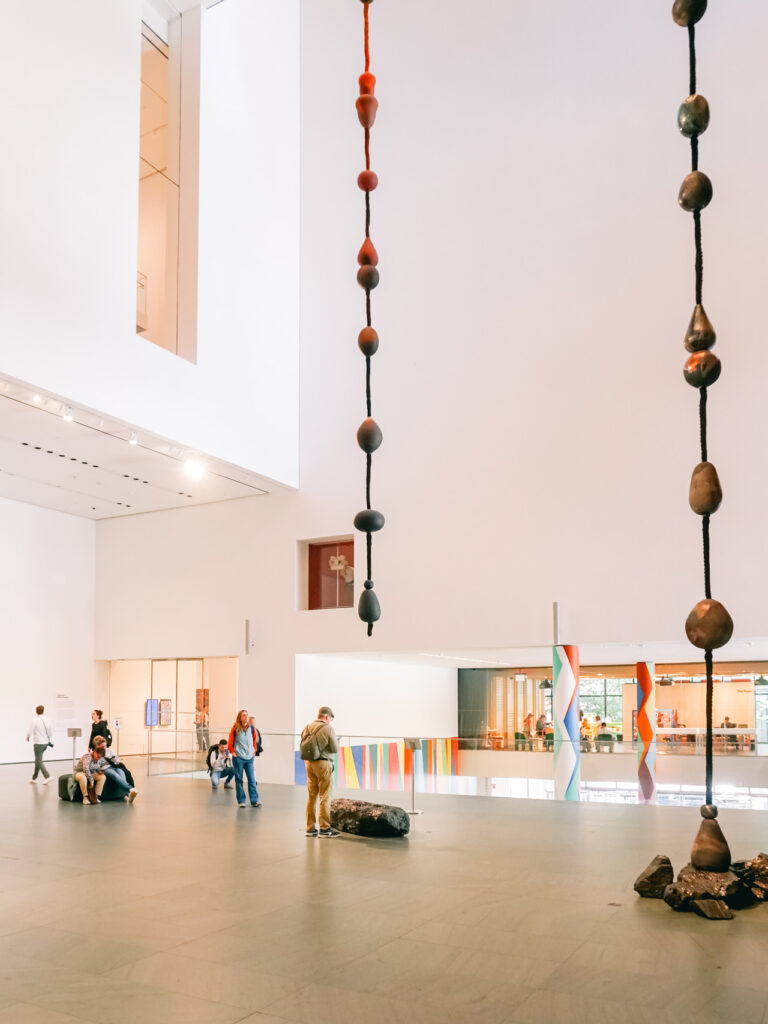
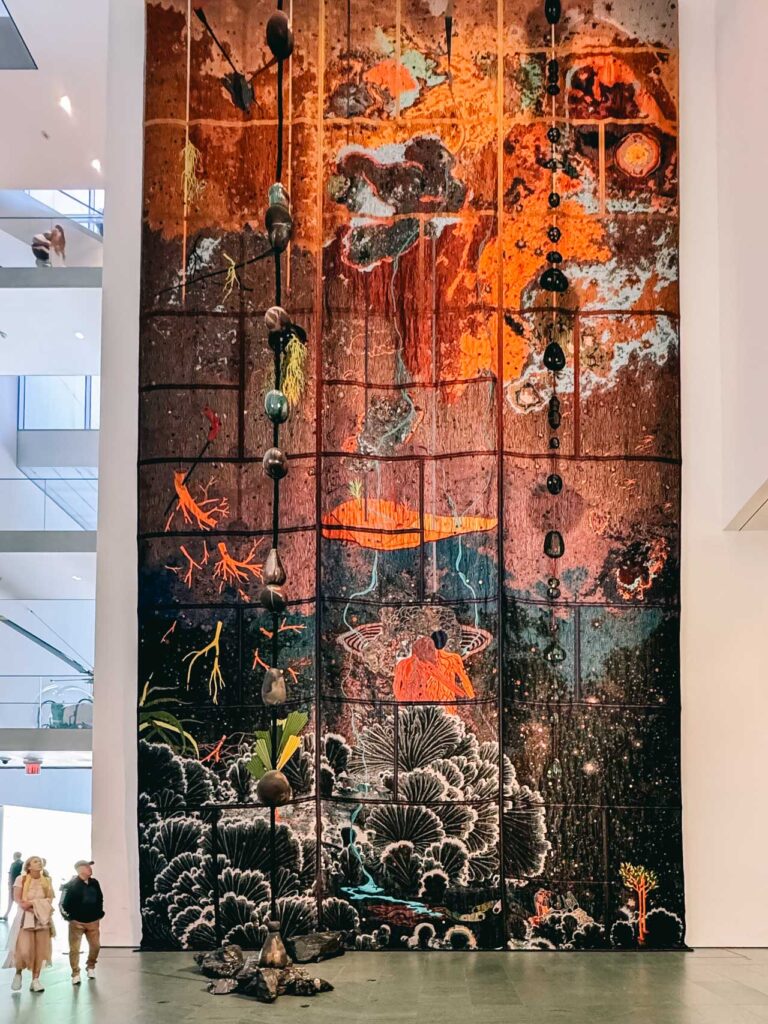
I couldn’t leave out Otobong Nkanga’s Cadence from this article. It was my introduction to MoMA because it was the first thing I saw upon entering the museum. Despite the museum’s austere exterior, Cadence made me slow down instantly. I wondered why. The best I could do was say that this layered installation carried stories beneath its surface and had a visual and emotional impact on me.
Even though its scale can amaze you, I believe Cadence was rather grounded and didn’t try to impress you. It stood there and transmitted a message. Here’s another image:
Feuer am Abend by Paul Klee
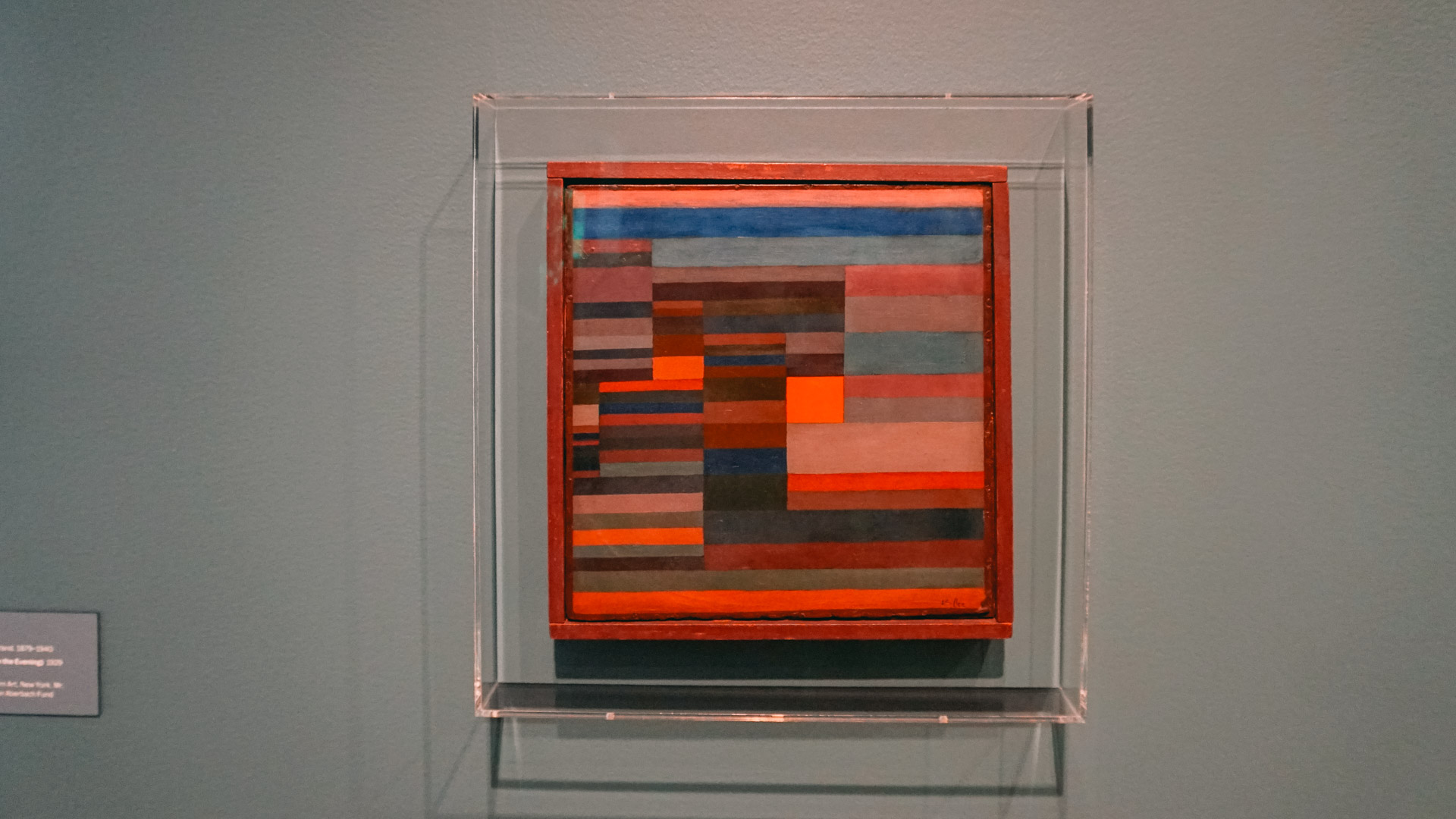
There’s no lack of legendary masters at the MoMA, of course, and Paul Klee is one of them. Klee’s paintings offer something comforting to my understanding when seen from a distance. However, the closer you get, the more intense they become. Feuer am Abend made me think of a small, enclosed world with its own rules. Given that MoMA hosts several oversized artworks, Klee stood there like a self-reflective anchor in an ocean of iconic art.
Drowning Girl by Roy Lichtenstein
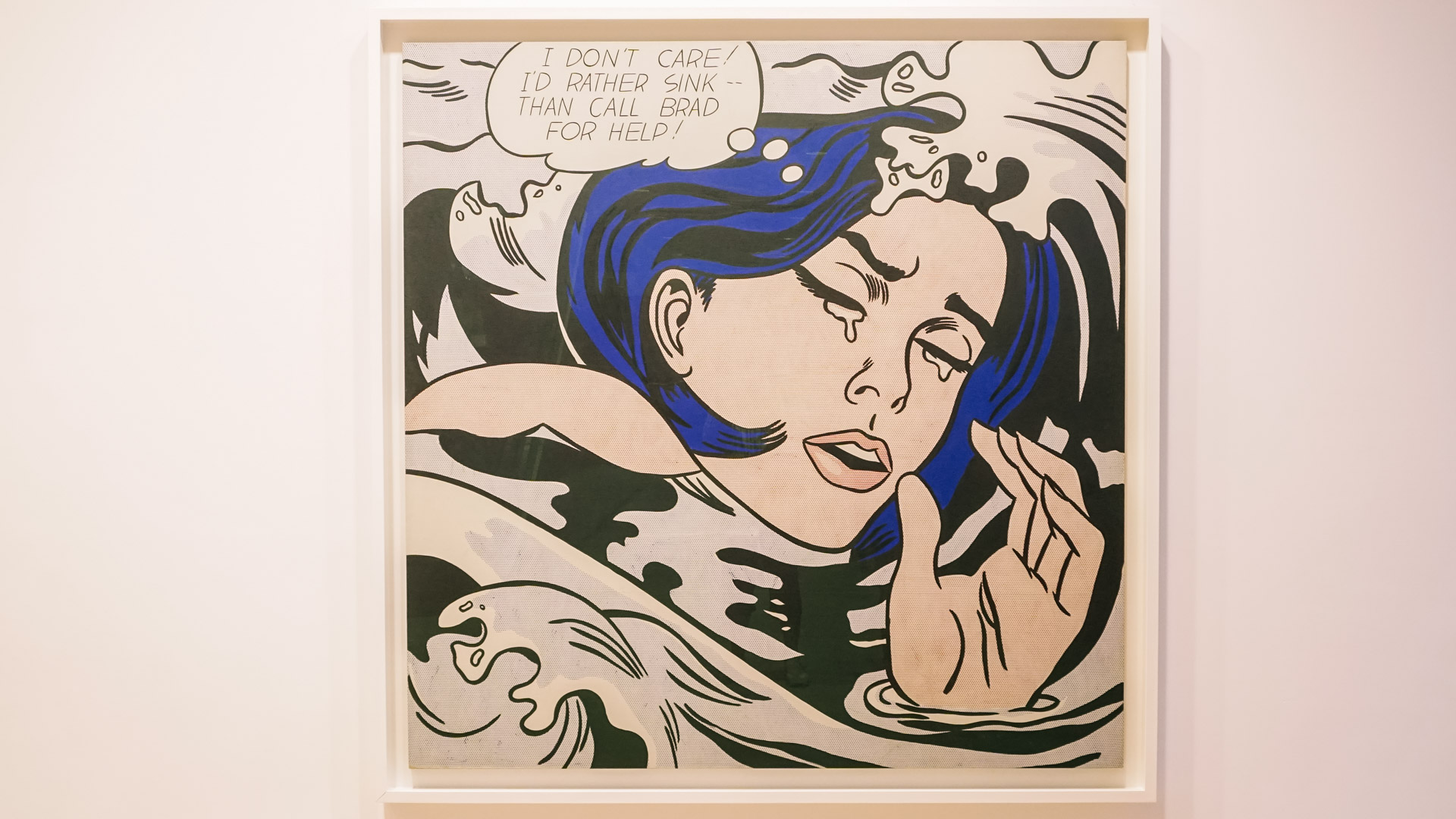
Roy Lichtenstein’s Drowning Girl is among the paintings that amazed me at MoMA. In a way, Lichtenstein (like Andy Warhol) feels as familiar as New York: you feel you know them before visiting them, before you’ve seen them so many times. Yet, the Drowning Girl is much smaller than I imagined it to be. It was like a snapshot of a fleeting moment. Lichtenstein’s style is, of course, identifiable at a glance, but I believe it’s the emotional message that makes people stop to admire it.
Woven Histories Exhibition
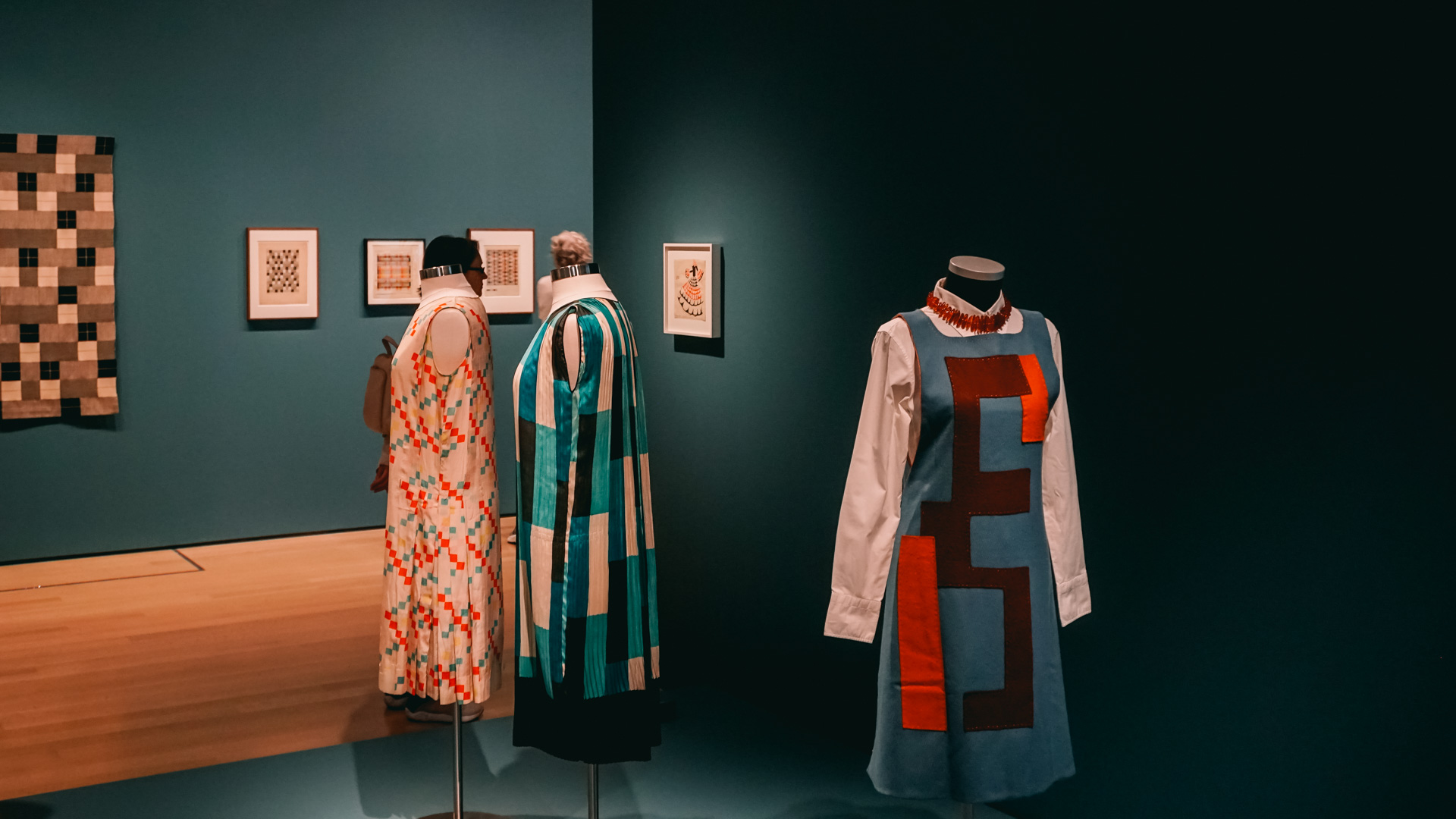
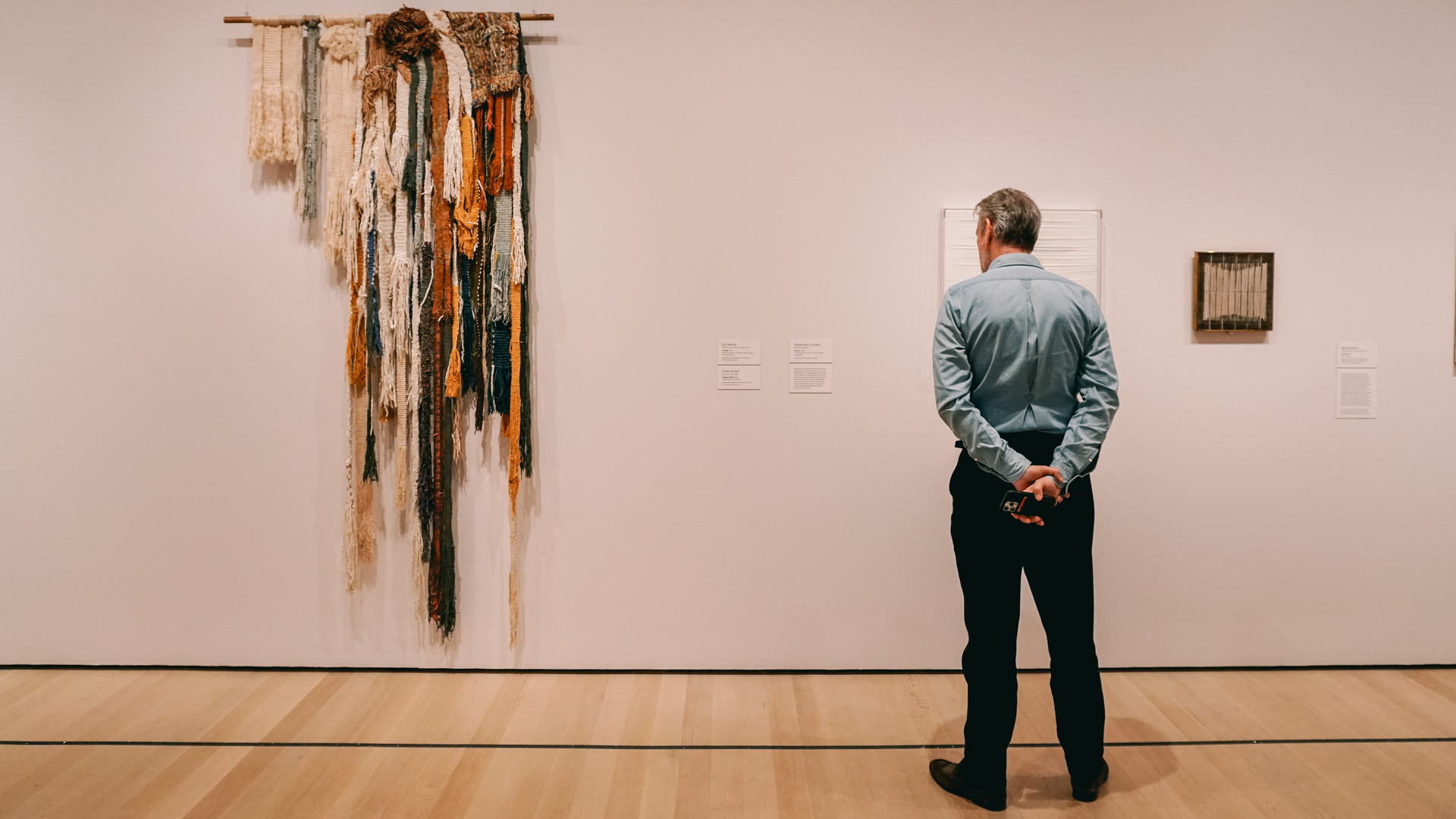
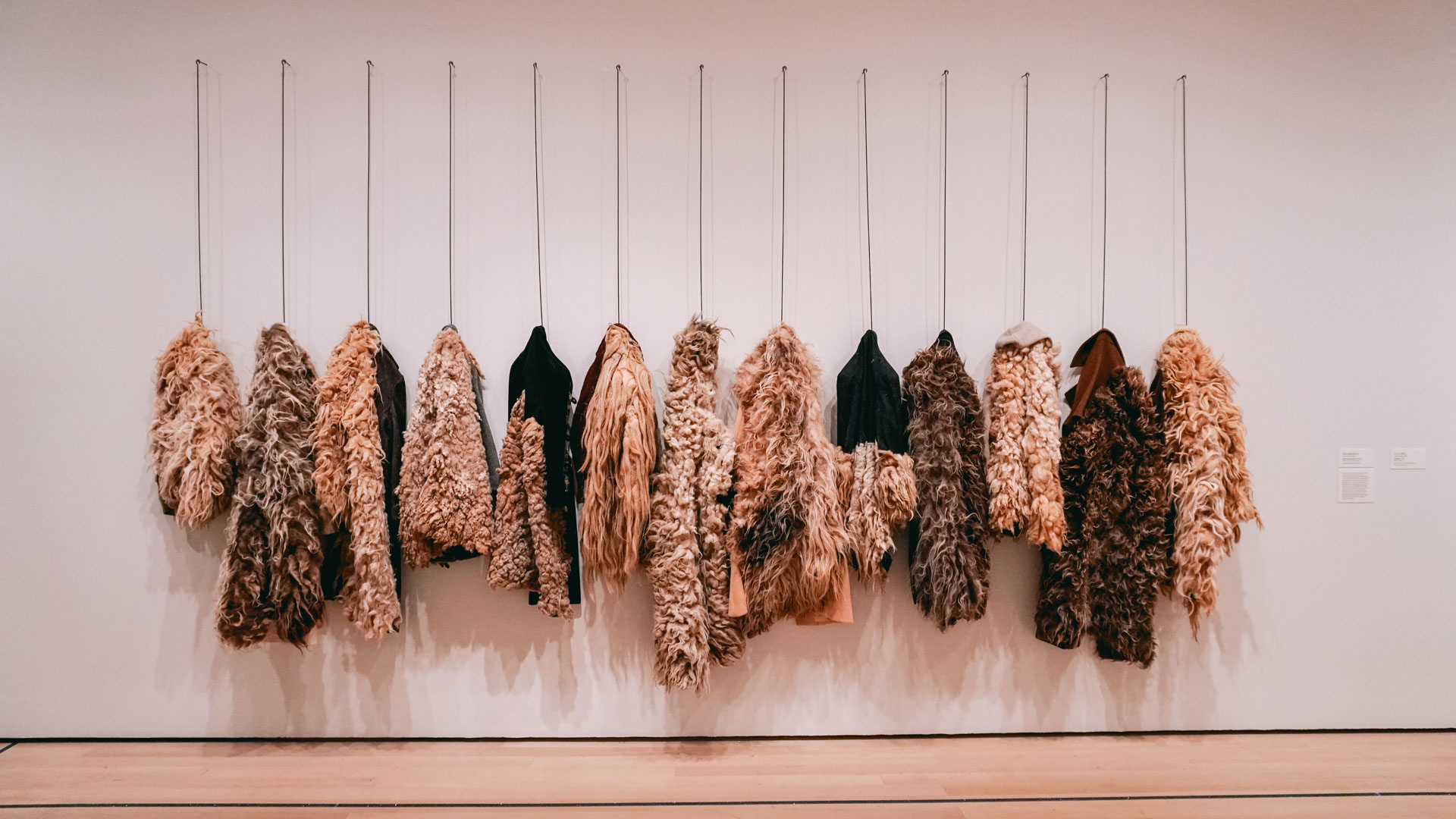
Here, I will be a bit more generic. This is a photo from the exhibition called Woven Stories. Instead of focusing on just a single artwork, I took a wider photo. And that’s on purpose, because at this spot I discovered something I truly loved and appreciated about the MoMA NYC: it treated textiles as a standalone medium with a touch of serious storytelling. Other museums might consider it a side note, but MoMA offered an appreciated contrast here.
Pirouette: Turning Points in Design
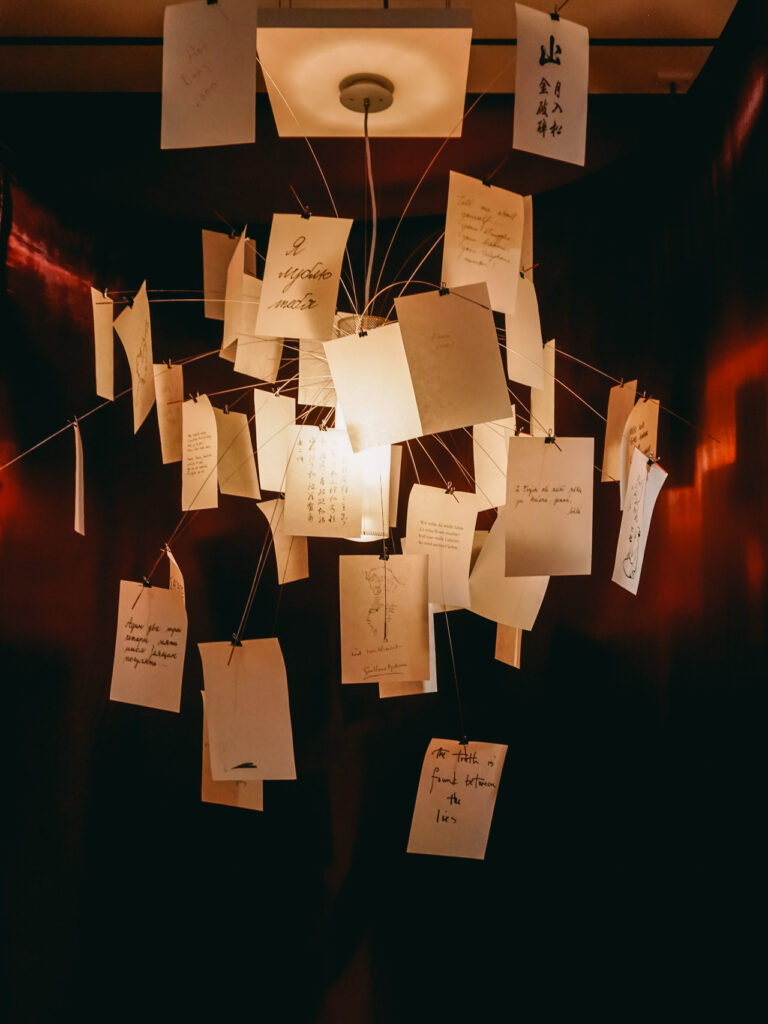
And here’s another reason I appreciated the MoMA. The Pirouette: Turning Points in Design was an exhibition that took the Woven Histories a step further. It served as proof that a museum should be dedicated not only to the past but also to how we live. Design is part of our culture, and the objects presented here feel like writing about the objects that surround us.
NASA “worm” logo

Interconnected to what I wrote just above, the iconic NASA “worm” made me stop and admire it. I’m not American, but the NASA logo feels so familiar and nostalgic. It’s something about its typography that recalls all these lost thoughts and sentiments, making you realize how deeply design can reach within you: even if you never paid close attention to something, it still lingers in your memory.
The NASA logo is also part of Pirouette: Turning Points in Design.
You Can’t Lay Down Your Memory Chest of Drawers by Tejo Remy
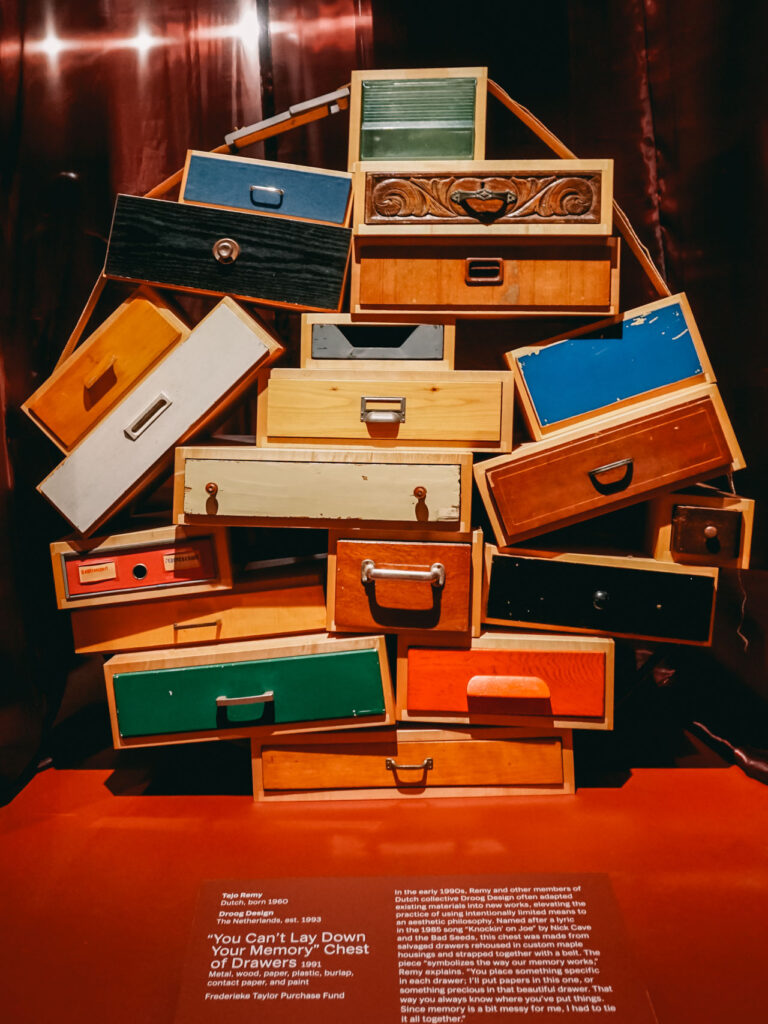
The You Can’t Lay Down Your Memory Chest of Drawers installation by Tejo Remy at MoMA was among the most personal artworks I saw there. Installations often feel distant to me, probably because of how they occupy space and present their themes. However, this one had the power and dynamics of a person’s life arranged into fragmented parts.
In a sense, it’s what we keep, what we hide, what we leave behind, and what we are constantly failing to properly store away. I found it mesmerizing, and I remember returning to see it twice.
One: Number 31, 1950 by Jackson Pollock
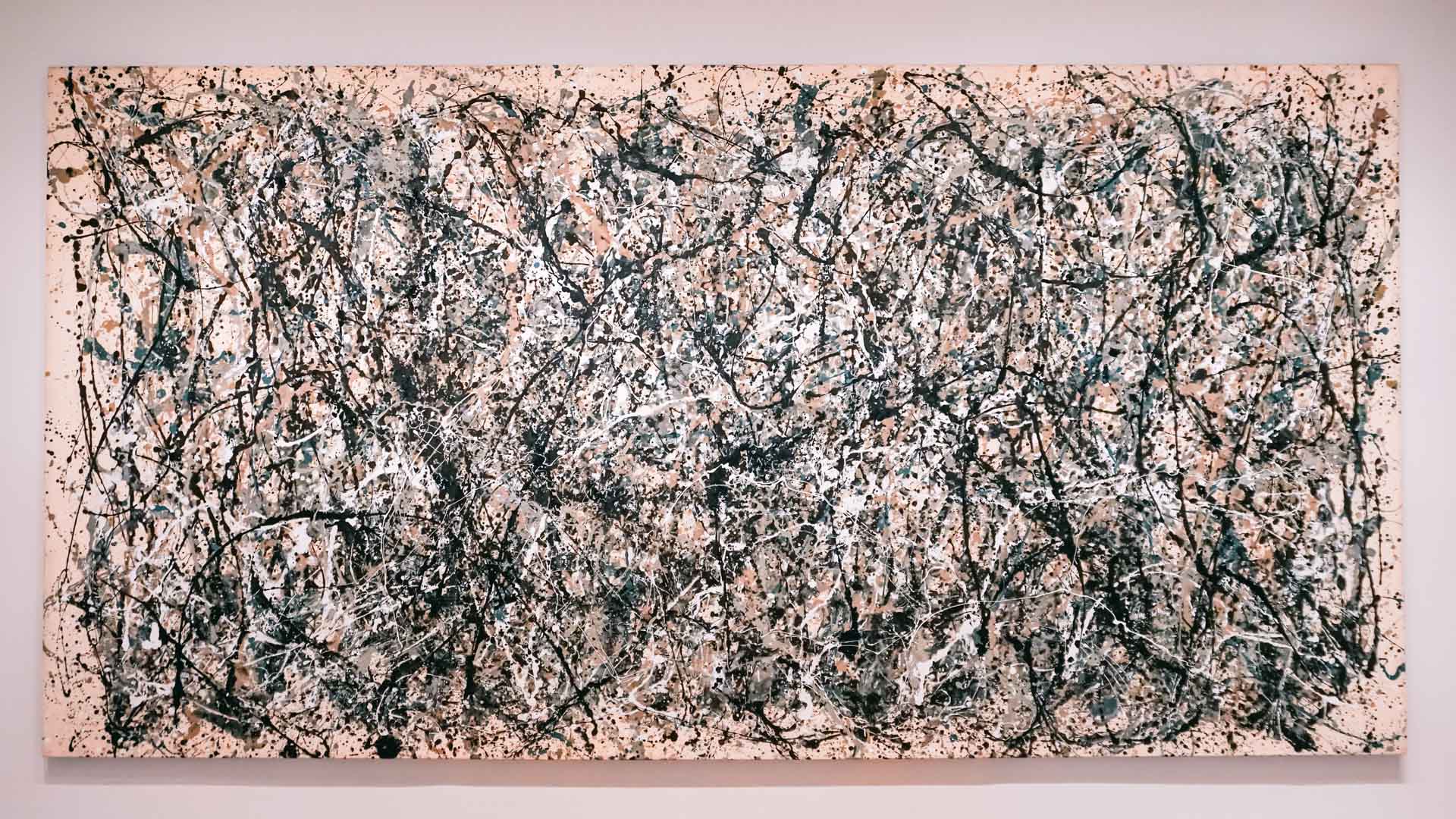
You can’t go to Manhattan and New York and visit the MoMA without reflecting upon a painting by Jackson Pollock, I guess. One: Number 31 was created in 1950 and has the elements one expects from Pollock. I saw his paintings elsewhere and at MoMA, and I had the same impression: they are less chaotic up close. Despite its huge size, this mesmerizing artwork kept me trying to identify what, to me, resembled a large-scale map for quite some time.
Apple Macintosh 1983
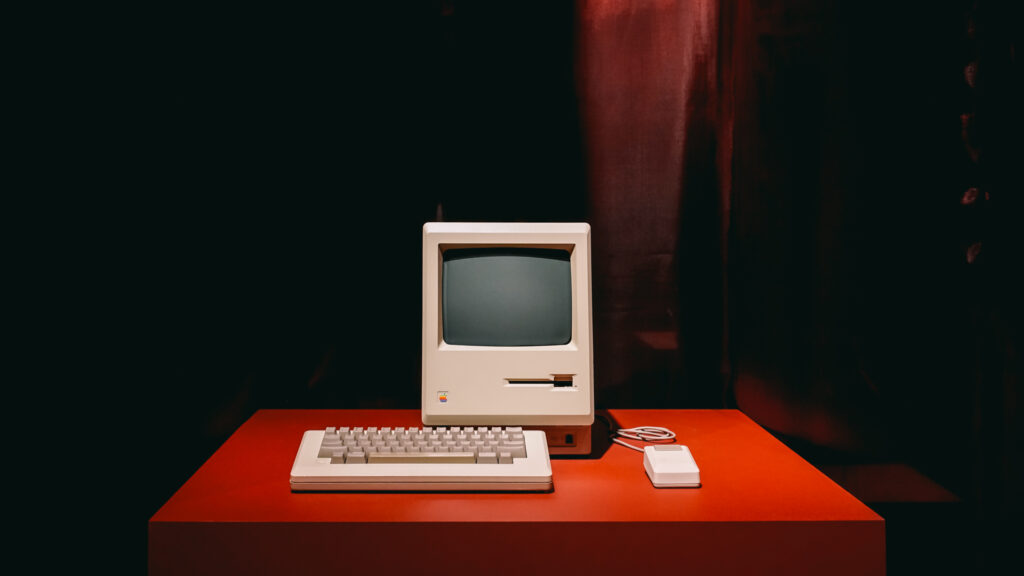
The same goes for the Apple Macintosh 128 K from 1983. I never owned one, but its style evokes memories of the 80s, when computer shapes were identical. It is a sentimental object because these old computers carry the hopes and promises of early personal computers and tech. If I add it to this list, it’s because, for me, it felt like the moment when woven histories, design, and MoMA’s style came together in one exhibit.
Fun fact: Its 128 KB memory means it could store a small JPEG photo from today’s smartphone. That’s it.
Practical notes for your MoMA visit (so you enjoy it more)
If that’s your first visit to MoMA in New York City, I suggest treating it like a place you slide through, rather than a museum you visit from edge to edge. I believe the latter is impossible on a single visit anyway.
It’s better to have a very easygoing plan to avoid feeling overwhelmed: visit one exhibition or see some famous artists you have always admired. That’s how I started, and that’s why other rooms and artworks caught my attention. Actually, that’s how I believe one can see more than one expects.
For peace of mind, I would also suggest visiting early in the morning so you can spend as much time as you wish. Prebook your tickets to avoid queuing and be generous to yourself: if an artwork clicks, spend as much time as possible. That’s what I believe is the true MoMA experience.
Opening hours of the MoMA NYC
The museum is open seven days a week between 10:30 am and 5:30 pm. It’s only closed on Thanksgiving Day and Christmas.
The ticket costs $30, but various reductions apply. You can pre-book your ticket here.
You can see the current exhibitions on the museum’s official website.
MoMA is located at 11 West 53rd Street, Manhattan, New York 10019.
FAQ about the Museum of Modern Art (MoMA) in New York
In the final section of this article on MoMA, I will answer some frequently asked questions about the museum. These are things that I wondered about before visiting the museum, so I believe they will solve some of your questions. If something is not covered, please leave a comment at the bottom of the article, and I’ll make sure to assist you.
Can you take photos inside MoMA?
Yes, you can take photos at MoMA. The usual rules apply, though: no flash and no tripods.
If you’re not allowed to photograph specific artwork, it will be mentioned beforehand.
How long do you need at MoMA?
It depends on how you treat museums. If you want only to see a few highlights, I believe two hours is enough. However, if you like reading labels and spending enough time at the artworks, you will probably need more than one visit.
As a rule of thumb, dedicate at least 2 hours, and reconsider if you need more time when you’re there. And if you do, go for it.
Is MoMA worth it?
100%. If you enjoy modern and contemporary art, the MoMA is a must. Although it is one museum, after visiting it, I believe it’s actually multiple museums. Even if you don’t like visiting museums, visit it anyway for its history, design, and importance in the city’s life.
What are the must-see artworks at MoMA?
This is personal, and that’s exactly why it’s fun. Many people come for the big names (and you’ll find them), but the works that stay with you are often the ones you didn’t plan to see. My list in this article is basically proof of that.
Is MoMA overwhelming?
It can be. The collection is dense, the museum is popular, and you should always expect crowds. As I wrote earlier, pick one room, artist, or exhibition and let the museum surprise you. An exhaustive list of must-sees for your first visit will most likely tire you out.
My visit to MoMA New York: Final Thoughts
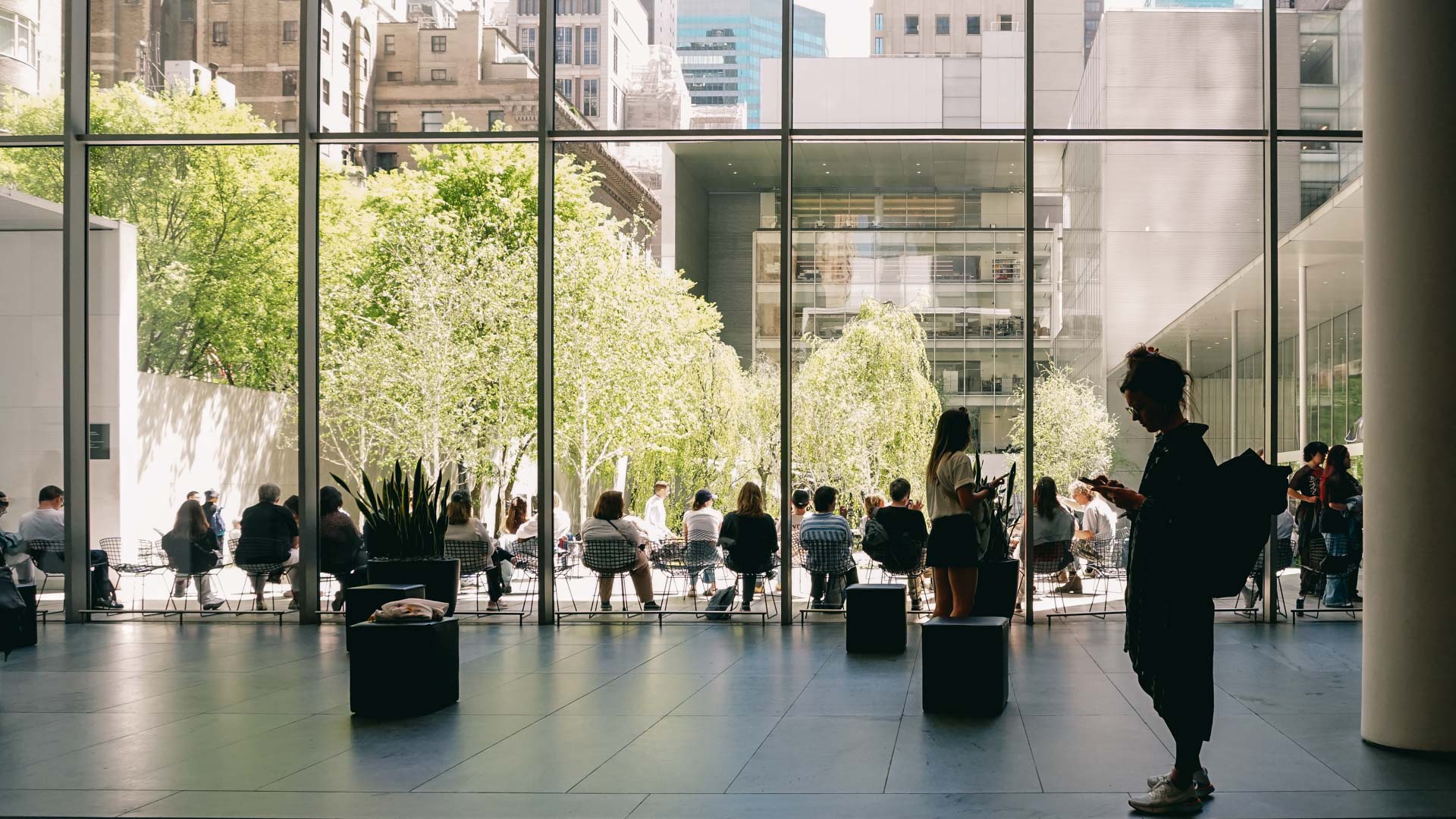
When I left MoMA, I knew that I hadn’t seen everything. And I was definitely not willing to visit the MET the same day; this would have been exhausting and unfair to both museums. The MoMA in New York feels like a new world, one you slowly immerse yourself in before returning to city life. It honestly is too big to summarize.
And that’s why I’m happy to share this article, which features just a few artworks and isn’t a guide to a place you’ll always have to navigate as if it were your first time there. This visual diary of MoMA artworks was the best approach both for a visit and an article. These works stayed with me for months, and I’m sure most of them will stay with me for years.
If you’re creating your NYC itinerary and wondering whether MoMA deserves a few hours or even a half-day of your time, I’d say yes in a heartbeat. It’s not because that’s one of the most famous museums in the world, no. It’s mainly because of the museum’s presence in New York’s life, but also because the variety of exhibits makes art accessible and personal to everyone. The latter might feel bizarre, but this was exactly my impression when I left the MoMA behind and saw, once again, Manhattan’s tall buildings.
More about New York: An NBA game at Madison Square Garden, My NYC Travelogue, NY Easter Bonnet Parade, Guggenheim NYC, The Whitney Biennial, Ellis Island, Where to eat in NYC
Pin it for later
Sharing is caring. Share this article about the artworks of MoMA New York with your friends.