
Last Updated on July 11, 2026 by George Pavlopoulos
Centered on the Beyoğlu and Karaköy districts, the Istanbul Biennial lacks the shimmering atmosphere of the Venice Biennale or the sophisticated touch of the Whitney Biennial in NYC. And that’s a good thing, actually. When I visited Istanbul for its major art event, I also wanted to see how the city had absorbed and incorporated something so big under its skin. While its Venetian counterpart transforms the entire city, the Istanbul Biennial is soaked in the city’s life.
One thing I always appreciate in art events that expand beyond a single venue is the footprint they leave on local life. It doesn’t have to be something always memorable or grandiose; it can also be subtle or humble. Art might not be the most obvious element of Istanbul, yet the Biennial offered a fascinating layer by placing art not in fancy museums but in everyday locations. The city, I thought, accepted this challenge gracefully.
These were, more or less, my thoughts after spending an entire day strolling through the Istanbul Biennial venues, seeing art up close, and observing the city’s rhythms. What you will see and read below captures these sentiments exactly: the discreet yet influential presence of art in one of the most chaotic yet mind-blowing cities I’ve ever visited.
*Some links are affiliate links. It means that if you buy something, I might earn a small commission at no additional cost to you.
Istanbul Biennial: The Three-legged Cat and Other Tales
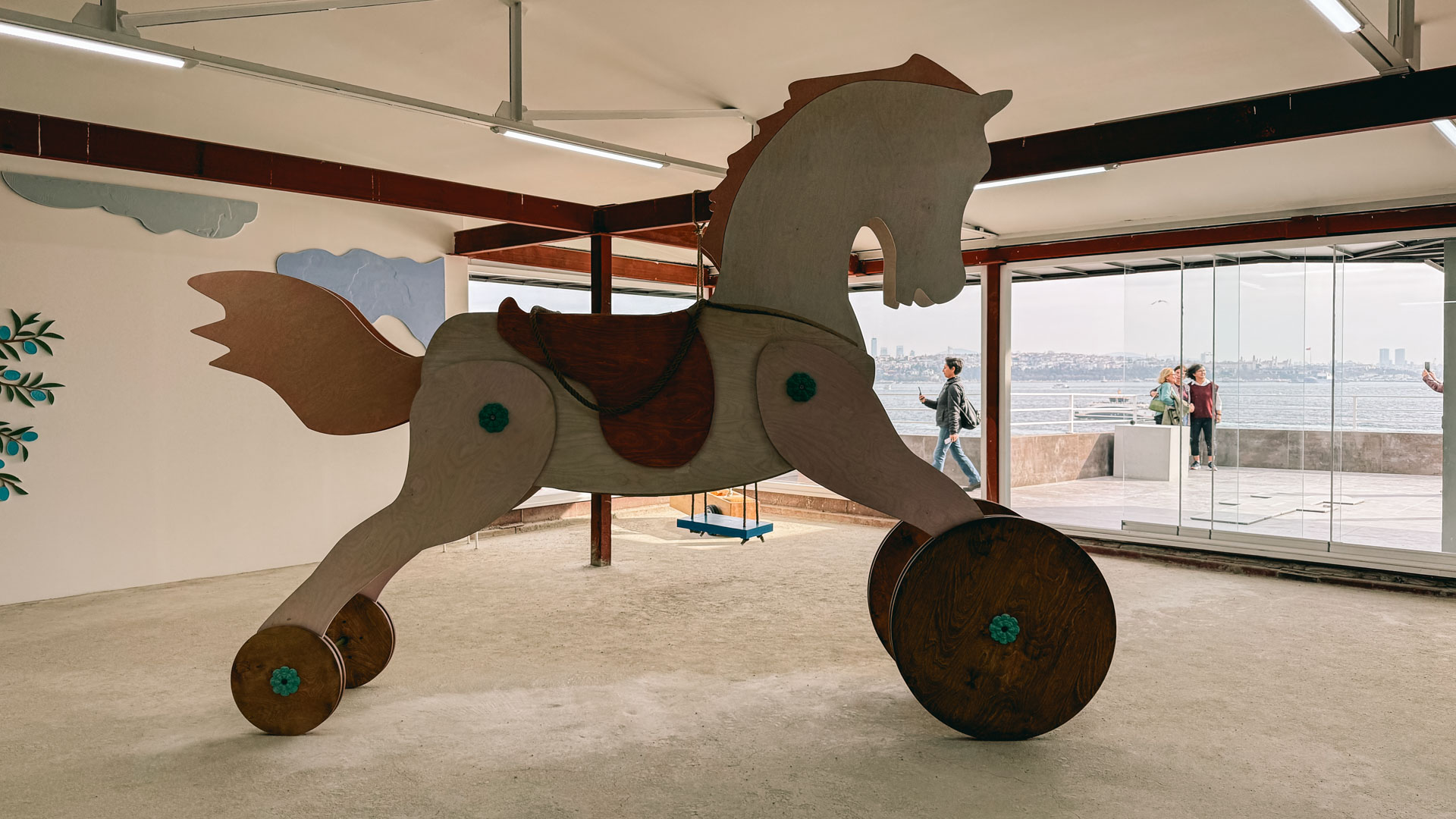
Beyoğlu and Karaköy lie at the heart of Istanbul and are the epicenters of local life. They consist of steep side streets, narrow alleys that cars still manage to navigate, nightlife, sea views, stray cats, and art. When I checked the Biennial’s venues on the map, I drew a large circle and looked for a place to stay within it. It was pretty easy to find a place to stay in October, and I booked a room at the Hammamhane Hotel.
Everything was within walking distance from there. I strolled around the Istanbul Biennial venues and ended up seeing more fragments of Istanbul than I expected. For a traveler, the combination of art, street life, and waterfront views already justifies the journey, I often thought.
The Former French Orphanage and its flourishing garden
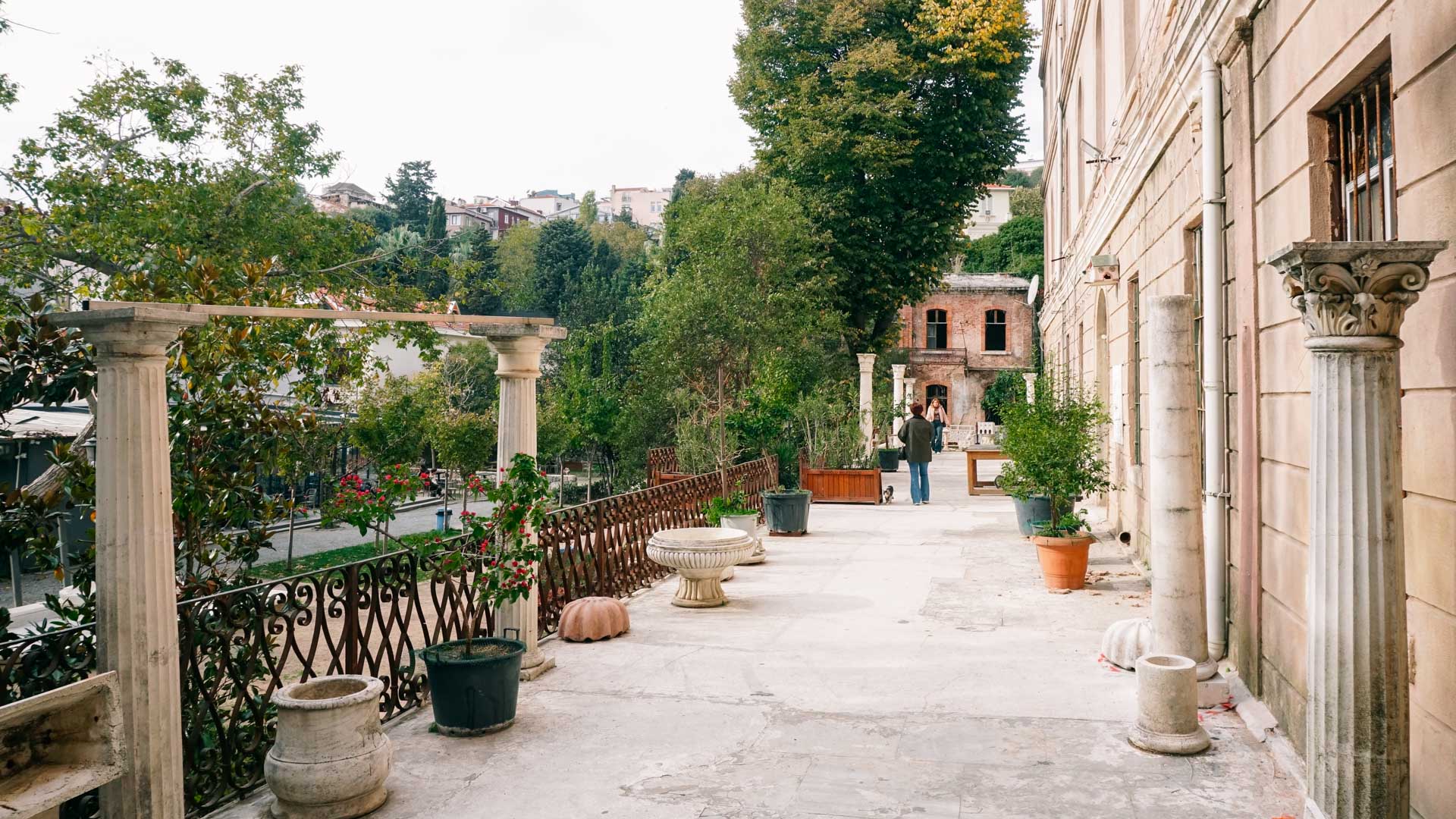
Tophane Mekân is the garden of a former French orphanage founded in 1869. Once a place featuring wells, terraces, and running water, the building lost its significance slowly and remained off the city’s radar for decades. It was only recently that the Beyoğlu municipality reopened it, and on the day I visited, I could feel a small drawer of memory breathing alongside the busy streets.
Its weight is undeniable, and the rundown building might feel depressing to some, but full of old-time charm for everyone, I think.
Khalil Rabah, “Red Navigapparate”
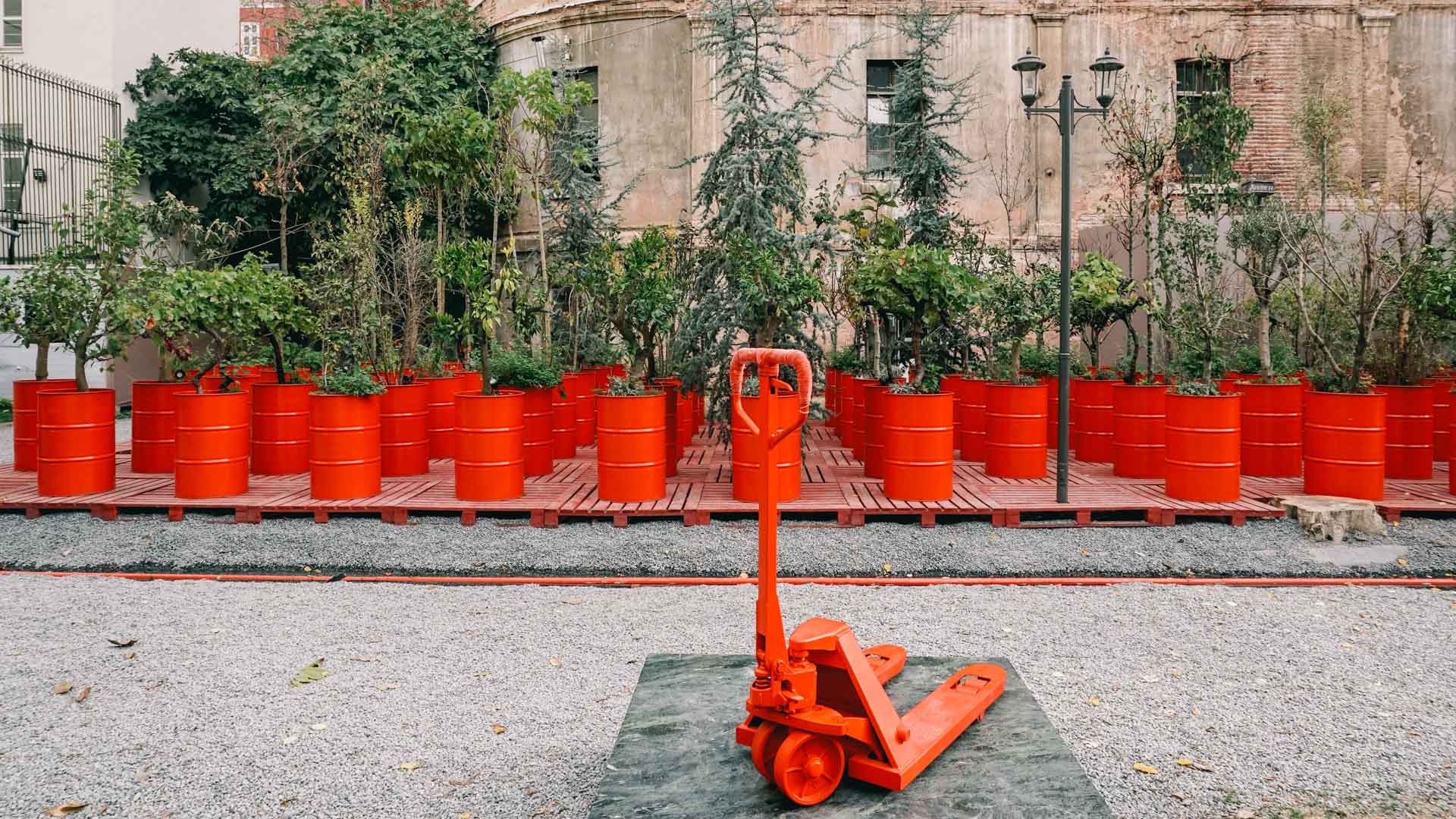
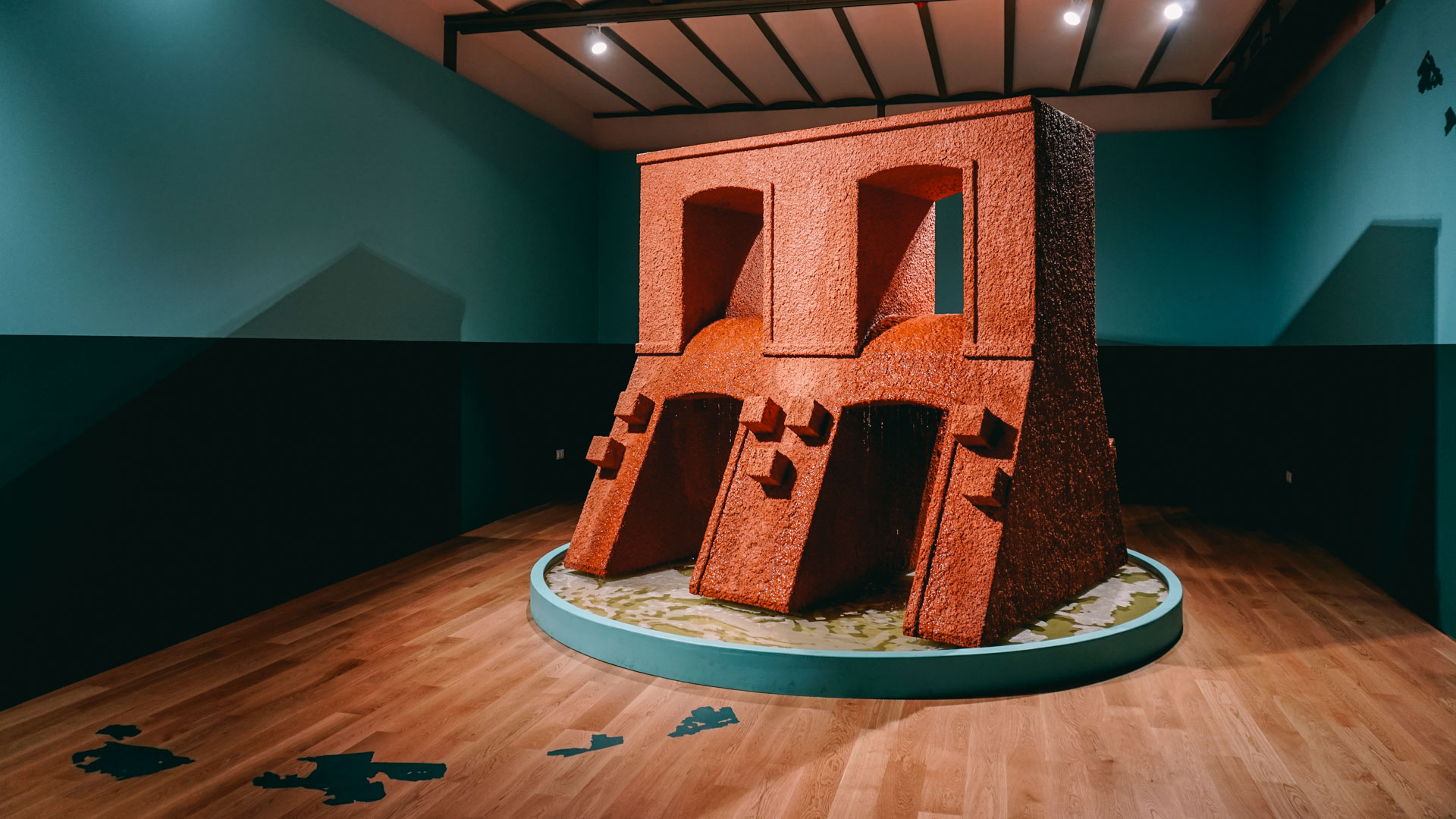
In its garden (you are not allowed to enter the building), Khalil Rabah presented the Red Navigapparate. All you see is a thin water channel and a red pipe that seems to divide the space. The red barrels with trees seem to be on hold. This is a powerful installation that dictates your movement and slowly takes control of where you stand, what you see, and how you interact with the entire garden. In a way, it dictates to you what kind of witness you want to be or become.
The Garden of the former French Orphanage was hands down the most impressive setting I saw in the Istanbul Biennial. And I’d love to discover more art in such locations, not just in Istanbul, but everywhere I travel.
Zihni Han and the Bosporus vistas
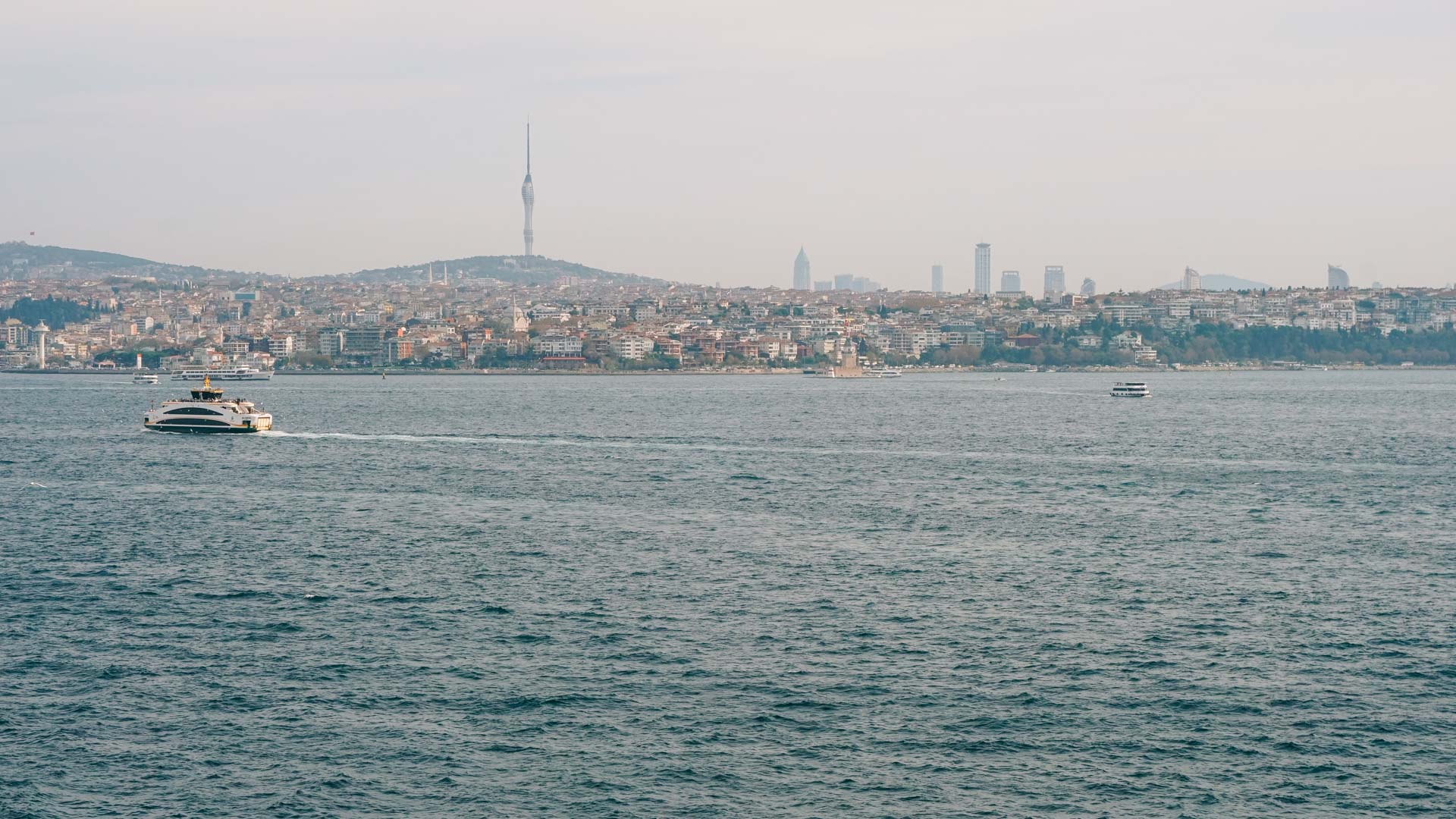
Initially used as the HQ of a shipping company, Zihni Han is located in one of the Bienal’s most impressive venues at Tophane. The Bosporus vistas from its top floor are stunning, and there’s a lot going on across its floors. I think this was the busiest spot at the entire Biennale, and it was hard to keep up with everything. While this is the signature location of the Istanbul Biennial, I often felt distracted.
However, one artwork stayed with me.
Elif Saydam, “Hospitality”
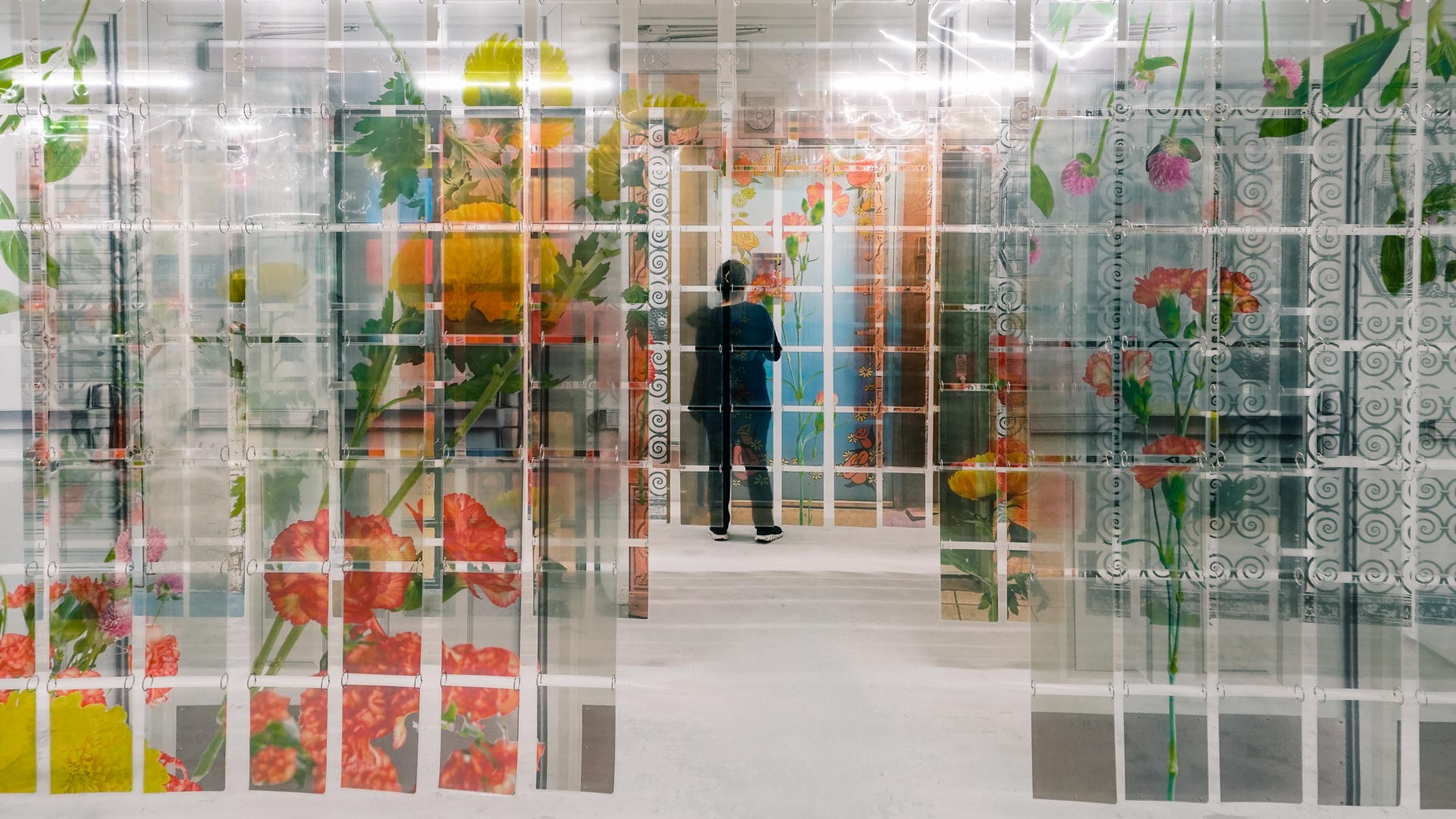
Elif Saydam’s Hospitality seems modest at first glance. It consists of laminated plastic sheets, linked with metal binder rings, hanging like layered curtains. Shortly after navigating through it, though, it becomes a narration about thresholds. Those thresholds seem fragmented: what you’re allowed to see, where you’re allowed to pass, and what must stay behind closed doors or curtains.
In a rather abstract sense, Saydam’s work reminded me a bit of the Language/Text/Image exhibition. The artist plays and at the same time reflects upon the word hospitality itself: to be a host, a guest, a stranger. Under this prism, the interior seemed “double” suddenly, and I felt invitation and refusal simultaneously. It’s as if the installation raises a voice for minorities and addresses who belongs here and who is excluded.
Meclis-i Mebusan 35 and the flow of history
Meclis-i Mebusan 35 is a building that once hosted Studio-X Istanbul. One could call it an urban lab that always focused on architecture and politics. The 2025 Istanbul Biennial occupied only its first floor, but it seemed enough to me to convey a message through the impressive installations I saw. It’s about the flow of history and how its former use still carries a strong vibe.
Pilar Quinteros, “Working Class”
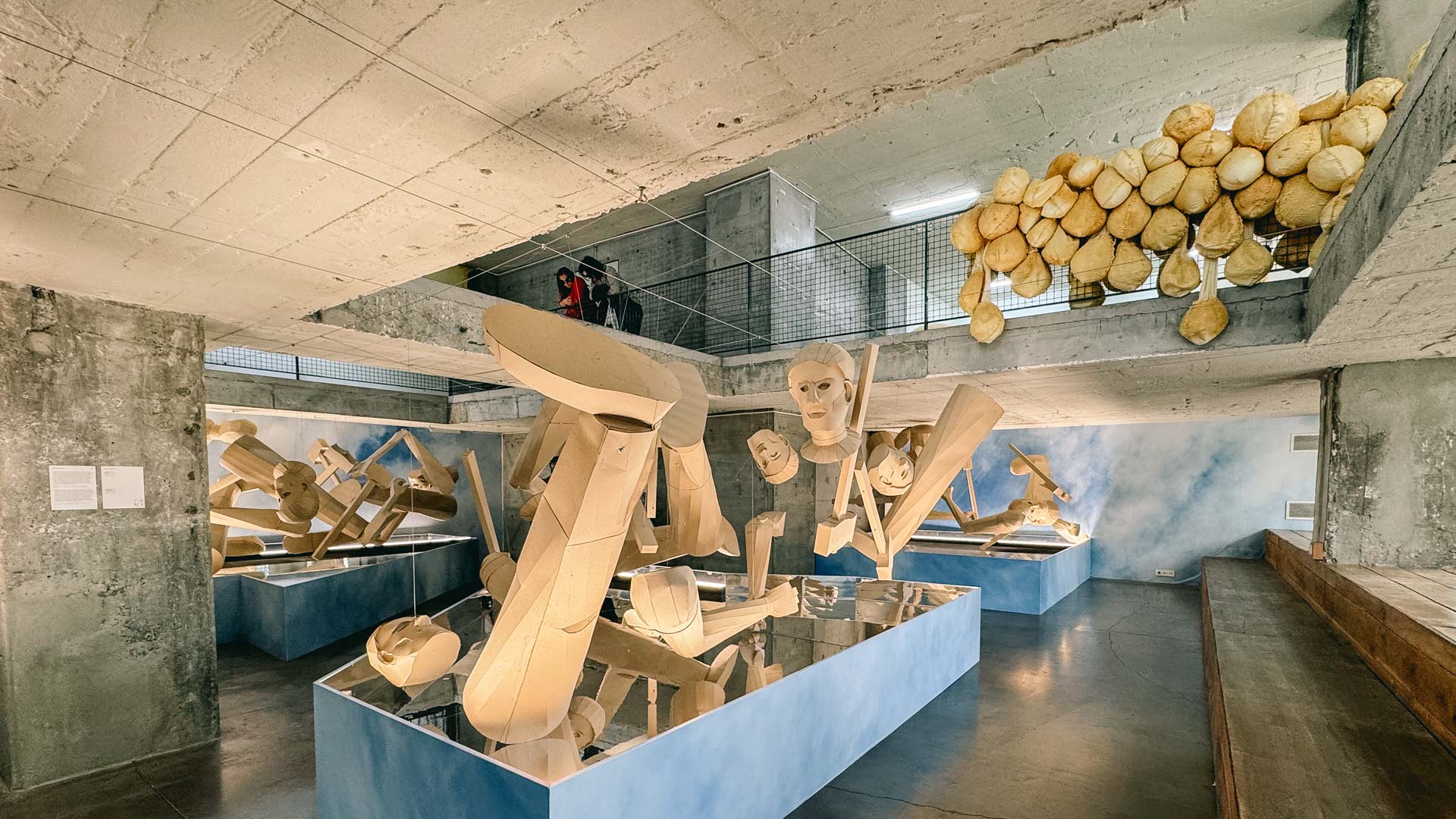
Quinteros uses a vandalized public monument as a starting point. The Worker (İşçi) is a sculpture that was so hated that it was reduced to a torso. I liked Quinteros creative approach: she didn’t repair it, she just let it fall apart again and again. While the documentary that accompanies it feels at times staged (or somewhere between a documentary and a mockumentary), the disassembled sculpture tells a story of persistence and public memory. I found it truly unique and inspiring.
Eva Fàbregas, “Exudates”
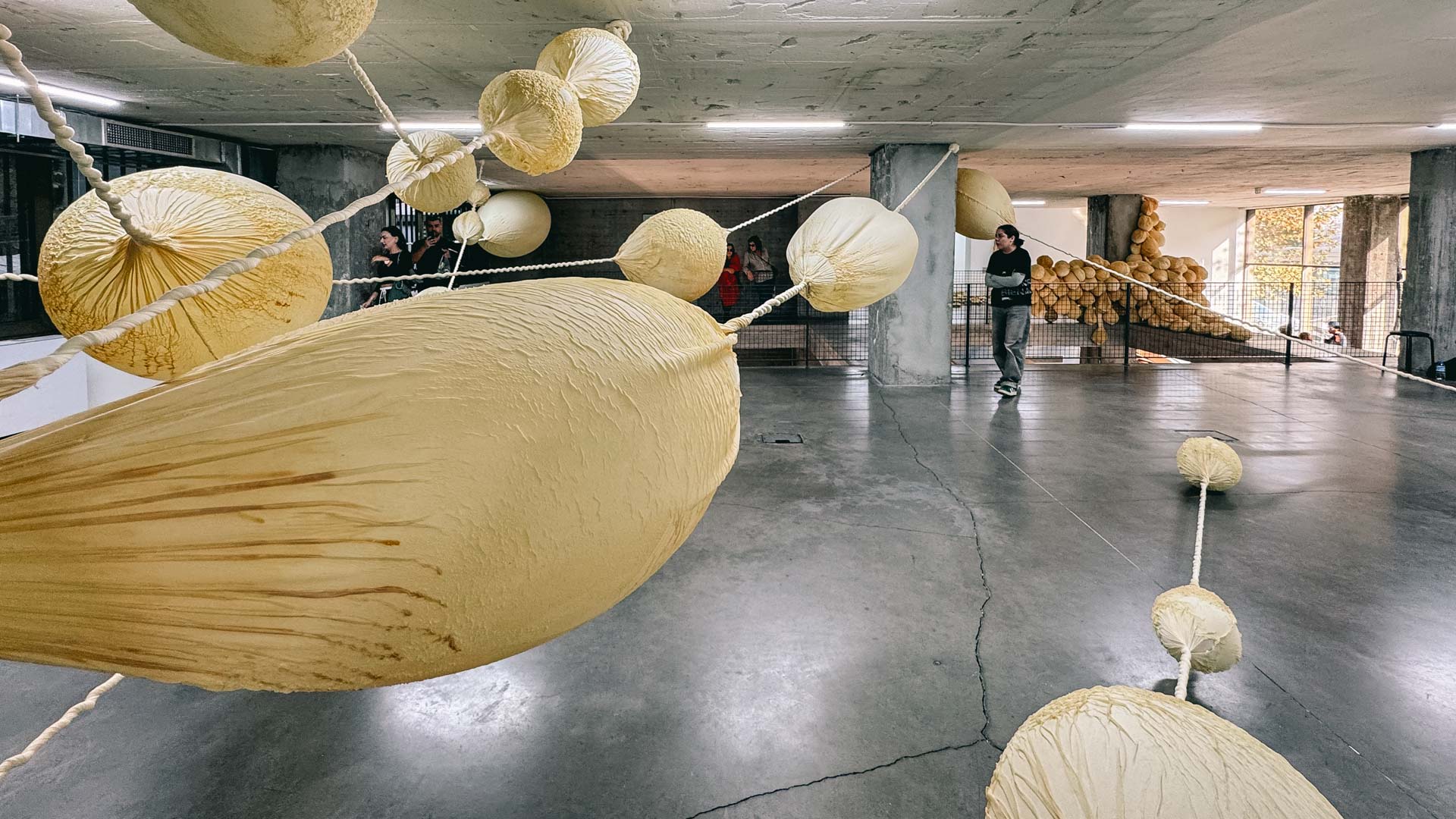
This one was mesmerizing. At first, it felt pretty basic, but the more I explored it, the more introverted it became. The shapes resembled body parts, but not directly; it was more abstract than it looks, and it reminded me slightly of the artwork at the French Orphanage, in that you will inevitably be told how to navigate it.
At the Cone Factory
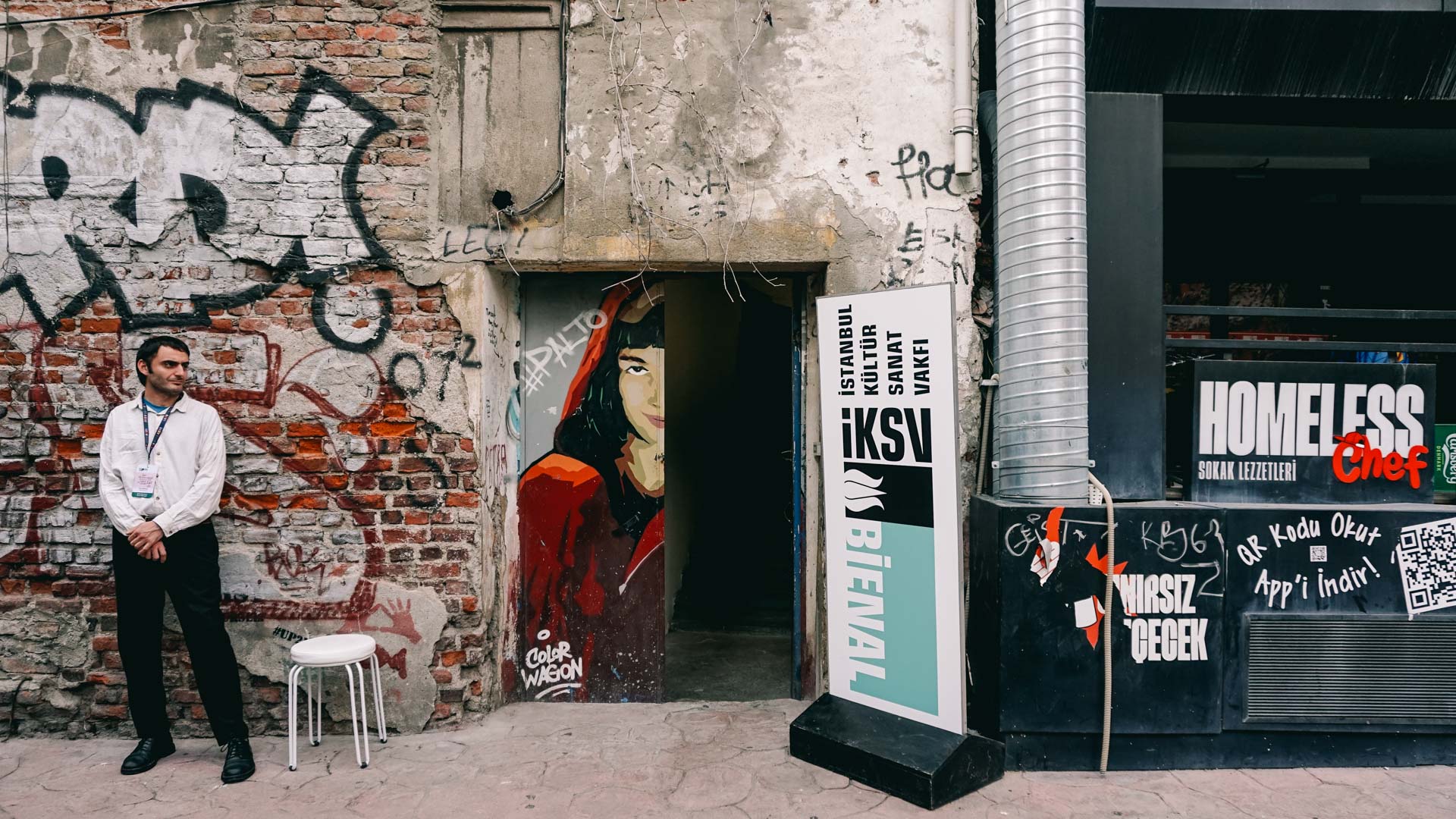
Tucked into Karaköy’s backstreets, the Cone Factory kept its construction elements intact: brick (with graffiti), iron doors, a small entrance, and two floors. Once an ice cream cone factory, the building became a space that obeyed Istanbul’s needs: sometimes a market, other times an exhibition hall or even a music studio.
However, I felt that the place was saved under the Istanbul Biennale: it is as it refused to belong to a relatively gentrified neighborhood and remained a tiny cultural hub.
Claudia Pagès Rabal, “Five Defense Towers”
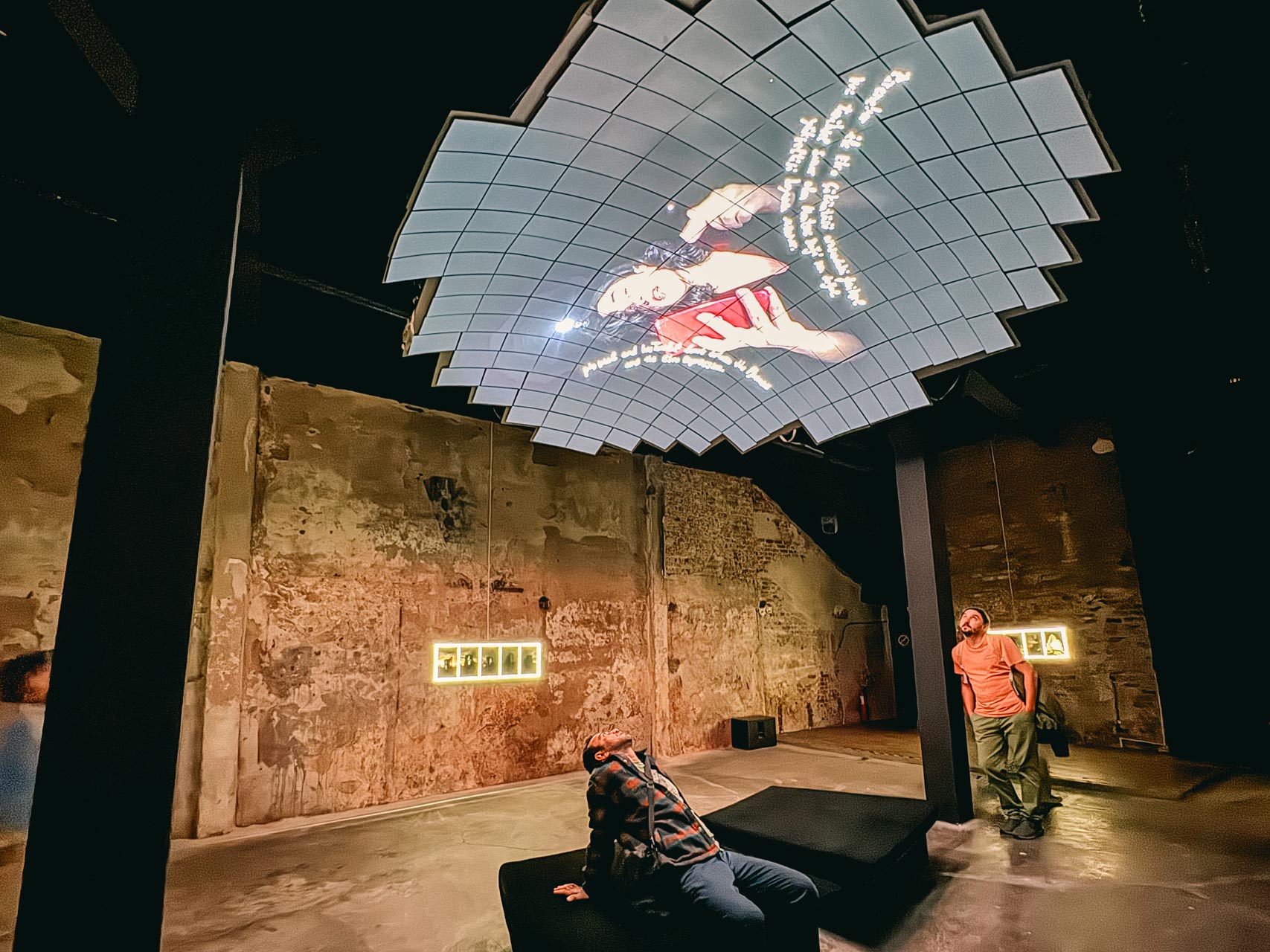
Dark. Impressive. These were my first thoughts. And then: “How can I photograph this?” I had the wrong camera lens with me, so I had to rely on my iPhone as a tool for art and travel photography.
I think I surmised straight to the charm of Five Defense Towers. One has to lie back and look up at an LED screen on the ceiling. It was unsettling, like the Panopticon: a 360° film with a simultaneous presence, precision, and (somewhat) tenderness. I honestly couldn’t tell if it was about language or surveillance, and I found it beautiful. It’s as if I were called to walk around it to grasp its meaning. But walking around felt puzzling: was I observing or being observed?
Galeri 77 and how to preserve wine and letters
Located on Galata Wine Dock Street, this late-19th-century building, which once stored wine for Istanbul’s Greek community, was transformed into a venue for the Istanbul Biennial and instantly became one of my favorite locations. It spans four floors, and on the top floor, I saw one of my favorite artworks, second only to the one I saw a few minutes later across the street.
Dilek Winchester, “410 Letters: On Reading and Writing”
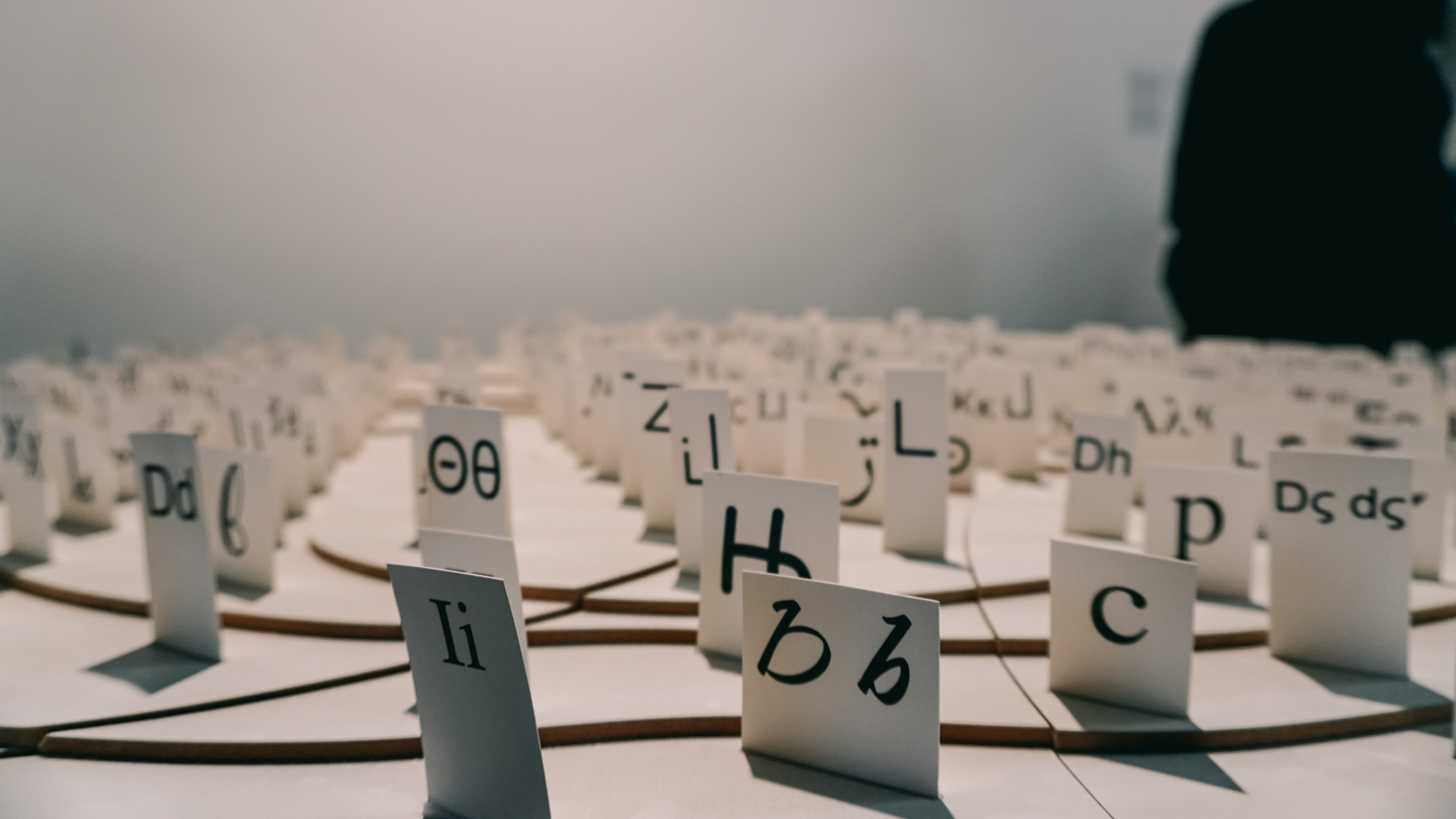
I am a writer, and I have a thing for words, so it didn’t catch me by surprise. Dilek Winchester’s 410 Letters was my second-favorite artwork in the Biennial of Istanbul. It’s all about letters and alphabets, but also about shapes and how (if I might say so) they shape politics.
Language engages, language redesigns, but it can also erase everything. And here it’s actually sound that turns everything into a bodily experience, paired with scattered letters of various alphabets (Greek, Arabic, Latin, Albanian, Cyrillic).
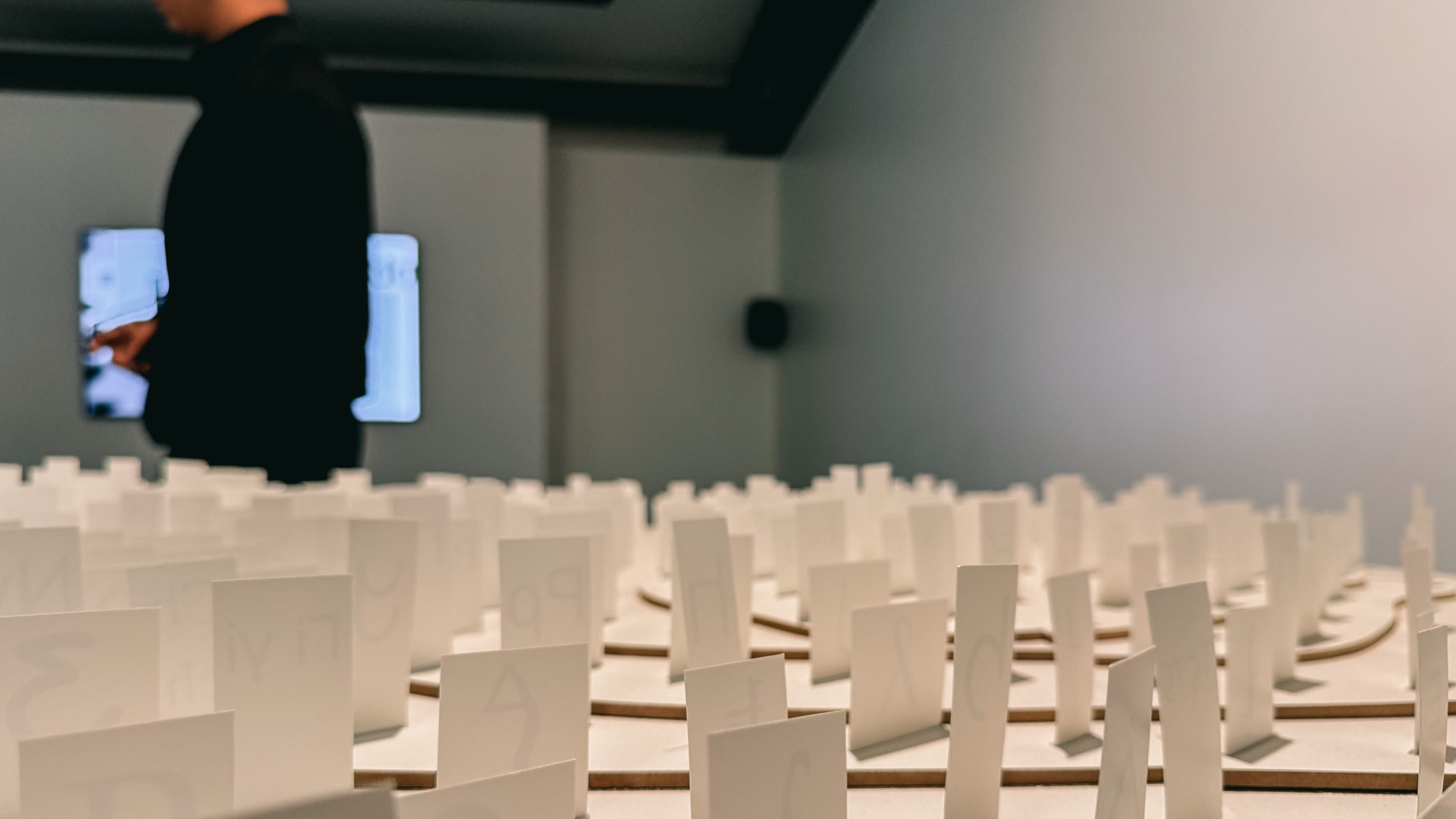
410 Letters was as if I had to contemplate how powerful language is, because it can serve as a selective tool for remembering, for forgetting, and for what survives or not. Fantastic.
Muradiye Han and a warning for natural resources
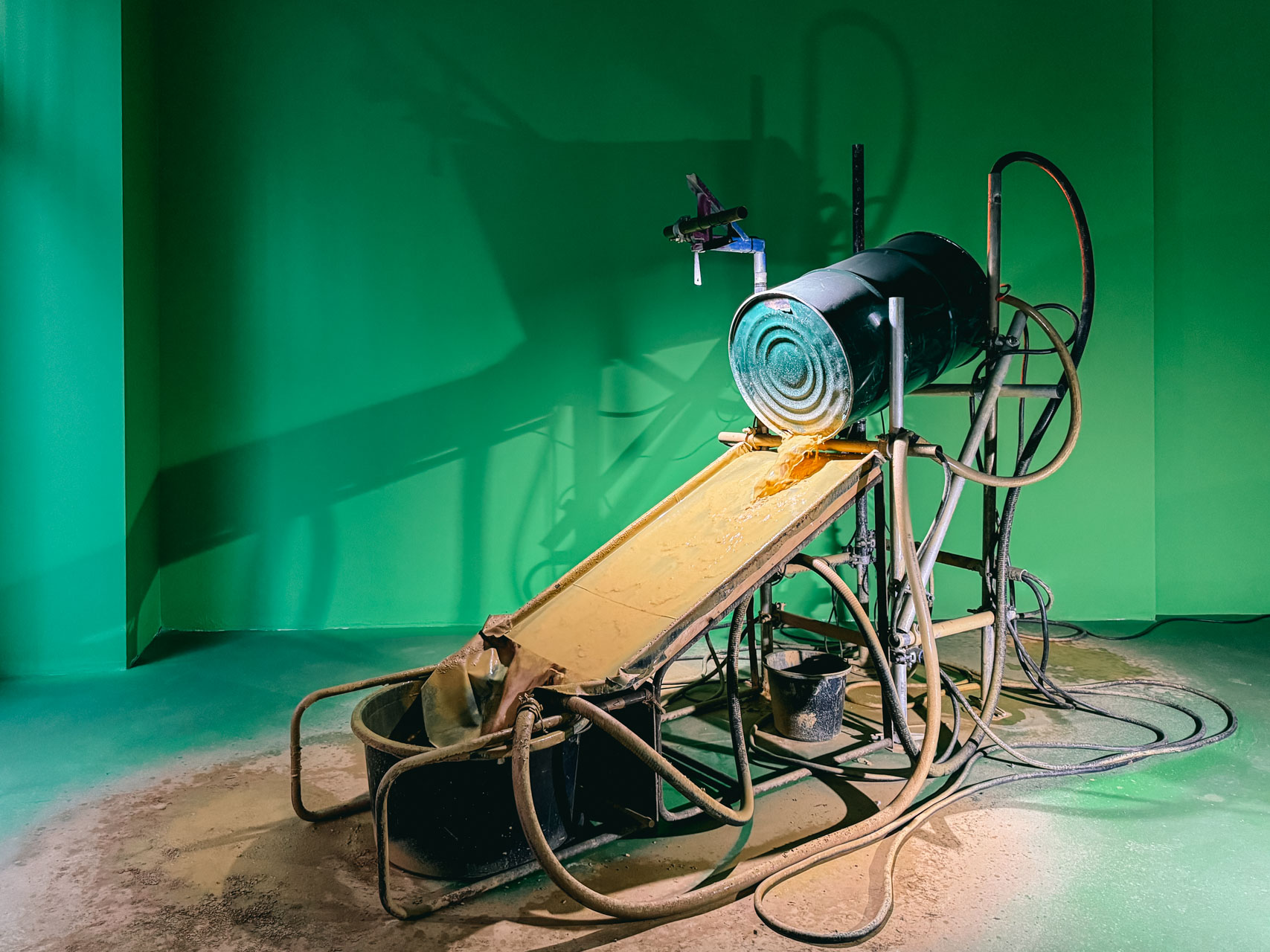
Located just across the street, Muradiye Han is a building that has lived many lives, which is the case with most Biennials’ venues. That’s part of its charm, and its history goes back a century, when it served as a trading house and afterward as a guardhouse for the French forces during World War I. However, it was the installation inside that fascinated me even more than the building itself.
Ana Alenso, “Lo que la mina te da, la mina te quita / What the Mine Gives, the Mine Takes”
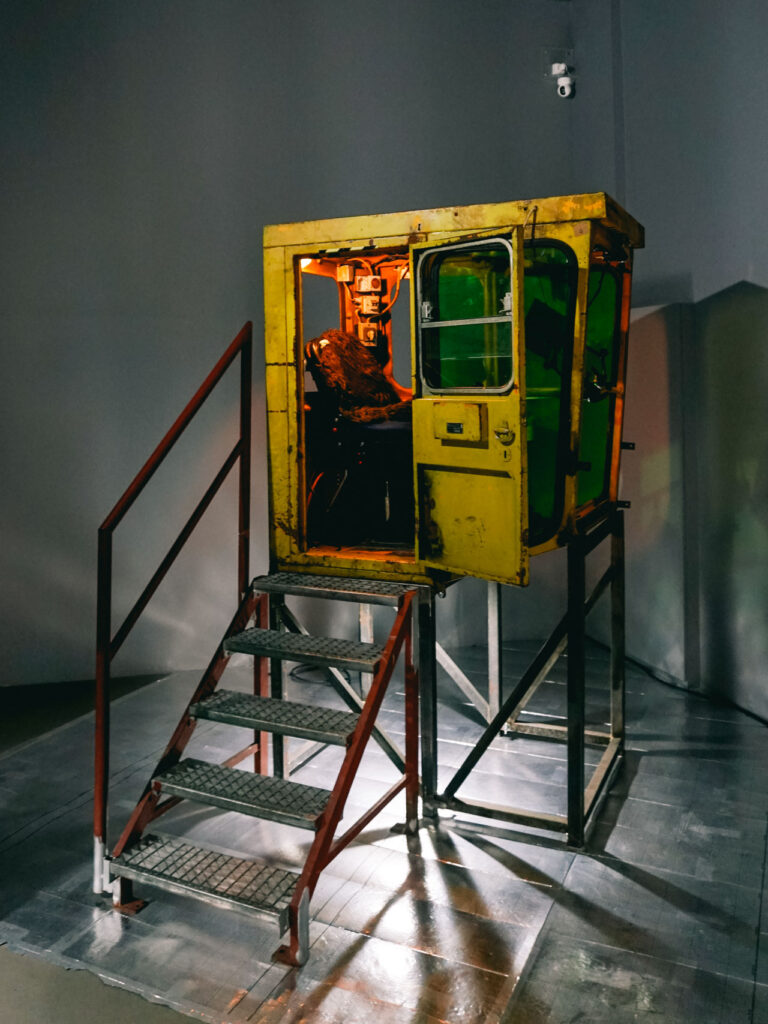
Alenso follows gold mining in Venezuela and the country’s Amazon regions. These spots cry out for help and attention: they’re areas where technology, physical damage, and labor walk hand in hand. It was a powerful warning about natural resources and human presence, and Alenso stripped down the manmade elements and presented them with great artistic vision. She constructed hoses, pipes, buckets, and everything rustles inside the room.
It occupies the ground floor of Muradiye Han, but honestly, when I exited, I felt a shift inside me. It was the most political installation I’ve seen in a while, and not just in Istanbul’s Biennial. Chapeau.
Elhamra Han and the rush of everyday life
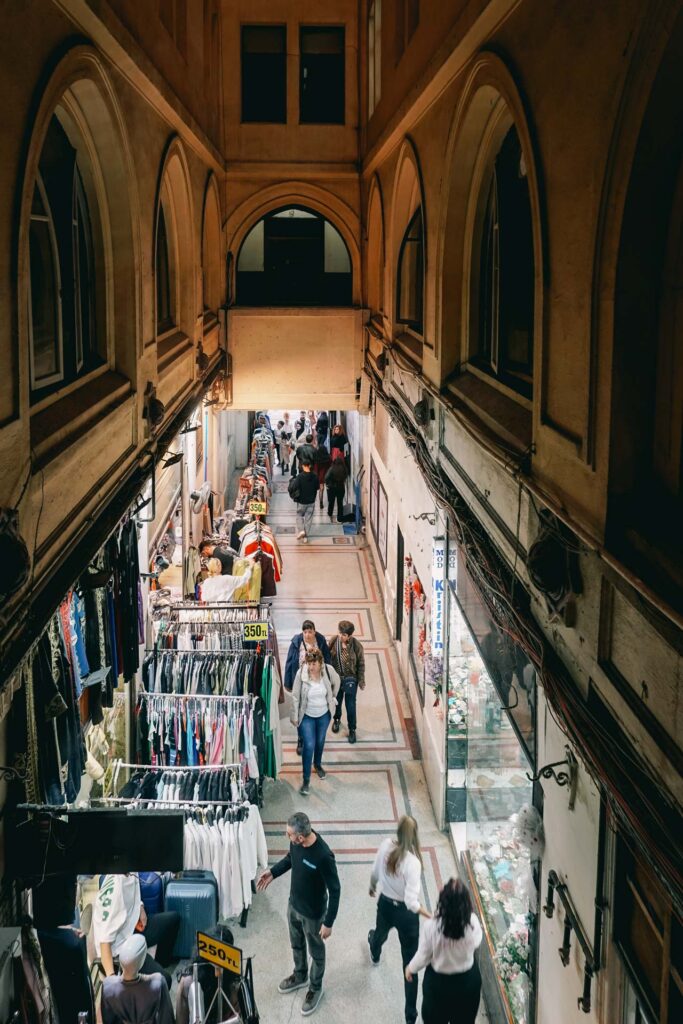
Istiklal Avenue is one of the busiest city arteries and, as the locals often described it to me, “the most well-known street in Turkey.” Elhamra Han rises six floors above the rush of Istiklal and the perpetual come-and-go of the historic red tram. The building has transformed itself as much as the city: it was a theater in 1827, then became the Palais de Cristal, and later a cinema and a commercial establishment before the big fire of 1999.
Nowadays, though, it feels like an arcade with shops on the street level and offices on the top. The second floor was one of the Istanbul Biennial’s venues, housed in two apartments.
Şafak Şule Kemancı
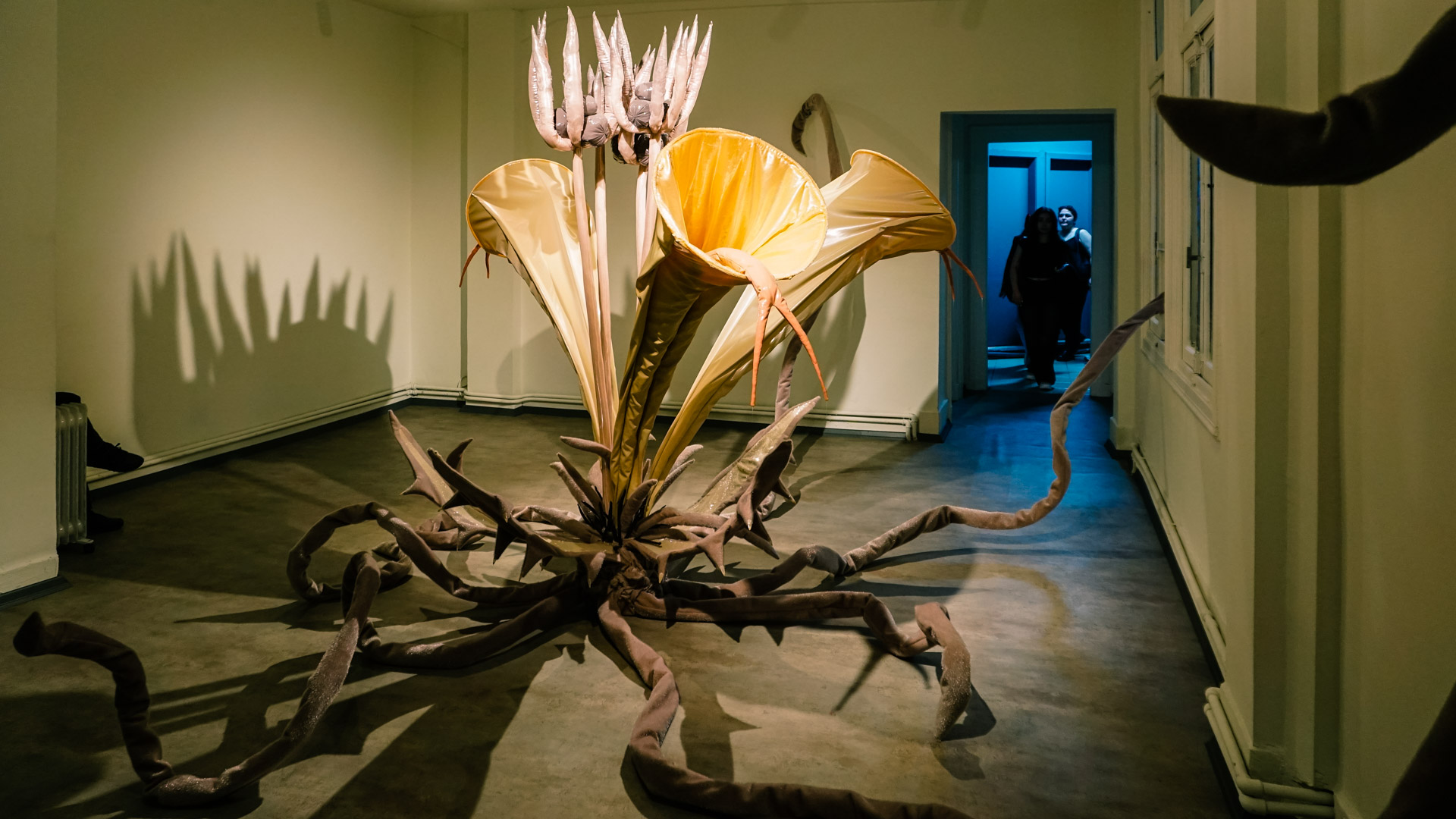
Şafak Şule Kemancı created a monumental sculpture that is hard to classify. It resembles a plant and an animal and seems soft. Yet the more you observe it, the less steady it seems: it seems to spread and search for a way out, like a small ecosystem trying to expand.
I perceived Kemancı’s sculpture as a blurry line between the wild and the cultivated, a metaphor for being human and not being one. On the bottom line, I thought this was about being (or making) a shelter for others or simply denying it.
The Galata Greek School
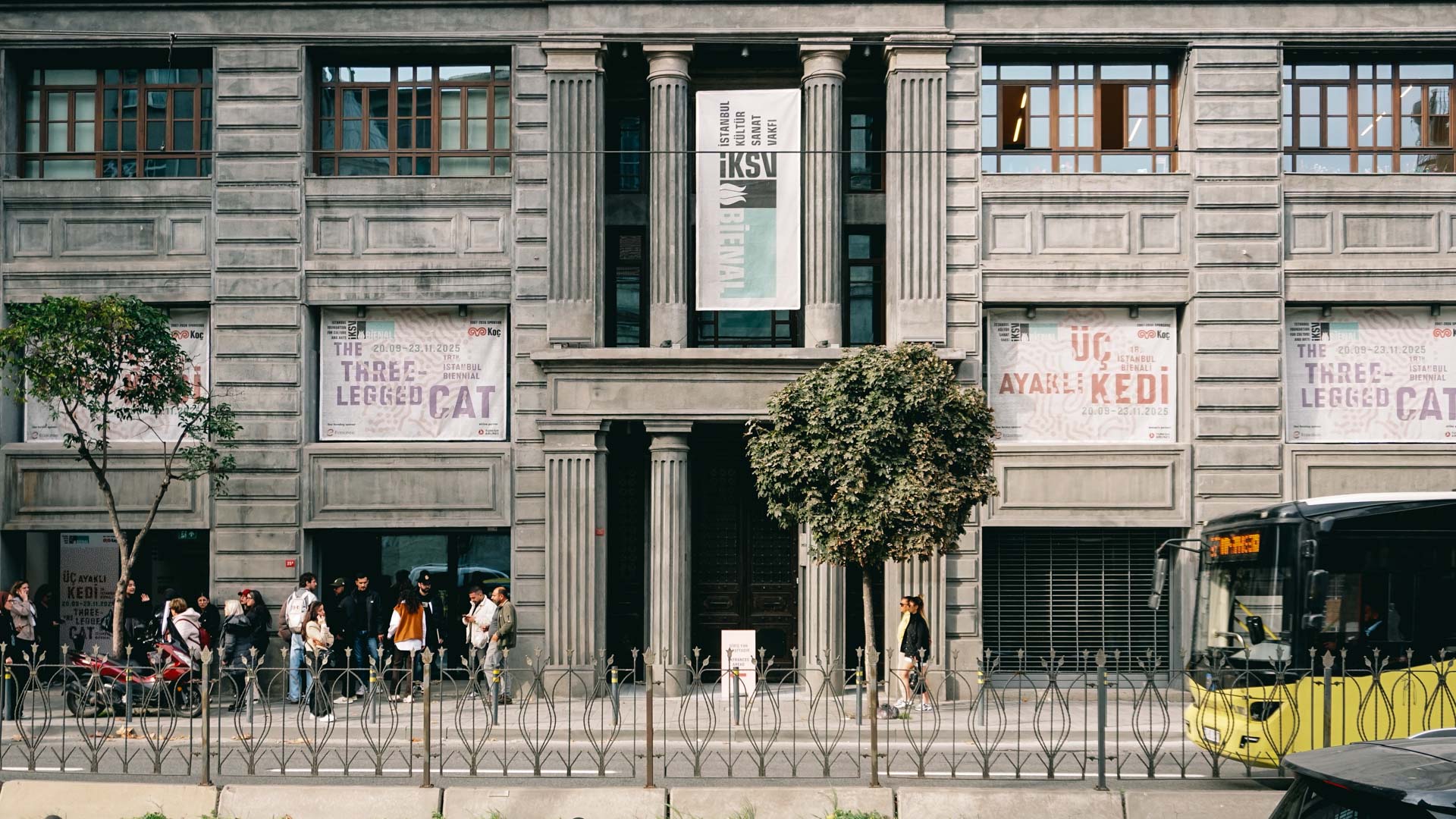
The Galata Greek School is a 19th-century neoclassical building that served the Greek community of Galata until it closed in 1988. After its closure, it became a cultural hub and a steady companion to the Istanbul Biennial. While the interior still retains the structure and logic of a school, the art clearly transforms it.
Lungiswa Gqunta, “Assemble the Disappearing”
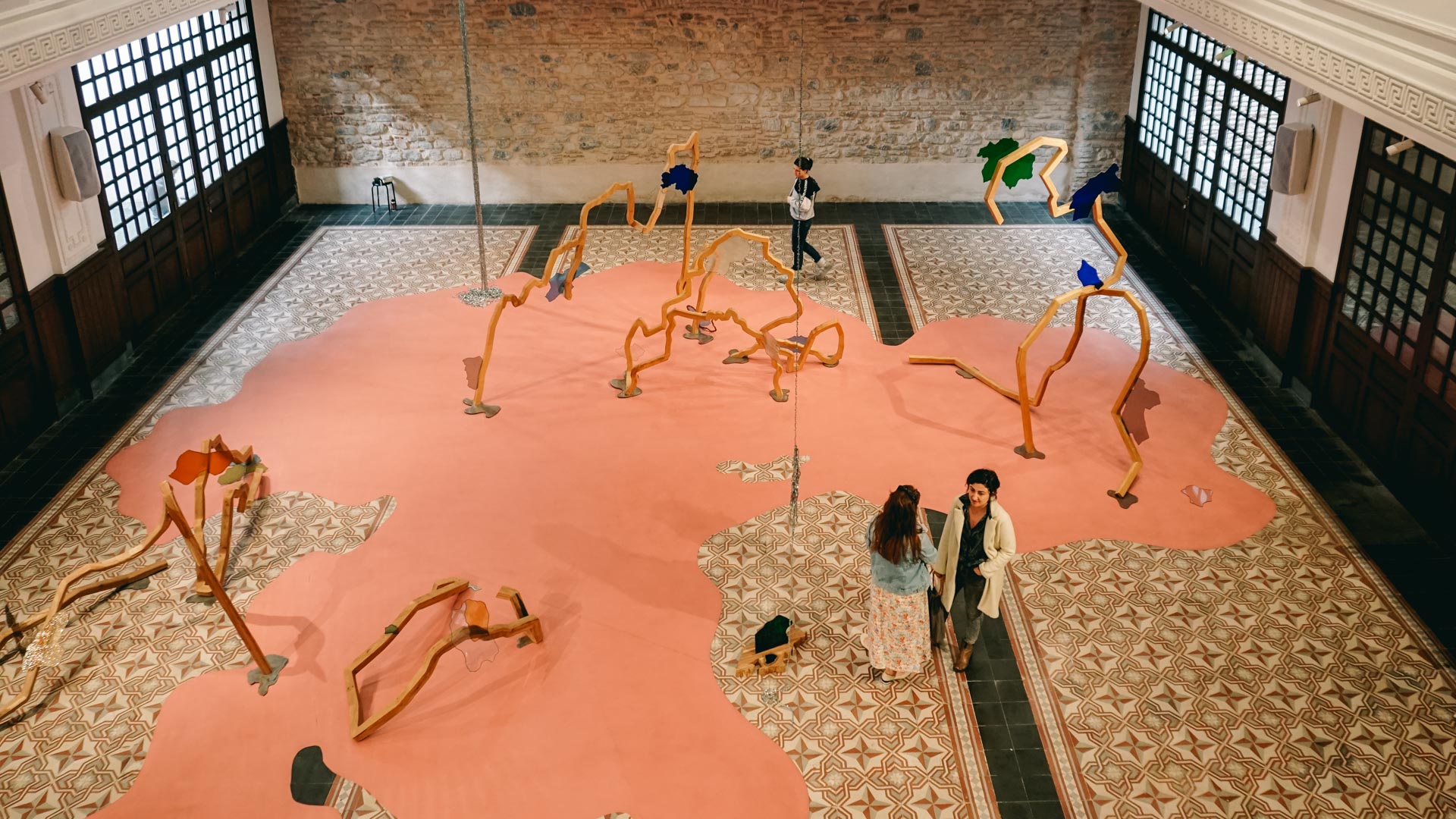
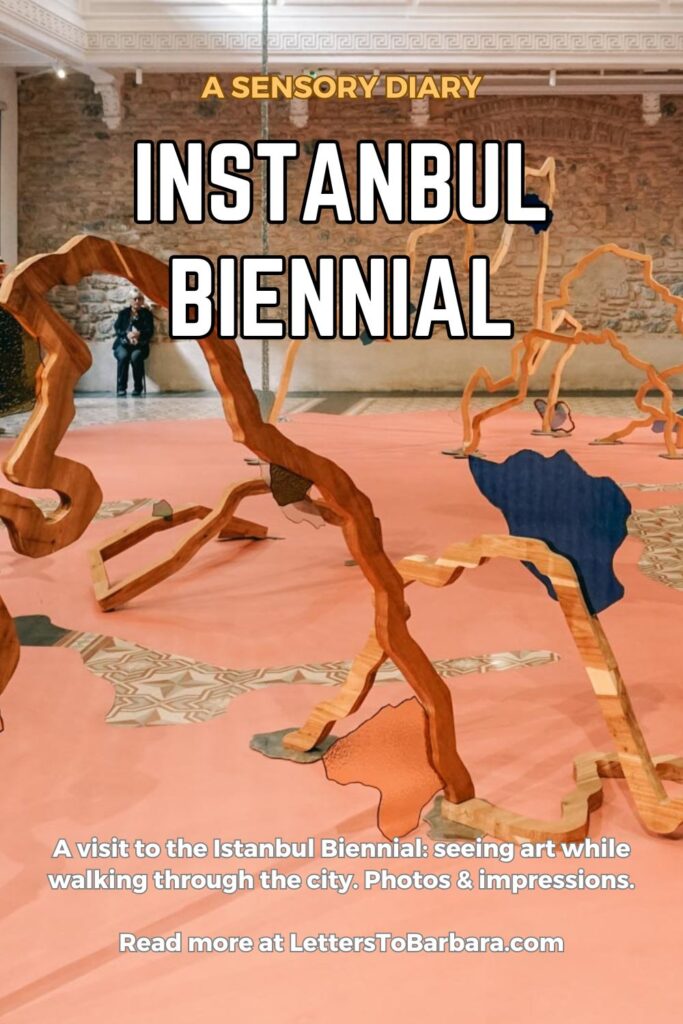
Occupying the ground floor, the Assembly of Disappearing is eye-catching, and I believe among the most photographed installations of this Biennale. Wood, stained glass, and wire create a labyrinth in the terrain. The elements feel scattered at first, but with a second look, it has more of a resemblance to a landscape after severe damage. I perceived this as a piece about resistance and about the challenging task of something that can be repaired.
While I’m still not sure if this was an installation about spatial memory, I was truly mesmerized by its fragmented approach. And here’s another detail that made a difference: the museum guards allowed only a few people in at a time. I don’t know if this was an artist’s request, but it created an urgency and a sense of alarm, as if entering no man’s land with care.
Final notes about the Istanbul Biennale
Subtitled the Three-legged Cat, the 18th Istanbul Bienal was scheduled to be presented in three installments: 2025, 2026, and 2027. However, in late December 2025, the 18th Biennial was concluded after running only its first leg. That being said, the two other legs of the Biennial (or the cat) will never be presented.
While this is an unfortunate development, I must admit I’m extremely glad I was able to attend the Istanbul Biennial. As you can see from my Biennial notes and photos, it featured high-quality art and memorable exhibits. In addition, it was presented in a unique way, and unlike other art fairs and Biennales, the city played a pivotal role. Beyond feeling a layer beneath the city’s fabric, the Biennial became its own voice, declaring its presence in Istanbul.
Obviously, while this article can serve as a guide to seeing the Istanbul Biennial in one day, that was not its purpose. By writing it, I wanted to reflect on what I saw, how I absorbed the art in Istanbul’s bustling metropolis of 16 million people, and to share my notes and visual diary.
The Three-legged Cat wasn’t, in a sense, concluded, but kudos to the curatorial team and the people who worked on it for bringing to life a major art event and presenting two Istanbul neighborhoods, Beyoğlu and Karaköy, in a new light, as shiny as the Bosporus.
More about Istanbul: The Museum of Innocence, The ferry from Karaköy to Kadıköy
Pin it for later
Sharing is caring. Share this article about the Istanbul Biennial 2025 with your friends.