
Last Updated on March 21, 2026 by George Pavlopoulos
Over the years, I have only visited ITB Berlin as a regular visitor. This time, though, I decided to attend Berlin’s tourism fair as a travel blogger. With a fresh media kit in my smartphone, I headed to Messe Berlin with a simple question in my mind. Was this huge travel fair really worth it for someone like me, a rather introverted long-form travel writer, who feels more comfortable with travelogues, neighborhood guides, and museums, and enjoys his loneliness?
Beyond that, I visited ITB Berlin to understand how the travel industry works from the inside. While I knew this was a B2B event, I wanted to see whether tourism boards still had space for what I do. I also wanted to know what one word really meant: collaboration. Was this translated into paid editorial content, hosted trip, social media exposure, something in between, or nothing close to these?
What I discovered at the travel fair was more complicated. Sometimes it was also confusing, but other times it was more useful than I expected. If you are a travel blogger wondering whether ITB Berlin is worth your time, money, and energy, this post might be worth reading before you go.
*Some links might be affiliate links. It means that if you purchase something, I might earn a small commission at no additional cost to you.
Why I decided to go to ITB Berlin as a travel blogger
I’ve been running Letters to Barbara for eight consecutive years, since 2018. Being consistent for that long means that I take what I do seriously, and I want to see it grow. Alas, in the era of constant Google algorithmic updates and traffic downturns, seeing your blog thrive cannot be taken for granted. In addition, travel writers and bloggers have bills to pay, and I believe earning money from writing is normal.
That being said, to keep growing the blog and monetize it meant that I should understand how the travel industry works from the inside. While imagining how things work is fine and noble, it’s only with direct participation that you can really understand what’s going on. Instead of waiting to be discovered, there comes a time when you decide to have a first-hand experience, whether tourism boards and destination marketing still have budgets for travel bloggers, especially for long-form writing and original photography.
ITB Berlin Pro Tips
If that’s your first time in Berlin or at the ITB, here are two ITB tips for a smoother experience.
1) Book a hotel close to the Messe. The best areas for easy access are around Charlottenburg, close to the border with Westend. You can find hotels in this area of Berlin here.
2) Berlin offers various tourist passes which include free public transport. I wrote a comprehensive article explaining Berlin’s passes. Check it out.
What I did before going to ITB Berlin
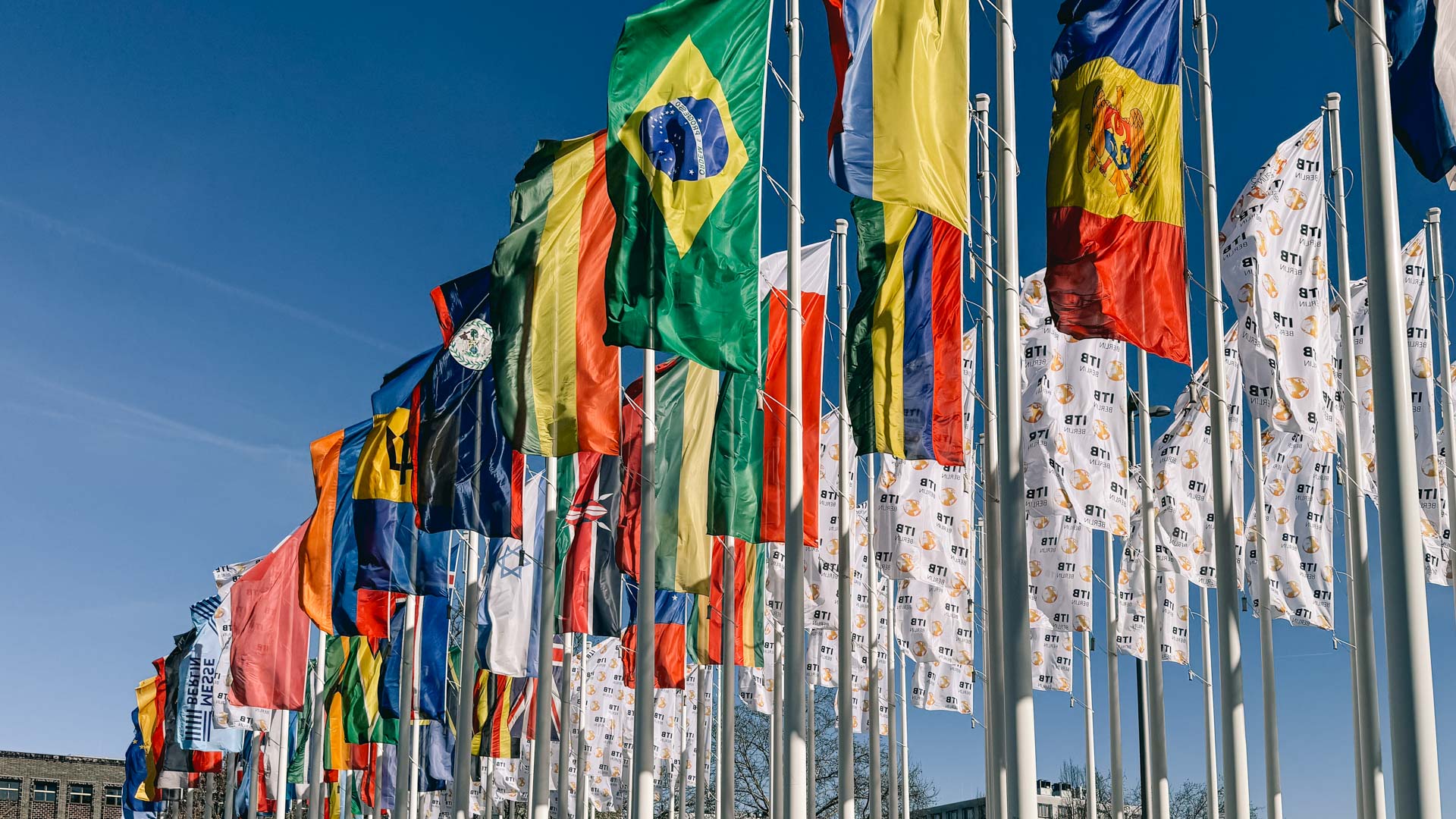
The ITB Berlin has strict standards for accrediting travel bloggers. When I saw that my blog traffic qualified for the fair, I prepared my application and applied for accreditation. It took me one evening to prepare everything, so this wasn’t heavy work.
A few days later, I received a positive reply, welcoming me to the ITB Berlin and providing me with a free entry ticket. Even if your application is rejected, you can still visit Berlin’s travel fair: you just buy a regular ticket, and you can enter. For 2026, the regular ticket costs 55 euros for one day, and 80 euros for all three days of the fair.
After getting accredited, I prepared my fresh media kit. I added relevant metrics (such as sessions and engagement time) and carefully selected my signature posts, including my New York City guide. In general, the media kit is probably not a must during the fair. The participants won’t have time to check it out. However, it’s useful for outreach and, of course, for follow-up emails.
When you have an entry ticket (free or paid), the ITB app lets you create a profile, where you share what you offer. In my case, it was long-form writing, SEO-led travel guides, and original photography. Based on your profile, you can start connecting with industry experts and start booking meetings.
All these sound easy, but I assure you, it’s not. As a travel blogger, you will probably have very few meetings booked; most contacts will happen at the fair.
And that’s how I prepared to go to the fair, with relatively low expectations but a clear goal in mind.
Prebooking the meetings via the app
Straight after creating the profile, I started requesting meetings. Not randomly, of course: I checked whether it might be a fit and reached out.
As I soon realized, not everybody uses the platform the same way. Some people replied; most didn’t. The app itself didn’t seem to notify for incoming messages. Sure, direct outreach helped, but it didn’t magically fill my calendar.
And then there were the mass invites to some booths where countries organized massive meetups. I won’t lie: I turned all these down. I know I struggle in such situations, and I prefer to spend my time at the travel conference in a different (and in my opinion, a better) way.
What does ITB Berlin feel like when you go as a travel blogger?
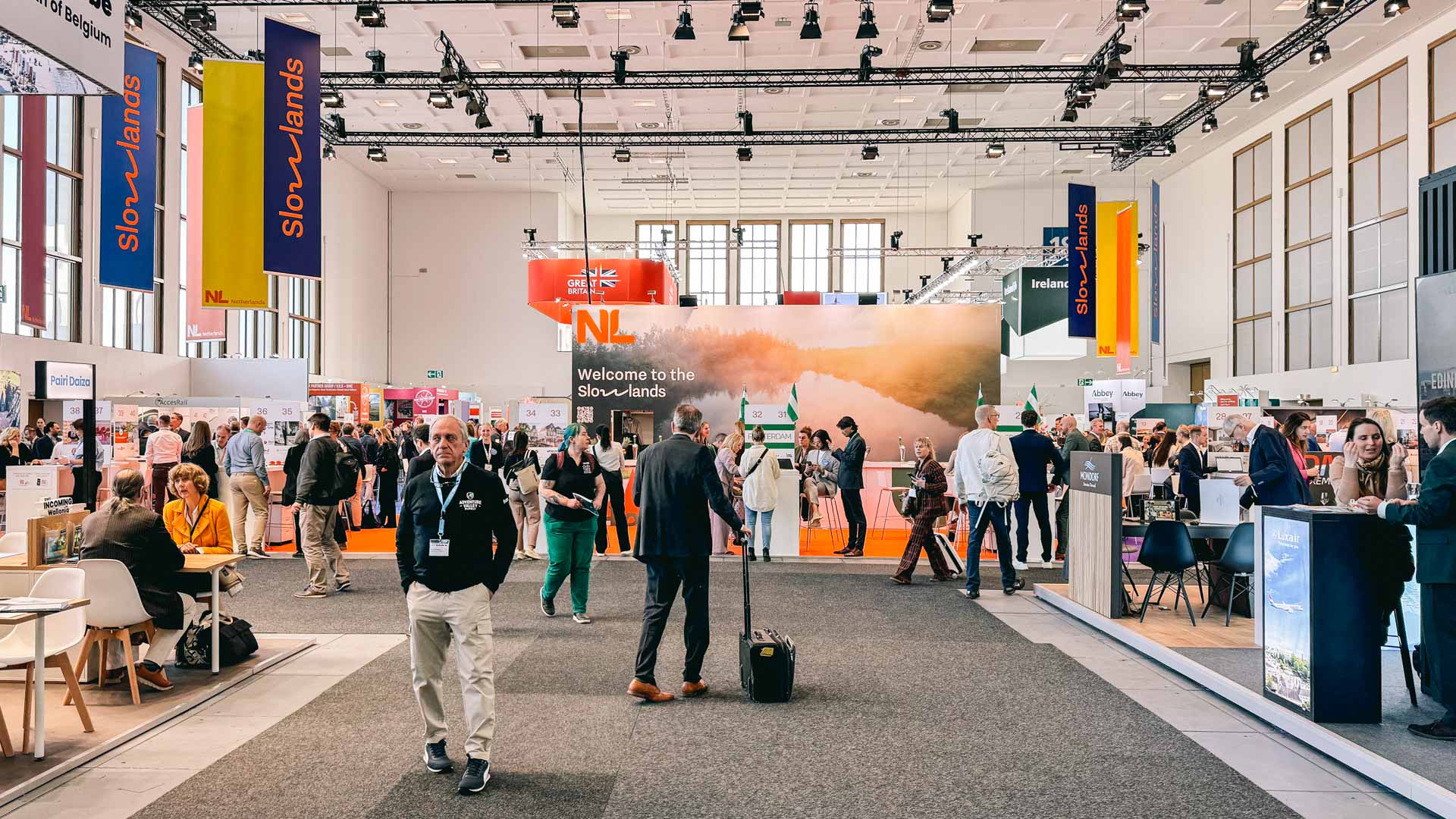
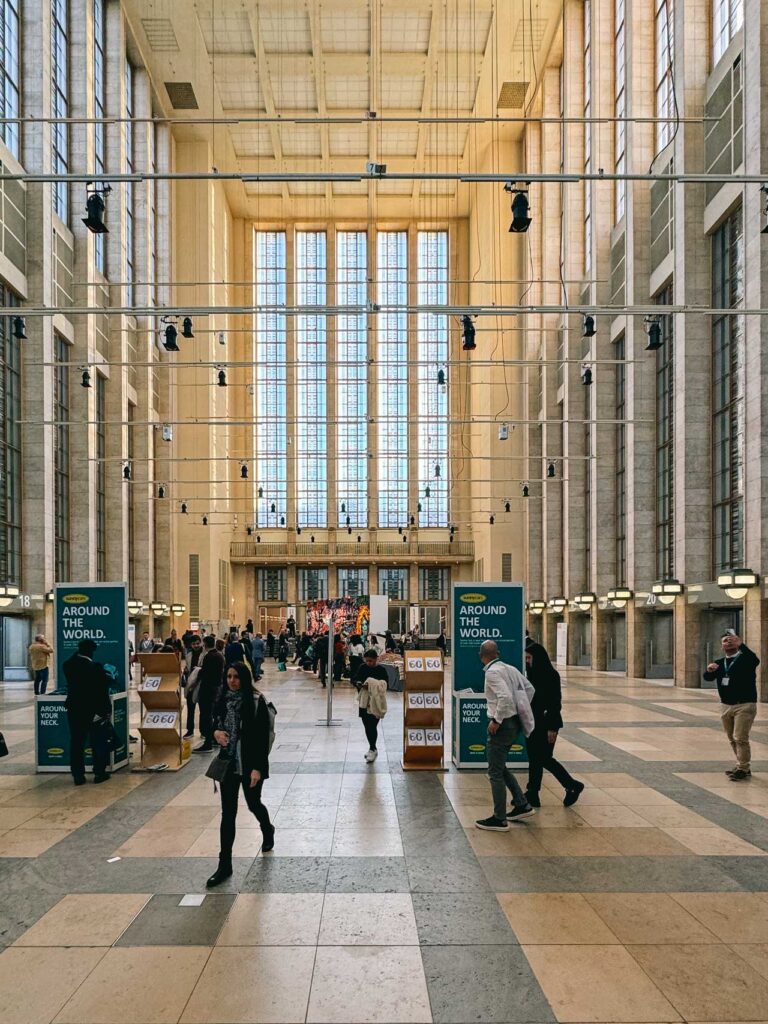
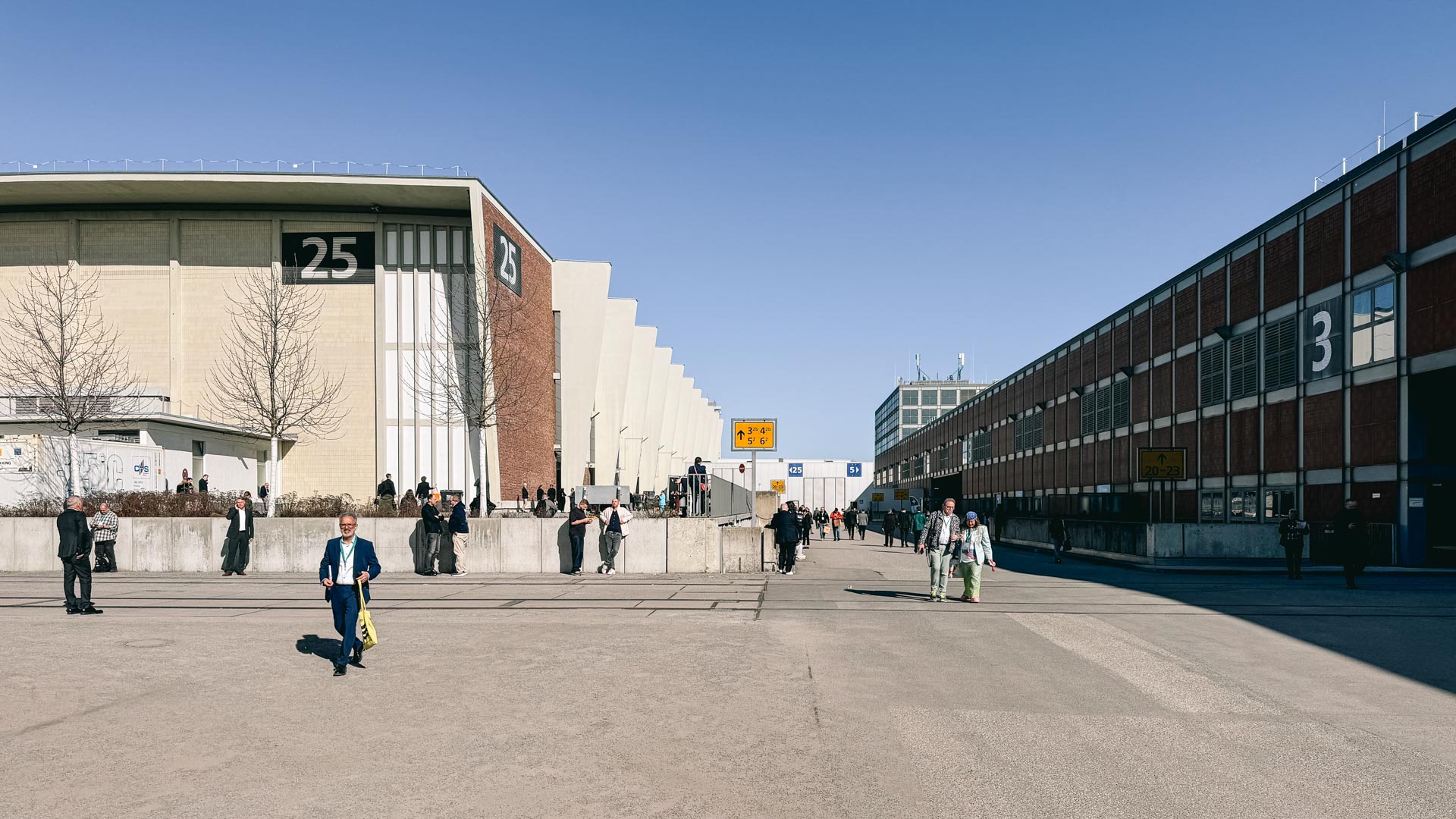
The Messe Berlin building seems relatively austere and distant from the outside. After I had my accreditation scanned at the entrance, I heard a buzz from inside. This loud chatter welcomed me at the 60th ITB Berlin and made me realize the location’s dynamic.
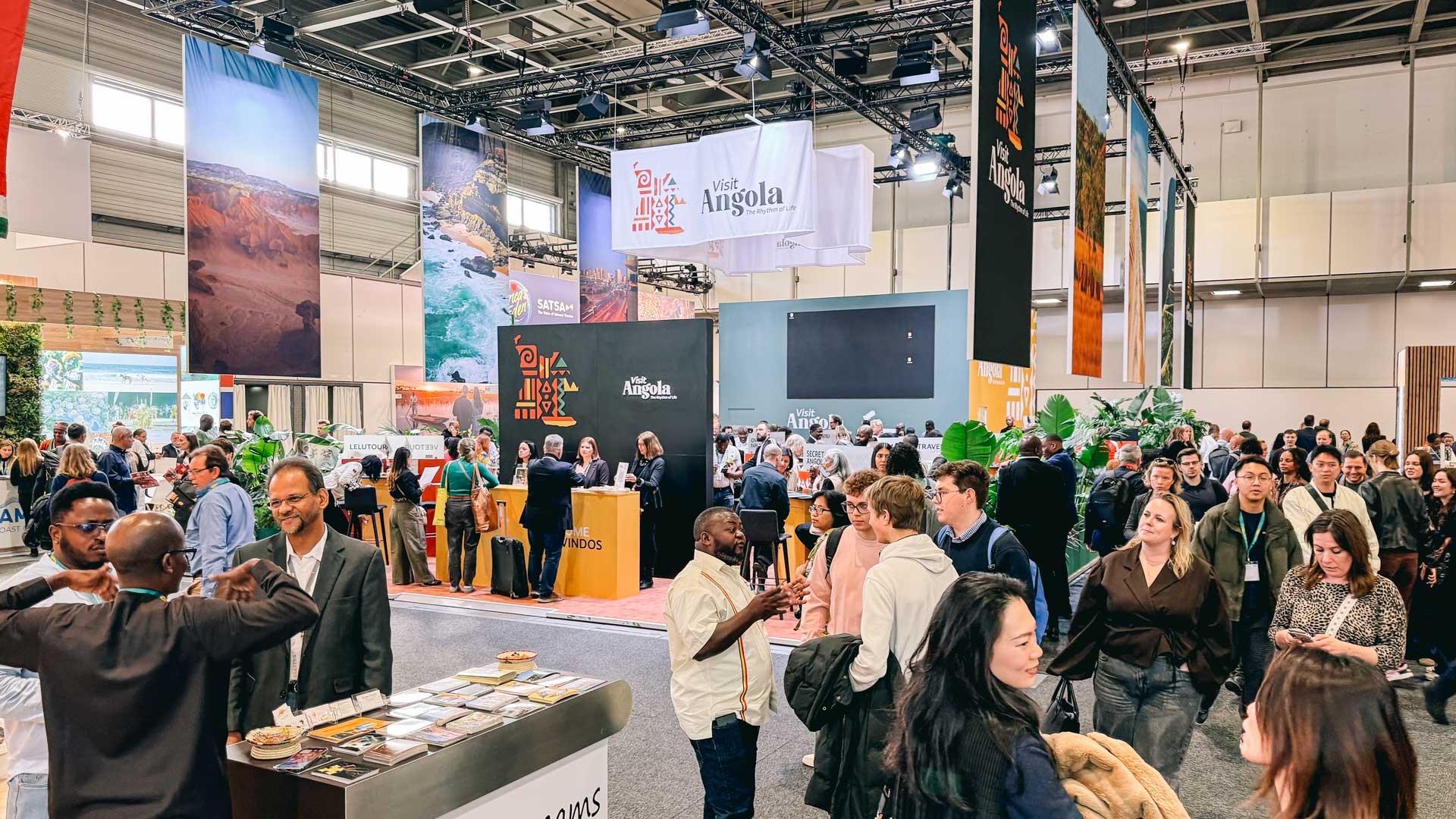
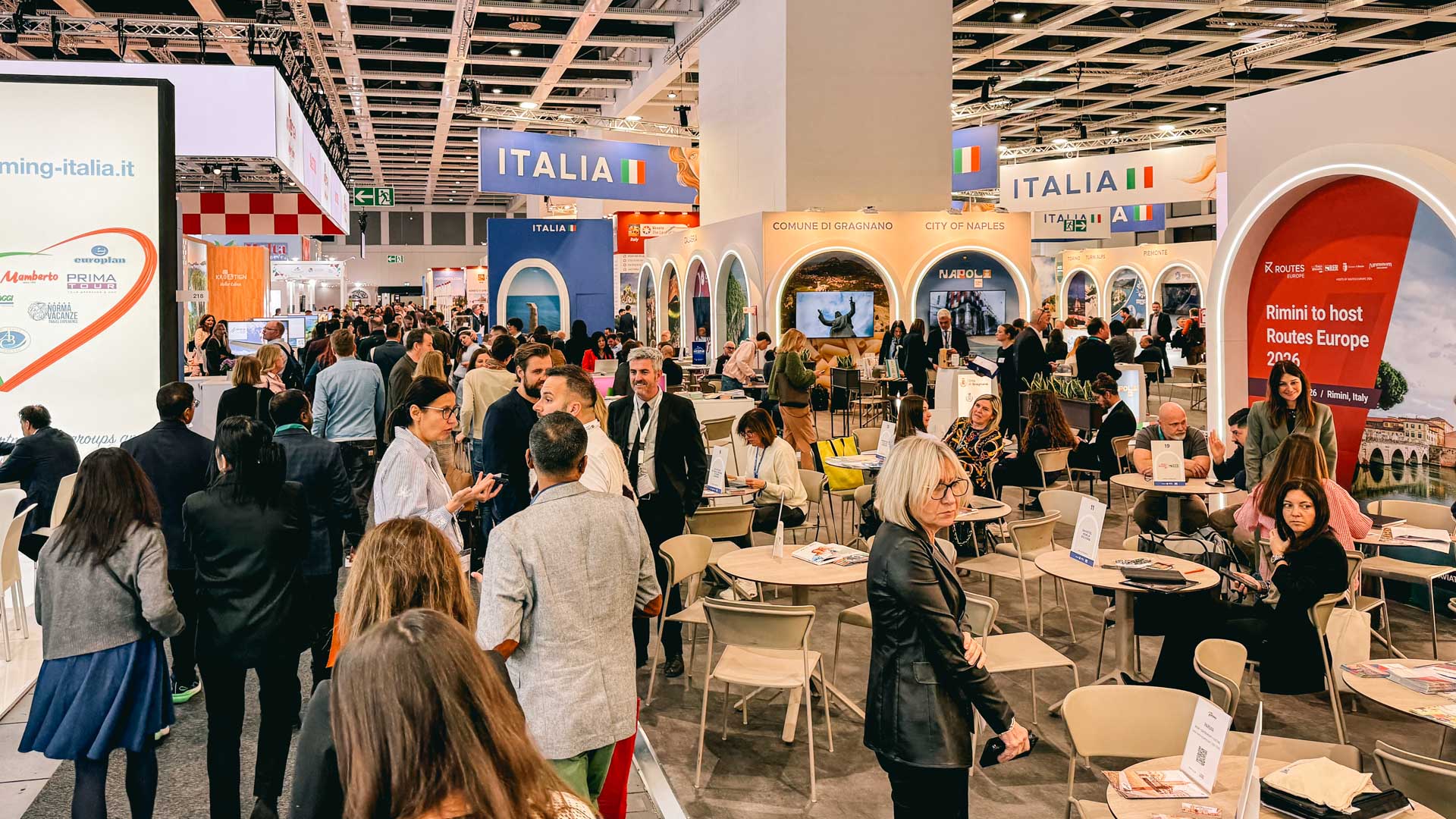
In a few words: busy, noisy, corporate. And as I soon realized, overwhelming.
One thing you must expect as a travel blogger at ITB Berlin is that the fair is much more B2B than you might expect. It’s for a reason the biggest tourism conference worldwide.
If you are introverted to some degree (I am), it might even cross your mind to leave. Well, don’t. Stay there, take an initial walkthrough of some halls to get a feel for the climate, and start approaching the participants.
Yes, there’s a handicap: you’re probably not what they’re here for. Yet, this doesn’t mean that you won’t get some contacts or understand how things work. Sure, lots of casual conversations will lead nowhere. And I believe this was a key takeaway for me: managing this sentiment matters a lot in how you’ll spend your time there.
The trade fair grounds are extended. You will need energy management, too. Every hall has an exit for some fresh air, and you can return when you’re ready. There are stands with street food, other people taking a break, having a cigarette, enjoying the sun (if Berlin treats you well weather-wise at least).
Then, return inside and carry on.
If you are introverted, plan accordingly
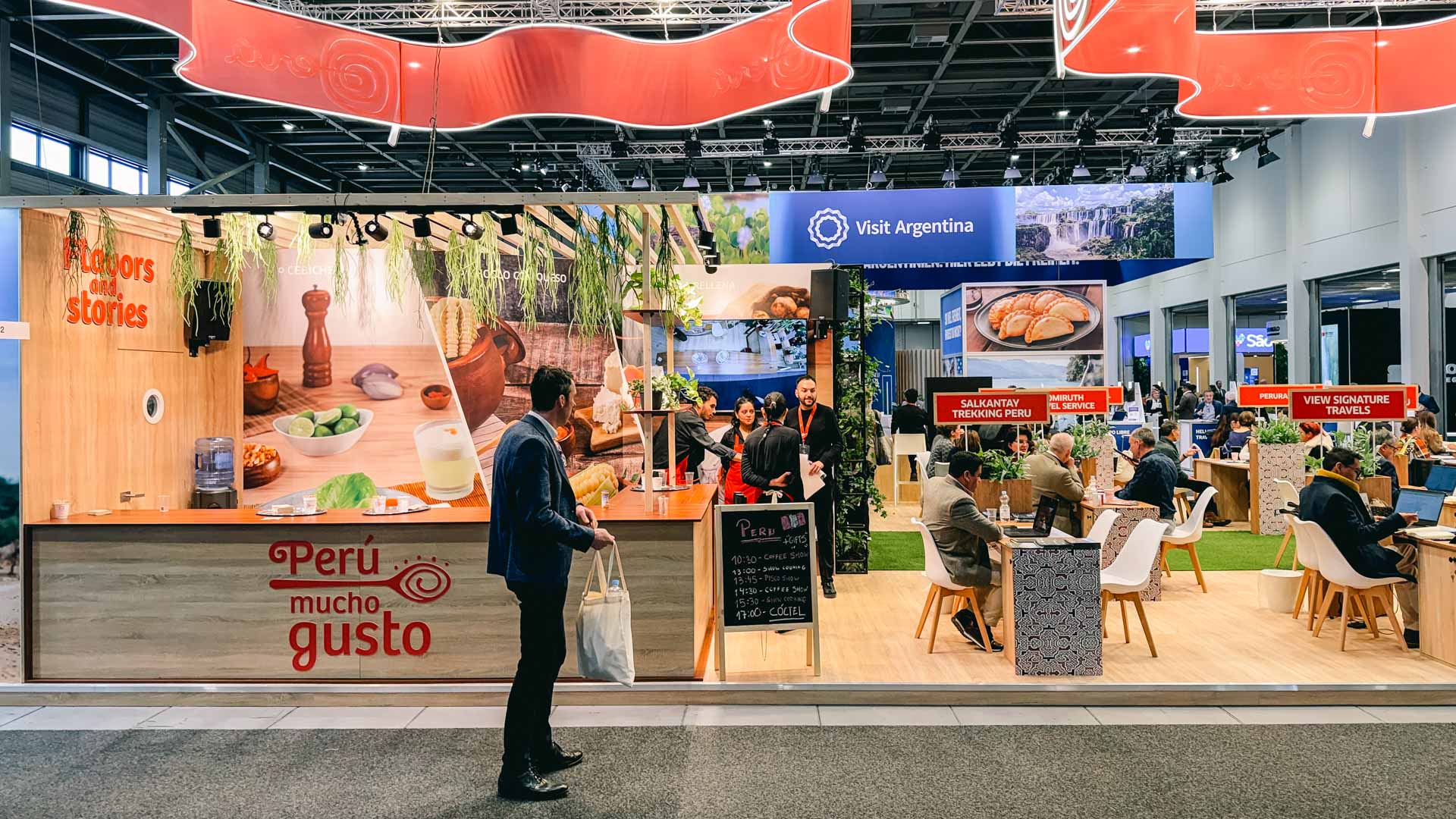
As an introvert at the ITB Berlin, you might feel you’re drowning. It doesn’t have to be this way, though.
First of all, nobody forces you to stay all day long. You can pre-arrange a time slot, visit the fair, and leave when you think you’ve had enough. Nobody forces you to stay all day or to attend from early morning.
I believe that two afternoons are enough for a travel blogger. You can’t talk with every country’s participants, and it’s impossible to only have successful meetings.
In my opinion (and that’s what I actually did), it’s better to have a few focused meetings rather than endless wandering. As a travel blogger, you know your content and future endeavors best. Before attending the ITB in Berlin, I created a short list of 10-12 countries I believed would fit my travel blog and that I’d love to write about. I focused mainly on these, and I ended up visiting their booths.
As for the opening line, I kept it simple (and I find it awkward to talk about myself anyway). Something like “Hi, I’m George, a travel writer running the blog Letters to Barbara,” and then a question about whether there are opportunities for collaboration. I kept it as simple as that to save both mental and physical energy.
To an extent, it served me pretty well.
The biggest question I had: do destinations actually pay travel bloggers?
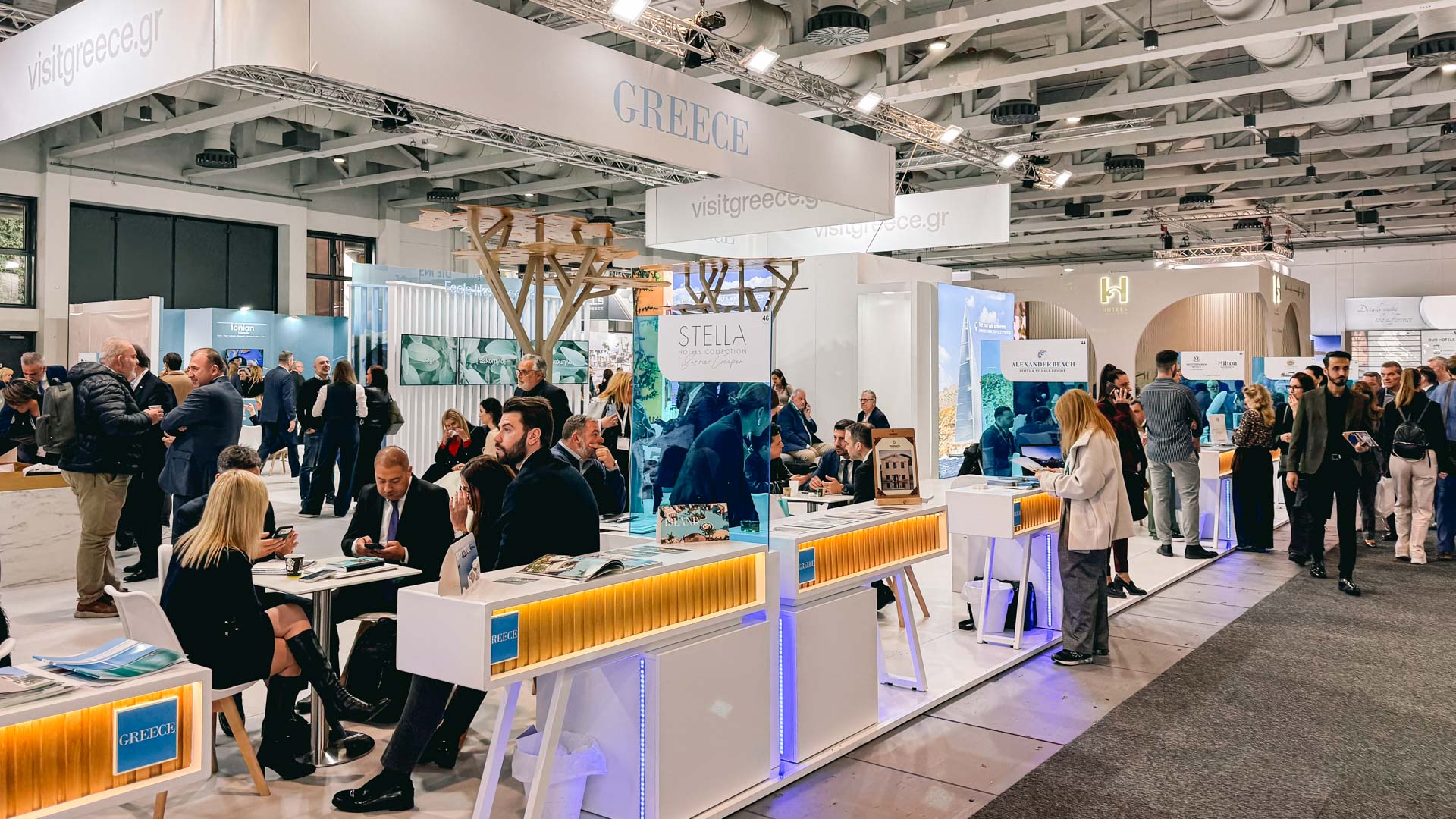
This was the million-dollar question, actually. I had more than 20 meetings at Berlin’s travel conference: I visited the booths of the countries that interested me. I’m talking here about conversations that didn’t say no from the first moment; I don’t count these. I focused on Europe, but not exclusively.
Soon, a gap emerged between what I hoped for and what the destinations were willing to offer. Plus, something I realized toward the end of the fair.
In general, I tried to categorize the replies I received.
Some destinations were exclusively interested in Instagram reels and influencer-style exposure. Apparently, this is not my style, so I thanked them and moved forward.
The most common reply I received was “hosted only.” This was said either directly or indirectly. However, the term “hosted-only” also had various definitions; you shouldn’t assume it means “everything included.” In one instance, it even meant free tours, so no accommodation, travel tickets, or food.
Conversations about the budget were rare on the booths, or to frame it better, nonexistent. While this means that you should keep your expectations low, there’s also a second layer to it. Payments and budgets require a second step. Whether this is approval or getting the right contact, discussing payment isn’t part of the ITB Berlin experience for bloggers. This will come afterward.
And this, somehow, is compatible with the fair’s spirit: you’re here for the contacts, the leads, not for sealing budget agreements. Therefore, don’t let this disappoint you, though it doesn’t mean there will be a budget for sure.
From what I understood at the fair, the budget for travel bloggers is limited (and this is the most polite way to say it).
Hosted trips vs. paid collaborations

This is something that you should decide before visiting the ITB Berlin, actually. That’s your own personal border and the way you want to work on your blog. I can’t advise you and, honestly, I don’t want to.
Every writer wants to make money from their writing, but that’s not always the case, especially when we talk about travel blogging. It’s different to get paid for what you deliver, to get accommodation, or to get free tours. Yet, both are fine if you are on good terms with each offer you receive.
That being said, if a hosted trip satisfies you, you should accept it. On the other hand, if you are only up for paid collaborations, that’s also fine. So, set your red lines before visiting the travel fair and stick to them. That’s what I did, and it helped me a lot because it became my personal filter from day one in the conversations I had.
Long-form writers are in a strange position

Well, as someone who always writes long-form articles, I found a relatively large gap when discussing potential collaboration. I have an Instagram account, which was once busy, but nowadays it’s not. My work is not reel-driven, I don’t play by the seconds, and I prefer to immerse myself in a destination. My payback to the places I visit is honest, long content that helps my readers understand what I experienced. If that’s irrelevant in the AI era, it’s another talk.
I prefer slower, evergreen content rather than a sudden impression. I realize the value of the latter, but it’s not for me. As an SEO Consultant, I also conduct thorough keyword research for my travel blog posts. That’s the way I work, and that’s how I write on the blog, because I also want my writing to appear when people search.
All these are useful, but they are hard to explain in a fast-paced tourism trade where time matters. And it matters a lot. You can say that even from the eyes of the people you will talk to. But that’s the environment, and that’s where you have to adapt.
And what is also true is that some destinations may not immediately understand the value of evergreen content. Actually, they might even reject it or lose interest from the beginning. I didn’t let that discourage me: it was better for both sides to move to the next meeting.
The kinds of conversations I had at the ITB in Berlin
I am not going to list the booths I visited nor the people I talked to for obvious reasons. But in brief, here’s what I got during the talks:
- Some destinations were only interested in reels and influencer marketing.
- Some were open but remained vague throughout the talk. This caused confusion.
- Others were very clear that they offered only hosted trips.
- The ones that showed genuine interest said that they needed approval.
- Of the twenty meetings I had, I believe four asked the right questions. These four are also the ones for which I see room for collaboration.
More or less, this is what I believe you will encounter at the ITB as well.
What discouraging conversations looked like
There were some common patterns in the conversations that felt discouraging. I didn’t see a match there, but once again, I found the time I spent there useful.
Some wanted free coverage. They might offer some booklets or maps; if I ever visit, I should let them know. There were possibilities for free tours. I turned these down, and I didn’t follow up.
Some booths had follower-count thresholds. This was a way to filter, and I found it fair. 50K monthly blog sessions or 150K Instagram followers were some of the benchmarks I heard. They turned me down before I did, I guess.
A few times, I got a generic reply after introducing myself, like “write to us.” If the email I got was a generic info email, I turned it down as well. If it belongs to a person, I’d add it to the secondary follow-ups list.
What promising conversations looked like
On the other hand, I also had some promising conversations, and that’s why I visited the travel fair after all. These justified the energy and time invested, and they have the potential to develop into a collaboration.
The nicest talk I had was about deliverables and results. They were clearly aware of what they could expect if they collaborated with me. I found this as a proper attitude in a talk.
They also wanted to see my media kit to understand the metrics and what I offer. This is always a big plus because it shows people with a real understanding of what travel writers do. Whether they like it or not is another talk.
They treated the conversation as a professional exchange and discussed openly the approval procedures, the ideal times to visit, the process, and everything the two parties should know before they shake hands.
Whether these meetings will turn into a proper collaboration remains to be seen. But in my opinion, that’s the way things should work. And I made sure to follow up quickly.
The meeting with the Stay22 representative
I will add a short section about my meeting with the Stay22 representative. I’m affiliated with them (if you are blogging, check Stay22 here), and this was the only non-destination meeting I had.
I’m writing this because it was the first time I met in person with a representative from one of the affiliate services I use on the blog. Stay22 helps you earn money from stays, flights, cars, and activities that people book via your website.
The meeting with Stay22 was extremely useful for getting some inside knowledge of how affiliate partnerships work. You can get brief insights about what works, CTAs, conversions, and all things that matter when you want to monetize your content.
Usually, you fill out a form, and if you are accepted, you get access to creative elements, affiliate links, and other relevant materials. Meeting a representative makes the whole program feel more human, in a way.
And I’m writing this because ITB Berlin is a place to meet people from your favorite affiliate programs. So, if you attend and have a program you want to learn more about, ITB is a perfect place to do that.
What I learned about how the travel industry sees bloggers

I’m still processing things, but here is how I feel that the industry sees travel bloggers.
Many think in terms of reach first. This is a filter to keep their budget under control and make the results measurable.
A lot of them are still social media first. Blogging might seem unsexy or irrelevant.
The ones that are open to editorial work are usually slower: there are various departments and people who have to decide whether to host a travel blogger. That’s not a bad thing per se, but it can be time-consuming.
The person you will meet at the stands is usually not the one who will decide the budget. Still, it’s the best contact you can have at a trade fair, and your chance to open a door that would otherwise require cold emailing and faceless exchanges.
And one thing I know for sure: collaborations happen after the fair, not during it. Write your follow-up emails and take it from there.
So, is ITB Berlin worth it for travel bloggers?
After this long article about the ITB in Berlin, it’s time for the reply to the title’s question: Is it worth visiting the ITB Berlin as a travel blogger?
My reply is affirmative. Yes, it deserves it. I can add lots of asterisks, but it is definitely deserving of being part of a travel conference this size, and to navigate the stands and booths for collaboration.
I can also offer more concrete replies depending on the reasons you want to visit the fair, but I won’t change my mind that the fair deserves a visit.
That said, if your goal is to understand the industry, make new contacts, and see how destination marketing works, there is no better place than ITB Berlin to gain that knowledge.
Also, a massive fair like this one will help you understand your work boundaries and force you to come up with clear offers. Without visiting a fair, I often imagine this and that about the industry. After the ITB, everything is clearer in my mind. It doesn’t matter whether I agree with everything (for example, Instagram marketing sounds bizarre to me, given how saturated the medium is).
In addition, the ITB will clear up the landscape of how hosted, paid, and unpaid collaborations work. Although paid collaborations are the holy grail of travel blogging, understanding supply and demand is really helpful for your future strategies.
The only reason I believe that one will find the ITB Berlin not useful is if they expect immediate deals (let alone paid deals) on the spot. This will not happen. There are processes to follow, departments to communicate with and to approve, and budgeting takes time. If you are visiting the ITB as a travel blogger and expect results like this, you will be disappointed.
That being said, for me, visiting the ITB Berlin as a travel blogger was a valuable experience. Apart from getting an insight into the travel industry, I also made some contacts. Beyond that, it made the reality clearer and helped me understand how to navigate the industry’s landscape, which, let’s face it, is just as uncertain as the world around us.
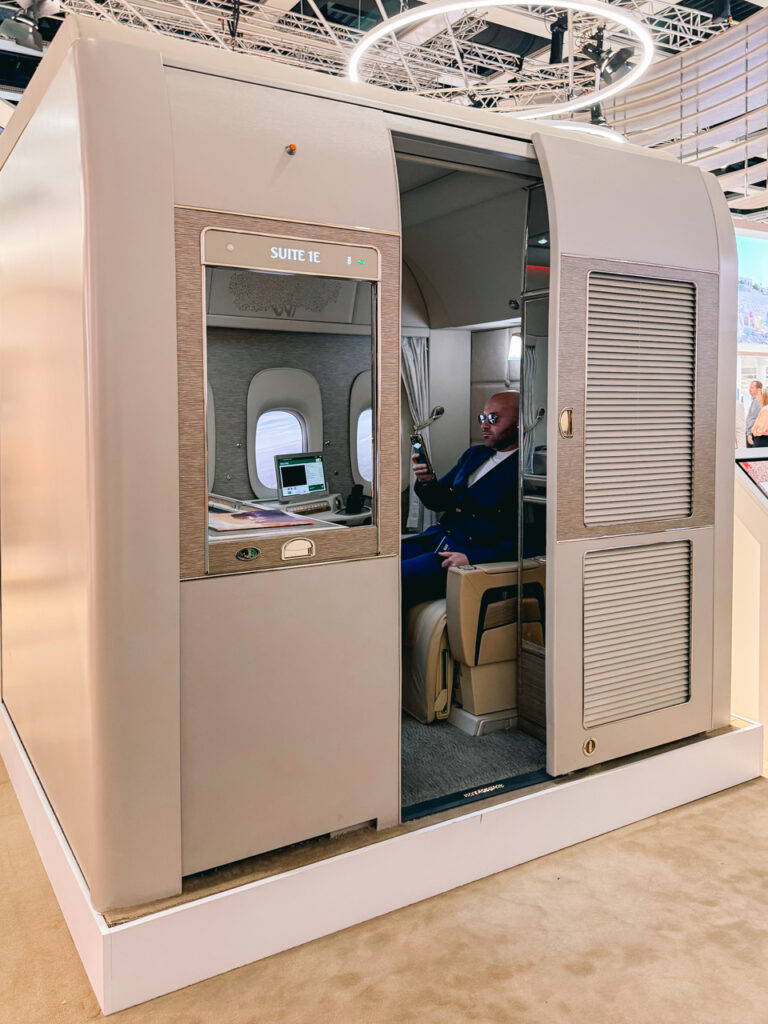
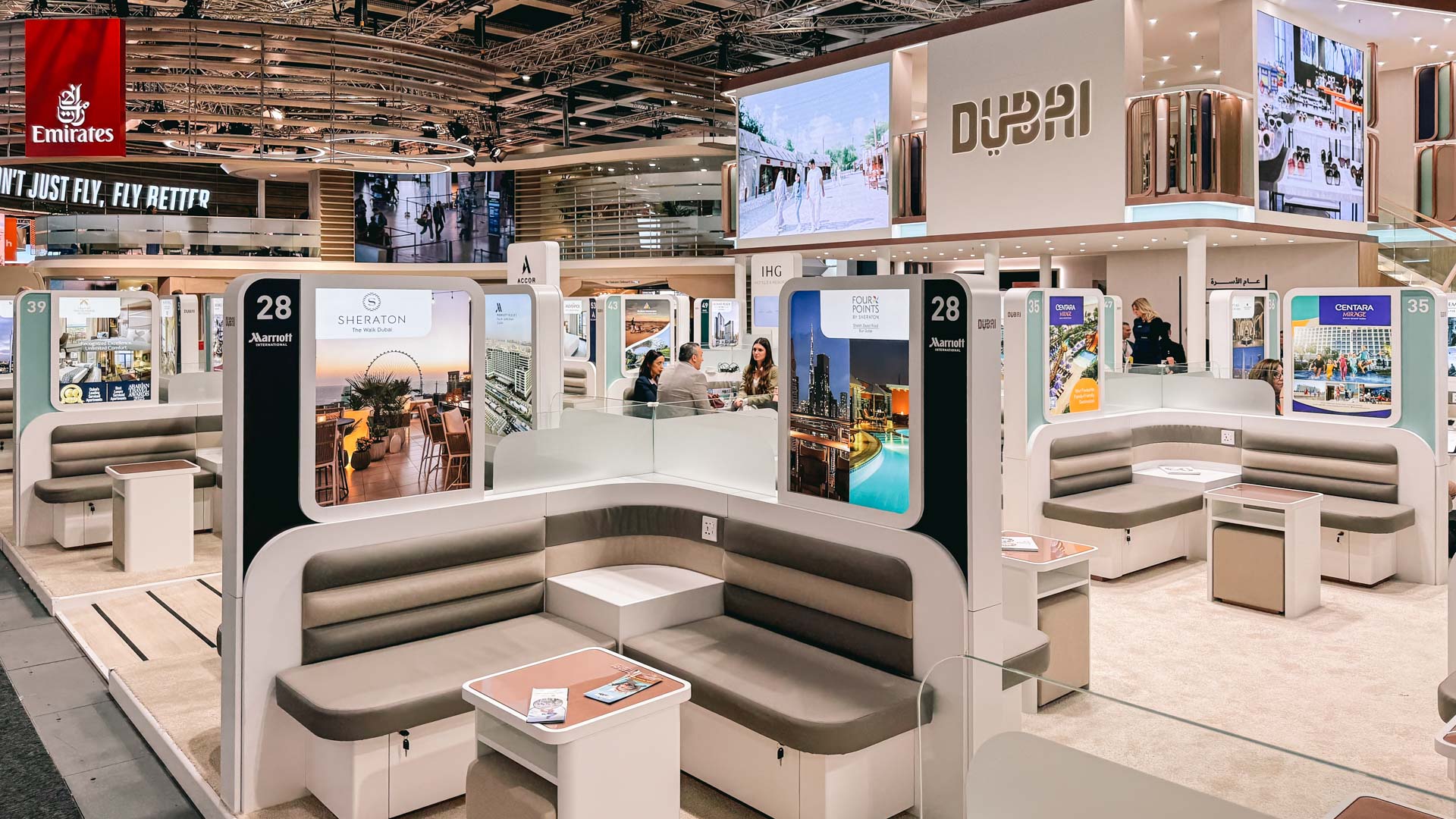
Travel is a very dynamic industry affected by both small and large events, as you can see from my photo of the Dubai stand. To understand how things move and how you can fit inside that ecosystem is a lesson that you can only learn by participating, not by distantly observing.
Practical tips if you are a travel blogger going to ITB Berlin for the first time
I know this has been a long article, but I thought I’d add a short, bullet-pointed section with some practical tips for travel bloggers visiting the ITB in Berlin. These are the things I’m happy I did before and during the fair, and they helped me have a good time in an interesting yet overwhelming environment.
So, here’s what I suggest for first-time bloggers to the ITB:
Get an accreditation if possible. Check the prerequisites on the ITB website, and if you tick the boxes, apply early for one. While you can buy a ticket and attend, getting an accreditation feels good because you’ll feel sentimentally part of the industry.
Prepare a media kit. You probably won’t need it on the spot, but it’s useful for prebooking meetings and follow-up emails.
Wear your most comfortable shoes. I can’t highlight enough how important this is. The fair is huge, and you will be exhausted sooner or later. My comfortable sneakers saved me, as I ended up walking almost 25000 steps per day.
Don’t overbook yourself. Focus on the countries that matter to you, and either pre-book meetings or go there directly and ask for one.
If you are only after paid collaborations, ask about it early during the talk. There’s no need to lose energy for something that doesn’t interest you. And be prepared to hear a lot of “no” and “hosted only”.
Follow up as soon as possible. This year’s ITB Berlin concluded on Thursday; I made sure all follow-up emails were sent by Monday. Don’t let days go by if you are interested.
ITB Berlin as a travel blogger: Final Thoughts
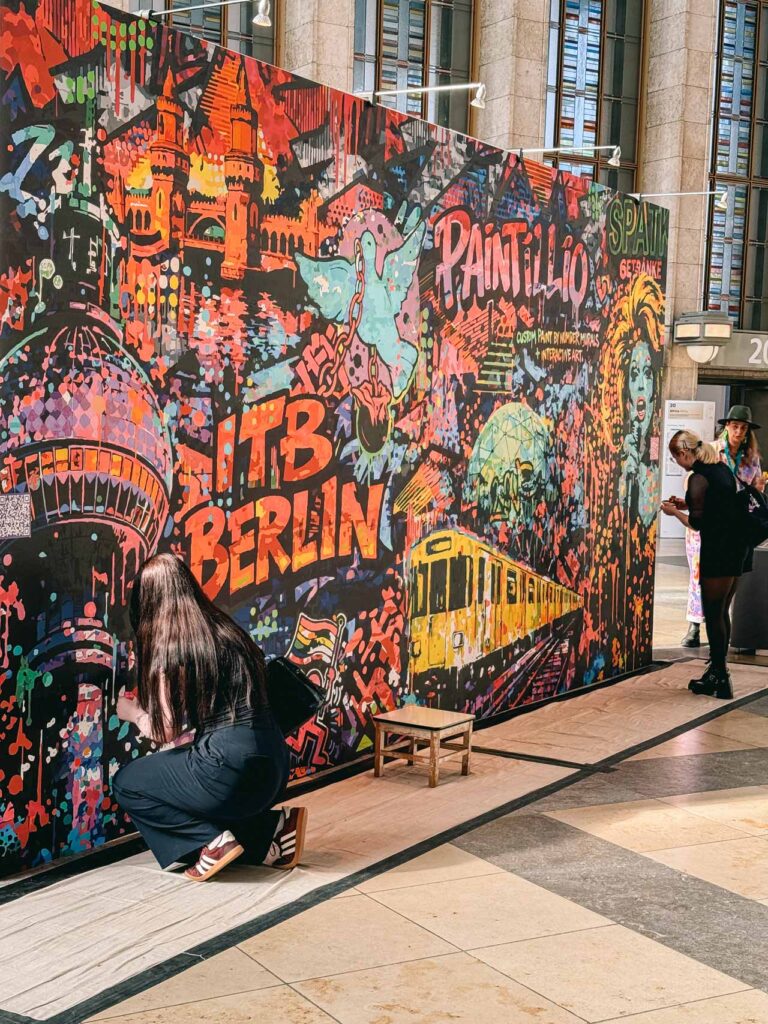
I went to ITB Berlin searching for answers: how things work, how I could further monetize my travel content, and how many real contacts I could make in a place moving at a crazy pace. I probably didn’t get all the replies I wanted. However, the ITB Berlin was a rewarding experience because I observed how the travel industry is breathing and moving.
As a travel blogger, the landscape isn’t much different from what I expected: paid collaborations are rare and take time. On the bright side of life, seeing all these destinations and getting little perks (or even tasting exotic food) definitely fueled my wanderlust. No, I don’t regret going to the ITB even if it exhausted me. I’d definitely do it again, this time to see how the industry has developed and make a few more contacts.
I’m a traveler, I’m a writer, and attending a travel conference is part of what I do after all.
More about Berlin: Berlin travel guide, Berlinale guide, Where to stay in Berlin
Pin it for later
Sharing is caring. Share this article about visiting the ITB Berlin as a travel blogger with your friends.