

Last Updated on June 13, 2026 by George Pavlopoulos
At first glance, Leipzig feels like a typical compact German city, featuring a beautiful market square, arcades, and museums. However, the train station itself is one of the largest in Europe, which adds a mysterious layer as a welcome: it feels as if you’ve arrived somewhere more important than it looks. The more I walked, the more the city revealed itself, and the best things to do in Leipzig consisted of a multidimensional experience where the past always left a mark on the present.
Apart from its undeniable elegance, Leipzig is a modern-day cultural hub in Germany, and this should be highlighted early on in any Leipzig guide. While I was walking around Leipzig, it seemed to me that the fate of secondary yet truly important European cities is to be marked by a variety of historical footprints. In the case of Leipzig, I saw a city sealed forever by war and literature, by dictatorship and music, and all these were slowly transformed and absorbed into an industrial afterlife.
As you will read in this article, in just a two-day visit to Leipzig, I moved from Goethe to the Holocaust memorial and from an old cotton mill to an East German neon sign. No wonder Leipzig felt, at all times, like a multi-layered city that constantly adds perspectives to a traveler’s experience. Therefore, in this guide, I tried to bring together the places and sights that helped me understand its story.
That being said, this article about the best things to do in Leipzig is, in fact, a cultural guide to a vibrant German city, focusing on travelers who appreciate cities with history and texture.
*Some links are affiliate links. It means that if you make a purchase, I might earn a small commission at no additional cost to you.
How to get to Leipzig, Germany
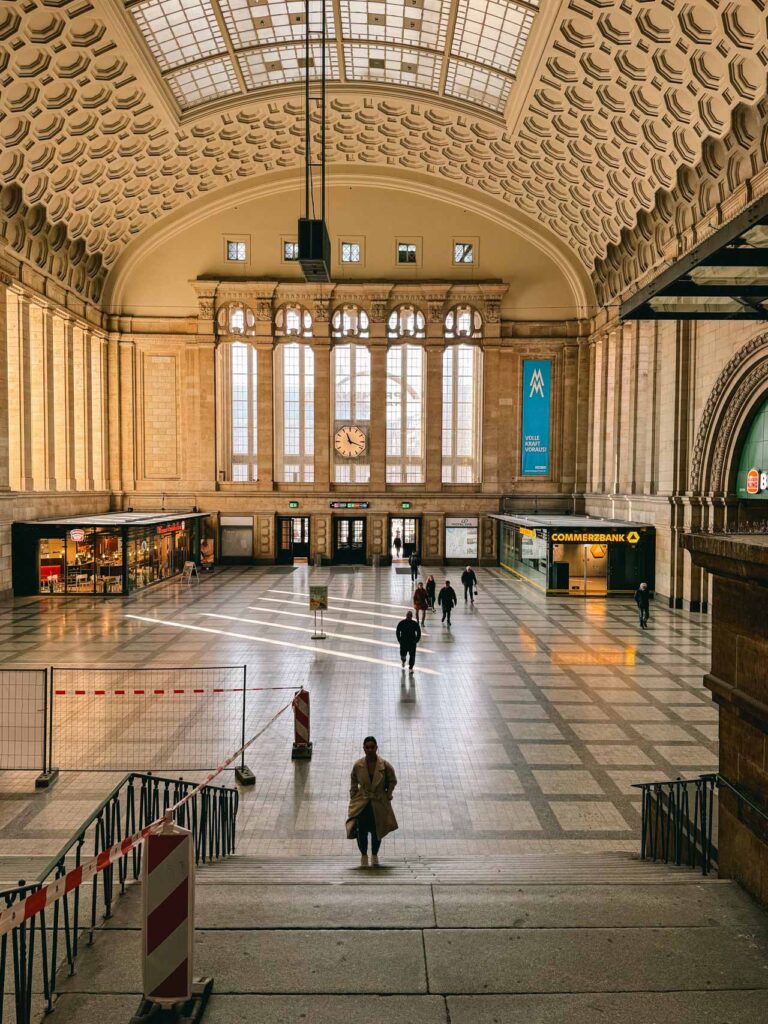
One of Leipzig’s travel privileges is its proximity to Berlin. I took the train from Berlin Hauptbahnhof (Central Station) to Leipzig, and the journey took approximately 1 hour and 20 minutes. There are several direct trains daily between Berlin and Leipzig, running every hour; however, depending on the route, the journey takes between 1 hour and 20 minutes and 1 hour and 45 minutes.
What’s even nicer, especially for daytrips to Leipzig, is that the city’s train station is right in the middle of the city. Therefore, you can start exploring straight after disembarking.
You can find ticket prices at the official Deutsche Bahn website here.
Tip: The Deutsche Bahn website will also show the expected train occupancy. If it’s marked as low, you can consider not booking a seat and finding a free one on board. For more information about train travel in Germany, please refer to my Deutsche Bahn guide here.
Where to stay in Leipzig
For first-time visitors to Leipzig, I believe that staying centrally is the best option. Staying centrally means finding accommodation in or around the Old City, as it gives you proximity to most major sights. Leipzig’s center is walkable, and, as you will see later in this travel guide, it is a joy to cycle in. That being said, if you arrive by train and want to make the most of a short stay or a city break, the city center is by far your best option.
I would only recommend staying outside the city center if you’re here for an alternative atmosphere, very local city rhythms, and galleries. In this case, I’d recommend Plagwitz, but keep in mind that most of the city’s major attractions won’t be within walking distance.
Where I stayed in Leipzig
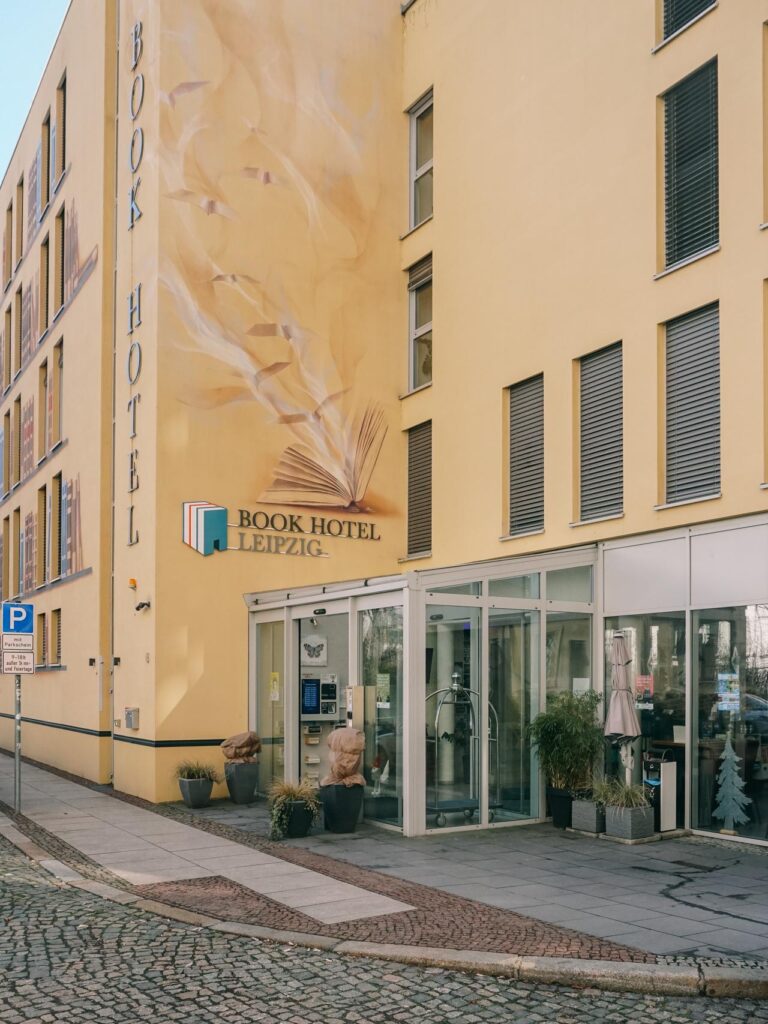
For my accommodation in Leipzig, I chose the wonderful Book Hotel. Goethe’s presence in the city is enough reason for Leipzig to have a strong literary background, and the wonderful Book Hotel, as its name betrays, is the place to stay for book lovers.
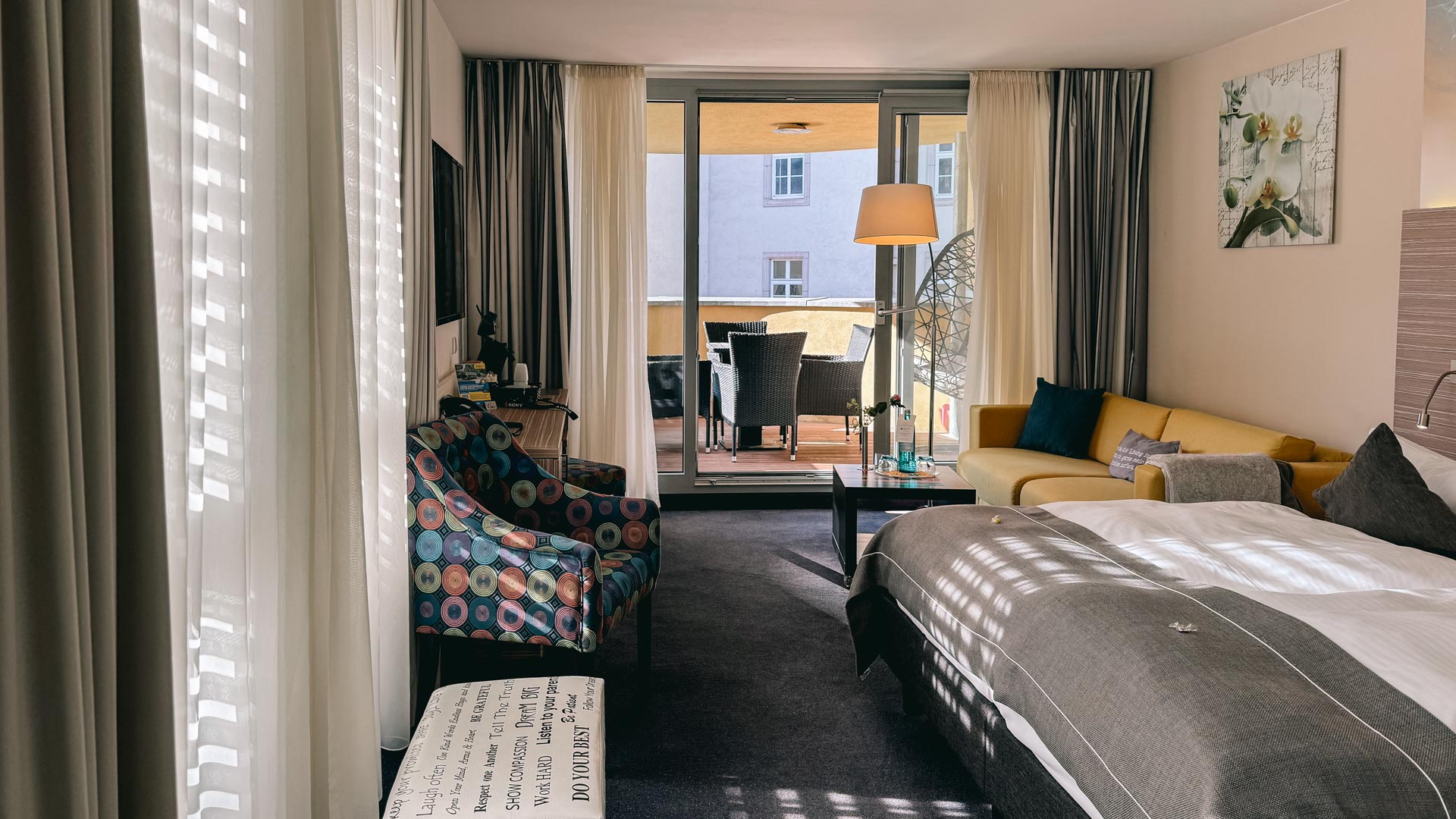
Located just across from the city center and less than a minute from the Market Square, Book Hotel offers spacious rooms, and for an extra charge, I upgraded to one with a balcony. The street is quiet, and in two minutes you can enter the historical center and find multiple tram stops. Continental breakfast is included in the price, and honestly, for a short cultural trip, Book Hotel will always be my choice.
You can see prices and availability for the Book Hotel Leipzig here.
The best things to do in Leipzig
So, here you will find what fascinated me about Leipzig. The itinerary is created with an overnight stay in town, but if you happen to visit Leipzig on a day trip, I will narrow down your options in the following section.
Start at Leipzig’s Market Square
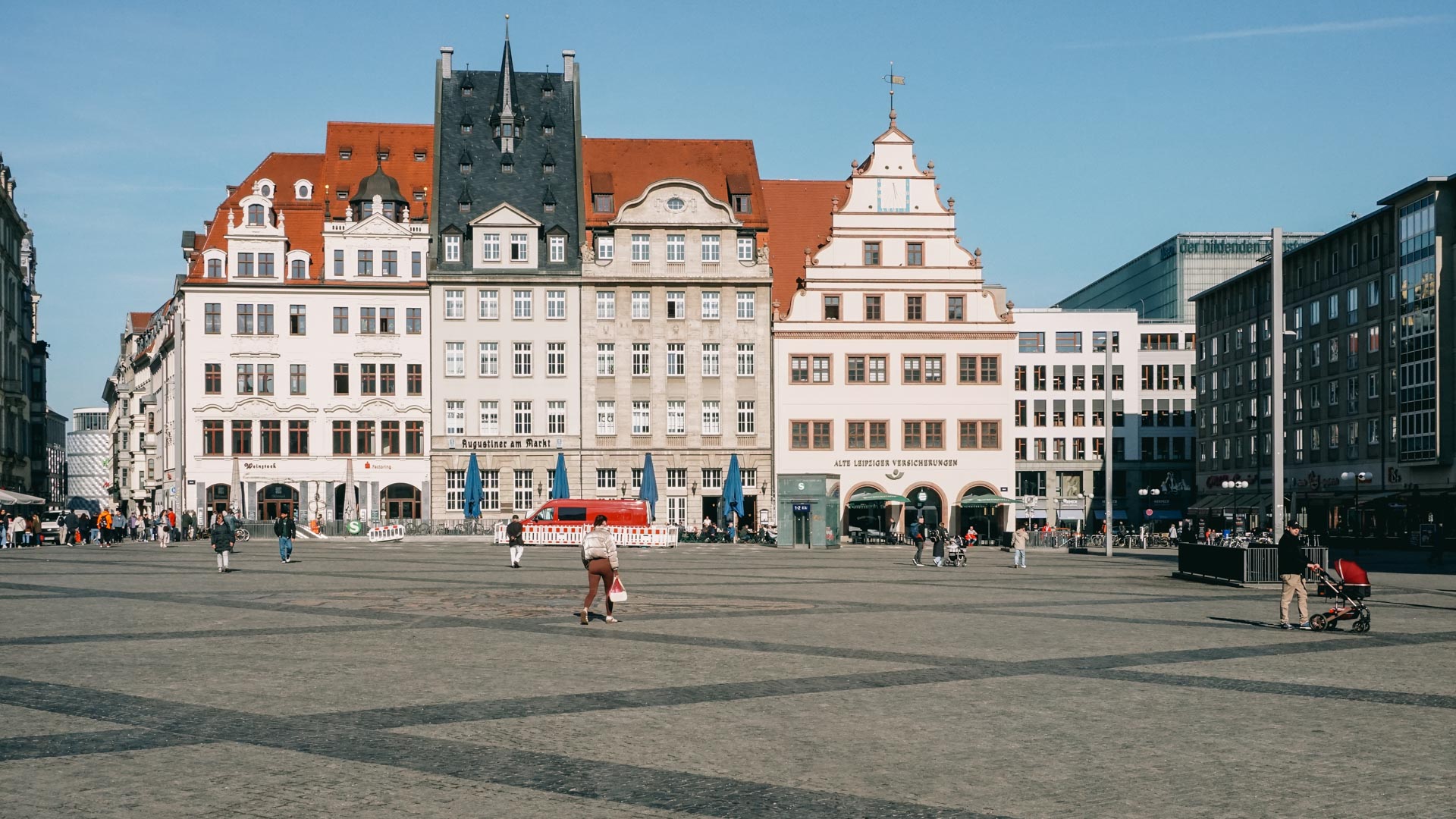
Leipzig’s Market Square is the obvious place to start your Leipzig wanderings. Located less than 10 minutes from the Central Station, the Market Square, together with the Old Town Hall, forms the city’s civic heart. Despite this typical touristy market-square flair, the one in Leipzig actually feels different, as locals enjoy hanging out there. While admiring the buildings is expected, various cafes and restaurants line the square, and on clear days it can be packed with locals soaking up the much-needed sunshine.
What I liked most about the Market Square was the sense of orientation it offered me. Open spaces help travelers find their way more easily through smaller streets and alleys, and knowing that the square is just a few steps away, wherever you are in the city center, is comforting for navigating without a map. That’s why, apart from its beauty, I recommend starting your exploration of Leipzig from here.
Visit the Museum der bildenden Künste Leipzig (MdbK)
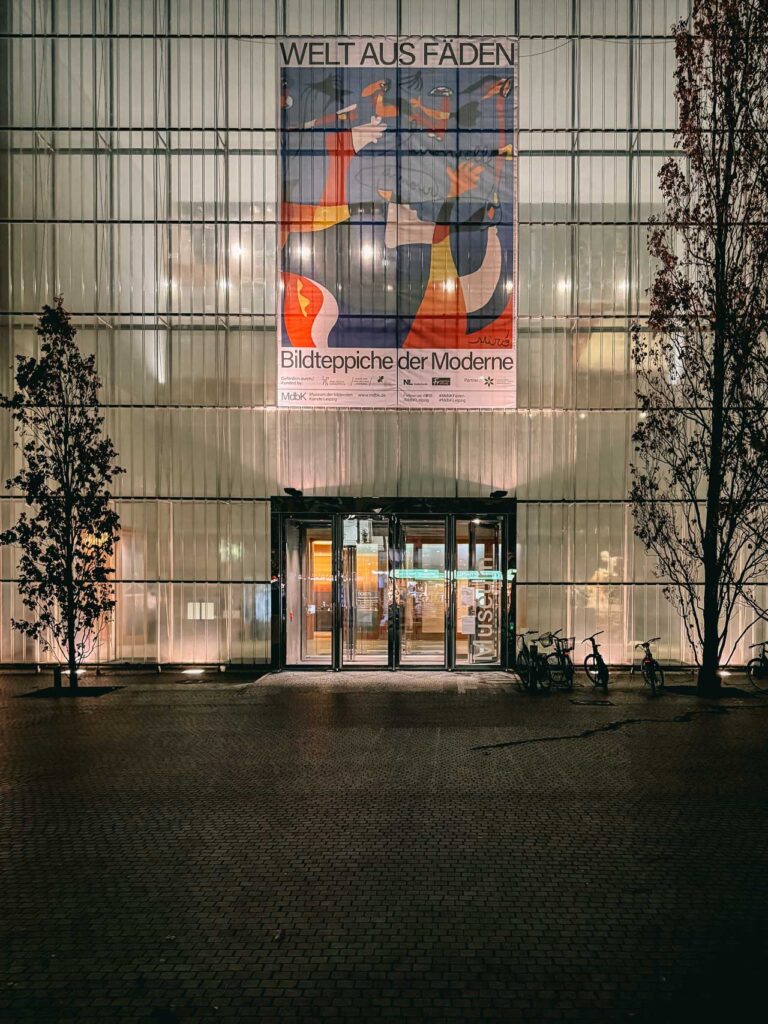
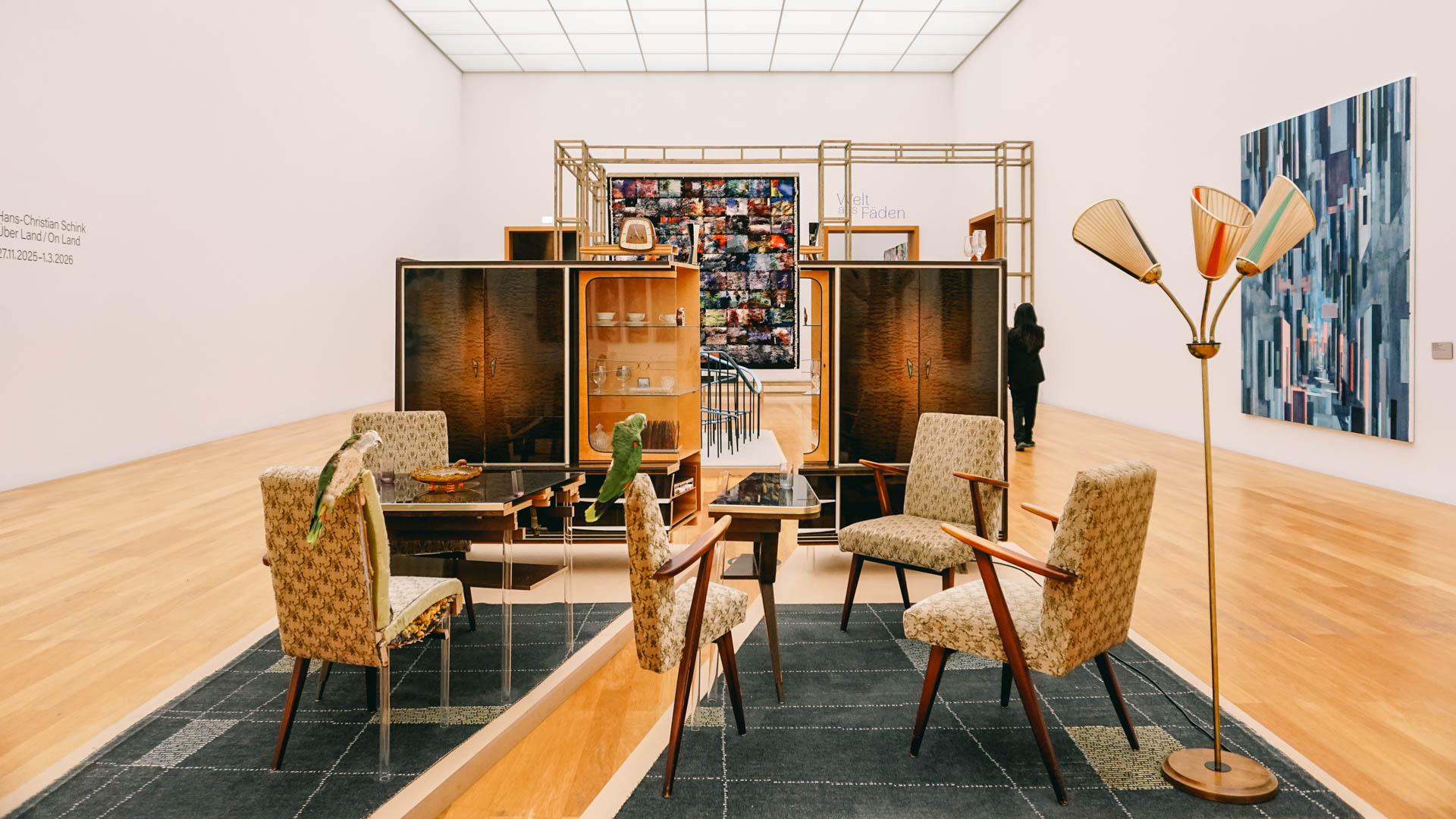
MdbK is a city highlight and a stand-alone reason for many travelers to visit Leipzig. It was also one of the main reasons I visited the city for me: an exhibition called Welt aus Fäden. The exhibition dealt with tapestry and textile-based art, and the way these materials were used on a large scale really surprised me.
The fact is that textile art is often overlooked or assumed to be purely decorative, but after seeing exhibitions elsewhere (like at the Benaki in Athens or MoMA in New York), I’m always keen to observe it.
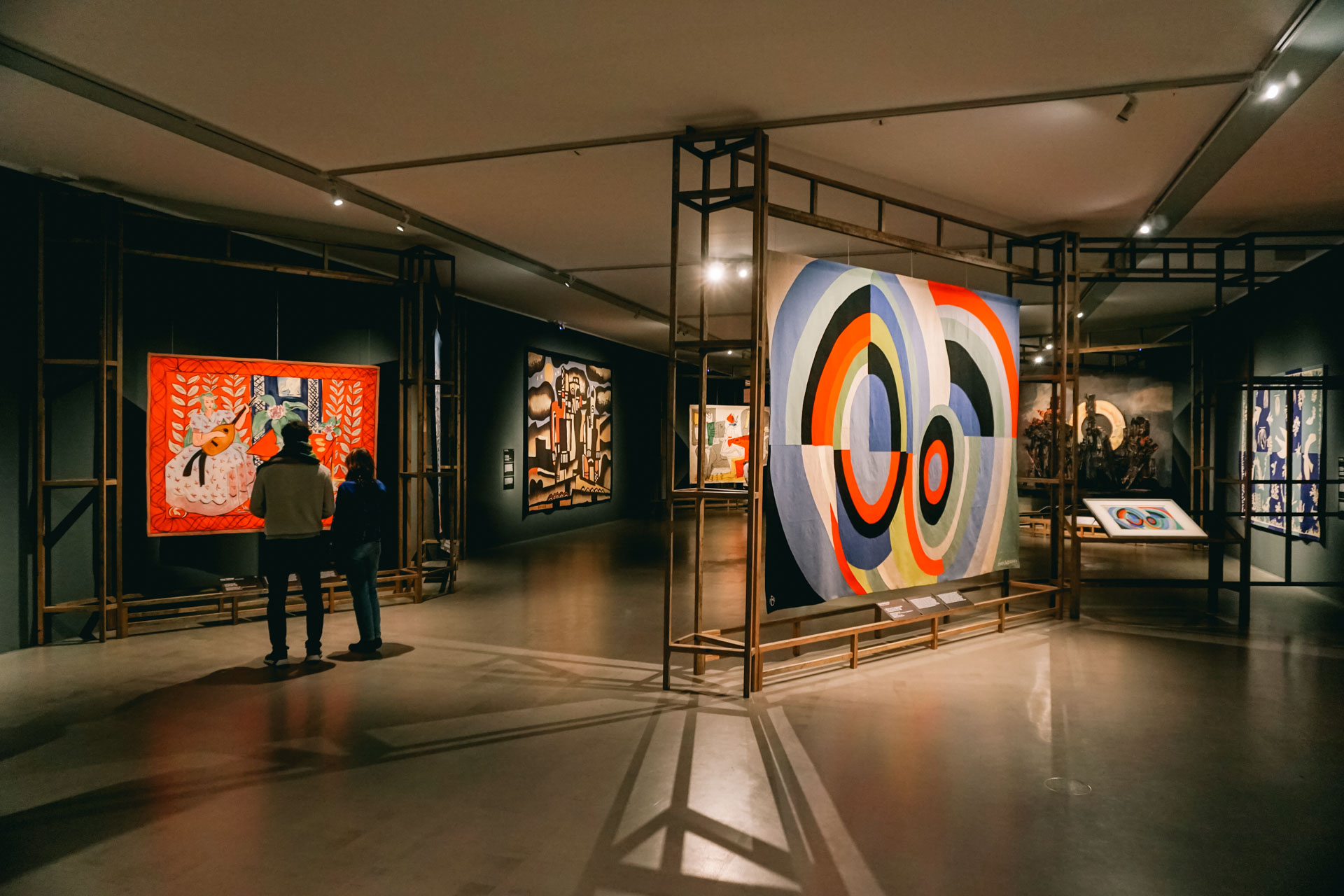
For a city with rich texture, observing the surfaces and the density of its tapestries felt like a way to slow down and take in. Located just off Market Square, the MdbK is a great choice for seeing a beautiful building that features high-quality exhibitions and serves as a cultural introduction to city life.
Walk in Goethe’s Footsteps at Auerbach’s Keller
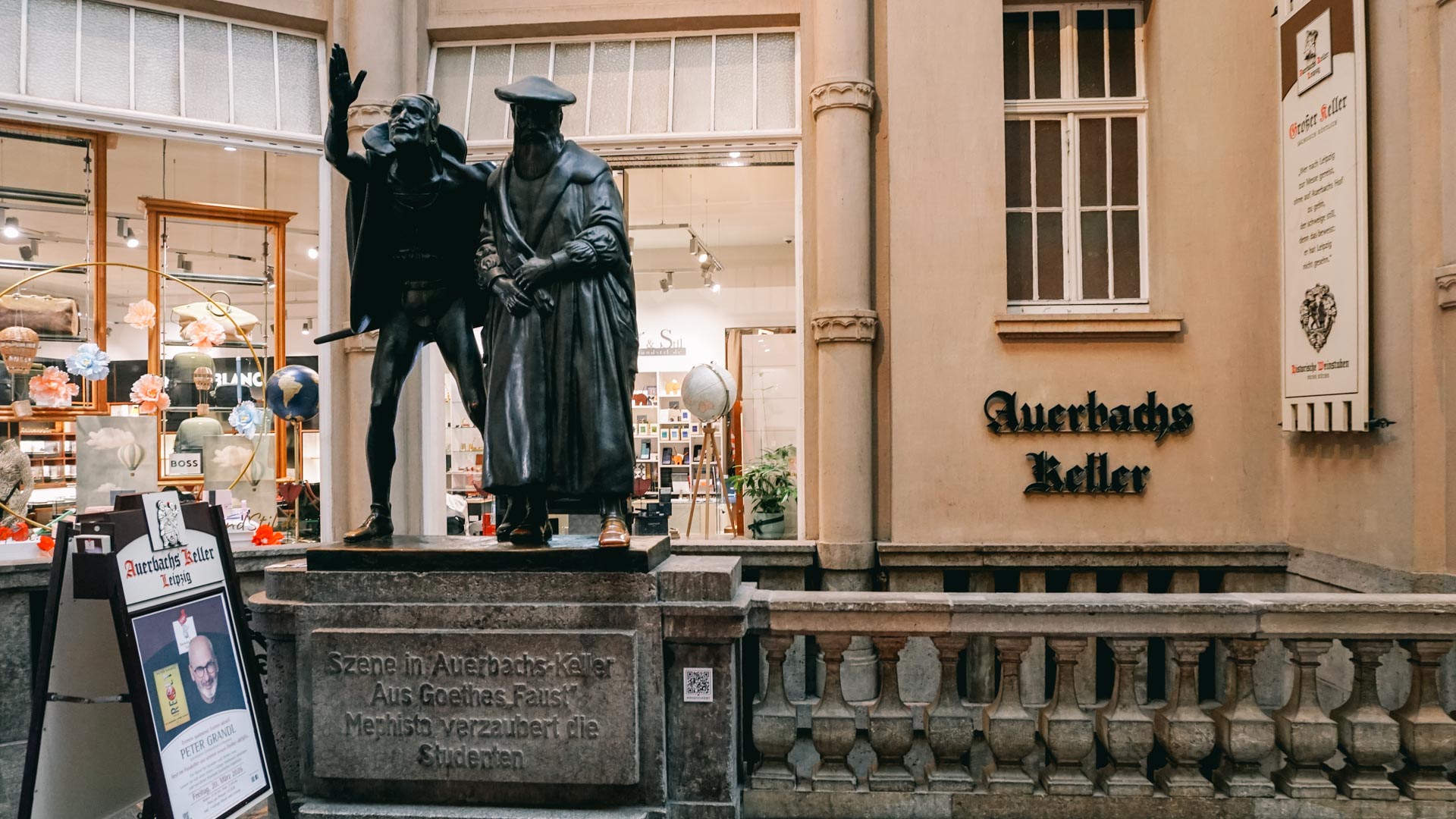
Goethe’s presence in Leipzig is not just a matter of folklore. As I mentioned earlier, Goethe is one of the figures forever tied to the city’s history. He studied here, and the iconic Auerbachs Keller later became inseparable with Faust. Goethe’s mark is omnipresent in the city, and Auerbach Keller still exists after more than 500 years, and you can actually have lunch or dinner there.
Outside the Auerbach Keller, you can see a statue dedicated to Goethe. Despite being a tad touristy and relatively pricey, the location is hard to beat for a proper old-time literary feel. Goethe’s presence is strong, and in front of his statue, you’ll actually feel how the written word and location can become as close as possible, even if you are not a literature lover.
Leipzig is also a city of Music and Musicians
Goethe’s presence is solid, but what makes Leipzig culturally dense is actually its strong musical identity. The city is associated with Bach, Mendelssohn, Clara and Robert Schumann, Wagner, and many others. According to official information, more than 500 musicians have left their mark on the city’s history.
The presence of music and its widespread meaning in Leipzig were, for me, among the reasons the city felt more important than it looked when exiting the train station. Such a strong arts background translates into an ever-evolving city, leaving a mark on its welcoming soil. The music heritage, I thought, definitely shaped the atmosphere of Leipzig.
Even if you don’t visit the museums and houses dedicated to Bach or Mendelssohn, you can still understand how the traditions influenced the city’s style.
Pause at the Holocaust Memorial
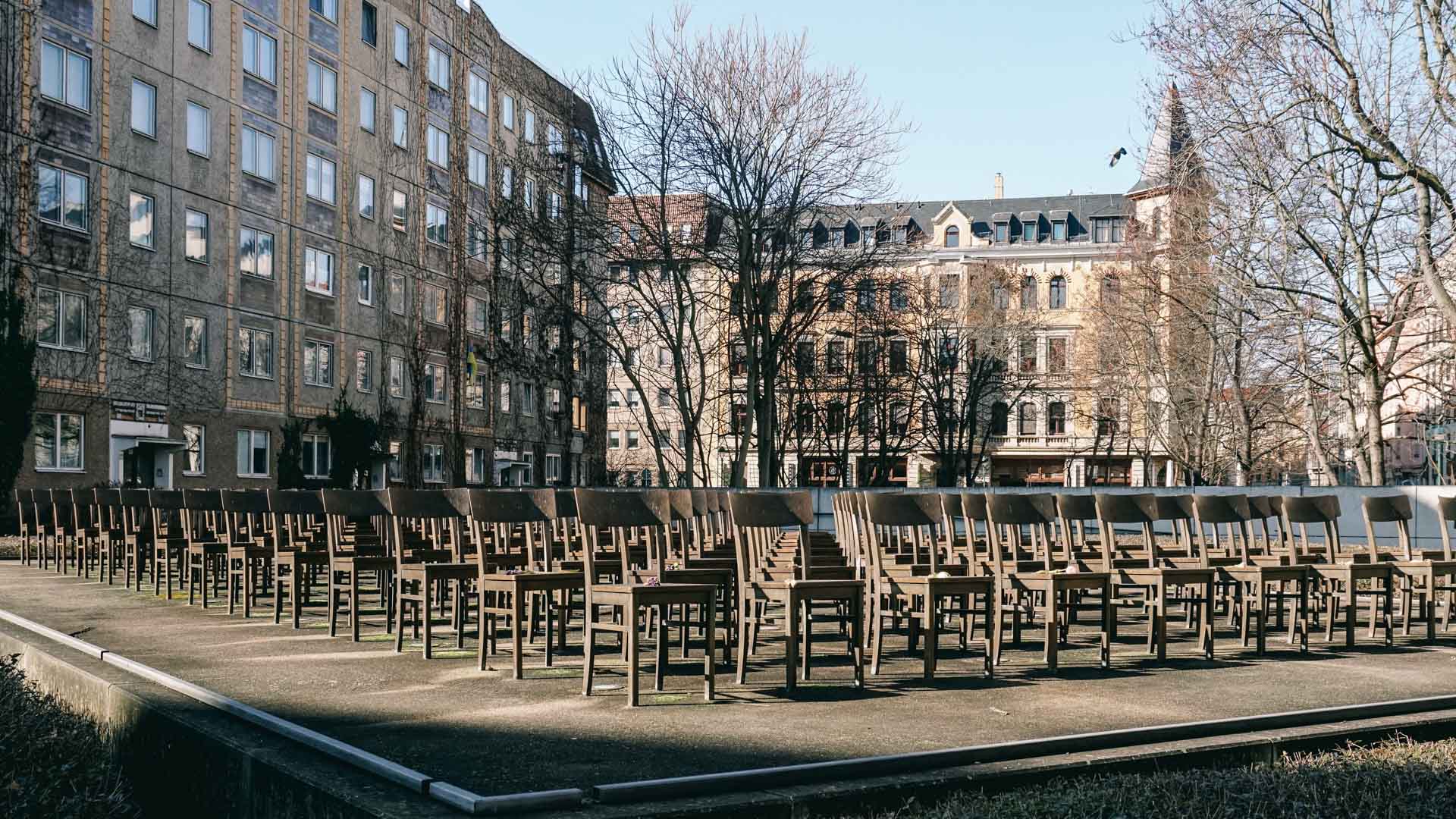
Humanity’s collective memory has been forever sealed by the Holocaust. In Leipzig, the Holocaust Memorial is located on a quiet street, and it’s one of the strongest and most unsettling places I saw on my trip. It stands on the site of the destroyed synagogue and consists of several rows of empty bronze chairs. The environment is eerie. At first glance, it seems pretty plain; however, it carries immense power.
After staying there for a while, I understood that the mourning here is conveyed by absence and silence. On the front row of chairs, people have left flowers, which made me re-observe: this emptiness or absence had a physical layer that I found truly emotional. For me, this was less of a bucket-list spot and more of one that calls you to slow down, pay attention, and remember.
Visit the Zeitgeschichtliches Forum

If you would like to quickly decode the city’s past, there’s no better place than the Zeitgeschichtliches Forum. Almost opposite the Market Square, the Zeitgeschichtliches Forum focuses on division and everyday life in the GDR, while guiding visitors towards the road to German reunification and democracy. Leipzig is a city forever tied to the Peaceful Revolution, and, as you will see later in this travel guide, it’s also closely connected to East German history.
Although I have visited and written about the DDR Museum in Berlin, this seems slightly different. Yes, some patterns and exhibits (like the Trabi) seem similar; however, here, the information and details add the necessary localized context. In its rooms, you can grasp the city’s themes, and the added details will help you see the city differently and understand its story after leaving the Forum.
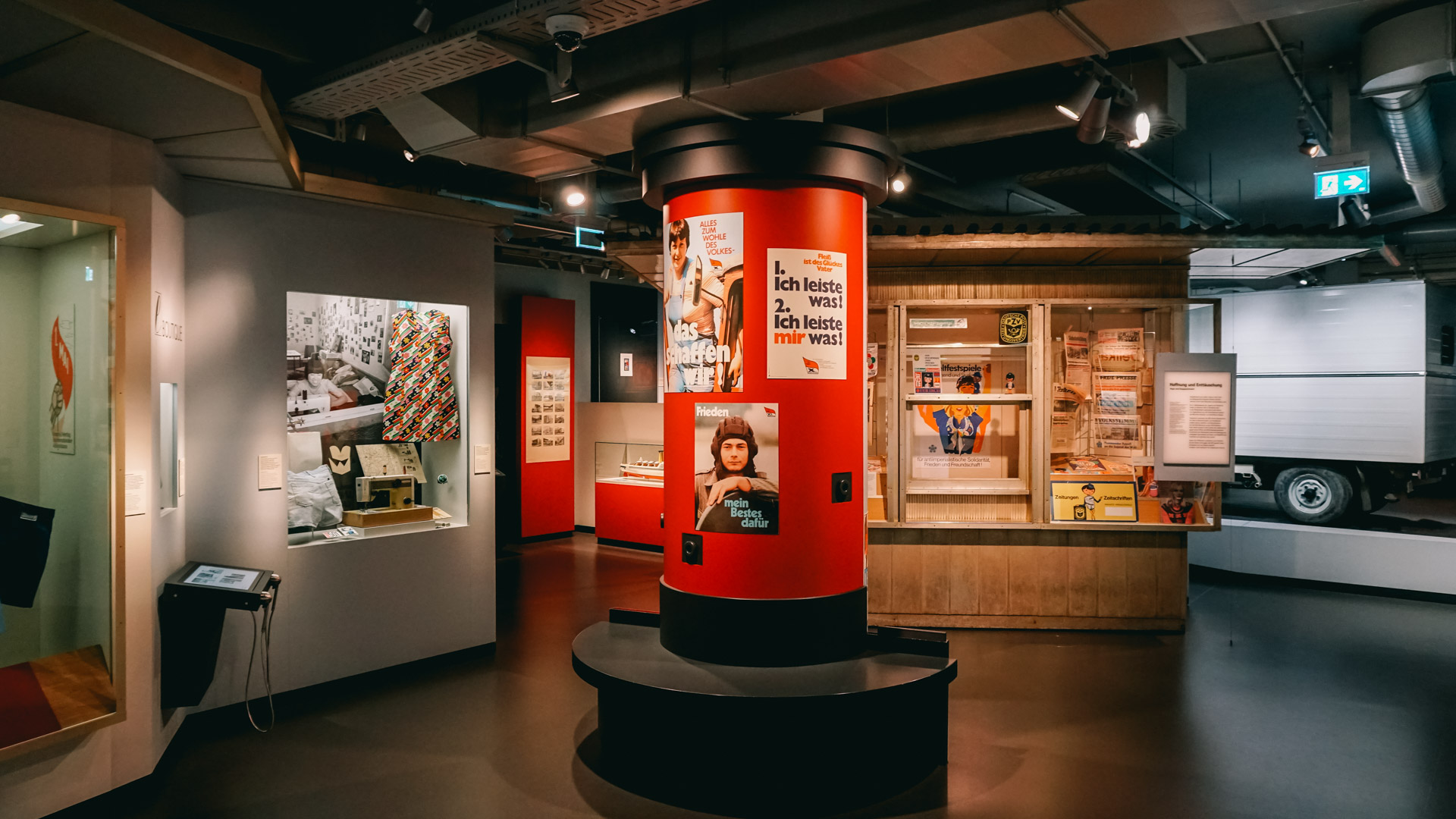
For first-time travelers to Leipzig, this is a spot where you can understand modern and contemporary history because it connects politics, memory, and daily life in an easygoing way. The Zeitgeschichtliches Forum is free for visitors.
Don’t miss the Stasi Museum in the Runde Ecke
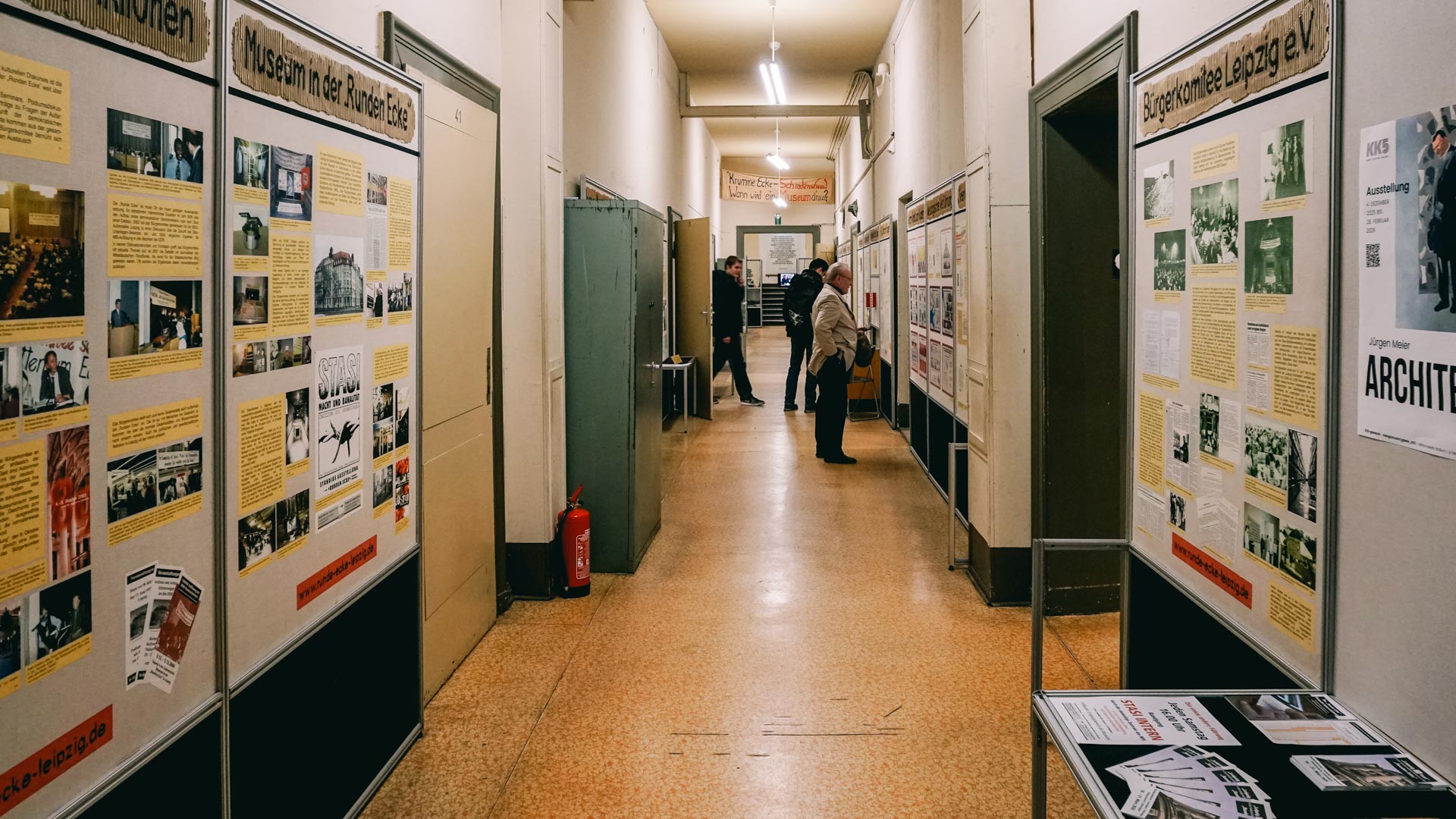
If I had to pick the most unsettling place I visited in Leipzig, this would definitely be the Stasi Museum in the Runde Ecke (I wrote a dedicated article on the former Stasi HQ here). Located in the former headquarters of the Ministry for State Security, this museum preserves the memory of dark times, where unprecedented surveillance covered the entire city.
Despite its administrative look and austere atmosphere, the Stasi Museum in Leipzig offers a powerful view of the State Police and covers a range of topics. You will see documents, objects, cell imitations, offices, and devices that you’ll think belonged to an old science-fiction movie. This is such a disturbing experience, but it deserves a visit to get a better idea of what East Germany looked like in the recent past.
Of all the layers of Leipzig, this stayed with me the most. And honestly, despite the differences, it made me think of the Corner House in Riga. Don’t miss it, even though you’ll need some time to recover from what you’ve seen.
Go West to the Spinnerei
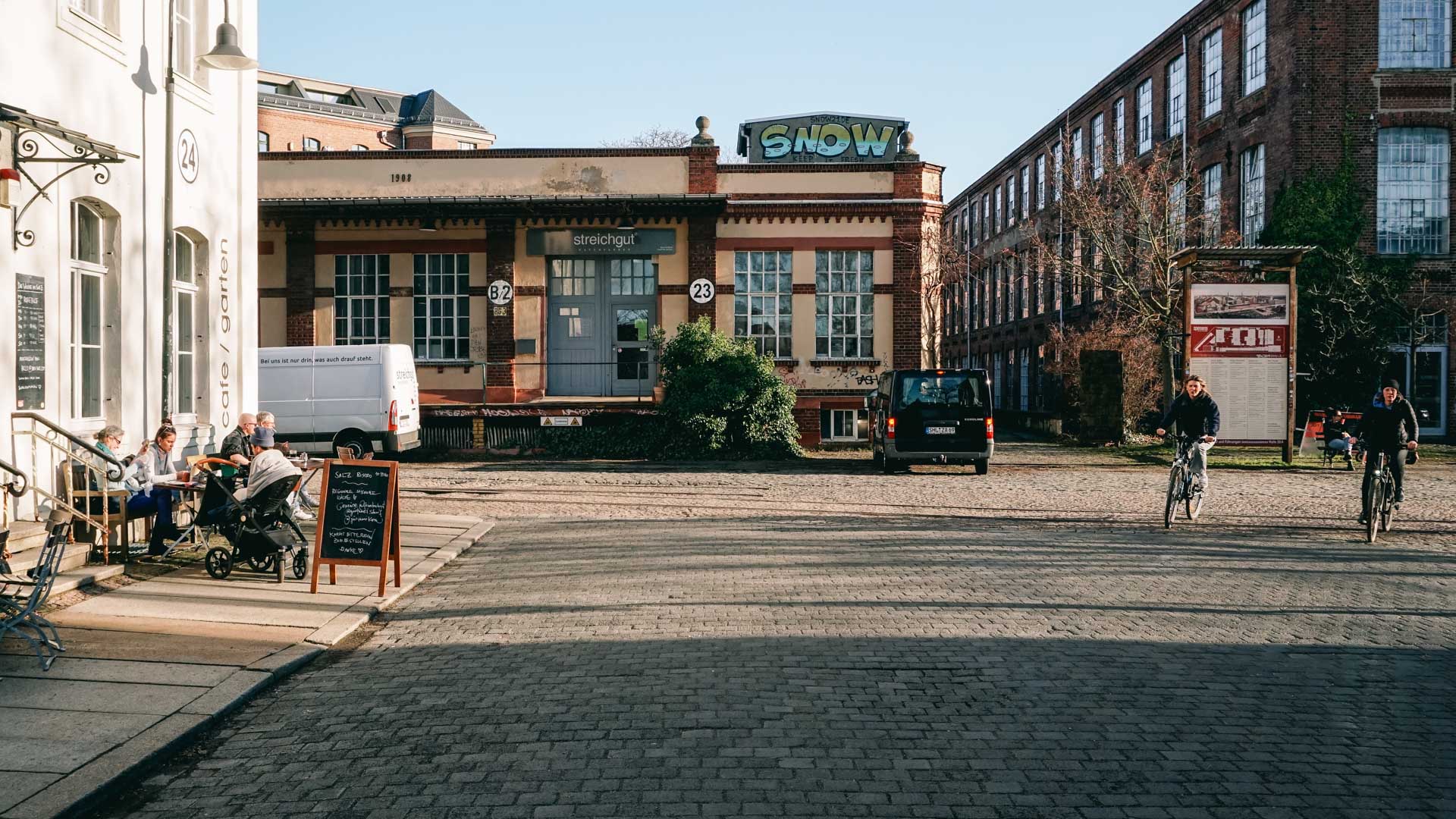
On a lighter note, one of the best things to do in Leipzig is to go west and visit the famous Spinnerei. It’s easy to reach by public transport, though I prefer cycling. After talking so much about history and the past, the Spinnerei will show you a more contemporary face of Leipzig.
Once a cotton mill, the Spinnerei is now a vast cultural hub featuring galleries, artists’ studios, and creative spaces. Yes, the industrial shell remains and lends a rundown feel to the complex, but I believe it’s necessary to convey the location’s artistic background.
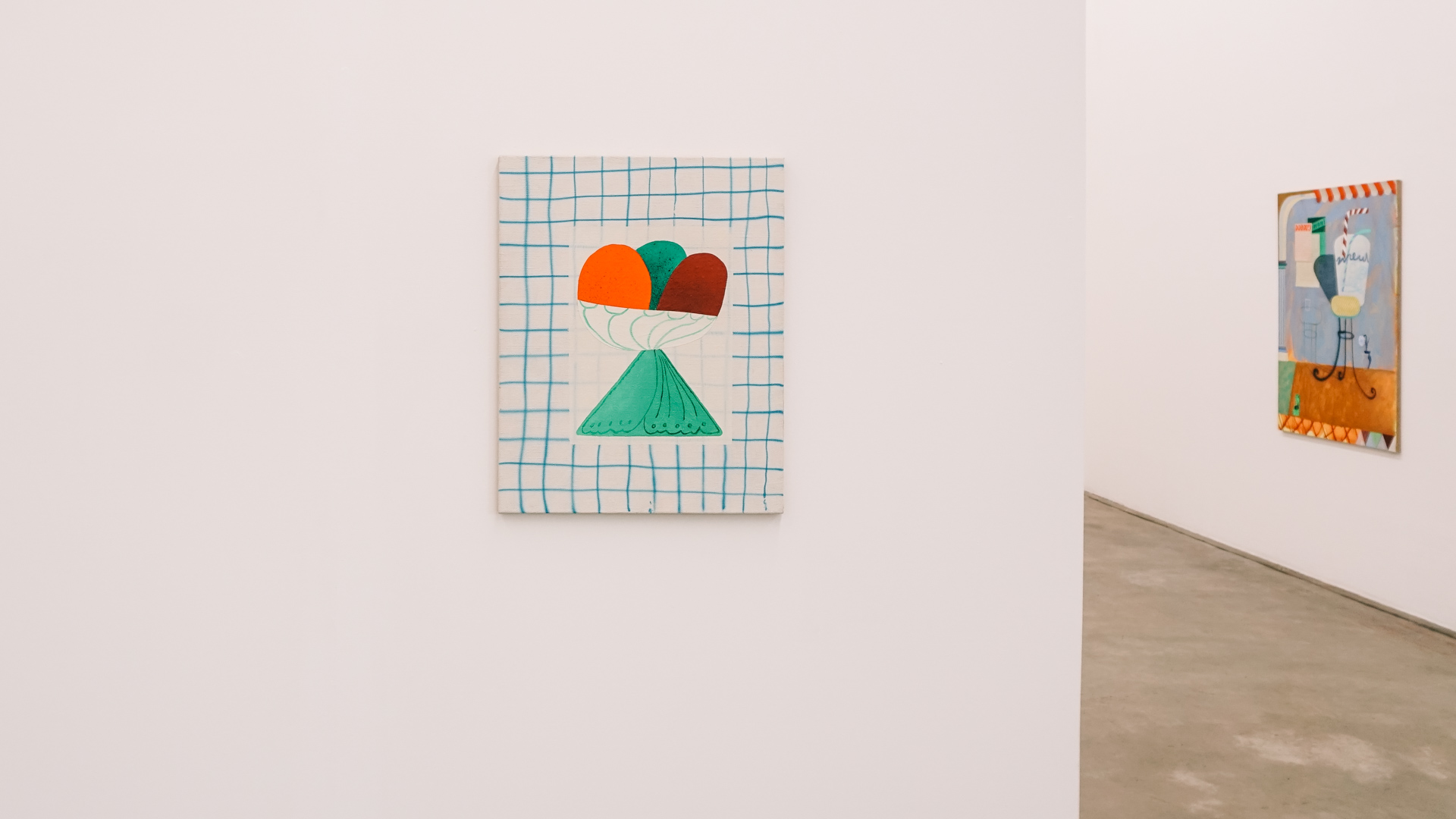
What I liked most about the Spinnerei is that it doesn’t look polished; on the contrary, it feels like a real site that repurposed itself without erasing its past. I came across several artworks in the galleries and loved observing the creative process of emerging artists. The scale of buildings and the afternoon light presented the surfaces as they should be: rough and artistically boiling.
If you need a break after strolling around the galleries, there’s also a cafe at the entrance serving delicious cakes.
Visit the Völkerschlachtdenkmal, the Monument to the Battle of the Nations
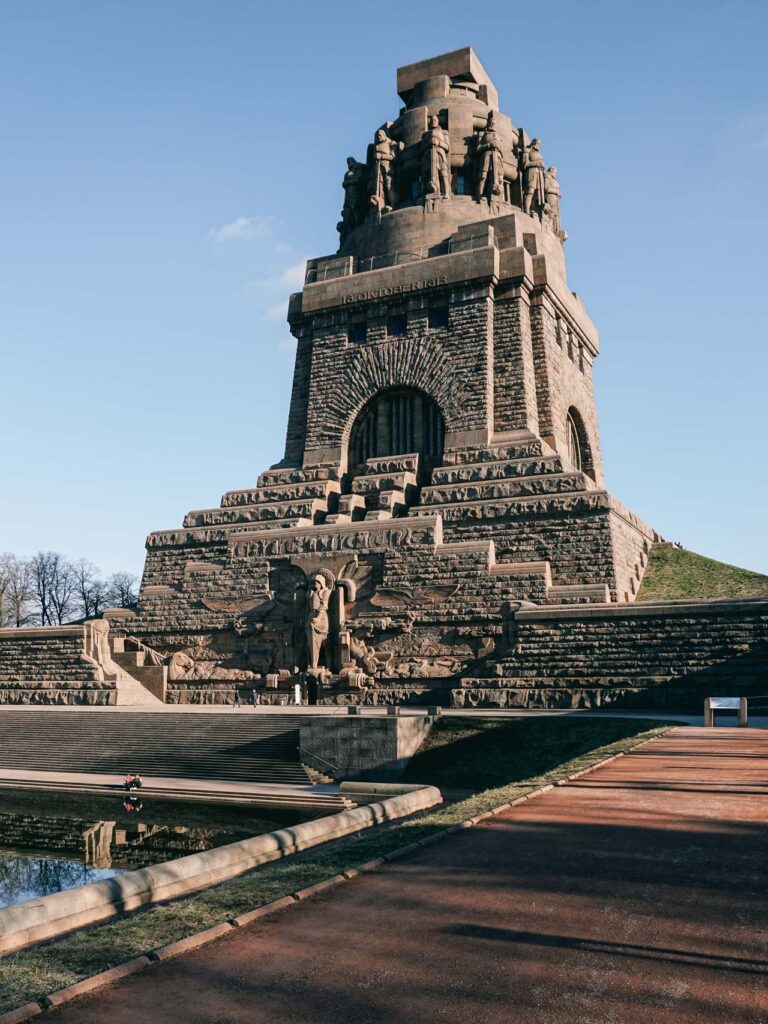
Since we are talking about the city’s more distant locations, one of the things to do in Leipzig is visit the Monument to the Battle of the Nations. Honestly, I didn’t expect to see something that massive (or shall I call it monumental?) in Leipzig.
The Völkerschlachtdenkmal, with the pond in front and the benches surrounding it, is an overwhelming memorial. It commemorates the 1813 Battle of Leipzig and stands 91 meters tall, which is pretty impressive for the city’s architectural landscape. The size and heft work well in the surrounding empty space, but I still found it very imposing. However, the scale and symbolism of the era in which it was constructed are probably justified.
Since it is located well out of the city center but easily reached with public transport, I suggest visiting it and unwinding while observing its size. You can even climb to the top, but keep in mind it might feel relatively claustrophobic.
Look for the Löffelfamilie Neon Sign
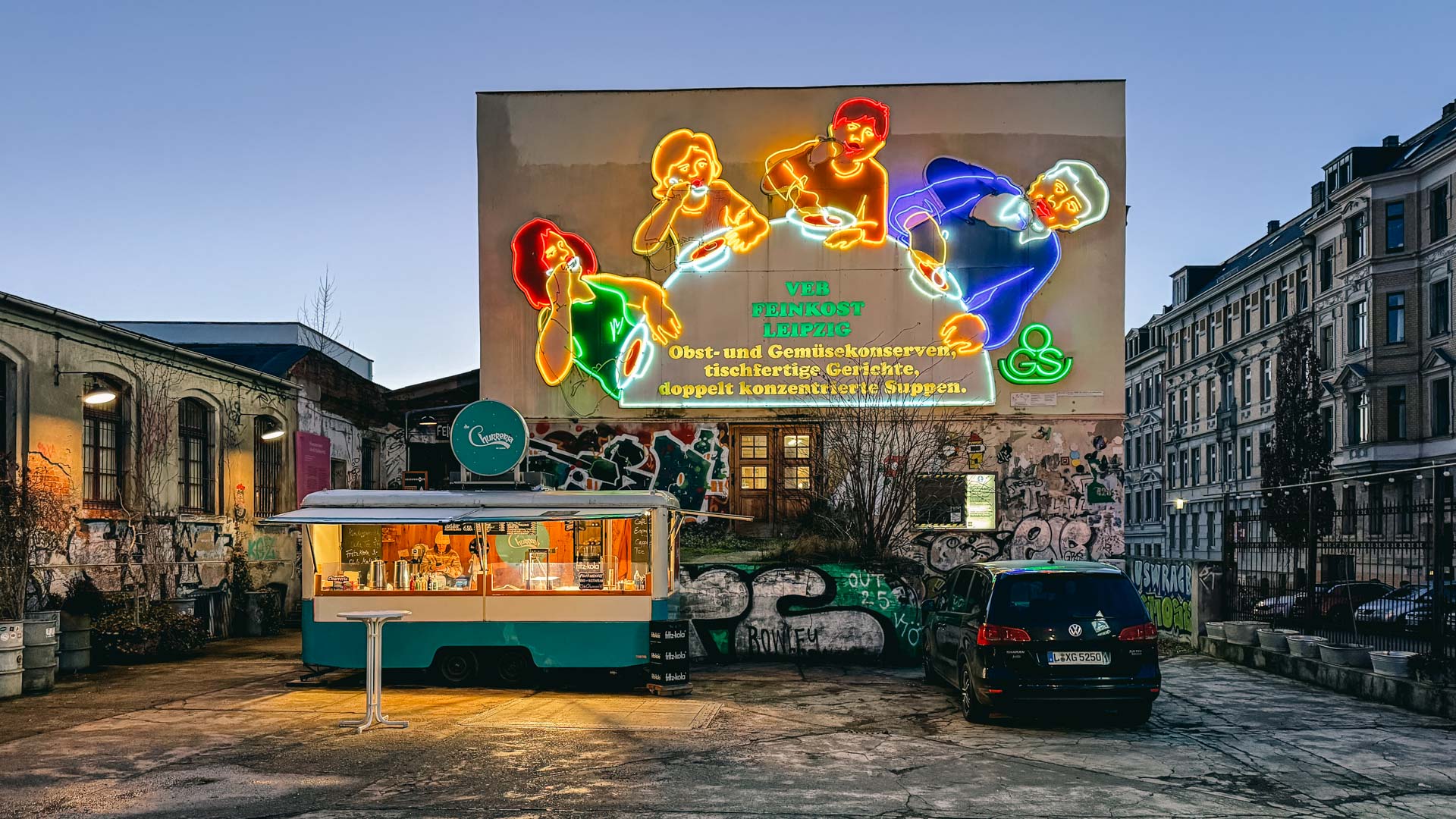
The Löffelfamilie neon sign is exactly the kind of fun, quirky element I always look for when I travel. These are small city details that present another face of a destination: sometimes witty, other times bizarre, quite often both. Apart from the nostalgic sentiment it evokes of a lost era, the Löffelfamilie (literally “The Spoon Family”) depicts an illuminated family eating with spoons.
The neon sign is a historical artifact from the GDR era that still glows every night. The Löffelfamilie is a fun urban detail in Leipzig, installed in 1973 for VEB Feinkost Leipzig, and it carries a trace of East Germany. Partly cinematic and definitely humorous, the Löffelfamilie was, for me, among the most fun things to see in Leipzig.
However, due to rising electricity costs, the sign is illuminated for only about 90 minutes after sunset, powered by solar panels. Therefore, plan your visit accordingly.
You can see its exact location on Google Maps here.
Visit the Robert Capa House
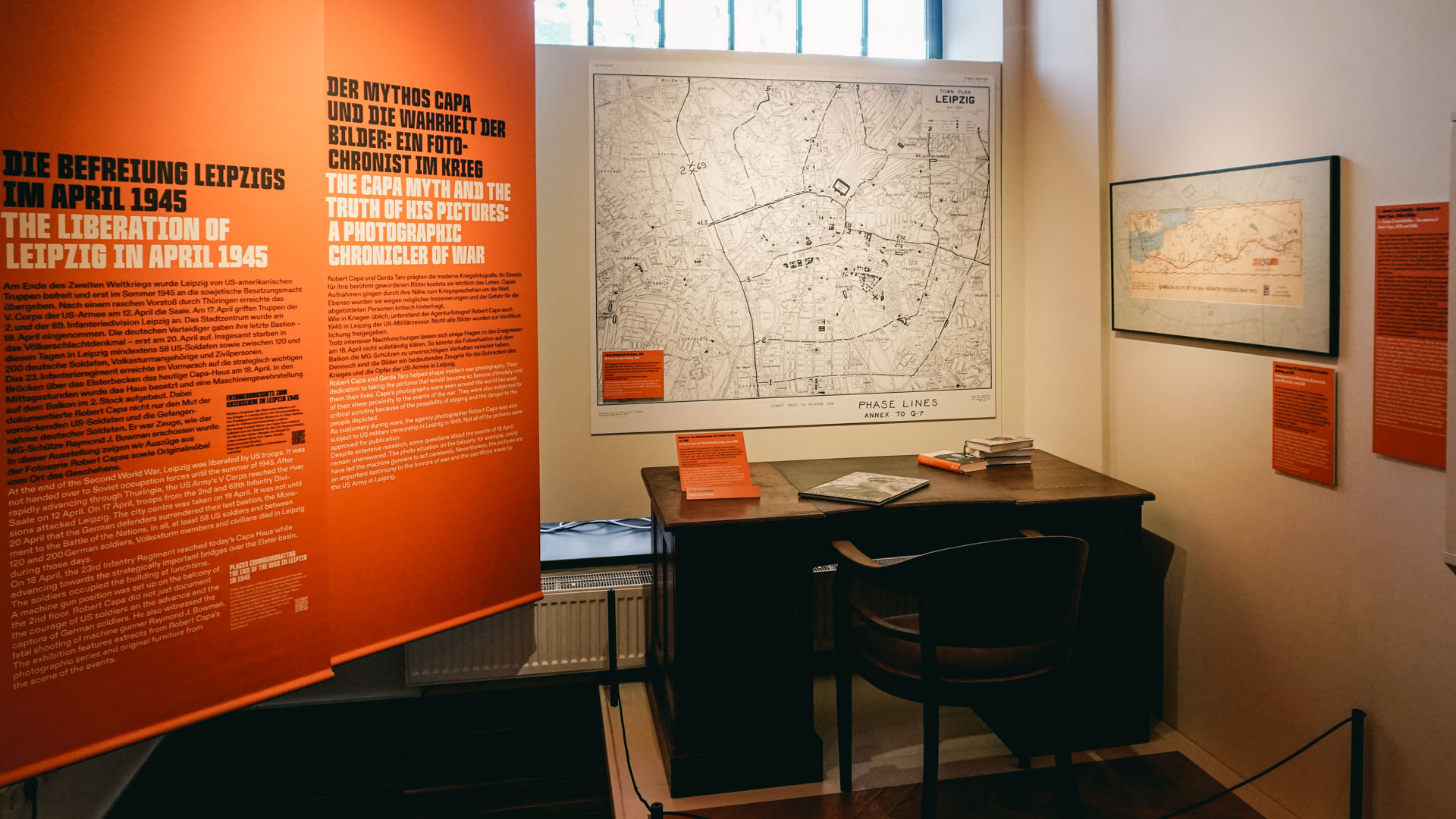
Visiting the Robert Capa House was, for me, one of the must-see places in Leipzig. This is not an exhaustive museum, nor a place where you will see many things. However, it is one of the city’s most important locations because it is where the famous photographer Robert Capa captured the image later published by Life Magazine, titled “The Last Dead Man on the War.”
Taken from this specific building in Leipzig in the last days of World War II, this was a place I wanted to visit because the lines between photography and history intersect and become obscure. The exhibition consists of just two rooms, where you can see Capa’s cameras, his desk, and photos from the series he shot in Leipzig. It feels tiny in size (and it actually is), but its historical importance is huge. Moreover, it feels like this specific photograph connected Leipzig to the war.
For photography lovers, this is a must-see location in Leipzig. Even if you’ll need to take the tram for a few stops, I highly recommend visiting it.
Spot the Last Gas Lantern
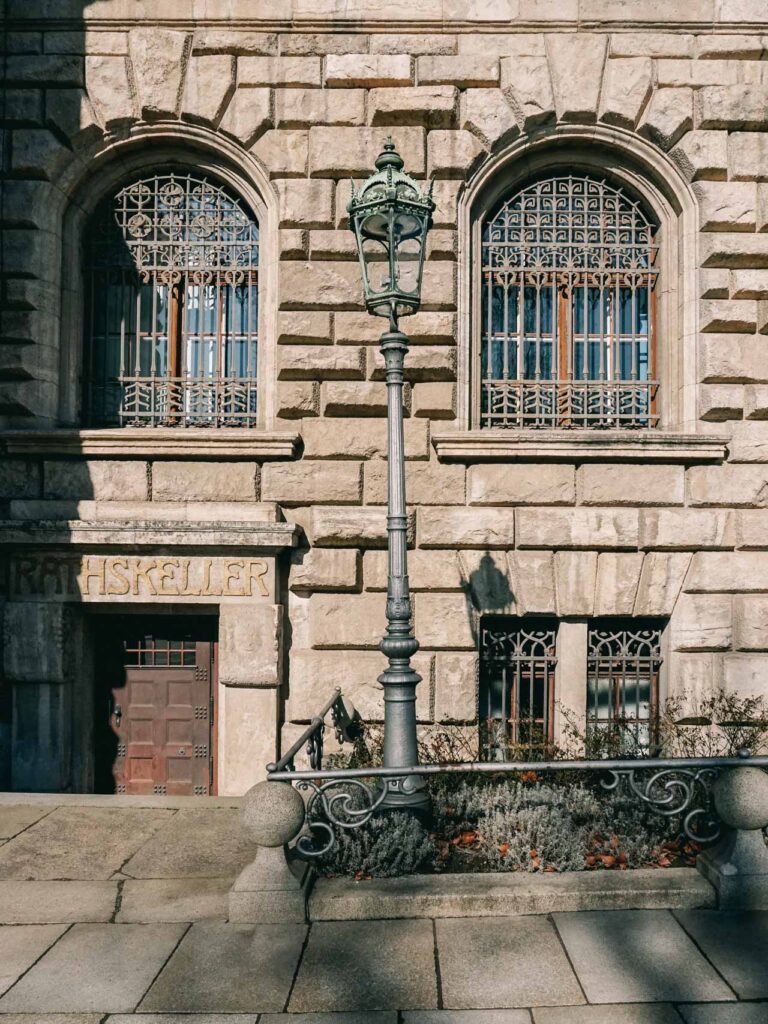
This is more of a spin-off of my Leipzig guide, but, like the Spoon Family neon sign, I believe it adds an extra layer to the city’s story. You can’t call it a major attraction, but the fact that there’s only one gas lantern left in town is a sight in itself.
You can easily overlook it because it doesn’t stand out and isn’t in a very prominent spot. You can find it outside the New Town Hall (here’s the exact location) on the right of its entrance. It’s a humble lamp post, but it still survives and seems like a remnant of old times.
Unfortunately, I spotted it in the morning and didn’t have time to revisit it at night to see it illuminated. So, if possible, try to see it in the evening for a fuller old-time touch.
See the “Unzeitgemäße Zeitgenossen” sculpture
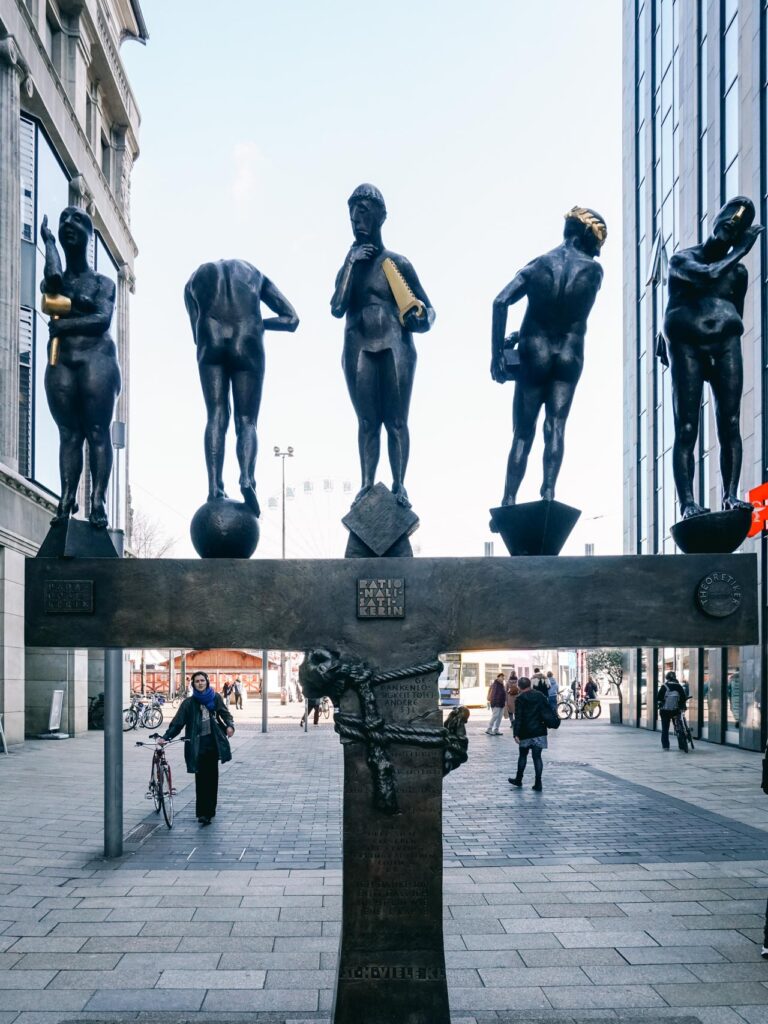
There’s no lack of public sculptures in Leipzig, but the one that caught my attention was the Unzeitgemäße Zeitgenossen. Although it is located on a commercial pedestrian street, this satirical statue contributes exactly what I loved in Leipzig: story, humor, and social commentary. It is a bit strange, yes, but also provocative, as it makes you wonder why it stands here and what message it intends to convey.
What you’ll see is five bronze figures standing above the street on a beam. The funny part is that each of them tries to balance and all have a small golden attribute: for example, the Rationalisatorin carries a golden saw. As if the caricatural figures were not enough, it was funny that the beam was placed relatively low. The point was to cross beneath it and afterward stop and think.
The sculpture, created during the DDR years by Bernd Göbel, is titled “Untimely Contemporaries.”
See the Historic Trains at Leipzig Hauptbahnhof
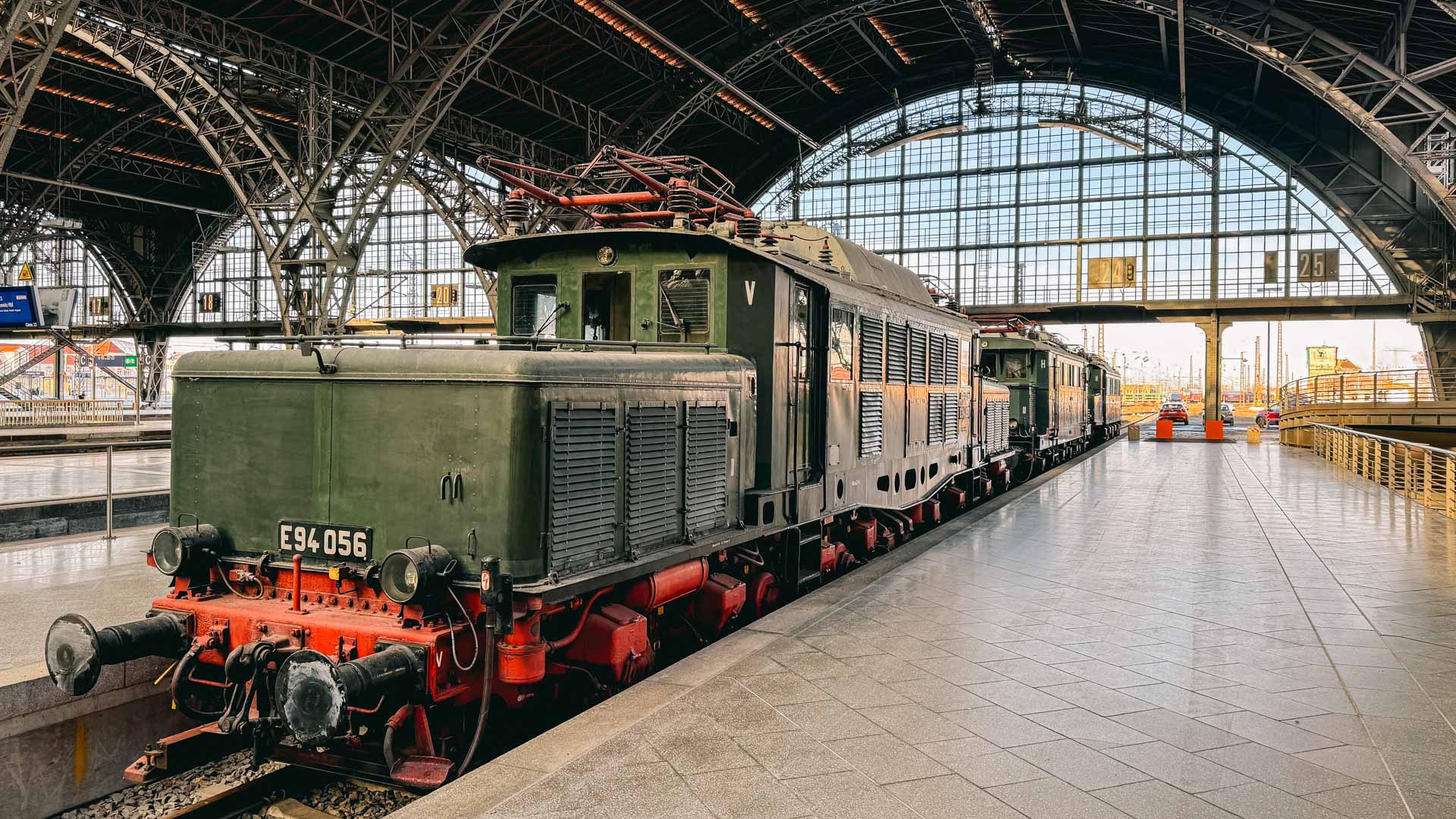
Last but not least, here’s one more of the top things to do in Leipzig. It makes it last to the list, but it could very well be the first. Don’t be confused: it’s not about its importance. It’s actually located at Leipzig Central Station, so you can decide for yourself whether to see it when arriving in town or before departing.
As I mentioned earlier, Leipzig’s train station is one of the largest in Europe. Here’s a fun fact for train lovers: in Platform 24, you won’t find trains departing. Instead, you will see the platform occupied by historic trains. You can see, among others, an old locomotive and an old passenger train.
Despite looking like isolated exhibits in a very busy train station, I felt a sense of nostalgia when I saw them up close. These old reminders of past journeys and old-time travel narrate quite a different story from what we are used to nowadays. Transport, identity, trade, everything seems to fit in Platform 24.
Therefore, assume this to be an extra, small layer of Leipzig life. After all, we often travel about the small details.
Getting around Leipzig
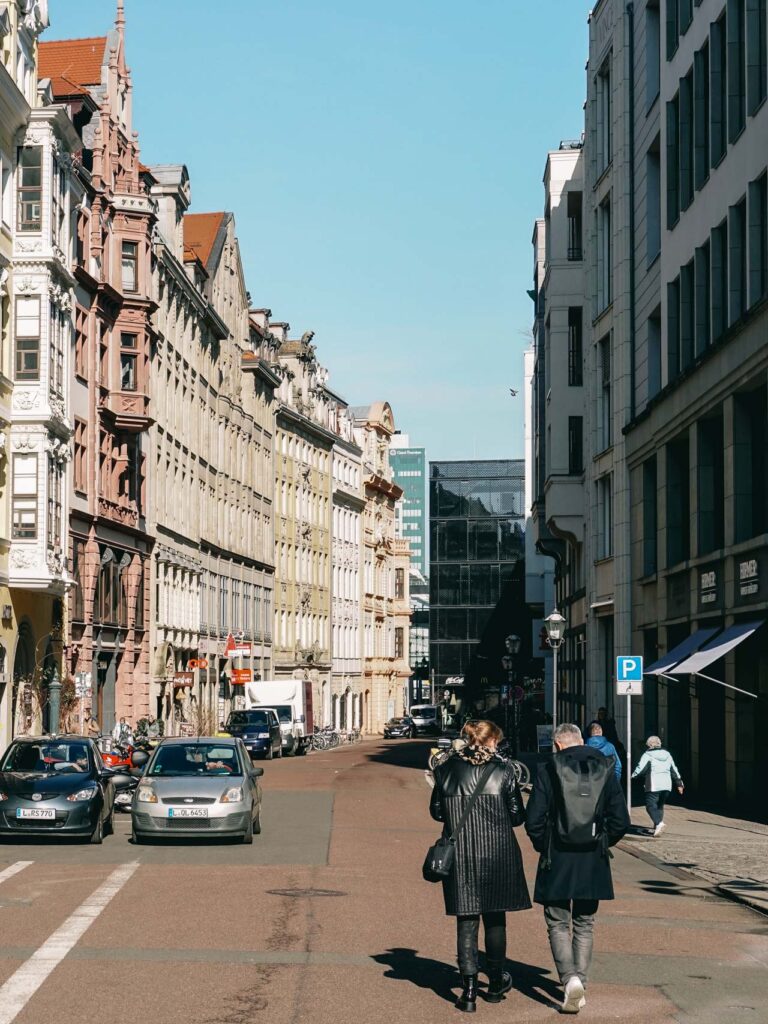
After sharing the things to do in Leipzig, it’s now time to learn how to actually visit all these places. And here’s some really good news for you.
Getting around Leipzig is something so pleasant that you don’t have to worry much about it. The entire city center is walkable, and most sights are easy to reach. It literally won’t take more than half an hour to walk the city center from edge to edge, so you can see most of the sights in a single yet long walk. That said, for first-time visitors, Leipzig feels very easygoing.
What I enjoyed even more than walking was cycling in Leipzig. Like Berlin, Leipzig is a city where you can enjoy cycling and visit its landmarks with minimal effort. NextBike offers shared bikes, and all you need is an app to start renting and riding through the city.
What I did during my journey to Leipzig was: explore the city center on foot and visit most of the distant locations by bike. For example, I cycled from the Battle Monuments to the Spinnerei and later from there to my hotel.
However, for longer distances, you can also use the trams and buses. I can also recommend the Leipzig card here. It includes unlimited travel within zone 110 (which covers the entire city and all the sights I mentioned in this article) and comes with discounts at museums, tours, and some restaurants. You can buy 1-day, 2-day, and 3-day Leipzig cards, and they are worth it, even for trams and buses, because single public transport tickets cost almost 4 euros.
Overall, Leipzig is a joy to explore, either on foot, by bike, or by public transport.
How many days do you need to see Leipzig?
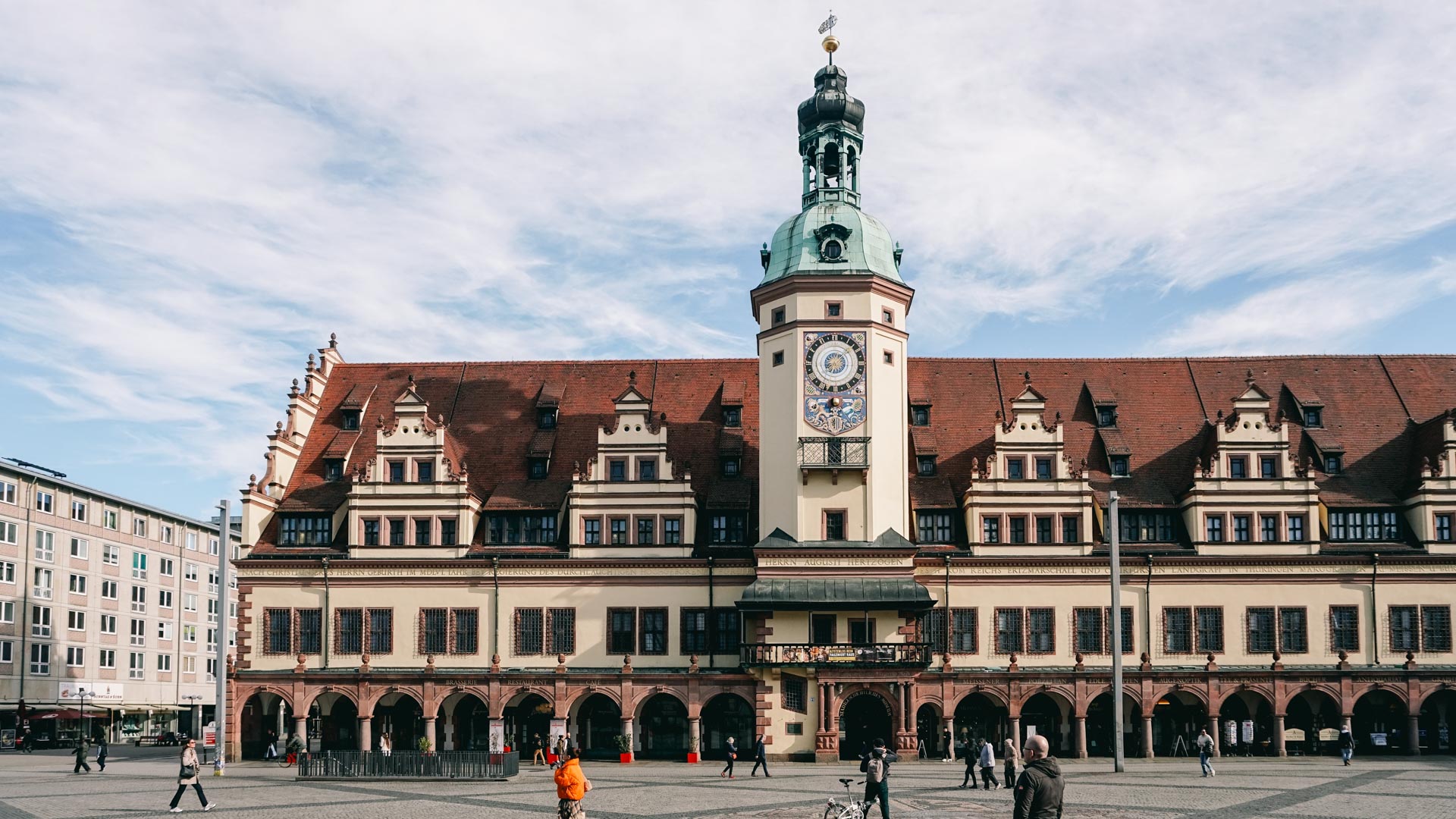
This question largely depends on your travel style. If you just want to see the main sights in the city center, a day trip to Leipzig is enough. I highly recommend spending at least two days in Leipzig for a fuller experience and to see as much as possible. Longer stays also make sense if you enjoy a slower rhythm or would like to visit nearby places like Halle.
Here’s what I’d suggest.
Leipzig in one day
If you only have one day in Leipzig, start with the Market Square at the historic center. Have a walk through the beautiful arcades and continue toward the Goethe and Bach statues. Choose one of the major museums in town for an extra layer: pick the MdbK for art or the Zeitgeschichtliches Forum for modern history.
From there, choose one memory site, such as the Holocaust Memorial, and observe local life. Have a cup of coffee or lunch, and see the last gas lantern or the statue. If you depart at night, the Löffelfamilie is also a lovely stop. Before you get on the train, see the historic trains at Leipzig Hauptbahnhof.
In one day, you can’t see all of Leipzig, and you will also be limited by your arrival and departure times.
Leipzig in two days (recommended)
That’s what I did, and I believe it’s the right amount of time to grasp Leipzig’s story. On the first day, focus on the city center and see the Market Square, the MdbK, the Goethe and Bach statues, the Holocaust memorial, and the Zeitgeschichtliches Forum.
On the second day, get out of the city center and visit the Spinnerei, the Capa House, and the Monument to the Battle of Nations. Finish your sightseeing at the Stasi Museum and feel its impact.
The second day makes a big difference because you can include everything in your itinerary and observe Leipzig’s texture unfold.
The best things to do in Leipzig, Germany: Final Thoughts
Arriving from Berlin on a sunny spring day, I found Leipzig unfolding like a compact, beautiful city. As you’ve read in this Leipzig travel guide, the city is so layered that there’s always something interesting to see. There’s music, there’s literature, but there’s also war, documentation, revolution, and resistance.
If you’ve been to Berlin, you probably know that not many places have such a rich and colorful history. However, Leipzig won’t let you down. While at times it might feel like the little sibling of Berlin, Leipzig has a unique identity: it’s more elegant, more vibrant, and not boring at all. What I saw was a city where squares lead to museums, dark history coexists with urban coolness, and there are so many cultural spots in town that it makes sense to call this travel guide cultural rather than anything else.
If you’re looking for an excursion from Berlin or a city break with a laid-back atmosphere, Leipzig is a solid option thanks to its significance and character. There will always be something to see and, as it happens with the nicest cities, something new to discover and please your inner curiosity.
Pin it for later

Sharing is caring. Share the best things to do in Leipzig, Germany, with your friends.