

Last Updated on August 22, 2026 by George Pavlopoulos
The Acropolis of Athens is always present in the city’s landscape. You will see the Parthenon from rooftops, but also appearing between apartments, while walking through Plaka (hint: see it from Aiolou Street), and quite often from places you don’t expect it to appear at all.
As a Greek, I have visited the Acropolis several times over the years: sometimes it was just for sightseeing and reconnecting with the capital, while at other times I wanted to show it to friends from abroad. Despite knowing the place relatively well, walking through the Propylaea and seeing the Parthenon remains always an experience that never feels totally ordinary.
For a first-time visitor to Athens, I believe that the Acropolis requires some planning. Tickets now come with a specific entrance time, which might feel tight; on top of that, Athens can become extremely hot in the summer, so the right entrance time can be important for your visit.
Therefore, in this guide to the Acropolis of Athens, I’ll share everything you need to know for your visit to Greece’s most iconic monument. You will find information about tickets and opening hours, the best time to visit, what you will see, and also the route I prefer when I visit the site with friends from abroad.
Let’s start.
*Some links are affiliate links. It means that if you book something, I might earn a small commission at no additional cost to you.
Visiting the Acropolis of Athens: the short version
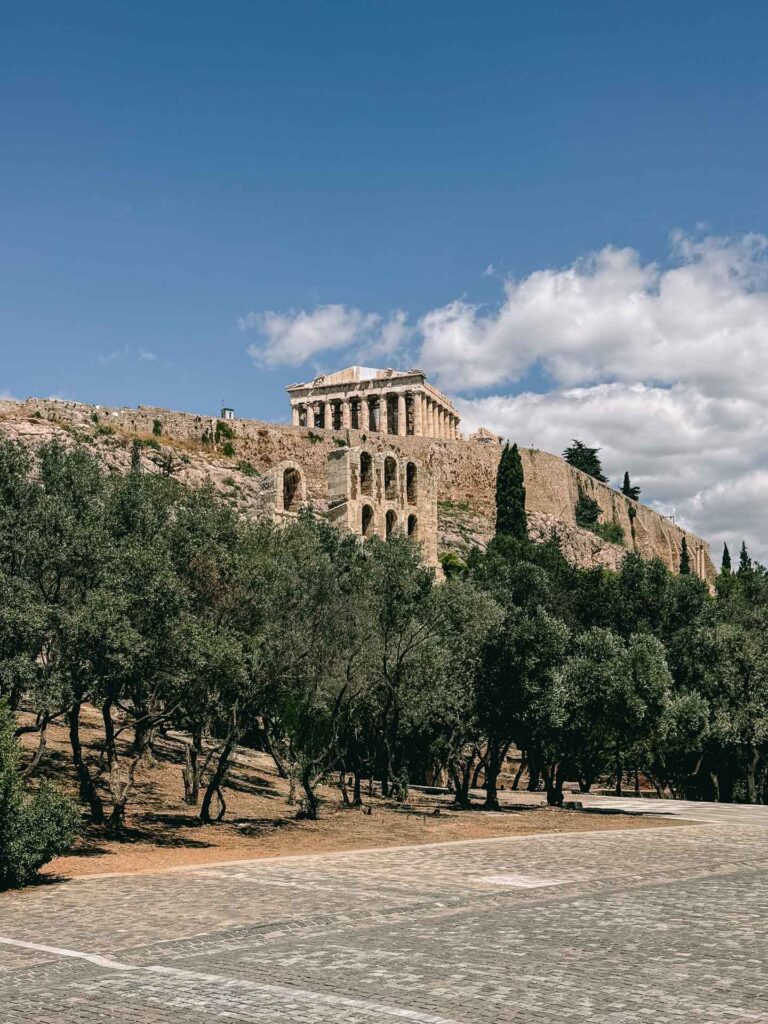
If you are currently planning your Athens itinerary, here’s the core information for including the Acropolis.
Acropolis ticket: €30 for a full-price ticket and €15 for eligible reduced-admission visitors.
Advance booking: Recommended, especially between spring and autumn. You can purchase your Acropolis ticket here.
Timed entrance: Yes. You must select an entrance time when booking your ticket. Entry is timed, and the official ministry website states that Acropolis tickets are valid from 15 minutes before until 15 minutes after the selected admission time.
Opening hours: The Acropolis generally opens at 8 am. Summer opening hours usually extend until 8 pm, while winter hours are shorter. Opening hours gradually change in autumn, so always check them before visiting.
Best time to visit: Either at 8 am or during the last couple of hours before closing.
Time needed: I always calculate approximately 2 hours.
Closest metro station: Acropolis Station, on Metro Line 2.
Acropolis Museum: Yes, it deserves a visit and requires a separate ticket.
Best entrance for first-time visitors: I prefer the South Slope entrance near the Acropolis metro station because it offers a better view of the archaeological site and the sacred hill.
Should you book a guided tour? If this is your first visit and you are interested in ancient Greek history, I think a good licensed guide adds significant value.
A few words about the Acropolis of Athens
In Greek, the word Acropolis stands for the upper or highest city, and ancient Greece had several acropoleis. However, when people refer to “the Acropolis,” they usually mean the rocky hill rising above downtown Athens.
The monuments standing there today are primarily associated with Pericles’ building program in the 5th century BC. The best-known building is, of course, the Parthenon, the temple dedicated to Athena.
However, the archaeological site contains much more. You will also see the Propylaea, which is the monumental gateway to the hill, the Temple of Athena Nike, and the Erechtheion with its world-famous Caryatids. On the slopes are some of the most important remains of ancient Athens, including the Theatre of Dionysus.
This is one reason I wouldn’t rush directly toward the Parthenon, and that’s why I suggested the South Slope: the ascent is definitely a part of your visit.
Acropolis tickets: price and where to buy them

A regular ticket to the Acropolis currently costs €30, while the reduced ticket costs €15. The ticket covers the Acropolis and its slopes; the Acropolis Museum requires a separate admission ticket and is not included.
You can buy Acropolis tickets at the archaeological site or online; for most travelers, I strongly recommend buying online to avoid queues that, especially in summer, can be exhausting in the heat.
Moreover, admission to the Acropolis operates with timed entry, so during the busiest periods of the year (late spring to early autumn), the most convenient slots can sell out fast. Buying a ticket beforehand means that one of the most important parts of your Athens itinerary is settled, and honestly, the Acropolis deserves this pre-planning.
Last but not least, there’s something else worth knowing if you’ve read older guides to Athens. The old state combination ticket that included the Acropolis and several other archaeological sites was discontinued in 2025. Therefore, you should calculate the Ancient Agora, Roman Agora, and other sites separately when planning your sightseeing budget. To me, this is unfair, but it is what it is.
You can buy your Acropolis ticket here.
Do you need a skip-the-line Acropolis ticket?
In my opinion, the phrase skip the line is slightly misleading at the Acropolis. This is because, while buying a ticket in advance allows you to avoid queues at the ticket office, it doesn’t mean you don’t have to pass through the entrance and security controls. On busy days, a queue can form there as well, and that’s a line that you can’t skip.
Long story short, yes, an online ticket saves you time, but don’t plan to arrive a minute before your time slot at the entrance. As a rule of thumb, I’d say that being there 20-30 minutes earlier is reasonable.
Which Acropolis entrance should you use?
There are two main ways to enter the archaeological site, and for a first visit, I would prefer to use the South Slope entrance. That’s close to the Acropolis metro station and the Acropolis Museum.
This route is more immersive and lets you slowly progress through the site. Instead of heading straight to the top, you’ll first walk along the southern slope and see spots connected to the daily cultural and religious life of Ancient Athens.
The most important stop here is the Theatre of Dionysus, and after walking past it, you will gradually ascend toward the main monuments and reach the Propylaea.
The entrance on the western side of the hill provides a more direct access to the Acropolis and makes sense if you are coming from Monastiraki or Thissio. However, in my opinion, it is less immersive.
As an idea, I would therefore suggest entering from the South Slope and, after visiting the Acropolis of Athens, descending from the western side. This will feel more like a natural walking route, and you will be closer to Plaka and Anafiotika afterward.
What is the best time to visit the Acropolis?

If you’re visiting Athens between late spring and early autumn, I would choose one of the following two timeframes:
Either the first entrance slot in the morning or late afternoon.
Early in the morning, the temperature is usually milder, and the crowds haven’t yet reached their peak. If sightseeing is your main priority, then this is probably the best time slot.
On the other hand, late afternoon might still be hot, but if you are into photography, the light is softer and better for capturing photos. The marble will not look that harsh anymore; the shadows are longer, and Athens is a tad more photogenic from above.
One thing I would definitely avoid during the summer is arriving at noon. Is Acropolis doable at noon? Sure. Will it exhaust you? Absolutely. There’s very little shade on the upper part of the Acropolis and the heat reflects intensely from the stones. Also, although not the rule, on exceptionally hot days Greek authorities may modify opening hours for safety reasons.
My preferred route through the Acropolis
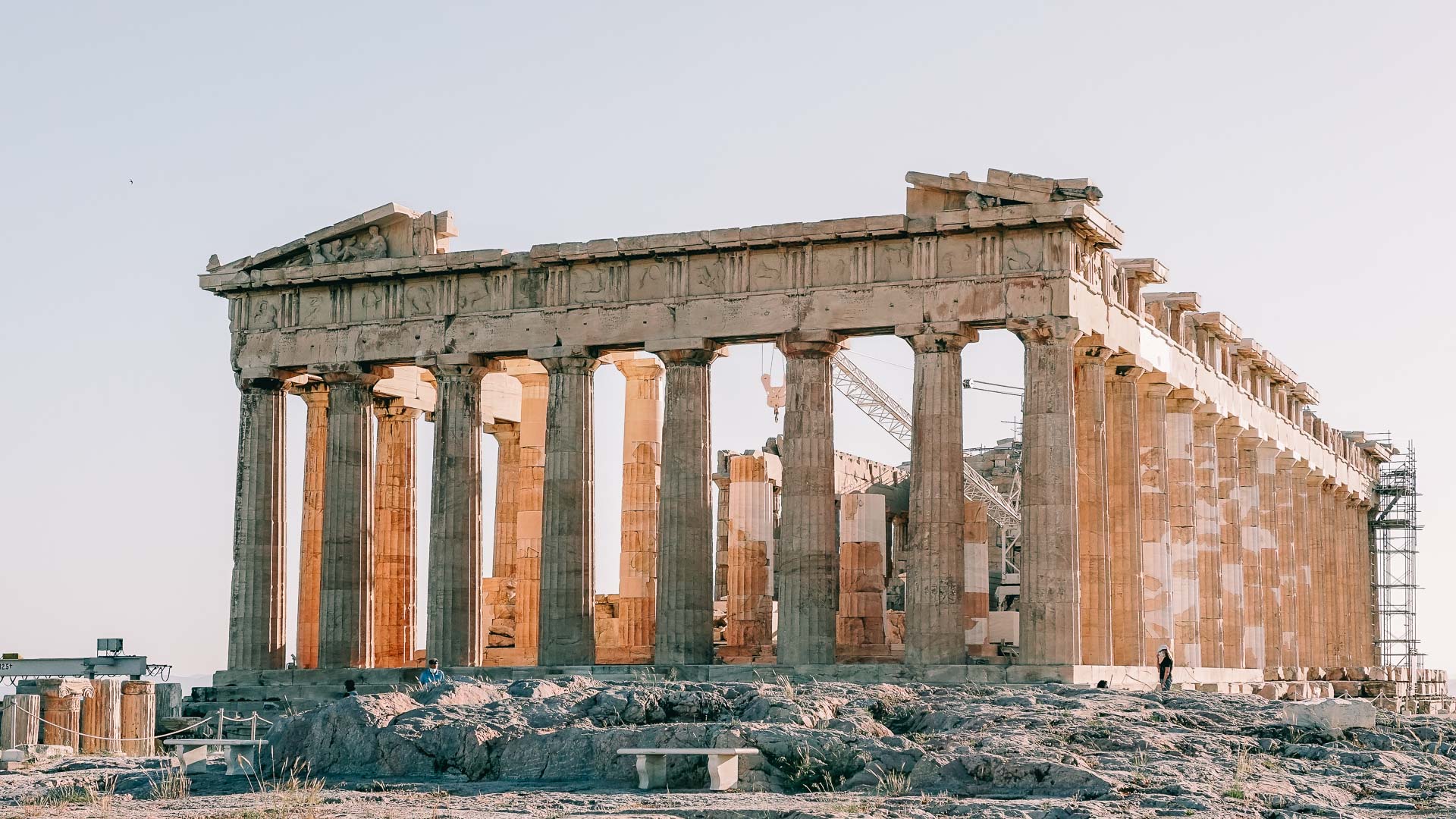
Whenever I want to show somebody the Acropolis for the first time, this is the route I follow.
- Start at the South Slope entrance near the Acropolis metro station.
- Walk first toward the Theatre of Dionysus and take some time there. Then continue uphill, passing the archaeological remains along the southern slope and enjoying the view toward the Odeon of Herodes Atticus.
- Afterward, continue toward the Propylaea. That’s the monumental entrance, and that’s also the moment when you leave the slope behind and see the Parthenon for the first time.
- From here, visit the Temple of Athena Nike, walk around the Parthenon, continue toward the Erechtheion, and spend some time looking at Athens from all sides.
- Then return toward the Propylaea and descend from the western side.
- You can easily continue your walk toward Areopagus Hill and Plaka afterward.
This route makes the most sense to me because, while the Parthenon is, from the beginning, the must-see, that doesn’t mean you shouldn’t enjoy the entire area.
What to see at the Acropolis of Athens
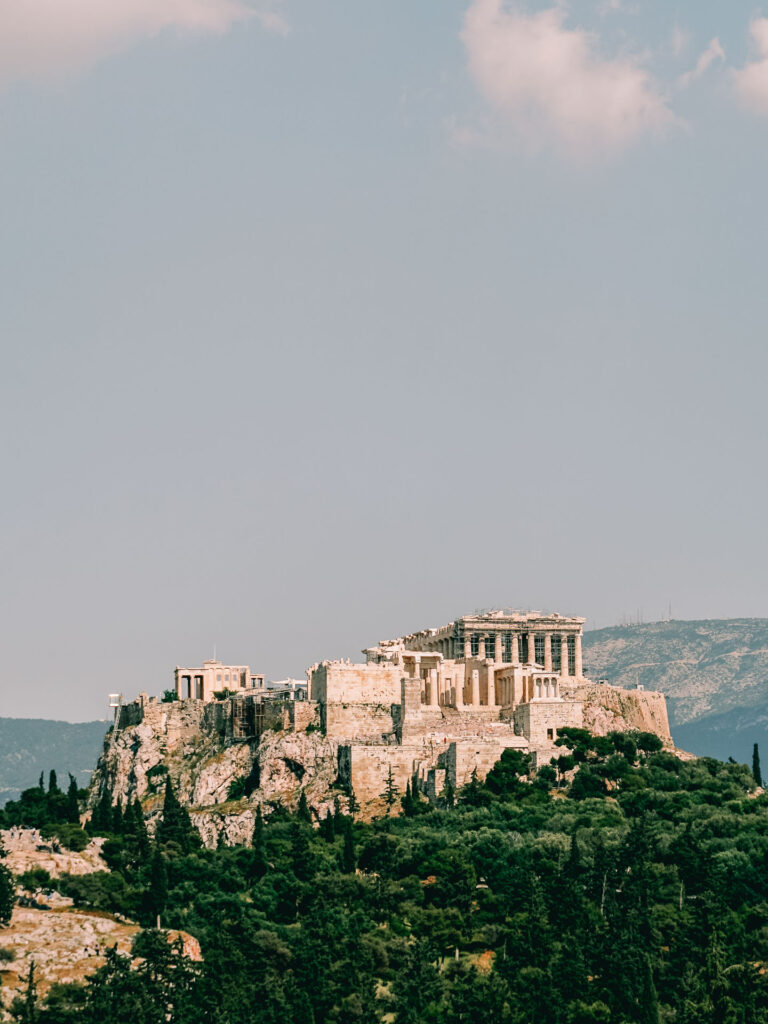
Here are the things I’d focus on if I were to visit the Acropolis of Athens for the first time.
Theatre of Dionysus
Entering from the South Slope, the Theatre of Dionysus will be among the first major monuments you’ll encounter.
This was one of the most important theatrical spaces of the ancient world and is closely connected to the development of Greek drama. Plays by Aeschylus, Sophocles, Euripides and Aristophanes were performed in this area during the festivals dedicated to Dionysus.
Odeon of Herodes Atticus
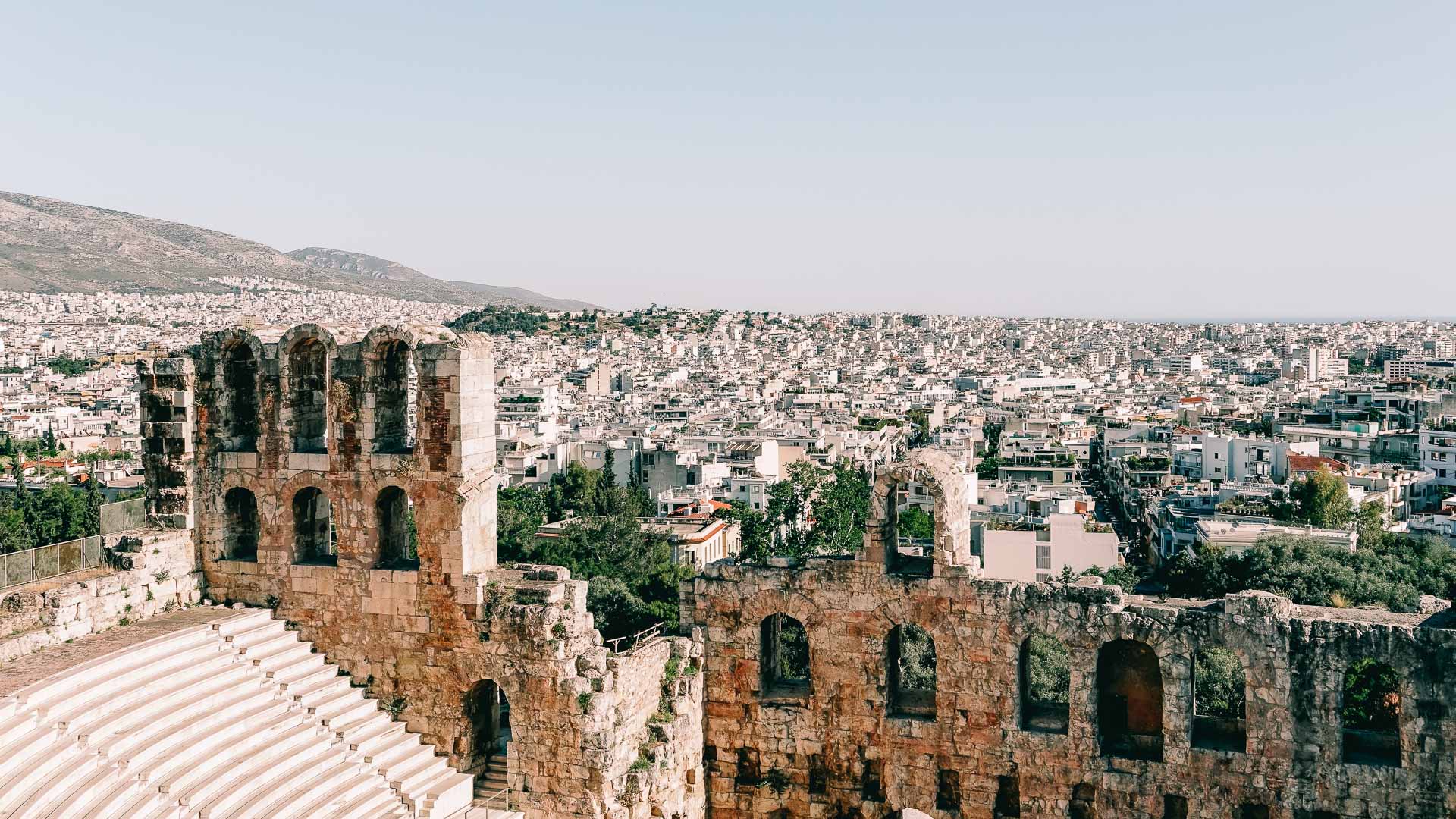
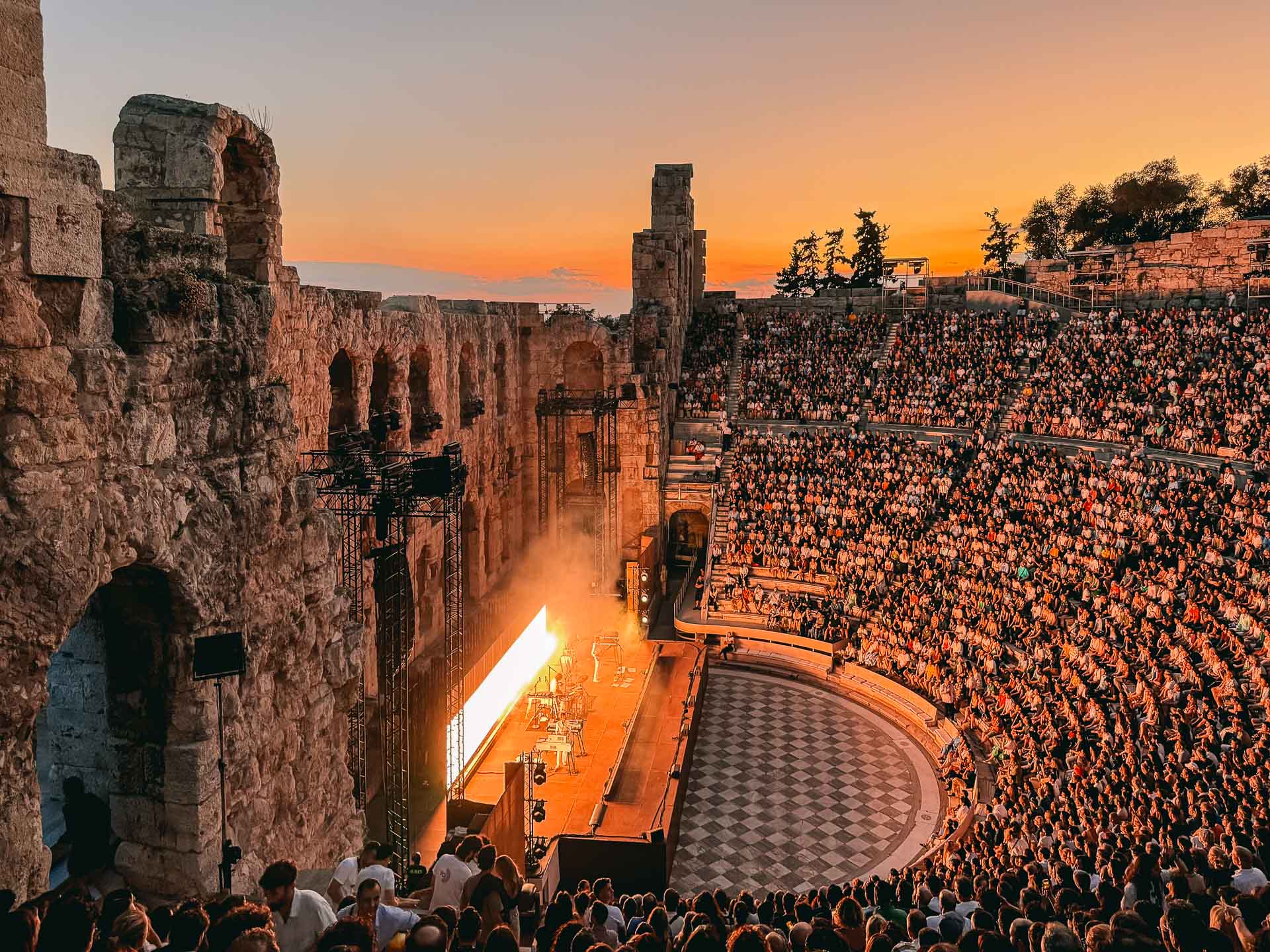
A little farther along the route, you’ll see the Odeon of Herodes Atticus, usually called the Herodeion by Athenians.
Unlike most monuments surrounding the Acropolis, the Herodeion still functions as a performance venue. During the warmer months (mainly between June and September), concerts and theatrical performances take place beneath the Acropolis.
Even if you don’t attend a performance, the view from above is impressive.
Note: from June 2026 onward, the Herodeion will remain closed for a few years for restoration. Please check the timeline to see if your journey to Athens coincides with its reopening.
The Propylaea
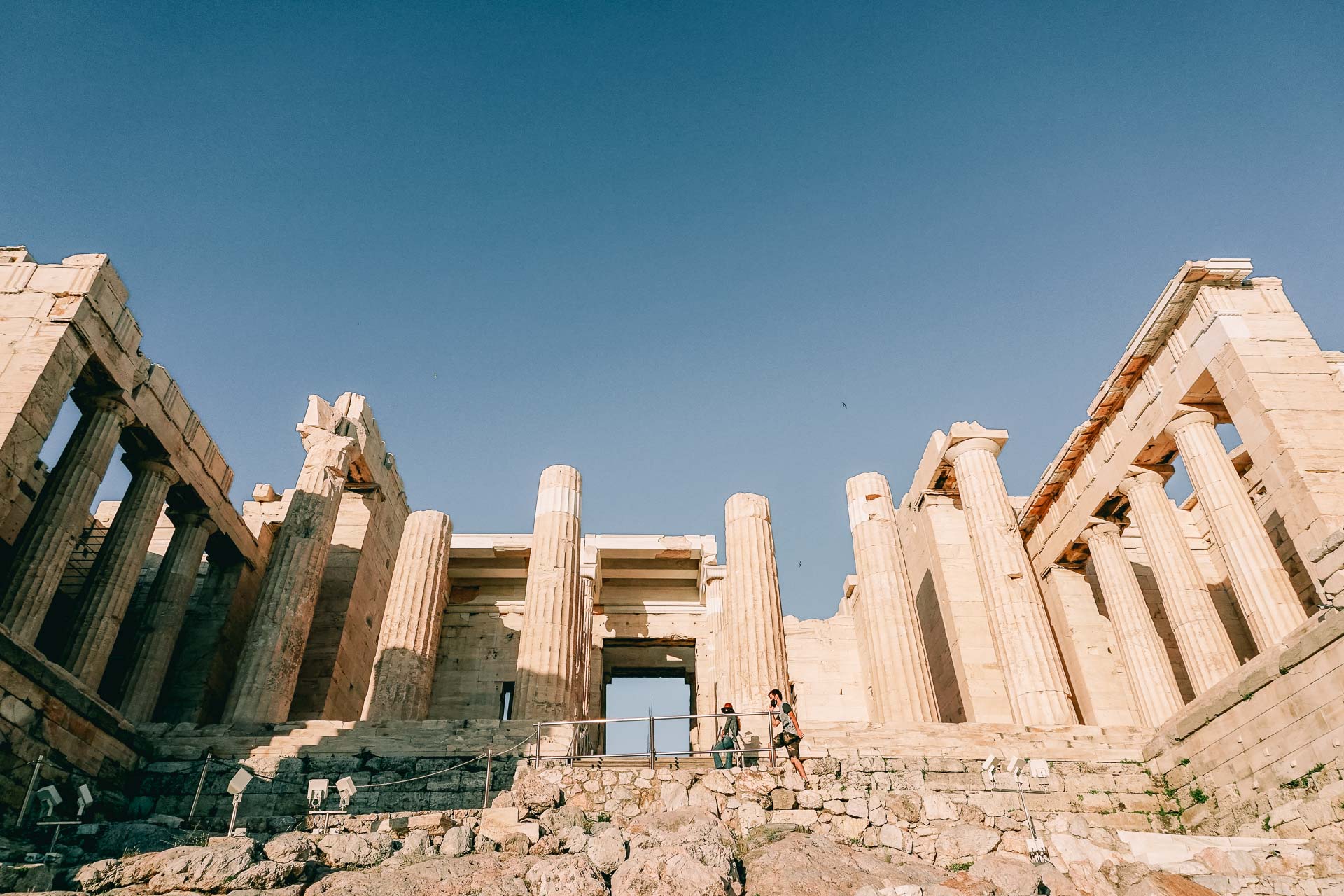
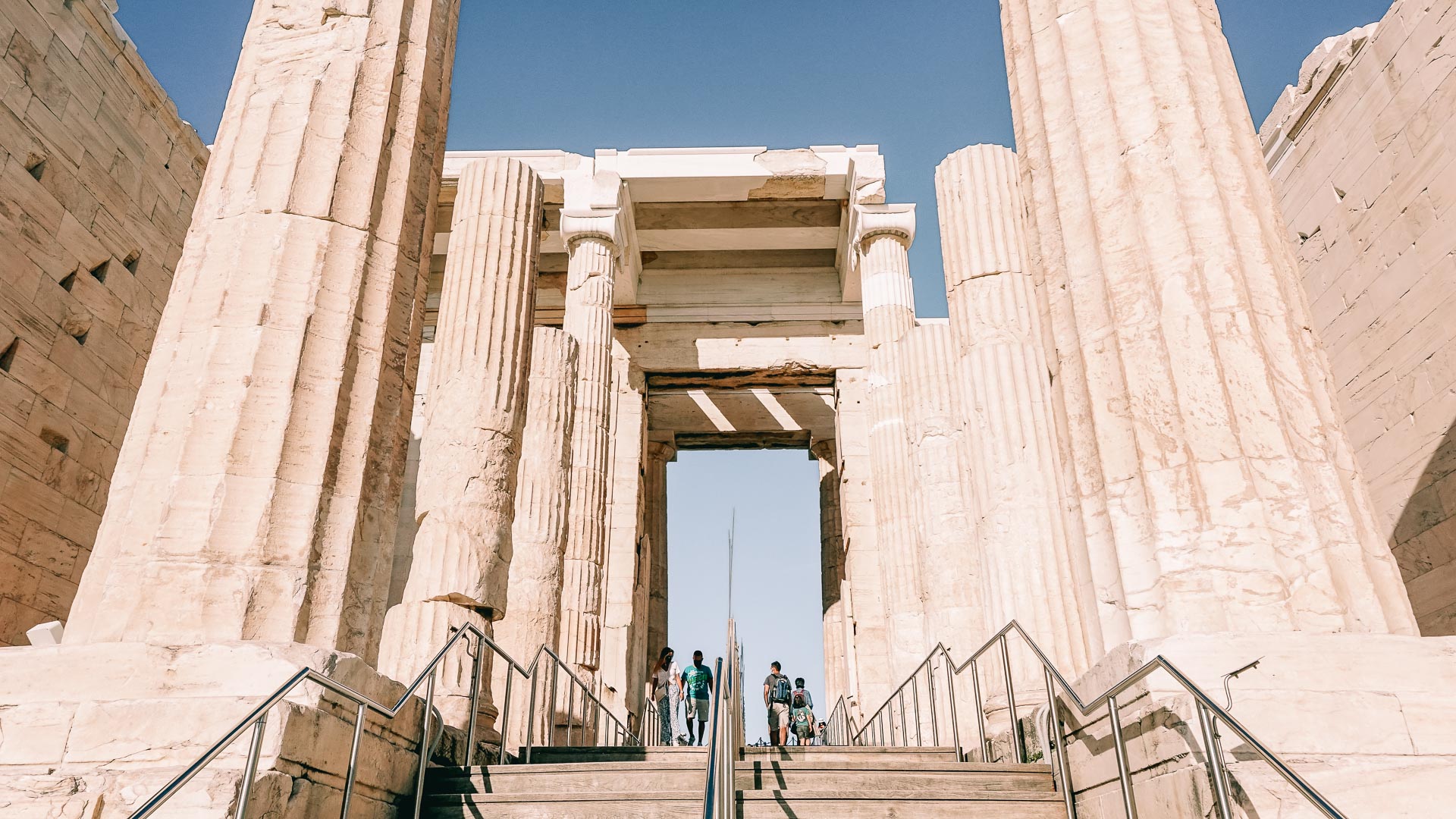
The Propylaea is the monumental entrance to the Acropolis and one of my favorite parts of the site.
When approaching it from below, the scale of the columns is breathtaking. After walking through it, the Parthenon will suddenly appear in front of you.
Temple of Athena Nike

The Temple of Athena Nike stands beside the Propylaea and is considerably smaller than the Parthenon. It attracts less attention, but its position is truly remarkable. Built almost to the edge of the rock, it overlooks the Acropolis and the city of Athens below. Naturally, everybody looks toward the Parthenon, so visitors often pass it quickly as something of less importance. Take a moment to admire it before moving on, though.
The Parthenon
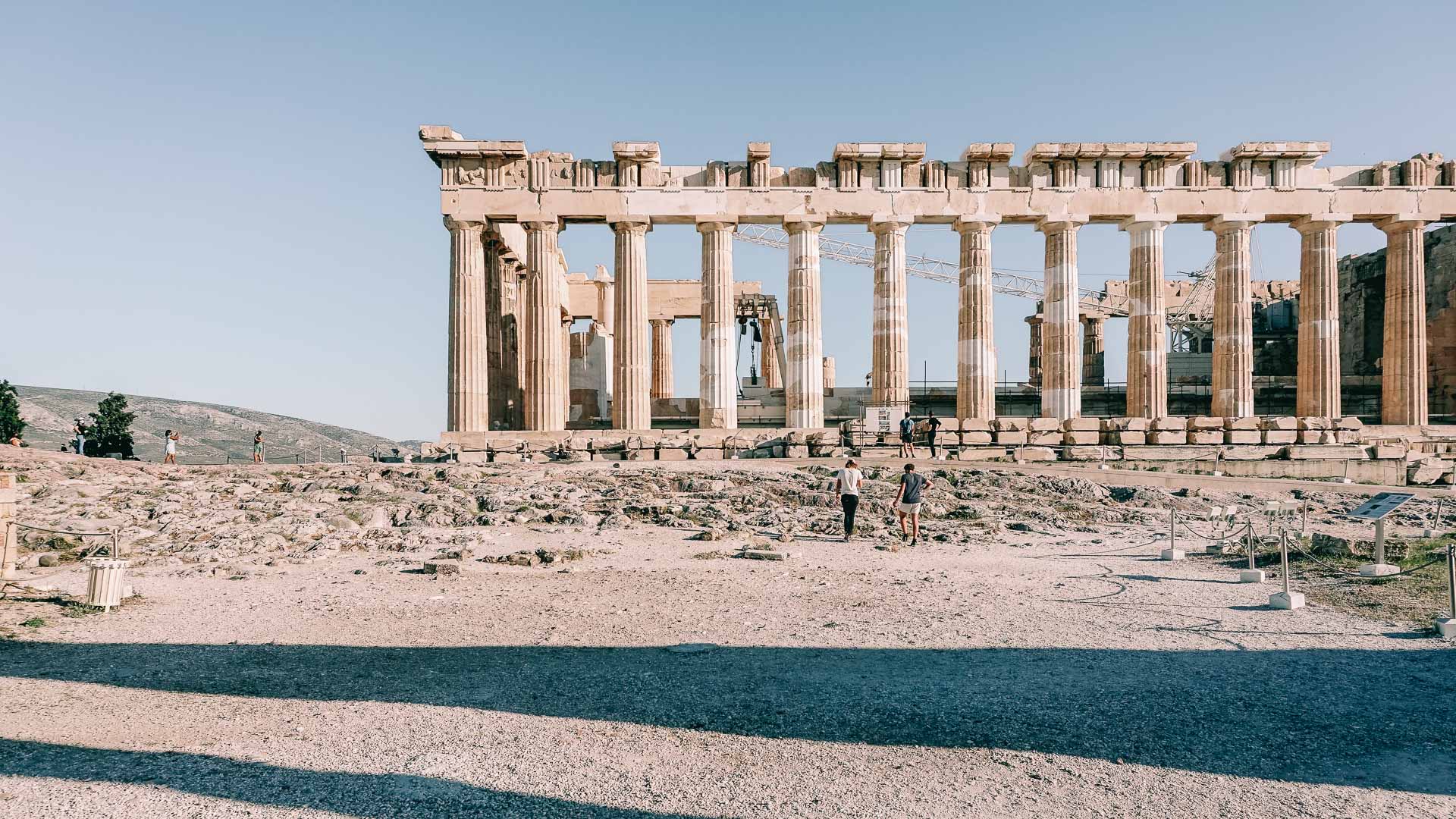
I guess the Parthenon doesn’t need much introduction.
Dedicated to Athena Parthenos, it was built in the 5th century BC and remains the building most closely associated with classical Athens, if not with Western civilization as a whole.
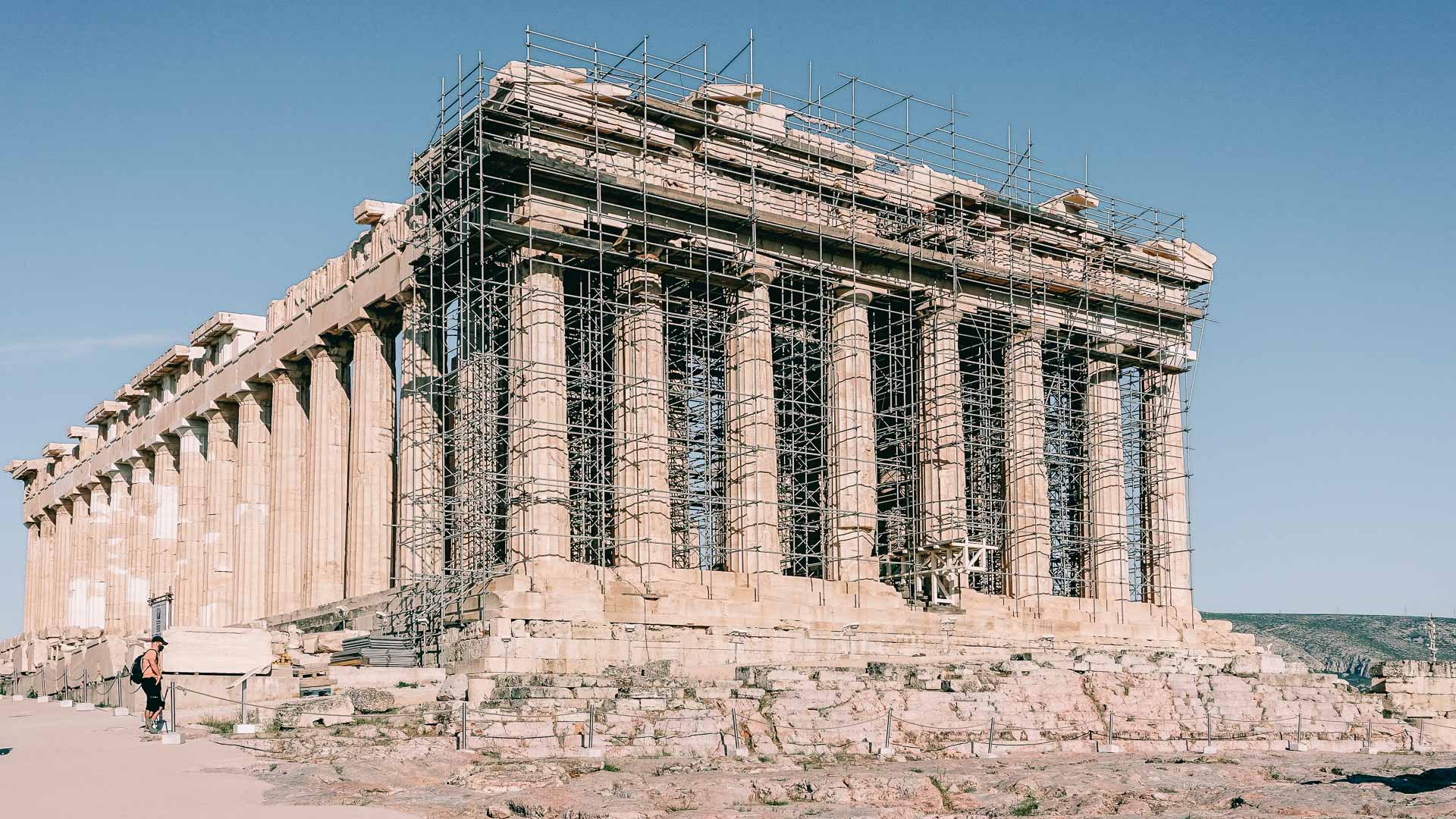
Restoration work has been part of the Acropolis for decades, so cranes and scaffolding may appear in your photos. Don’t let it bother you that much: the Acropolis is an archaeological site under continuous conservation, and every generation seems to encounter a slightly different version of the Parthenon.
Walk around it rather than photographing it from just one side. The Parthenon’s proportions change continuously depending on where you stand, and the cityscape behind it creates several interesting perspectives. Yes, from up there you can also observe the sea and, on a clear day, the small cluster of islands on the Saronic Gulf.
The Erechtheion and the Caryatids
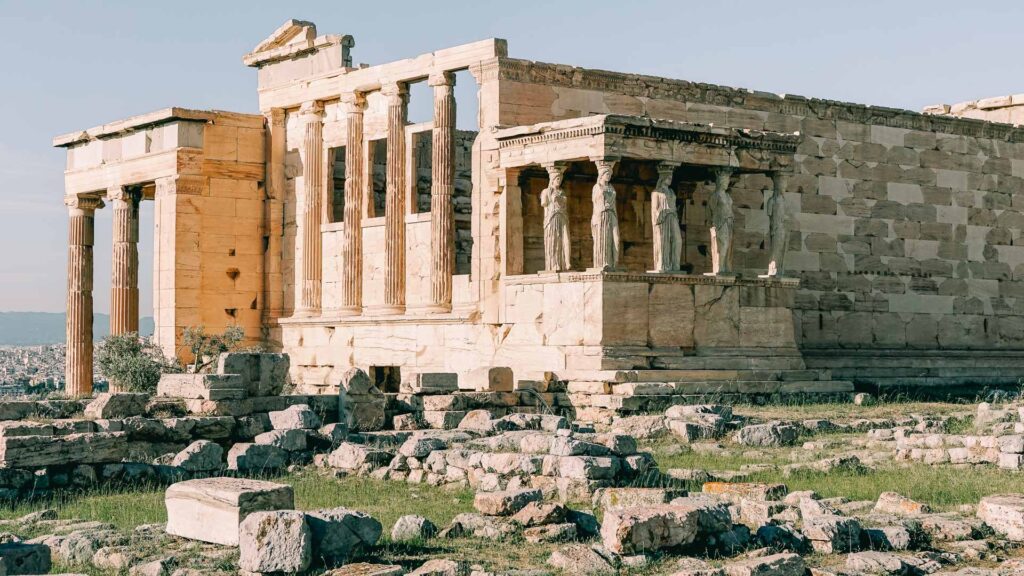
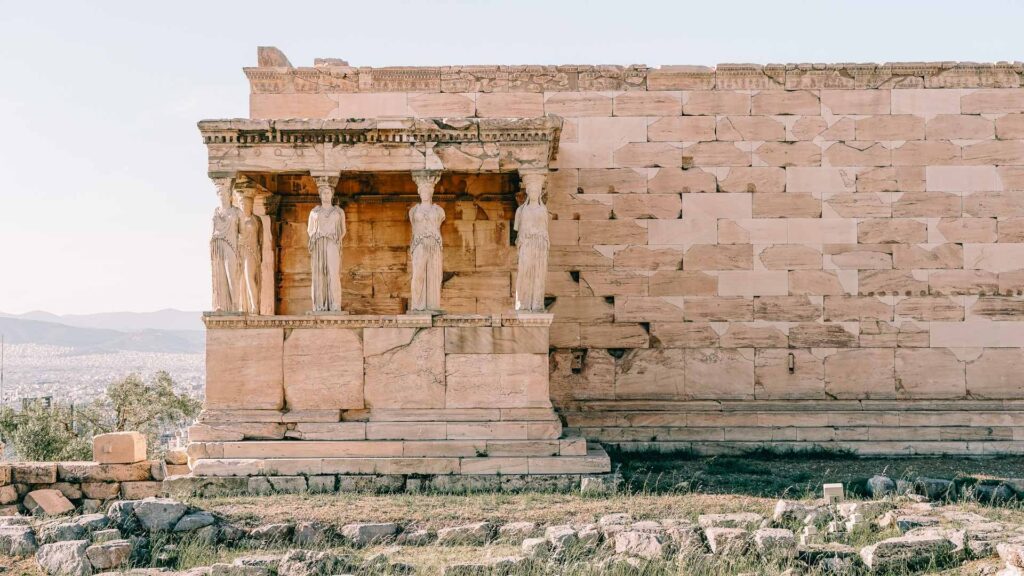
The Erechtheion is perhaps the most elegant building on the Acropolis. Its most famous feature is the Porch of the Caryatids, where six female figures serve as architectural supports.
The Caryatids you see outdoors today are replicas. Five original statues are preserved in the Acropolis Museum, while the sixth is in the British Museum. This alone is a good reason to visit the museum afterward.
How long do you need at the Acropolis?
I would allow approximately 2 hours.
You can certainly walk through the site faster, though I don’t see a good reason to. Between the ascent, monuments, city views, and photographs, two hours pass by quickly. Actually, if you are passionate about archaeology or photography, you might remain even longer.
Now, if you add the Acropolis Museum to your visit, adjust the calculation accordingly. I would reserve another two hours for the museum and preferably add a break between the two visits. While it is totally manageable to visit both sites in one day, give yourself some breathing space, because the museum is extended as well.
That means the Acropolis and the Acropolis Museum together can easily take up half a day.
Is an Acropolis guided tour worth booking?
For a first visit, I think it makes sense, especially if you want to learn more about the site.
While the Acropolis features buildings familiar from books, documentaries, movies, and school lessons, standing next to them is impressive in itself. Still, understanding how these buildings relate to one another and how the entire sanctuary functioned gives the place considerable depth.
A licensed guide can also make details that are easy to overlook much more visible and explain everything to you.
If you prefer a relatively compact visit, I’d choose a two-hour guided tour of the Acropolis and the Parthenon.
On the other hand, for travelers with a strong interest in archaeology, the better option is a combined guided tour of the Acropolis and the Acropolis Museum. The museum contains sculptures and objects originating from the hill, so seeing the two places together creates a much clearer picture.
Current guided tours generally last around two hours for the Acropolis alone and roughly 4 hours when the museum is included. Some packages include the €30 Acropolis admission while others require you to purchase it separately, so check exactly what each guided tour contains.
I have also written a separate guide to my favorite walking tours in Athens, where you’ll find more options covering antiquity and contemporary city life.
Should you visit the Acropolis Museum on the same day?
Yes, if your schedule allows it, this is actually the best option.
The Acropolis Museum sits directly beneath the hill, so combining the two requires no additional transportation. More importantly, several objects you’ll hear about or see replicas of at the archaeological site are on display in the museum.
I would honestly visit the Acropolis first and then head over to the museum. This is because seeing the monuments in their original setting provides context, and later on, the museum will help you fill in the details. Especially for summer visits, this is almost a must to avoid being on the hill during peak heat.
The current general admission price for the Acropolis Museum is €20, and the museum ticket is sold separately from the archaeological site ticket.
What to wear and bring to the Acropolis

I would say that your first priority should be the most comfortable shoes you have. Parts of the route include ancient marble that has become extremely smooth after centuries of use. It can be surprisingly slippery, even when the weather is dry, so flip-flops are not always the best idea.
In summer, I would also bring:
- water
- a hat
- sunscreen
- sunglasses
As I wrote earlier, there isn’t much shade once you reach the top. The climb is manageable for most people, but if you feel tired, take a short break. You should visit the Acropolis at your own pace and not rush among the crowds. Since this is not a flat city attraction, but an archaeological site on a hill, give yourself enough time.
What to do after visiting the Acropolis
One advantage of visiting the Acropolis is that you’ll finish your sightseeing in one of the most pleasant parts of central Athens.
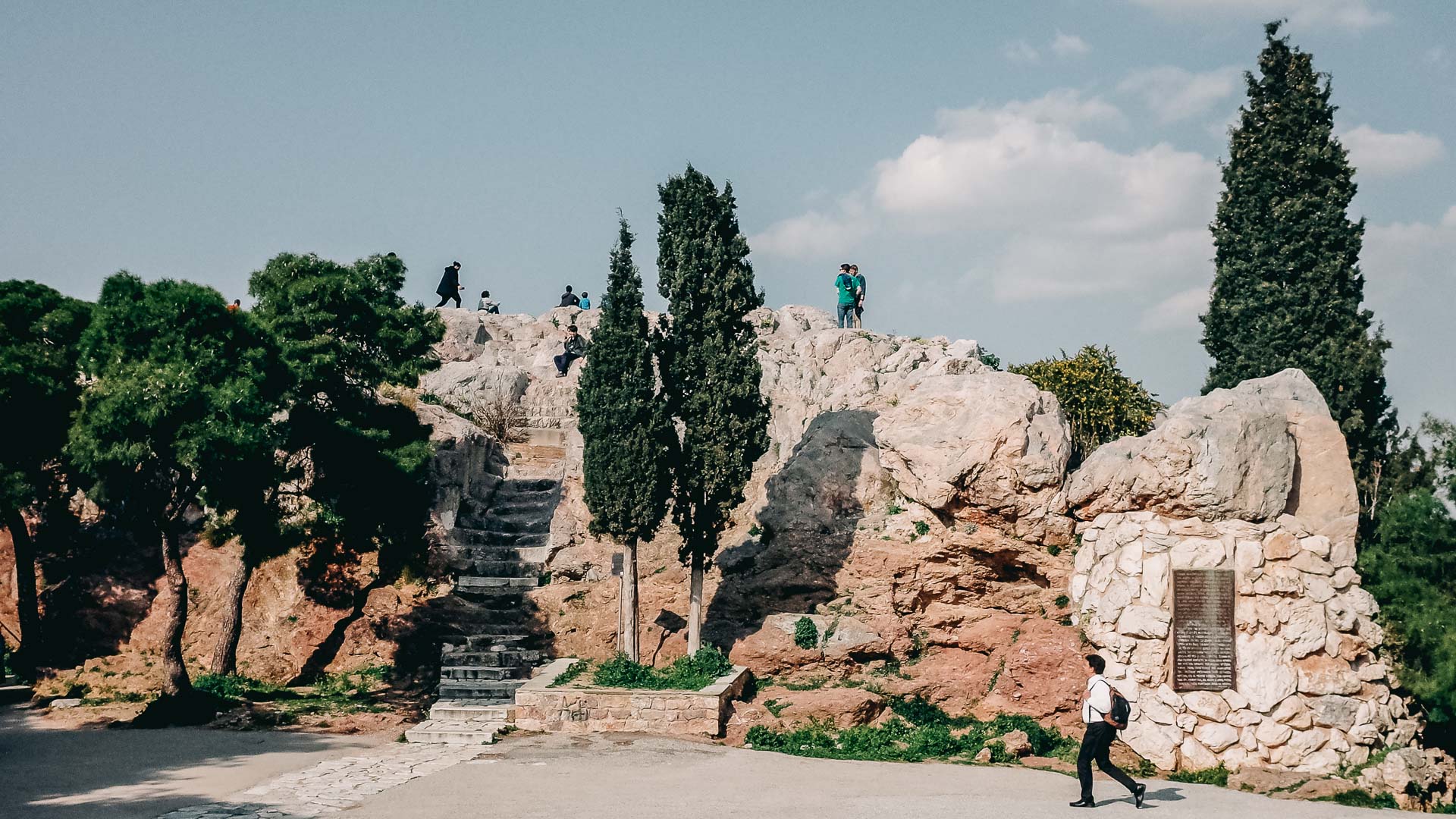
If you exit toward the western side, you can walk to Areopagus Hill in a couple of minutes. From there, continue toward the pedestrian streets surrounding the Ancient Agora or descend toward Monastiraki.
Alternatively, walk around the northern side of the Acropolis and enter Anafiotika, the tiny whitewashed neighborhood built by workers from the Cycladic island of Anafi. I’ve written a complete guide to Anafiotika and its unusual history.
From Anafiotika, you’ll soon reach Plaka. If you’re considering staying in this part of Athens, you can also read my guide to Plaka, which explains the neighborhood’s distinct micro-areas. For first-time visitors to Athens, Plaka is probably the best place to stay because of its proximity to the main sights in downtown Athens.
And if you entered from the western side of the Acropolis, you can simply descend toward the Acropolis Museum and continue your visit there.
Frequently asked questions about visiting the Acropolis
Is the Acropolis worth visiting?
Yes. Even if archaeology isn’t your main reason for traveling to Greece, the Acropolis is central to understanding Athens. The monuments are significant on their own, and the views over the modern city add another layer to the visit.
Can you visit the Acropolis without a guide?
Absolutely. You can buy an entrance ticket and explore independently. A guided tour is useful if you want more historical context or have limited knowledge of ancient Athens.
What is the best time of day to visit the Acropolis?
In warmer months, 8 am is the most comfortable choice. Late afternoon offers better light and can also be enjoyable once the strongest heat has passed, but don’t expect the heat to disappear completely.
Can I buy Acropolis tickets when I arrive?
Yes, tickets are sold at the site, although online booking is advisable because Acropolis admission is timed and popular slots can fill up. In the high season, you can expect long queues if you’d like to buy your ticket on the spot.
Visiting the Acropolis of Athens: Final Thoughts
Living between Athens and Berlin means that I often return to familiar places after months away. The Acropolis, though, is probably the Athenian landmark that still feels most unique.
It is visible from so many parts of the city that it’s easy for a Greek to take it for granted, as if it were just one more decorative item on the skyline. However, going up the hill or even circulating its peripatos (the ancient belt road) changes the perspective: the distances seem smaller, the noise of Athens fades a bit, and familiar places look different once again.
For travelers, I would reserve a morning or late-afternoon visit and avoid squeezing the Acropolis into too much sightseeing. That’s because the Acropolis of Athens has stood above the city for a very long time, and it deserves a couple of unrushed hours.
More about Athens: 10 day trips from Athens, From Athens to Mycenae
Pin it for later

Sharing is caring. Share this travel guide to the Acropolis of Athens with your friends.
Hey George, have you ever attended any special events on the Acropolis? If so, how much did you pay? Do you have any fond memories from visiting there? Hope you had a great summer!
I’ve made the decision to go to Greece next year. I’m planning to explore northern Greece — Thessaloniki, Thassos, and Samothraki. Before that, I want to visit Hydra and Spetses. But, as always, the very first thing I want to do is walk up the Acropolis…
Hi John,
Great to hear from you as always! 🙂 I can’t recall any special paid events I attended in the Acropolis. Full moon nights are special for sure, but I can’t think of anything that I’ve attended. Do you have something specific in mind? If so, please share it so I can have a closer look.
Your travel plans sound great. It seems that it will be a nice return to Greece, and I’m really glad for you because I know how much it means for you and your blog! Haven’t been to Hydra and Spetses in over a decade, but I guess both of these islands are still stunning. No need to say that you should let me know if you make it to Athens; we might have the chance to visit the Acropolis together.
Best regards,
George
I was mainly thinking about concerts, but I also wondered if there might be some special light shows, fireworks, or even parties on top of the Acropolis. I imagine tickets for concerts there would be quite expensive and probably sell out quickly. Still, I would think everyone in Athens, including many tourists, would want to experience it at least once.
I’m also wondering why no one can go inside the Parthenon. A quick guided tour for an extra 20 euros or so would be a cool way for people to get a closer look. And seriously, what’s with the scaffolding going back up? LOL.
I’m not sure how much travel content about Greece will boost my traffic — I seem to be more popular in Turkey, haha. Movies tend to do much better for me. When Christopher Nolan’s The Odyssey was in the limelight, I spiked to around 100,000 visitors in a month. I’m still riding a bit of a traffic wave…
When I visit Athens, I’ll definitely let you know, George. We should enjoy some ouzo together!
Hi John,
For sure, let me know if you are in Athens 🙂
I’m not aware of any such concerts or events on the rock. These are all held at the Herodeion, which is literally straight beneath the Parthenon. I believe it’s too risky to host something like that straight on the Acropolis. Also, I think it will sound very commercial to a lot of people. But primarily, I think that the problem is that the monuments are very sensitive. So the same also applies to a tour inside the Parthenon.
Wow, this is a real traffic boost! Well done! I hope that this traffic wave lasts forever 🙂
Let me know when you book your Greek journey!
George