

Last Updated on February 4, 2026 by George Pavlopoulos
The location of Anafiotika is prime, and so is its architecture. This micro-neighborhood lies beneath the Acropolis of Athens, and the location will remind you of an island. And, as you’ll read in this article, that’s no coincidence.
Everything was carefully planned, and today the area preserves its character, even though the Greek state has not always been fond of the idea of a district in the shadow of the Parthenon. A few decades ago, the authorities even decided to demolish some of the buildings in Anafiotika.
If you are visiting Athens, make sure to include a walk to Anafiotika (Greek: Αναφιώτικα) in your itinerary. The whitewashed houses, the narrow streets, the beautiful stray cats, and the magnificent views make this unique location worth spending some time in.
This guide to Anafiotika contains everything you need to know before visiting the micro-district. Specifically, you’ll read about Anafiotika’s history and learn how to reach the area from downtown Athens. Moreover, you’ll discover some great places to stay at Anafiotika, along with several images.
Let’s start.
*Some links are affiliate links. It means that if you buy something, I might earn a small commission at no additional cost to you.
Where does the name Anafiotika come from?
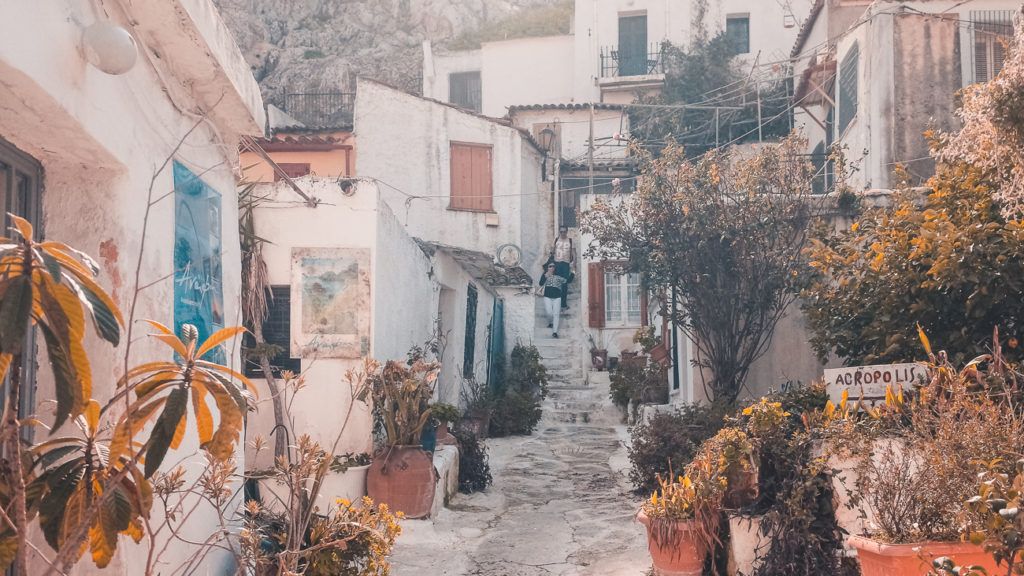
The name Anafiotika derives from the Greek island of Anafi. One might think that this is an odd decision. However, the inhabitants of Anafi played a significant role in modern Greek history.
Anafi is a small island in the Cyclades complex and is actually the most distant. The ferry from Piraeus takes more than 12 hours to reach it. During the wintertime, fewer than 200 people live there, including just a handful of kids.
Despite being a remote island, Anafi is a beloved destination for sophisticated travelers. If you’d like to visit the island, I wrote the most comprehensive guide to Anafi you’ll find online.
Who built Anafiotika – A neighborhood’s history

Despite its compact size, the micro-neighborhood has a long and fascinating history. Apart from offering picturesque scenery beneath the Acropolis, Anafiotika’s birth coincided with Athens’s development.
The early days of Anafiotika
Everything started in the middle of the 19th century. A couple of years after the Greek Revolution of 1821, Athens slowly developed an urban plan. Building a modern capital was not an easy task, of course. However, the vision mobilized loads of people from different backgrounds and places.
Among them were the inhabitants of Anafi, who decided to leave their island and settle in Athens. One of the major projects that they worked on was the refurbishment of King Otto’s palace. Today, the former palace houses the Greek Parliament.
The initial area the people of Anafi inhabited in Athens was around Zoodochos Pigi, near Akadimias Avenue. The Greek state offered this area to them, but soon plot prices skyrocketed. However, the people of Anafi didn’t want to leave Athens, and soon they found a new place. It was a small area beneath the sacred rock of the Acropolis, where they built their settlement, the so-called Anafiotika.
The first inhabitants of Anafiotika were a carpenter, G. Damigos, and a construction worker, M. Sigalas. The location they chose was beautiful, but building houses there was illegal. The first two houses were constructed overnight: they brought materials secretly, and a bunch of people worked on the project.
Several days later, a bunch of Athenians noticed that something was going on in the area. They reported the incident to the authorities, but the process of finding who was responsible for planning the illegal settlement was slow. Meanwhile, the houses in Anafiotika multiplied.
Despite being an illegal settlement, the local authorities tolerated the decision and never pressed charges.
Anafiotika in the 20th century
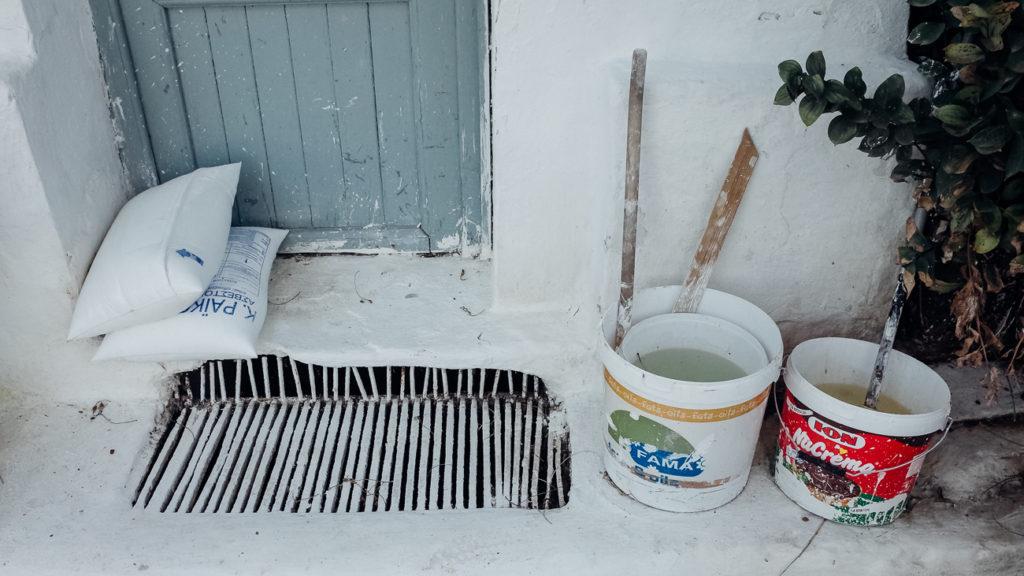
Although people from Anafi built the settlement, many other islanders called Anafiotika home in the years that followed. That island feeling remained intact in the years to come. However, a historical event (the “Asia Minor Disaster,” as Greek historiography calls it) altered the population composition.
The Greco-Turkish War of 1919-1922, fought between Greece and the Turkish National Movement, ended in defeat for Greece. According to the Treaty of Lausanne, Greece and Turkey agreed to a population exchange. As a result, many Greeks were forced to leave Asia Minor, and some settled in the Anafiotika area. The state hosted them in sheds beneath the Acropolis, and the area was a mixture of refugees and islanders for several years.
Significant archaeological research took place in the ’50s, eventually destroying part of the small district. Consequently, the Greek state began expropriating houses in the ’70s and ’80s to reveal the ancient Peripatos, which means “Walk,” referring to the beltway road surrounding the Acropolis of Athens.
Anafiotika today
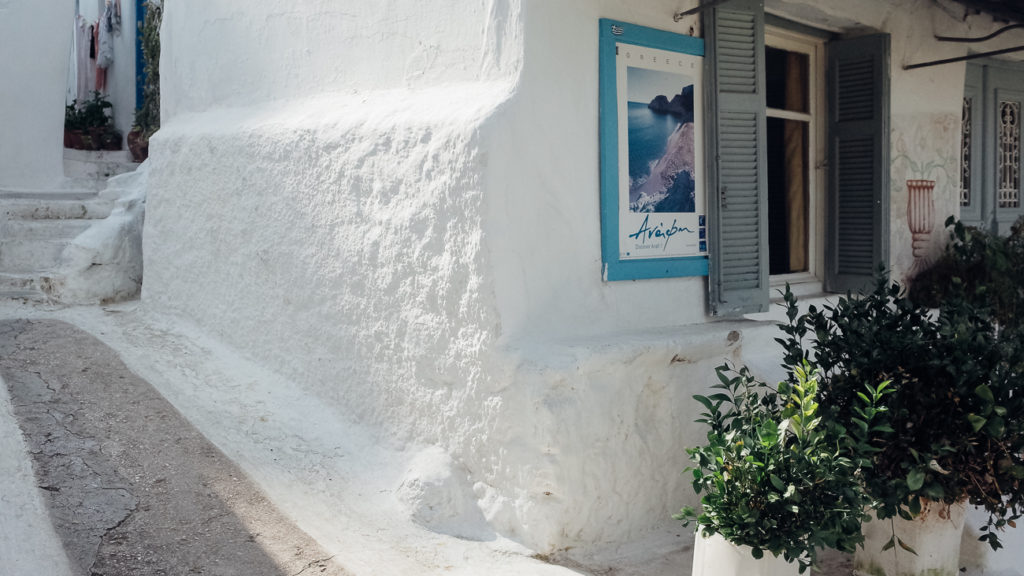
Although one can never be sure, it seems that the days of demolitions in Anafiotika are long gone. The micro-district holds historical landmark status; therefore, its future looks relatively bright. There are approximately 45 houses in the neighborhood today, and according to local authorities, 65 people call Anafiotika home, including four children.
The sum is smaller than the population of Anafi itself, but the adult-children ratio is probably pretty close.
Architecture and Life in Anafiotika
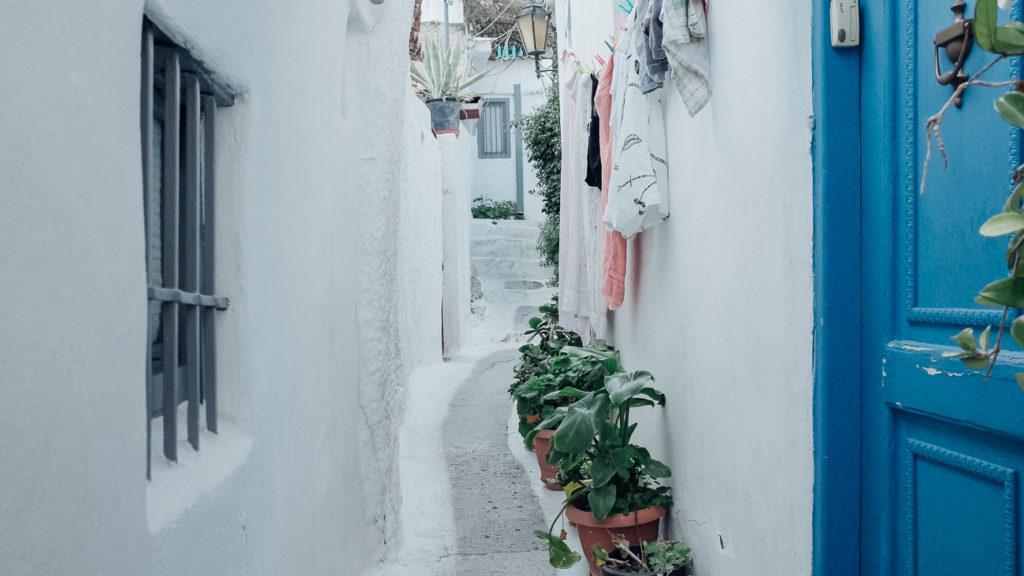
Given its historical connection to Anafi, it’s not surprising that Anafiotika resembles a Cycladic island. The inhabitants built the settlement to remind them of their home. Like the Chora of Anafi, the district has plain whitewashed houses, narrow streets, and beautiful stray cats.
Meanwhile, the visitor enjoys a Greek-island feel, with bougainvillea in abundance. The houses are tiny, as in Anafi, and their surfaces usually range from 8 to 36 sq m; walking either along or even beneath the inhabitants’ laundry is common on this side of Athens.
Most of the houses are in good condition. There are usually a few cats walking around, enjoying the sunshine in front of the white walls. The truth is that the view of Athens from certain spots of Anafiotika is fantastic -actually, one could even call it cinematic. An interesting fact is that the streets of Anafiotika have no names, while the houses are named “Anafiotika 1”, “Anafiotika 2”, etc. On one side of the settlement is a blue box where people receive their letters.
And here’s a fun fact about Anafiotika: according to the locals, Jim Morrison stayed for a couple of days in Anafiotika. That’s probably not a surprise: most tiny cubic houses have terraces, and one can enjoy tranquility and beautiful city views.
Where in Athens is Anafiotika, and how to reach it
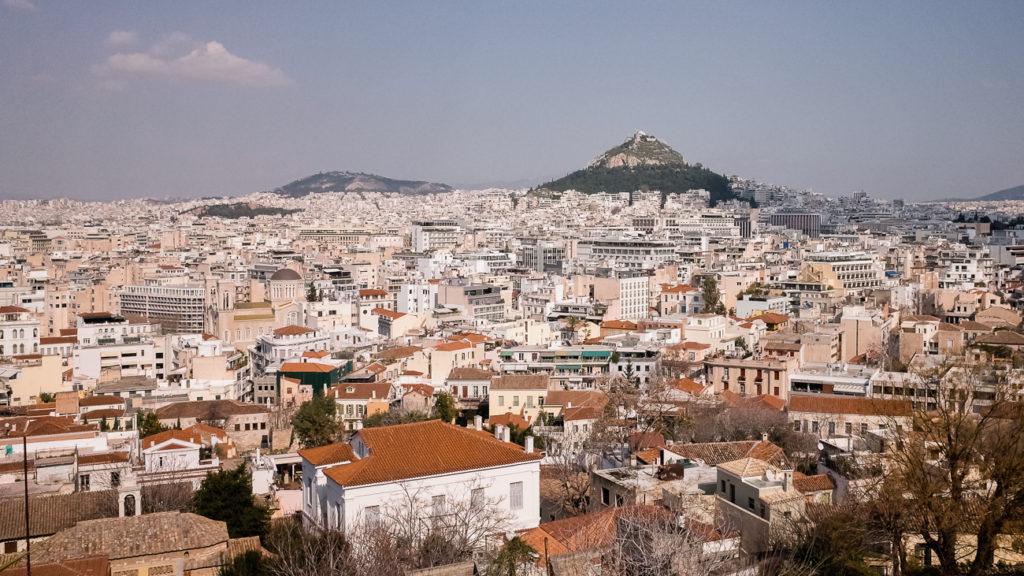
Many people confuse Anafiotika with the northern part of Plaka. But that’s not the case. Anafiotika refers strictly to the specific micro-neighborhood. Apparently, there’s a direct connection to current tourism trends, where people try to sell Anafiotika wherever the Plaka side of the Acropolis is. Until recently, there were no vacation rentals in the neighborhood, but this has changed lately.
So, let’s see how you can get to Anafiotika. You have a couple of choices, actually.
- From the Acropolis metro station, you’ll have to follow Dionysiou Areopagitou Street. It’s easy to find; Dionysiou Areopagitou Street is the big pedestrian street in front of the Acropolis Museum. Before reaching the museum, though, there is a small, steep street called Thrasillou Street. You have to walk up, and at some point, the street changes its name to Stratonos. That’s actually the street leading to Anafiotika. At the end of the road, there is an intersection: if you turn to your left, you will be at the entrance of the picturesque neighborhood.
- From Plaka, you can start from Kydathinaion Square. This is a beautiful square with many cafés and restaurants (even though a bit touristy). The street facing the Acropolis is Kydathinaion Street. Walk down this street, and after getting a good impression of Plaka, you will reach the end of it. The road you’ll now see is Stratonos (like in No.1). There, turn to the right. At the intersection, take a left turn, and then you’ll be in Anafiotika.
- From Monastiraki, you will have to walk significantly more. You’ll have to walk from the other side of Plaka all the way to Prytaneiou Street (or Pritaniou, depending on your map). Soon, you will see the Agioi Anargyroi Church; shortly afterward, there’s a little steep street on your right. This is again Stratonos Street, but you’ll be in the lower part of it this time. Follow the road, and you will soon reach Anafiotika.
Where to stay at Anafiotika
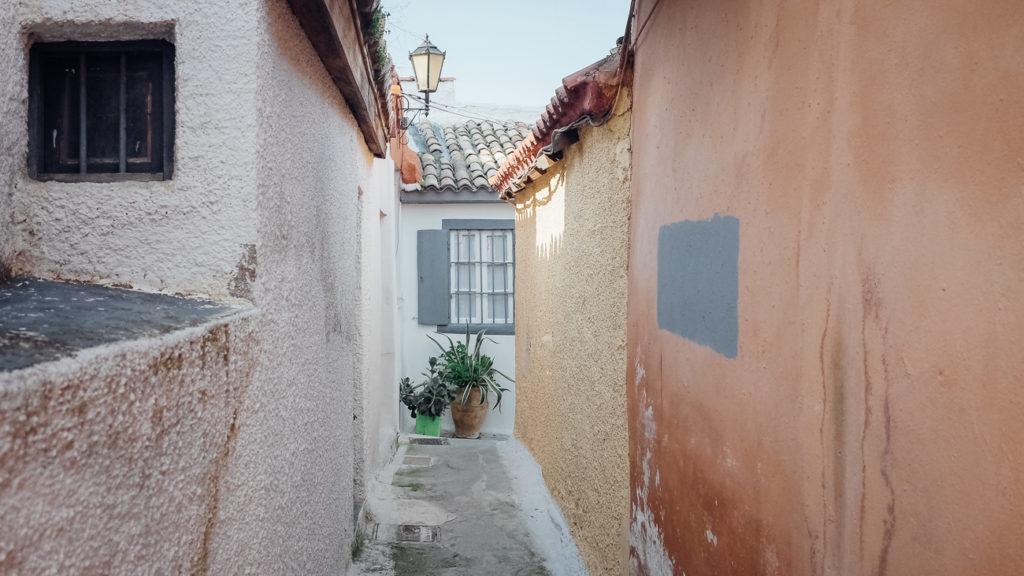
There are no hotels in Anafiotika, but a few vacation rentals have popped up in recent years. Apparently, these are typical whitewashed houses converted into accommodations. That being said, the surfaces are pretty small, but all of them offer modern amenities and are in one of the most unique settings in downtown Athens, with endless views of the Acropolis and Lycabettus Hill.
Places to stay at Anafiotika
So, here are all available vacation rentals directly in the micro-neighborhood of Anafiotika. All of them are traditional small houses converted into vacation accommodations. Due to space constraints and the fact that their facades can’t be altered, these four accommodations are similar. Yet each has its own charm, so check them out. Since this is a prime location and demand is high, these rentals are usually fully booked.
Vacation rentals close to Anafiotika
There are also some hotels and rooms to rent close to Anafiotika. Since this is an expensive location, you should budget accordingly. So, if you appreciate staying for a couple of days beneath the Acropolis and close to Anafiotika, here are your options:
- 6 Tholou – The Acropolis Residence. That’s very close to the whitewashed neighborhood and enjoys an Acropolis view. The residence is brand new and has an excellent terrace.
- Antisthenes Guesthouse. This is probably the cheapest option you’ll find near Anafiotika. It offers basic accommodation but is in a prime location.
- Acro&Polis. A magnificent apartment just 200 m away from the district. It has a veranda with a direct view of the Acropolis of Athens.
- House on the Acropolis rock. Another beautiful house, very close to the Acropolis.
- Aldis Plaka Mansion by K&K. A luxurious mansion in the heart of Plaka. Both the Acropolis and Anafiotika are nearby. Three bedrooms, two bathrooms, and a fully equipped kitchen.
- Tripodon Plaka | In the shade of Acropolis. Tripodon Street is one of the oldest streets in Athens, and it has stood in the same place for over 2,000 years. A wonderful house, very close to Anafiotika.
For all other accommodation options, please use the interactive map below.
Anafiotika travel guide: Conclusion

After reaching the neighborhood, make sure to wander around the narrow streets. Take a breath, find a rock, and enjoy the moment. This hidden village has no cafés or restaurants, just tiny streets and whitewashed houses. But you aren’t here for the noise: you visit Anafiotika to enjoy the silence, a feeling of island life, and some spectacular views of Athens.
There are also several signs pointing in the direction of the Acropolis. By following them, you will have the chance to visit the Acropolis and see the Parthenon. Sooner or later, you will end up walking the Peripatos I mentioned earlier in the article. If you would like to have a more organized tour, some walking tours are offered by locals. You can see some of these tours here.
Last but not least, please remember that this is a proper neighborhood; therefore, be respectful. The people are polite, but they also see several tourists every day. If you want to spend some time away from the big city hustle, the Anafiotika neighborhood is a must. You will not find a more peaceful place anywhere in downtown Athens.
Read more about Anafi and understand the district better by accessing my Anafi resources here.
Did you know that I have written a book about Anafi? You can learn more about it here.
Greek guides: How to spend 1 week in Greece, 3 weeks of island-hopping, Aegean Business Class Review
Pin it for later

Sharing is caring. Please share this Anafiotika travel guide with your friends.