

Last Updated on September 10, 2022 by George Pavlopoulos
Polaroids need light. The first time I used the Polaroid Sun 660, I took advantage of Athens’ sunny weather. This time though, I wanted to test the camera under less optimal weather conditions. Therefore, I decided to visit the iconic East Side Gallery in Berlin on a cloudy winter day. Shooting the Polaroid Diaries: The East Side Gallery with the Sun 660 sounded challenging. Would I have some keepers, or would every photo look dark and dull?
The East Side Gallery is one of the most famous Berlin landmarks. Even though the Berlin Wall fell more than thirty years ago, there’s still a surviving Wall section in the city. Specifically, in the area of Friedrichshain-Kreuzberg, one can still see a 1,3 km (4,320 ft) section of the Berlin Wall, close to the famous Oberbaumbrücke. Once a city divider, the remaining part of the Wall is today a permanent open-air art gallery. A series of murals are painted on the Wall’s surviving piece and symbolize freedom.
I always wanted to shoot polaroids at the East Side Gallery. However, I had second thoughts, mainly due to the light conditions. On the other hand, having a camera with a built-in flash, like the Sun 660, meant I might have to deal with reflections. But in the end, of thought of trying.
*Some of the links are affiliate links. It means that if you buy something, I might earn a small commission at no additional cost to you.
What you’ll see in the Polaroid Diaries: East Side Gallery with the Sun 660

As I said, I chose a cloudy day to test the camera’s limits. Apart from the inevitable darkness, I also had to deal with the cold: polaroids tend to have a blueish tint when they develop at low temperatures. I decided to bring only one 600 film with me and followed the usual winter polaroid process. What does it mean?
Well, I loaded the film at home and before placing it in my backpack, I stored the camera in an old beenie. I wanted to make sure that the camera would remain at a warmer temperature. Moreover, I wore a jacket with inner pockets: the moment I shot a polaroid, I stored it straight in these pockets. Body temperature is your best friend when you take polaroids in winter.
It was zero degrees outside when I started riding the bike, and half an hour later, I was at the East Side Gallery. I shot the entire film photographing murals’ details. Honestly, even if I had two or even three films more, I’d have shot all of them. The East Side Gallery is a photogenic location, and it’s a must-see in Berlin.
Therefore, in the Polaroid Diaries: East Side Gallery with the Sun 660, you’ll see the eight photos I shot in the location. After presenting the images, I’ll share the settings I used for this diary.
Let’s start.
Polaroid Diaries: East Side Gallery with the Sun 660
The East Side Gallery features the work of more than 118 artists from 21 countries. They gathered here in 1990, a year after the Fall of the Berlin Wall, to create art straight on the Wall’s remains. It’s the largest open-air gallery in the world, celebrating the end of the Cold War in Europe.
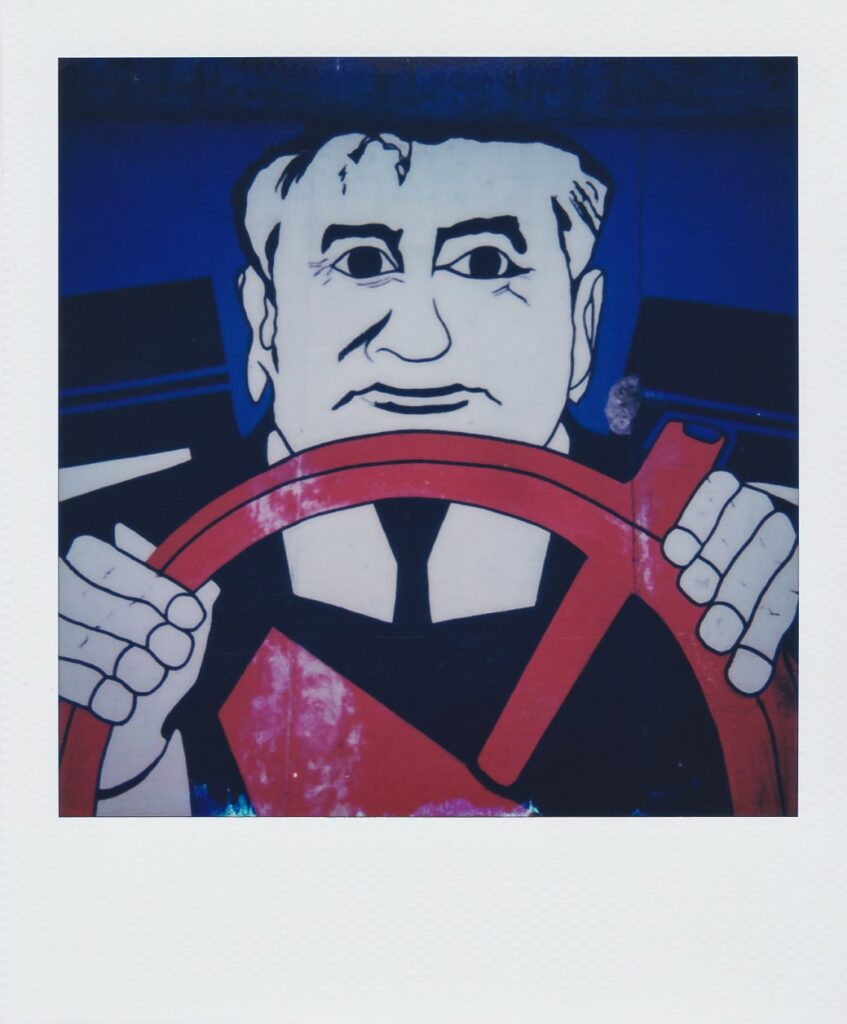
The first polaroid on this album depicts Mikhail Gorbatchev driving. It’s the work of Lutz Pottien, and it has no title.
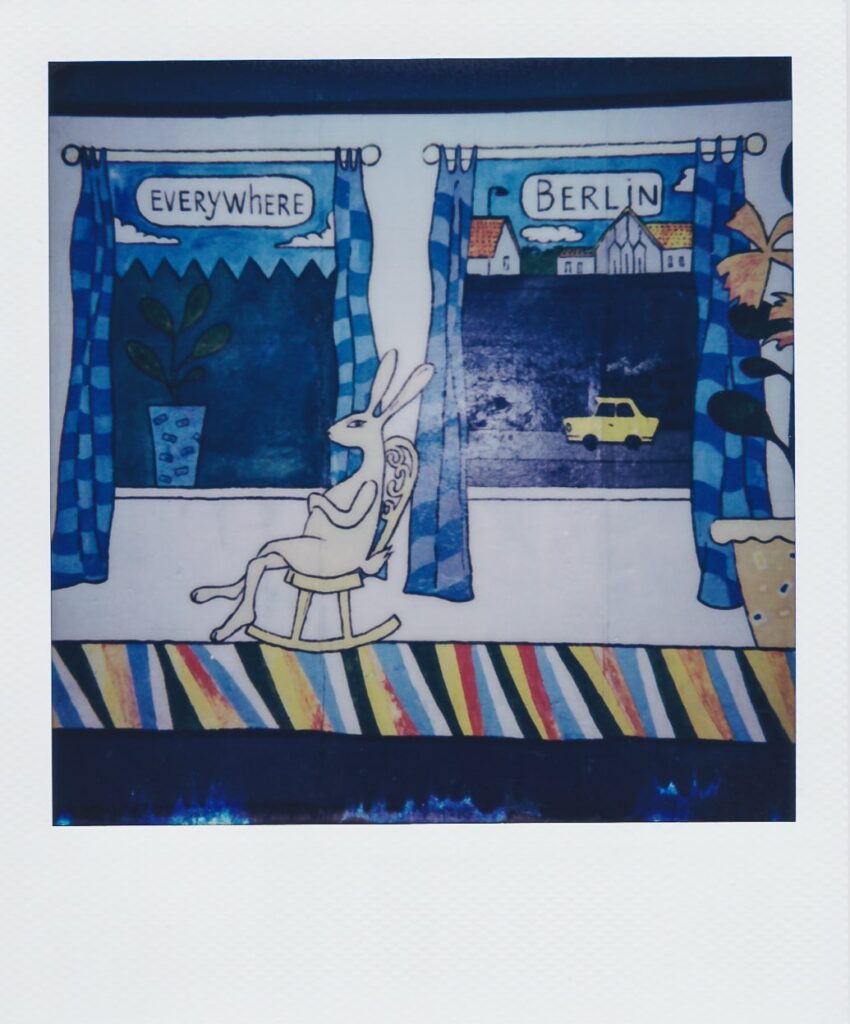
One of the most sentimental East Side Gallery paintings is by Alexej Taranin. Under the title “Walls International,” Taranin created a mural that shows life out of the window in four places: Moskow, China, Everywhere, and Berlin. While everything seems normal in three of them, the fourth one looks sad. Here, all you can see from the window is the Wall dividing the city. In the polaroid I shot, I couldn’t include all four places. Therefore, I decided to move closer to the Wall and shoot the contrast between “Everywhere” and “Berlin.”
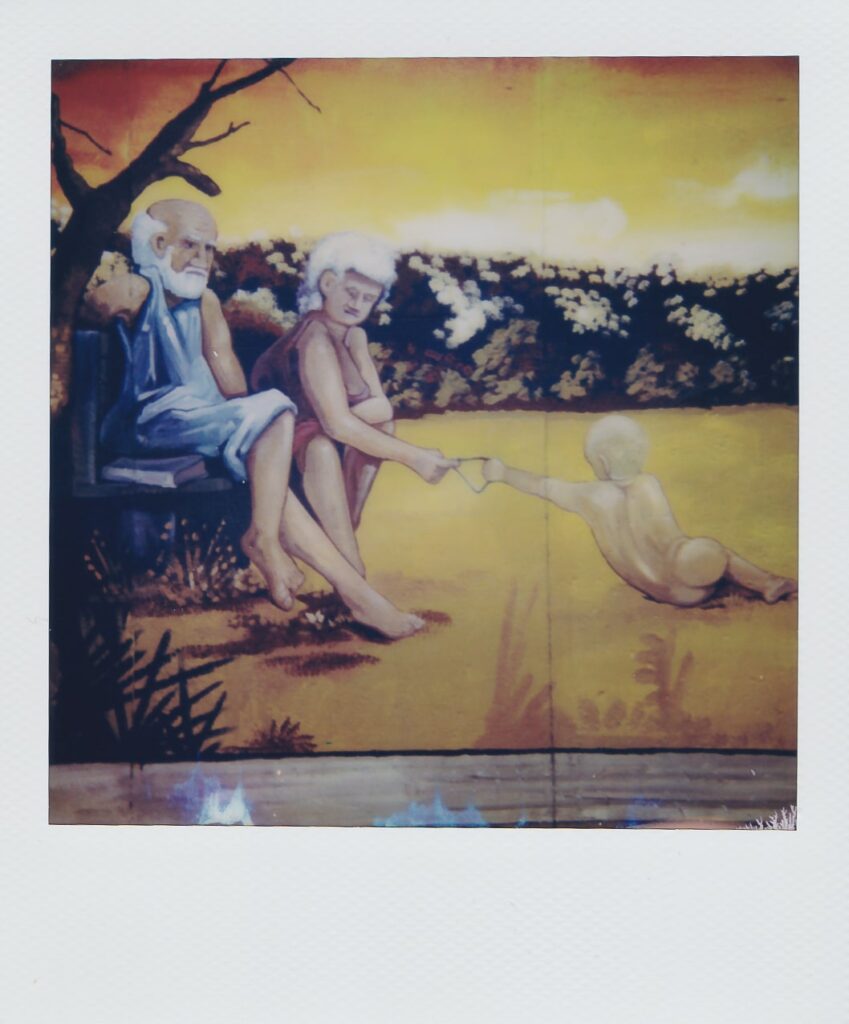
The following polaroid shows Henry Schmidt’s “Don’t forget the love.” That’s a long horizontal painting featuring a couple of people. Of course, everything is about love in turbulent times. Once again, I decided to shoot a photo up close and get some detail. I should stand quite far away and preferably shoot with a wide-angle lens to capture the whole mural. It wouldn’t work with my Polaroid Sun 660, so I decided to photograph a detail.
You’ve probably seen this mural before, even if you have never visited Berlin. It depicts Honecker and Brezhnev kissing. This is a reference to the so-called Socialist fraternal kiss, a form of greeting between leaders of socialist countries. Kissing on the mouth symbolized that these leaders had a special political connection. So, here’s a polaroid from the most iconic East Side Gallery painting by Dimitri Vrubel. Its title is “My God, help me survive this deadly love.”

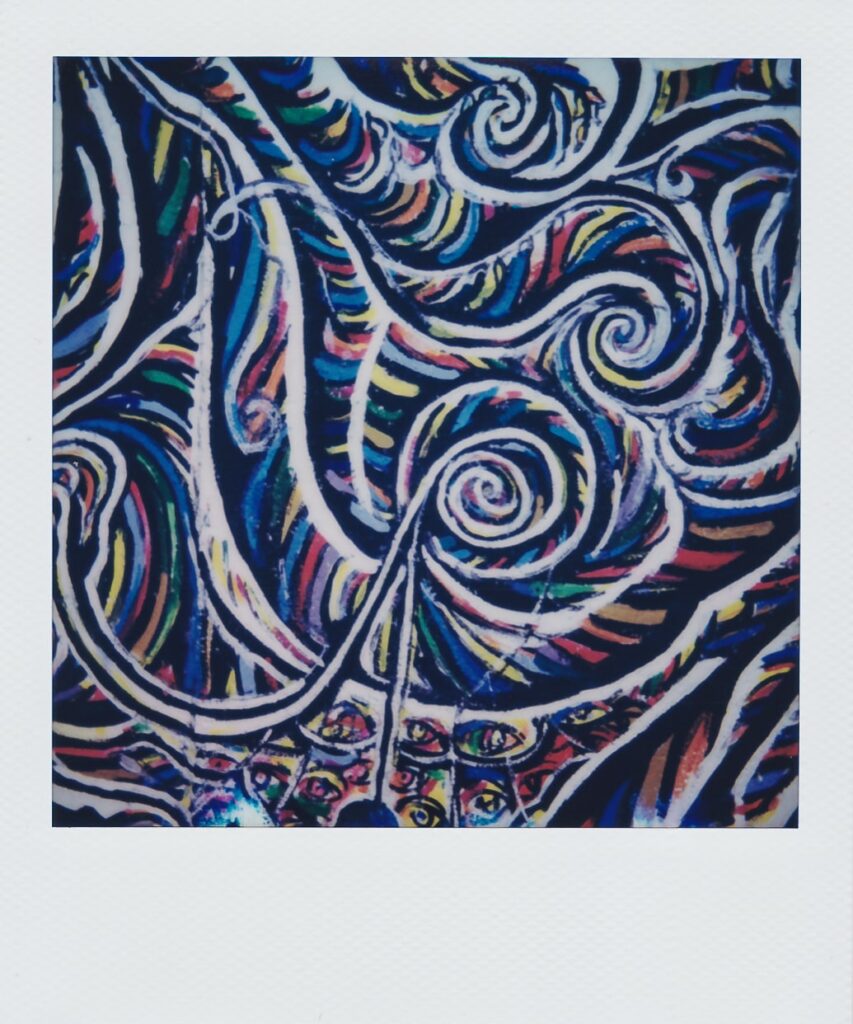
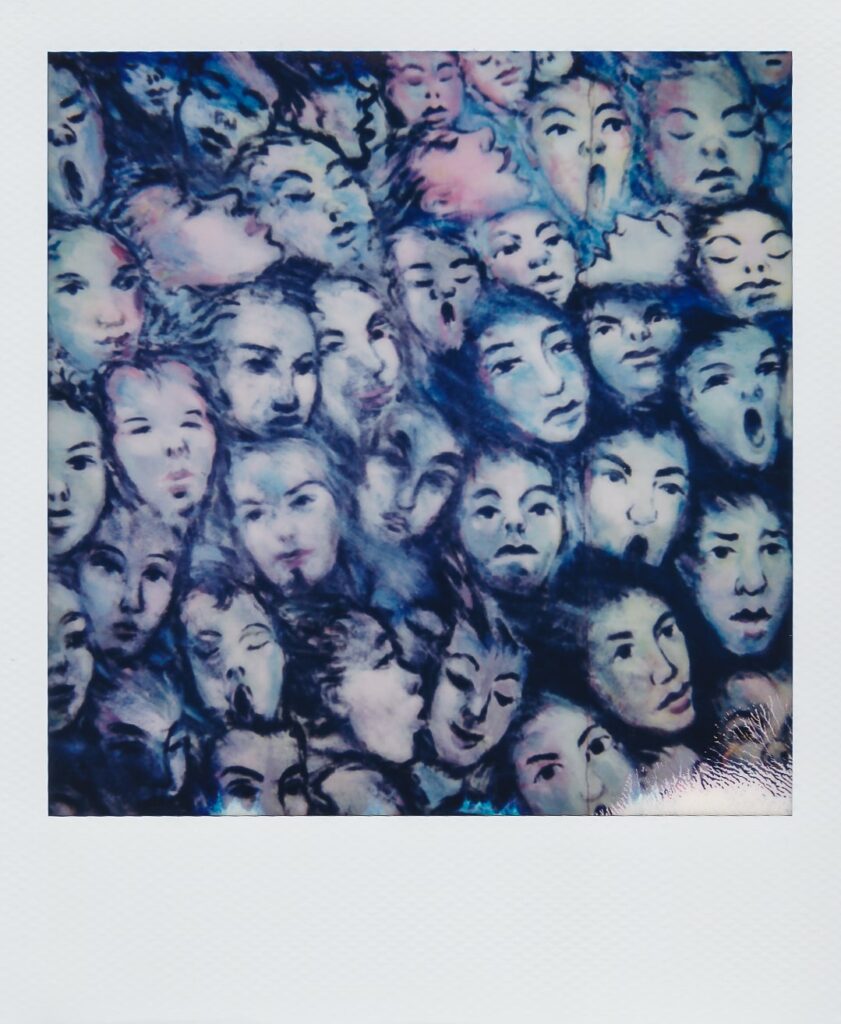
One of the biggest and, at the same time, more mesmerizing paintings in the East Side Gallery belongs to Schamil Gimajew. Its name is “Worlds People,” which deals with peace among nations. In my opinion, it’s one of the most impressive things you can see in the Gallery. Here’s a close-up polaroid:
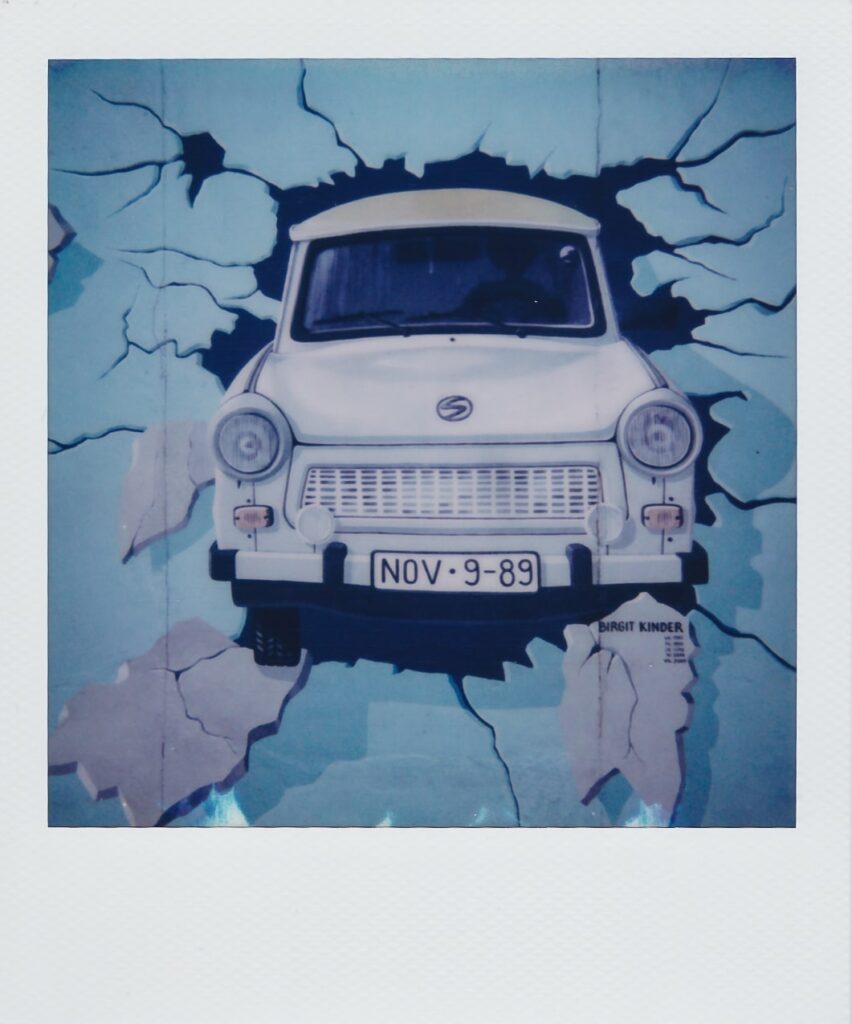
One of the trademarks of former East Berlin was the famous Trabi. The Trabi (originally called Trabant, which stands for “satellite” or “companion”) was a series of cars manufactured in former East Germany between 1957 and 1991; approximately 3 million Trabis were produced. People used to call them Rennpappe (racing cardboard) because of the materials used in their production. In the painting by Birgit Kinder, we see a Trabi breaking through a concrete wall without any scratches. The painting’s name is “Test the best, test the rest.”
Equally impressive is the mural created by Kani Alavi, called “It’s happened in November.” It depicts a mass of people flowing like a river through the demolished part of the Berlin Wall. The painting shows the power of the people and how history can change overnight. Thousands of people walked that November 1989 night from East to West. Kani Alavi had a studio at Checkpoint Charlie and observed history in the making.
Finally, the last East Side Gallery polaroid is a detail from the painting “Amour, Paix” by Hervé Morlay. In the polaroid, you can see Nelson Mandela; however, the mural features more personalities like Ray Charles and Yves Montand.

And that’s it with the Polaroid Diaries: East Side Gallery with the Sun 660, shot at the iconic Berlin location.
You can see more images from the East Side Gallery in the photo report of Google Arts & Culture.

The Polaroid Sun 660 settings for this diary
The Polaroid Sun 660 is a sonar autofocus camera. This means that the camera uses sound waves to focus. Apart from being a fantastic feature, what matters the most is that it’s also accurate. As you saw in the polaroids, all of them look sharp. (Read my Sun 660 review here).
This was probably the easiest polaroid diary I ever shot regarding settings. Since the day was extremely cloudy, I trusted the camera’s exposure system. I kept the exposure wheel in the middle and shot the entire diary like this. Moreover, I also trusted the built-in flash due to the weather conditions. I didn’t override it in any photo and had it fire in every shot. I find the polaroids well-lit, and I think the camera handled the colors well.
Now, one extra tip for the Polaroid Sun 660 has to do with the flash. Although the images might look random, they required some effort before shooting. I decided not to shoot single-color surfaces because of the flash. The reason is that I would probably have reflections from the flash. In other words, I avoided having (for example) the flash shooting directly on a black surface. At least, this was my intention. Unfortunately, you can see a reflection on the “Everywhere-Berlin” image; I should have placed myself a step towards the left.
Overall, I’m delighted with the results. The Sun 660 is a camera dating back to the late 80s (so, is this a Cold War camera?), but it still performs great. I’ll definitely shoot more photos in the future, and it’s a great point-and-shoot polaroid camera: the fact that you can trust the built-in features make this camera a great traveling companion (er, Trabant?).
And that’s it with one more edition of the Polaroid Diaries and the photos from the East Side Gallery in Berlin. Don’t forget to subscribe to the mailing list below if you want to see more polaroid tips, camera reviews, and photos.
*You can buy the newest (and freshest) films and Polaroid 600 cameras directly at Polaroid’s official websites.*
The US Store | The EU store | The UK Store
**If there’s no availability on the official stores, search for second-hand 660 cameras on Amazon.
More Polaroids: The complete Polaroid diaries, My SX-70 review, My Now+ review & My Polaroid GO review
Pin it for later

Sharing is caring. Share on FB or Twitter the Polaroid Diaries: East Side Gallery with the Polaroid Sun 660.