

Last Updated on September 22, 2026 by George Pavlopoulos
Frank Gehry’s creation stands proudly next to the Nervión River. The Guggenheim Museum Bilbao, with its striking design, attracts thousands of visitors annually for both its appearance and the innovative art exhibitions it hosts. Unlike its counterparts in Venice or New York City, it has no strict Peggy Guggenheim story attached. However, since its inauguration in October 1997, the Bilbao Guggenheim has instantly become an art institution.
On my recent journey to Bilbao, I decided to dedicate half a day to exploring its collection. I also chose nearby accommodation because I wanted to feel its presence in the city and photograph it from various angles throughout the day. A large-scale building like this affects the city’s appearance and identity.
That said, in the following lines, you will read some interesting facts about the Guggenheim Museum Bilbao and see various photos. Let’s start.
*Some links are affiliate links. This means that if you buy something, I might earn a small commission at no additional cost to you.
The Guggenheim Museum Bilbao
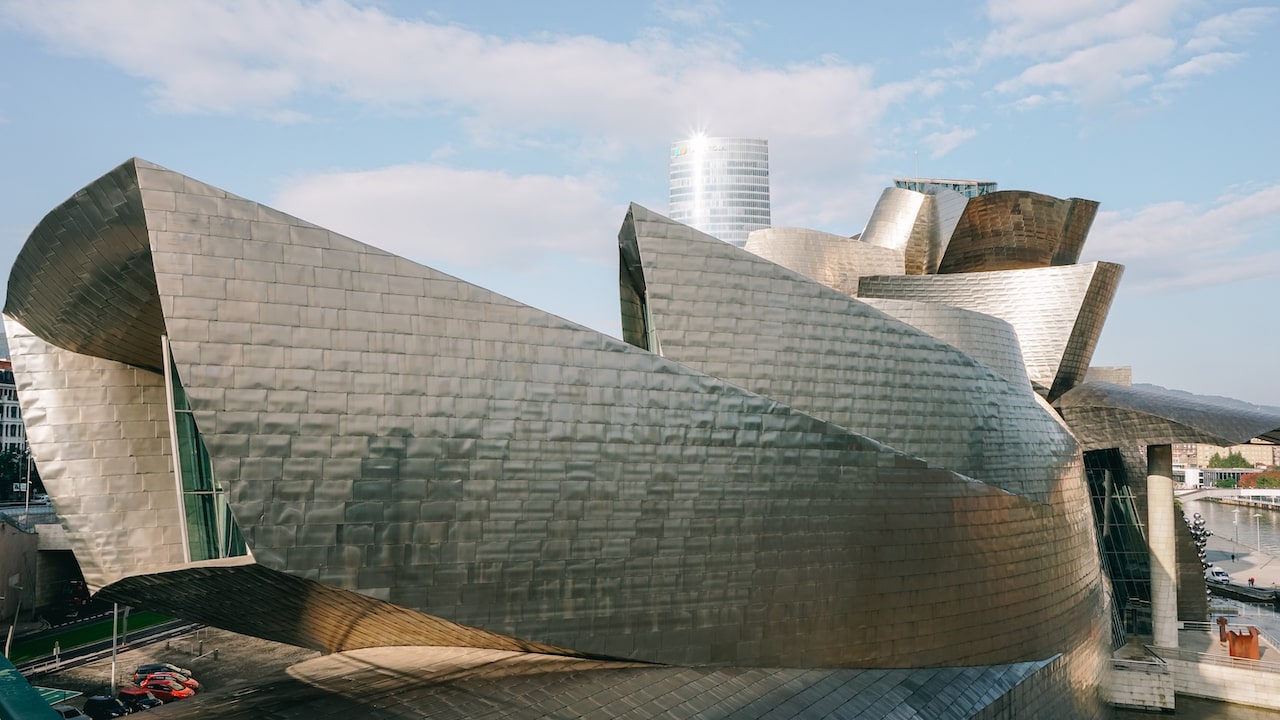
The Bilbao Guggenheim often feels bigger than the city itself. And that’s a certain problem, and most likely why the term Bilbao effect was coined. The “Bilbao effect” has several meanings: on one hand, it refers to the transformation the museum brought to the city. On the other hand, it became a motto for the subsequent gentrification that came along with it. My impression was that both explanations were valid.
The building
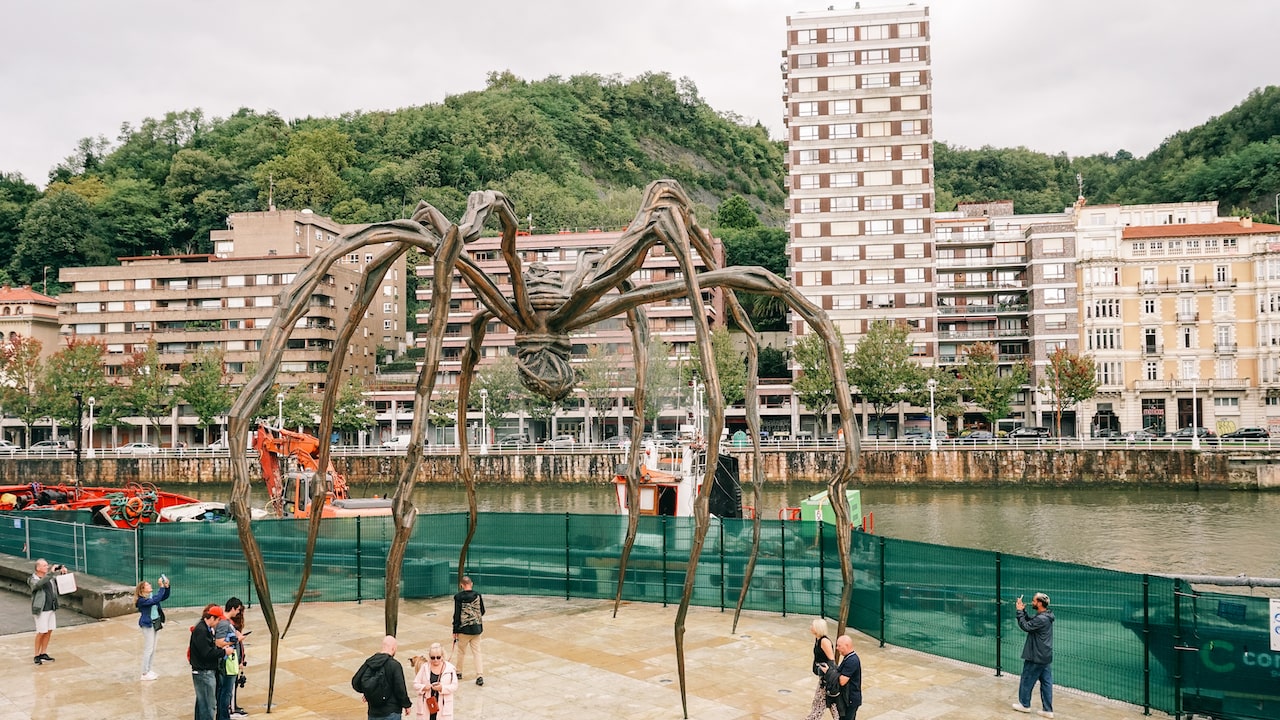
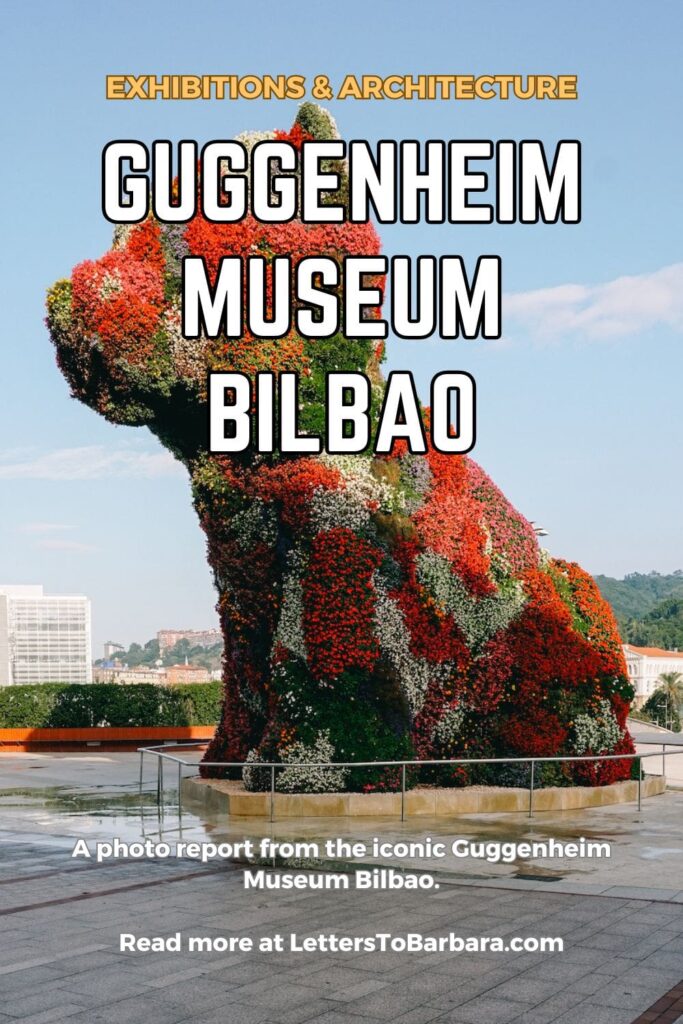
The museum seems to expand beyond its walls. The large-scale outdoor sculptures seem to invade the space and potentially aim to leave a mark on its identity. Louise Bourgeois’ iconic “Maman” spider appears ready to dive into the Nervion River, while Jeff Koons’ iconic “Puppy” seems to guard the building. The latter ranks among the most-photographed spots in town. Even people without much interest in entering the museum stop there for a selfie.
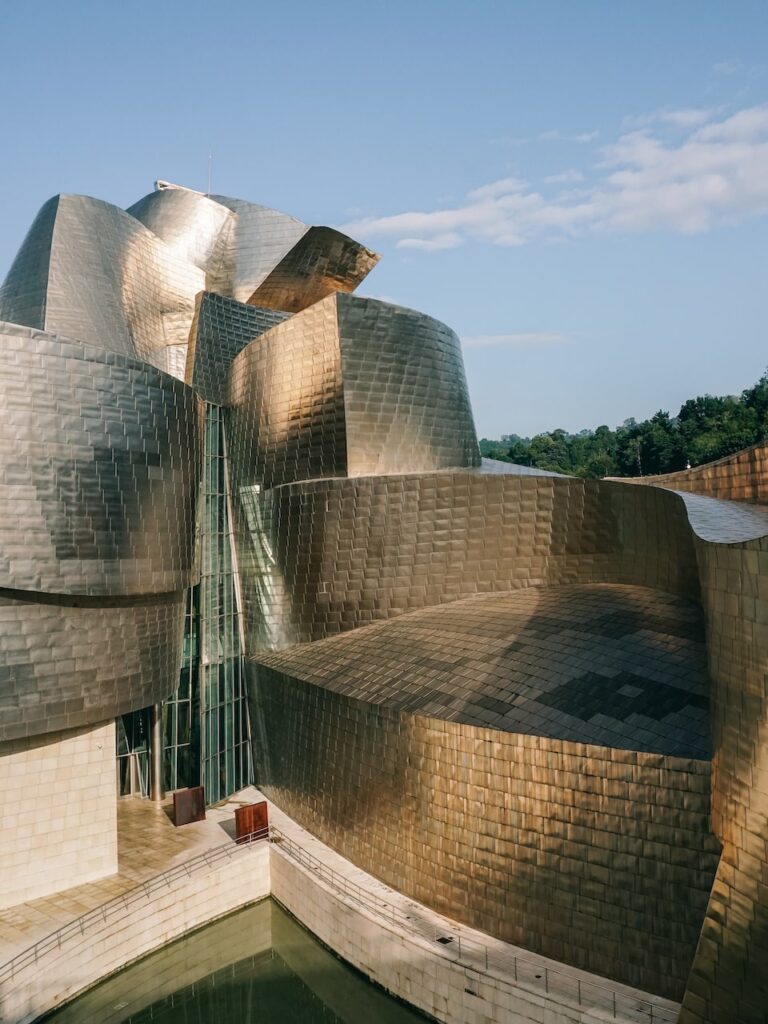
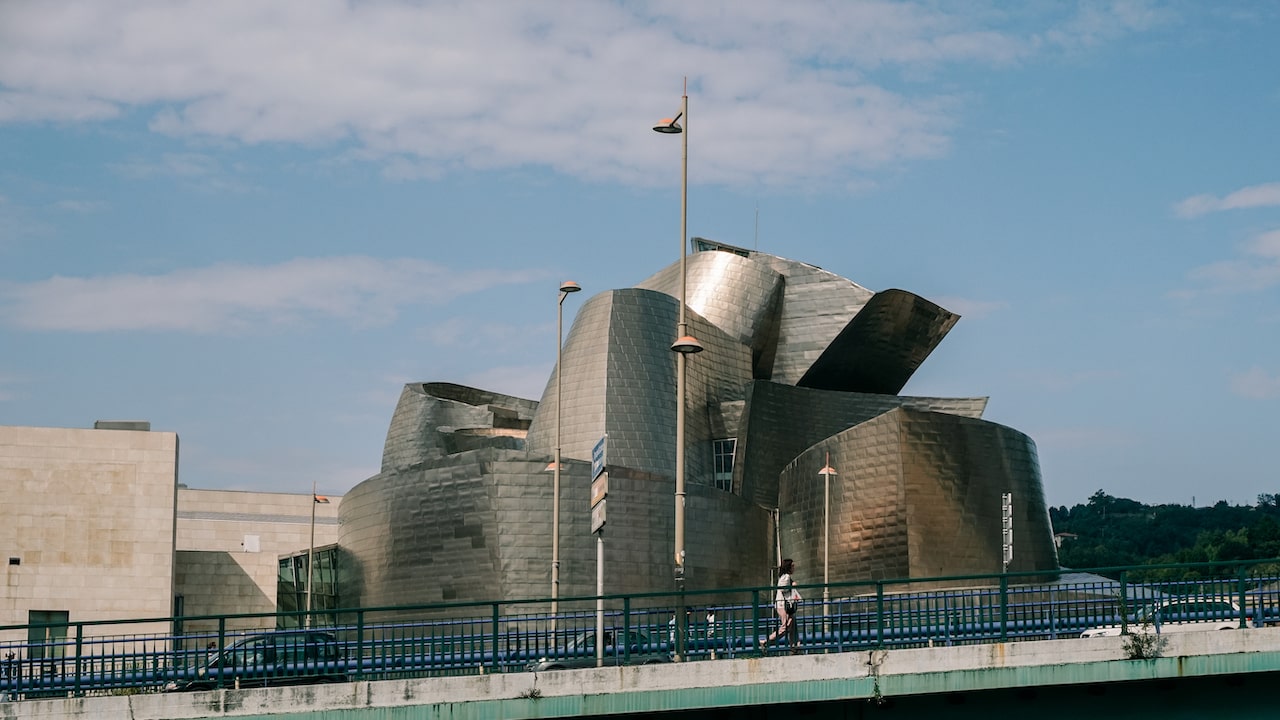
The building itself is impressive. While I’m not sure you’d call it a typical example of Deconstructivism, it’s definitely a building you want to see from every possible angle. The complete absence of harmony might irritate some, but the way it attracts light is unique.
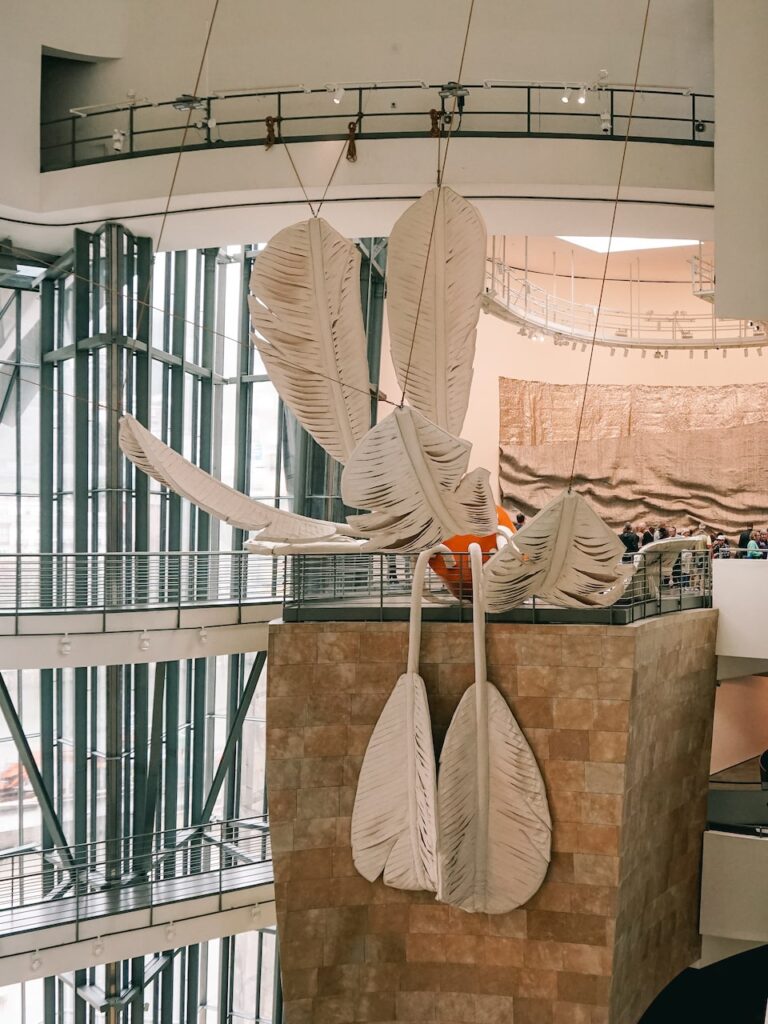
At different times of the day, you can see the windows reflecting the sun, and the light always finds its way into the atrium. Gehry called this atrium The Flower because of its shape. For a building like this, I find the term heartwarming, as I found the building to be a tad distant overall. But maybe that’s just me.
And here’s a tip for your visit to Bilbao: I believe the museum looks much more impressive from the river. For a completely different angle, book a boat tour and see it from the water.
The interior and the exhibitions
The Guggenheim Museum Bilbao is made of glass, stone, and titanium. Located in the city’s old industrial area, just off the center, it covers 24,000 square meters. As you can imagine, it has enough space for a variety of exhibitions and features nineteen galleries.
One of the most impressive exhibits is Richard Serra’s installation “The Matter of Time.” Located on the ground floor, “The Matter of Time” features massive steel sculptures. Visitors can walk through winding, maze-like paths created by curved steel walls, experiencing shifting spaces and perspectives. Serra is interested in the themes of space, time, and movement, and somehow invites visitors into a physical experience.
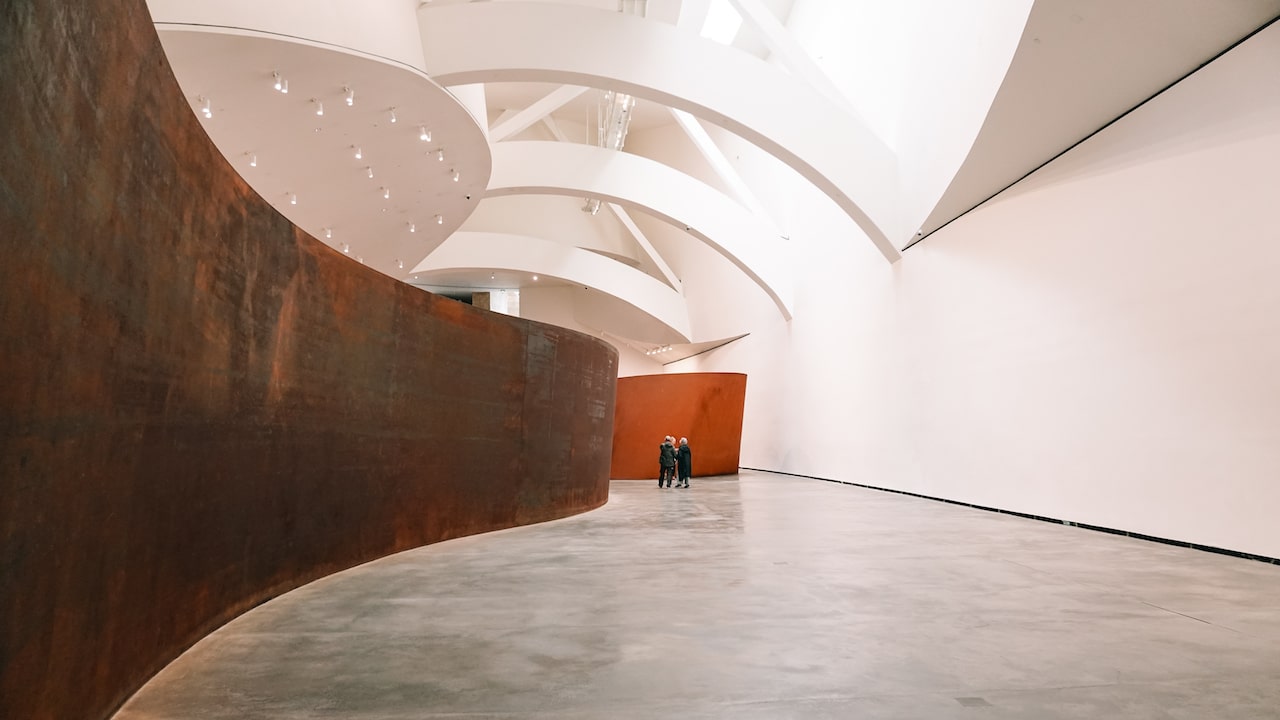
During my visit, as I strolled through Serra’s sculptures, I kept thinking about the expansion of the museum’s space. Like with the vast outdoor sculptures I wrote about earlier, I felt the same way: the museum constantly tries to escape the building’s walls and expand toward the city.
My photos from the Guggenheim Museum Bilbao
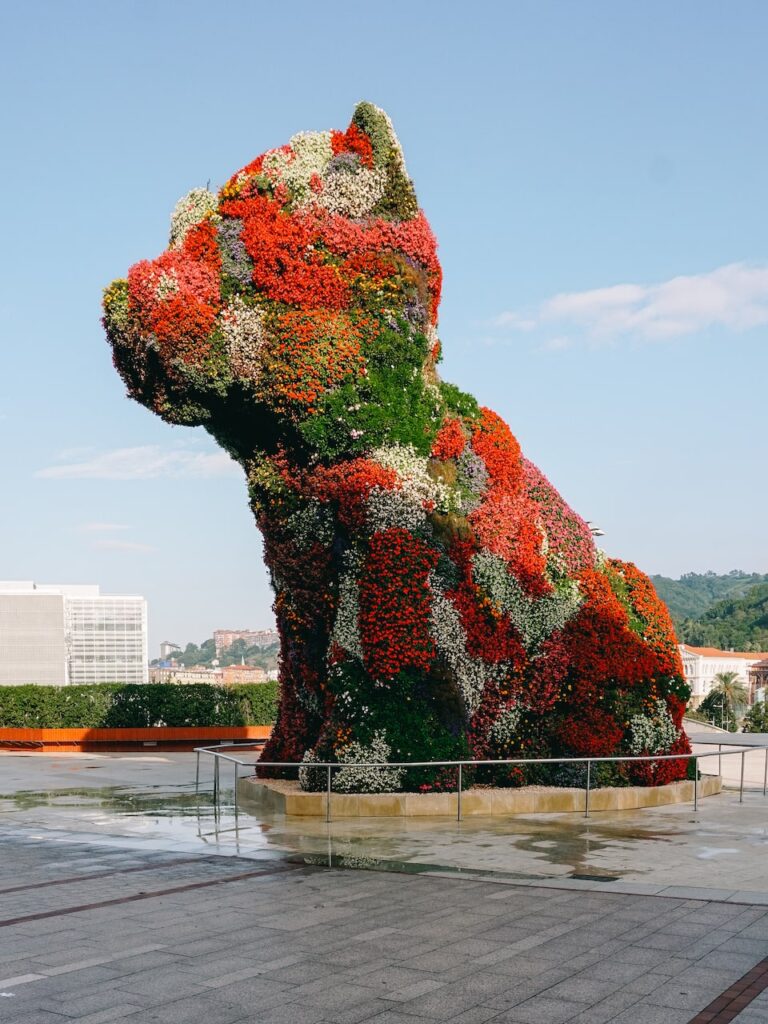
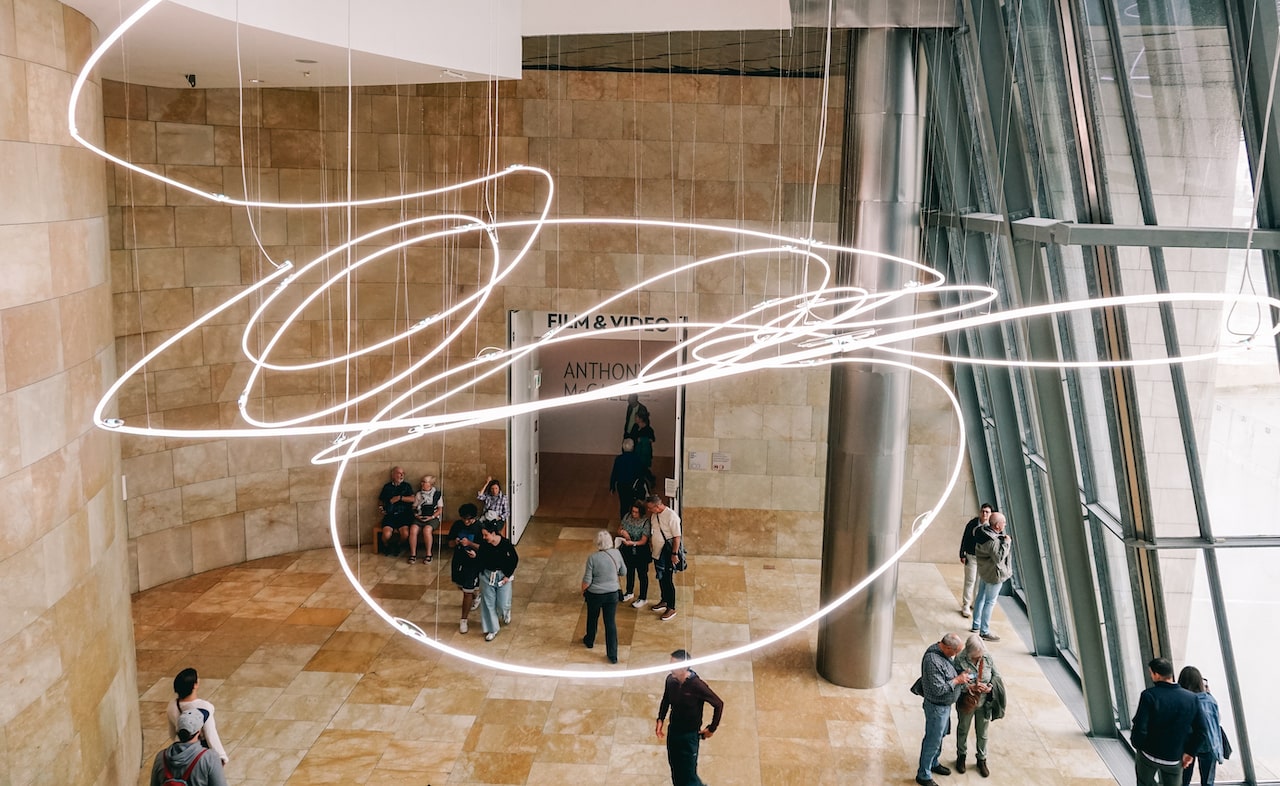
In this section, you will see some photos I shot when I visited the Guggenheim Museum Bilbao. When I wrote this article, the exhibitions I saw had concluded. However, because of the innovative presentation style and the museum’s fascinating interior, I still think they have value. That’s because they present artists with strong voices and visuals. Moreover, they will give you a good overview of what it feels like to visit the Bilbao Guggenheim.
Yoshitomo Nara exhibition
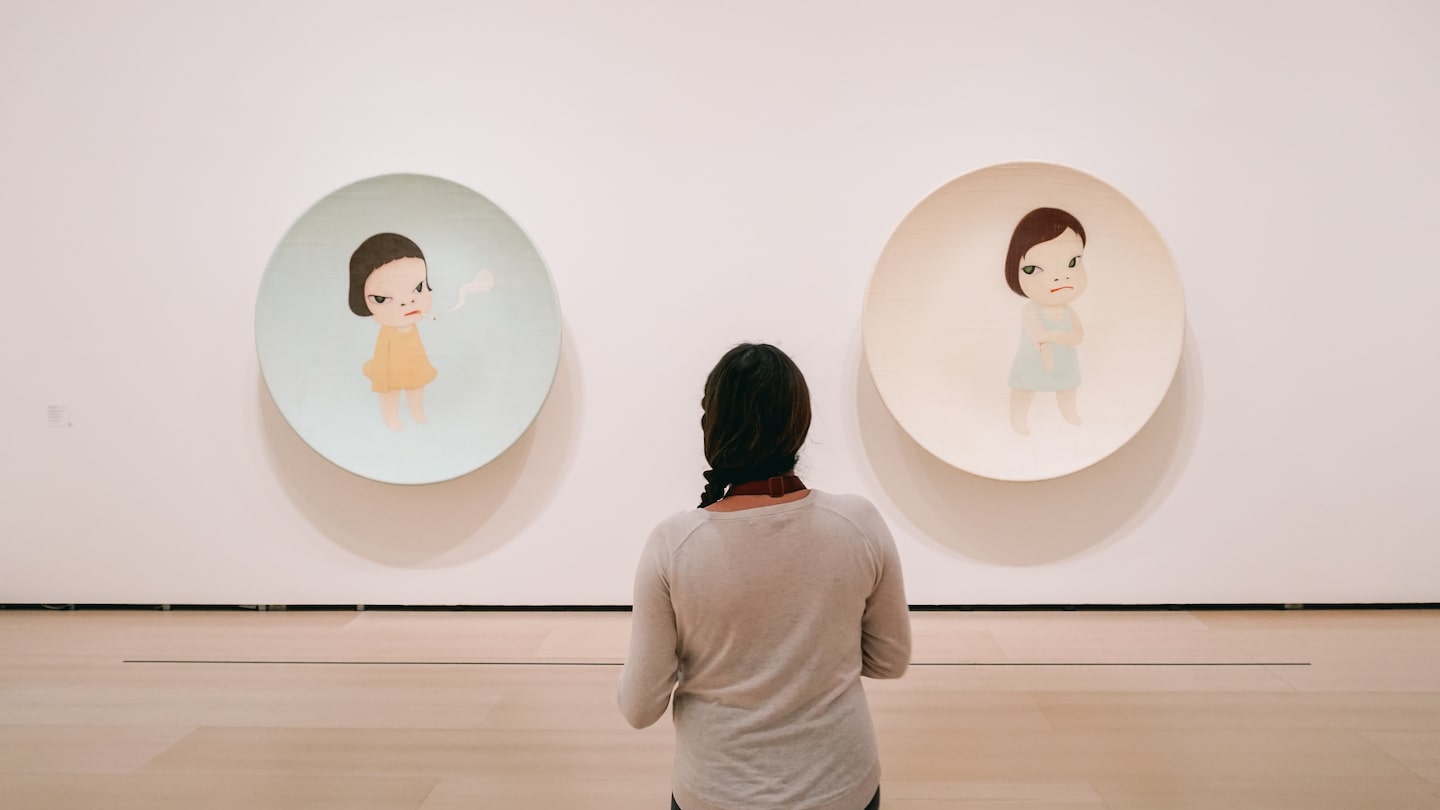
At the Guggenheim Museum Bilbao, I saw Yoshitomo Nara’s artworks for the first time. Known for his distinctive cartoon-like portrayals of children with expressive, oversized eyes, Yoshitomo Nara captures complex emotions ranging from defiance to introspection. His characters symbolize his inner feelings, shaped profoundly by childhood memories, literature, music, art history, and personal encounters across various cultures.
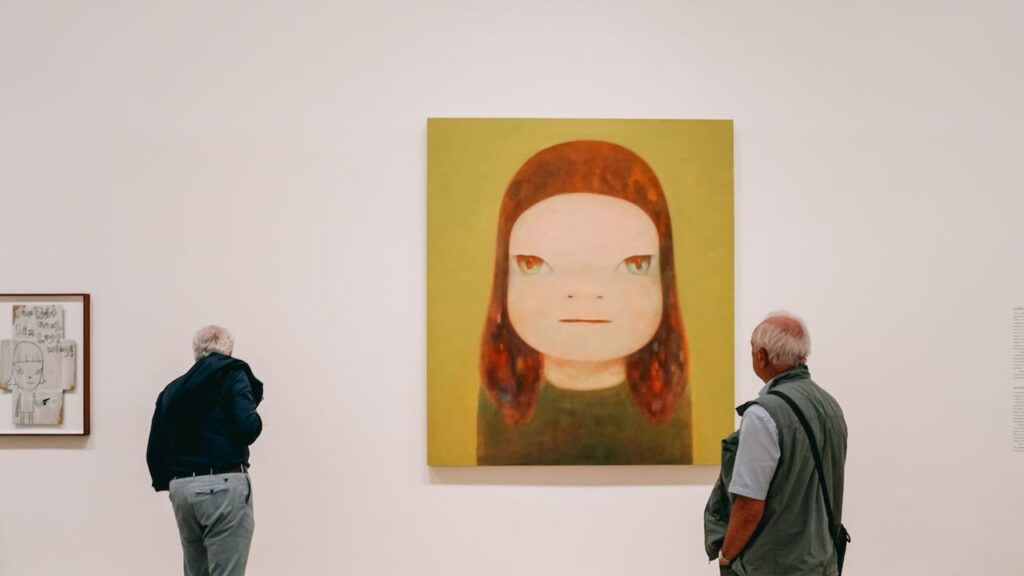
Nara’s work has quiet yet powerful messages. Although critics initially resisted him when he first appeared in the art scene, Nara’s innovative style is now admired.
Anthony McCall: Split Second
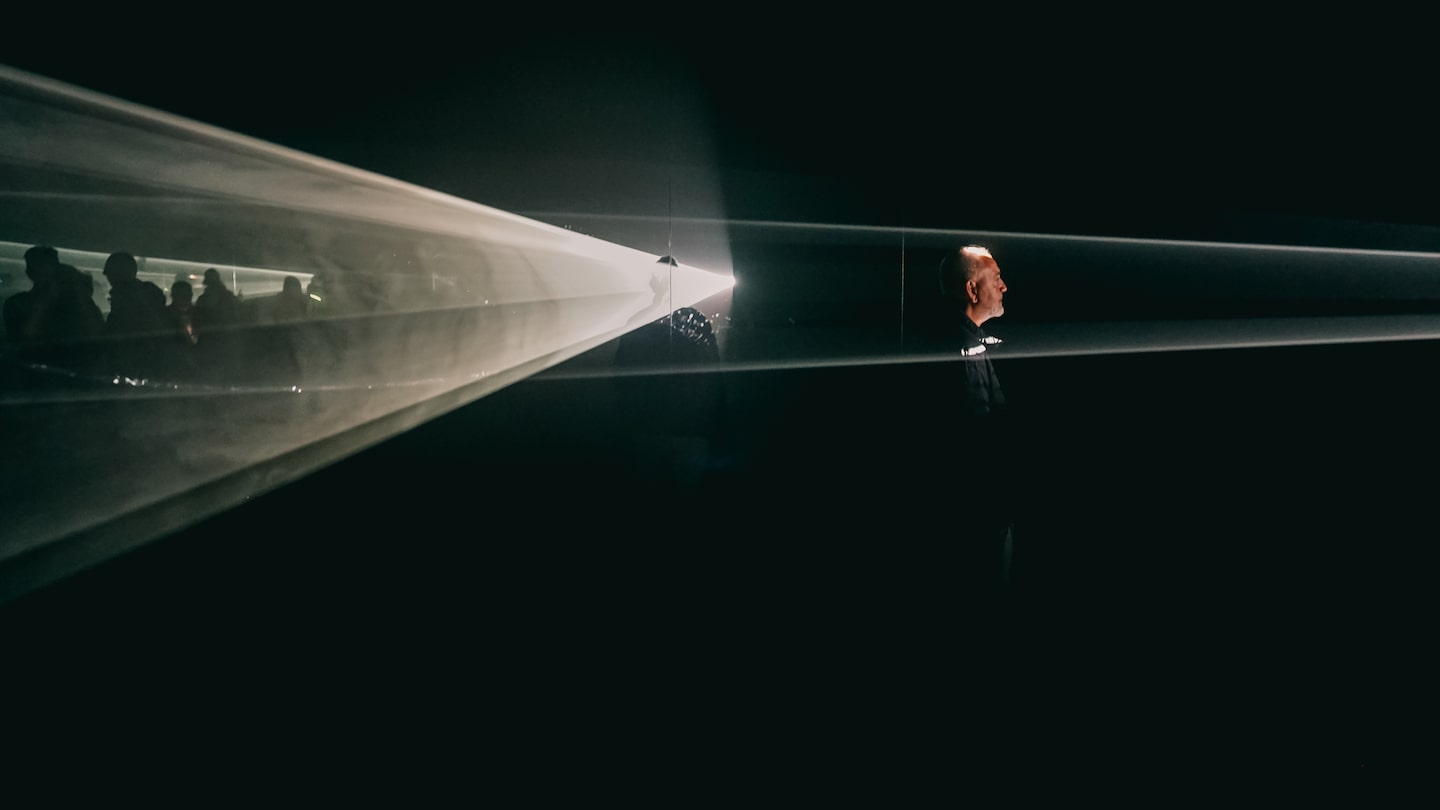
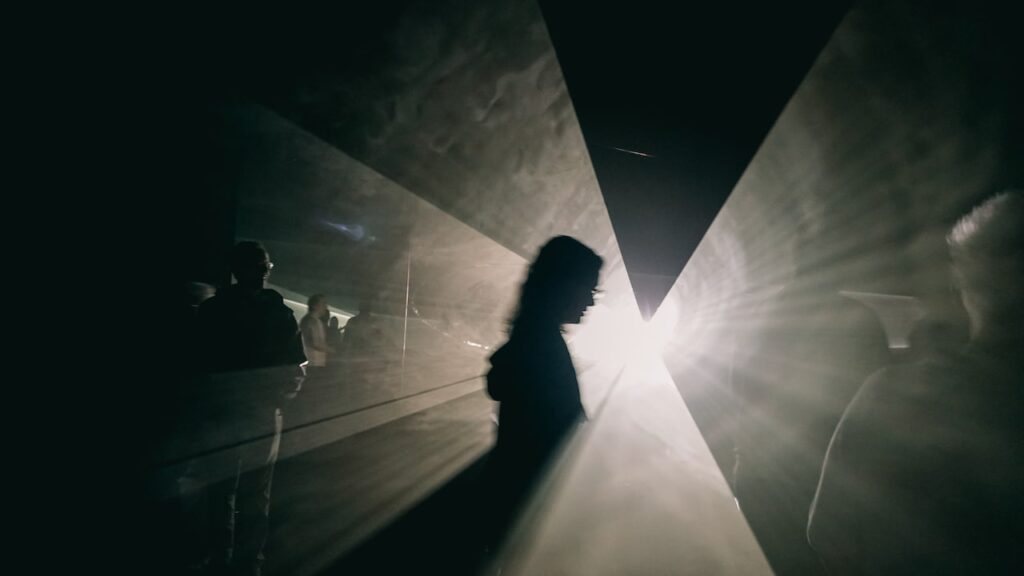
I was very impressed by the Split Second exhibition. McCall created sculptural effects with projected beams of “solid light,” forming hypnotic shapes that floated through darkened spaces. The exhibition debuted his latest work, Split Second (Mirror) IV (2024), alongside an early projection, Miniature in Black and White (1972), complemented by photographic prints that connect visually and conceptually with works by Richard Serra and Lucio Fontana.
Practical information about your visit to the Bilbao Guggenheim Museum
In this short section, you will find information about your visit to the Bilbao Guggenheim.
The museum is open Tuesday to Sunday from 10 am to 7 pm. It remains closed on Mondays.
Tickets cost 18 euros for adults, but students and seniors receive discounts. For more information, please visit the museum’s official website.
You can also book a skip-the-line ticket that comes with a guided tour by a certified art professional. If you love art, this’s the best museum tour you can book right now.
Last but not least, here’s the museum’s address: Abandoibarra Etorb., 2, Abando, 48009 Bilbao, Bizkaia. You can see it on Google Maps here.
A visit to the Guggenheim Museum Bilbao: Final Thoughts
A landmark for the city and an institution for the art world, the Guggenheim Museum of Bilbao is one of the must-see locations in town. As I wrote in my city guide, the Guggenheim is one of the best things to do in Bilbao due to its significance and how it reshaped the city. The museum hosts high-quality art exhibitions, and its permanent collection will showcase famous artists from the previous century.
Everything comes at a price, though, and voices raised concerns about gentrification early on. And those statements are valid. Visiting the Guggenheim Bilbao also means balancing mixed feelings about how people perceive art and how museums can reshape entire cities. There’s no easy reply, especially if you are an art lover.
However, I will stick with what I wrote earlier: I highly recommend visiting Bilbao’s Guggenheim for its rich collection, impressive building, and unique exhibitions.
More about Bilbao and the Basque Country: Getxo, Gernika, San Juan de Gaztelugatxe, Athletic Club VIP Experience

Pin it for later
Sharing is caring. Share this article about the Guggenheim Museum Bilbao with your friends.