

Last Updated on February 21, 2026 by George Pavlopoulos
The Museum of Innocence in Istanbul is one of these places that travelers always love to discover while visiting foreign countries. While it is not comparable to the city’s legendary landmarks like Hagia Sophia or Topkapi, this small museum on a humble street is a must-visit for literature lovers. Based on the homonymous novel by Orhan Pamuk, this small yet highly conceptual museum was one of the most interesting places I visited in Istanbul.
Set in a 19th-century small red house in Çukurcuma, this adds extra flair to the experience: it feels like a typical street in Beyoğlu, with stray cats walking along steep roads and antique shops on narrow pavements. It doesn’t get more Istanbul than that, and seeing the red building that spans three floors will put a smile on your face.
One thing that I want to mention before starting with the photo report is that the Museum of Innocence deserves a visit even if you haven’t read Pamuk’s novel. As you will see in the following lines, the museum feels like a huge visualized book. Yes, although it won’t be among the top things to do in Istanbul for most people, I believe it adds value to your trip for several reasons, which I will explain in the text.
So, let’s begin with my visit to The Museum of Innocence in Istanbul (Turkish: Masumiyet Müzesi) and how I navigated its pages through Orhan Pamuk’s love story.
*Some links are affiliate links. It means that if you purchase something, I might earn a small commission at no additional cost to you.
The Museum of Innocence in Istanbul
So, the first thing you might rightly wonder is why you should visit The Museum of Innocence if you haven’t read the book (you can buy the book here). Well, it’s one of the rare examples of a literary book fully converted into a museum. Moreover, the writer Orhan Pamuk is actually the person who envisioned this museum and contributed wholeheartedly to its creation. Pamuk had the idea of creating a museum simultaneously with the book.
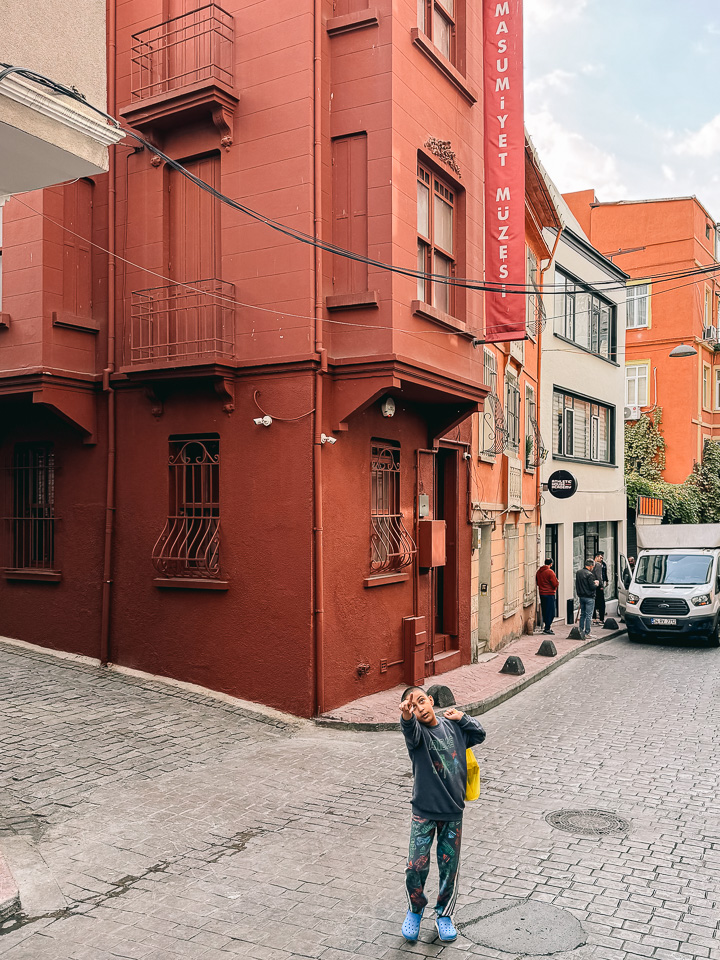
Specifically, Orhan Pamuk claimed that the two ideas (a novel and a museum) were conceived simultaneously, and that he began collecting objects as early as the 1990s. The goal was reciprocal: to write a novel that would grow into a museum, and that museum would somehow visualize the pages. This sounds like an ambitious project, for sure, but it was delivered perfectly (it was also awarded the Best European Museum in 2014), and what you will see today in that quiet side street of Istanbul is the result of hard work and research.
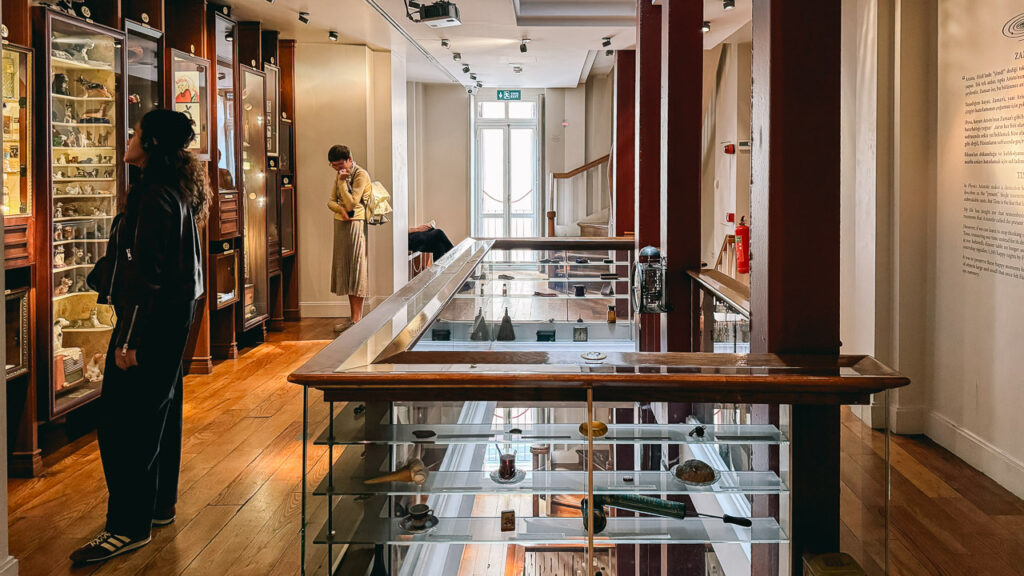
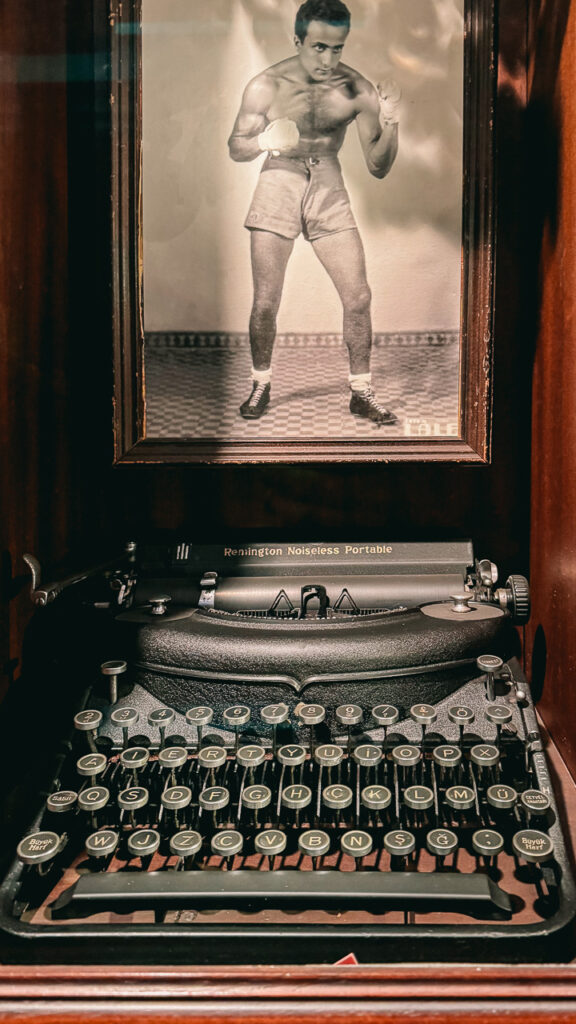
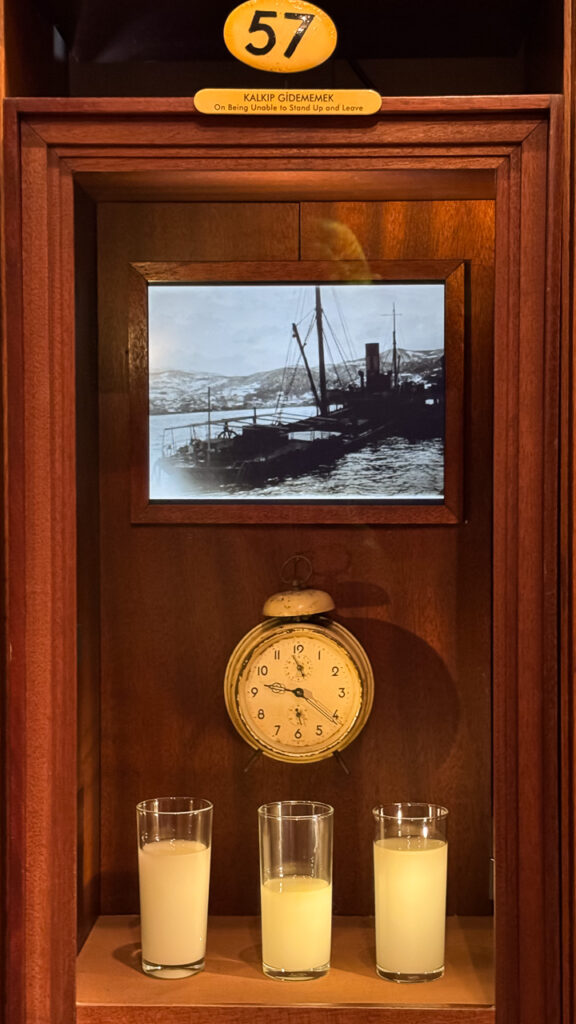
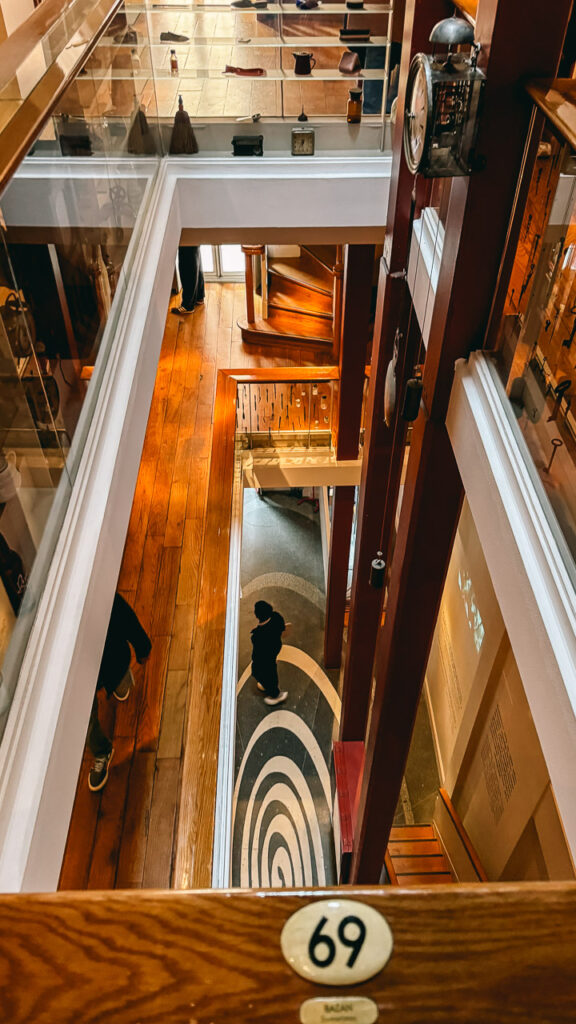
To get a better idea of how conceptual the museum is, on its three floors, you will see 83 small cabinets featuring objects behind glass vitrines. These 83 cabinets correspond to the 83 chapters of the book. Yes, each chapter has its own cabinet, and it was fantastic to see up close which objects were chosen to distil each chapter’s reading experience.
What’s the book about?
If you haven’t read the book, I still suggest visiting the museum. Here’s a very short synopsis of The Museum of Innocence by Orhan Pamuk, without spoilers.
The novel The Museum of Innocence is set in Istanbul during the late 1970s and 1980s. The book follows Kemal, a wealthy young man engaged to the elegant Sibel. However, Kemal begins an affair with Füsun, and what starts as a casual encounter becomes the epicenter of his life. Kemal is unable to leave Sibel or choose Füsun, and he ends up losing both. His life slowly rearranges itself around this absence. However, Kemal secretly collects objects bearing Füsun’s traces (such as earrings, tea glasses, bus tickets, and countless cigarette butts), thus creating a private archive of their vanished happiness. The house where Füsun once lived becomes a “Museum of innocence,” and arranging these objects in vitrines serves as evidence of their love.
Apparently, there are many more incidents in the book, but I believe this outline is enough if you haven’t read it yet and are willing to.
Inside The Museum of Innocence in Istanbul
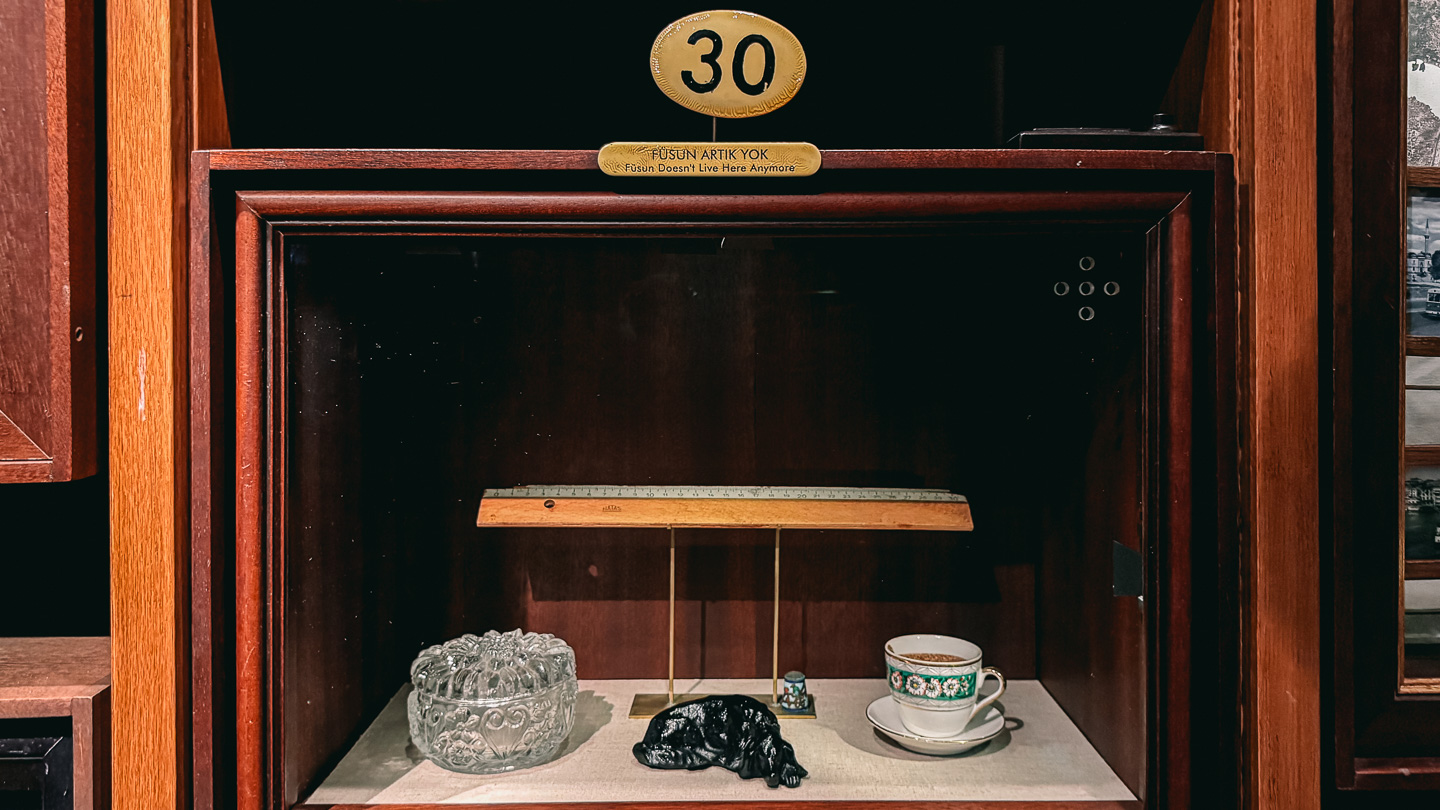
You can buy your tickets on the small side street where the museum is located. One of the nicest gestures is that if you have Orhan Pamuk’s novel with you, you will get free entrance to the museum. There’s also an audio guide narrated by Pamuk himself, which currently costs 50 Turkish liras (about 1 euro or 1 USD).
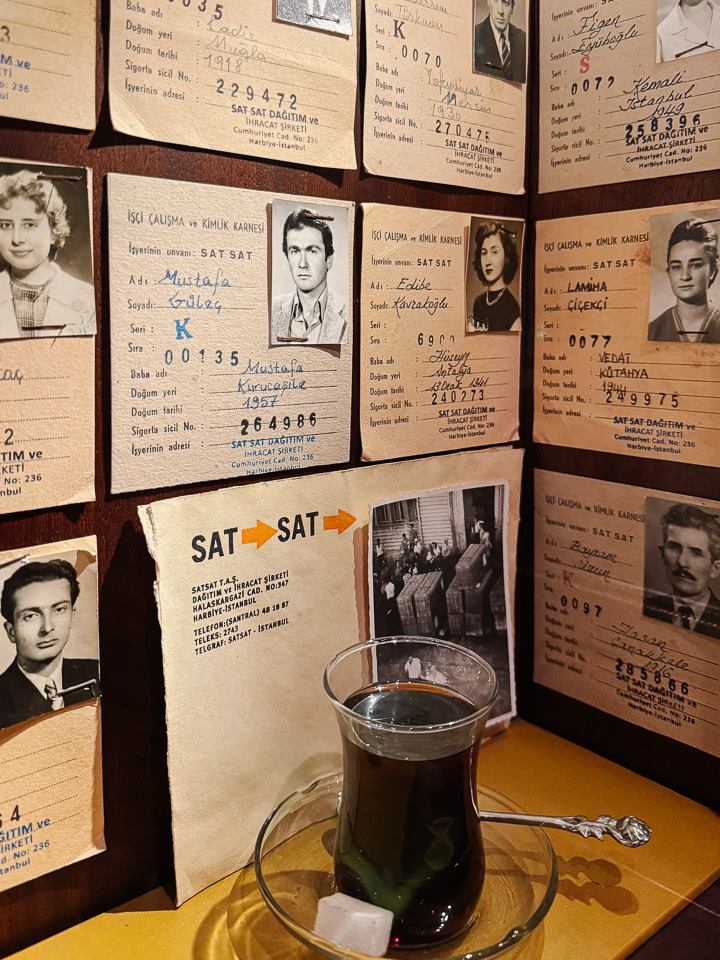
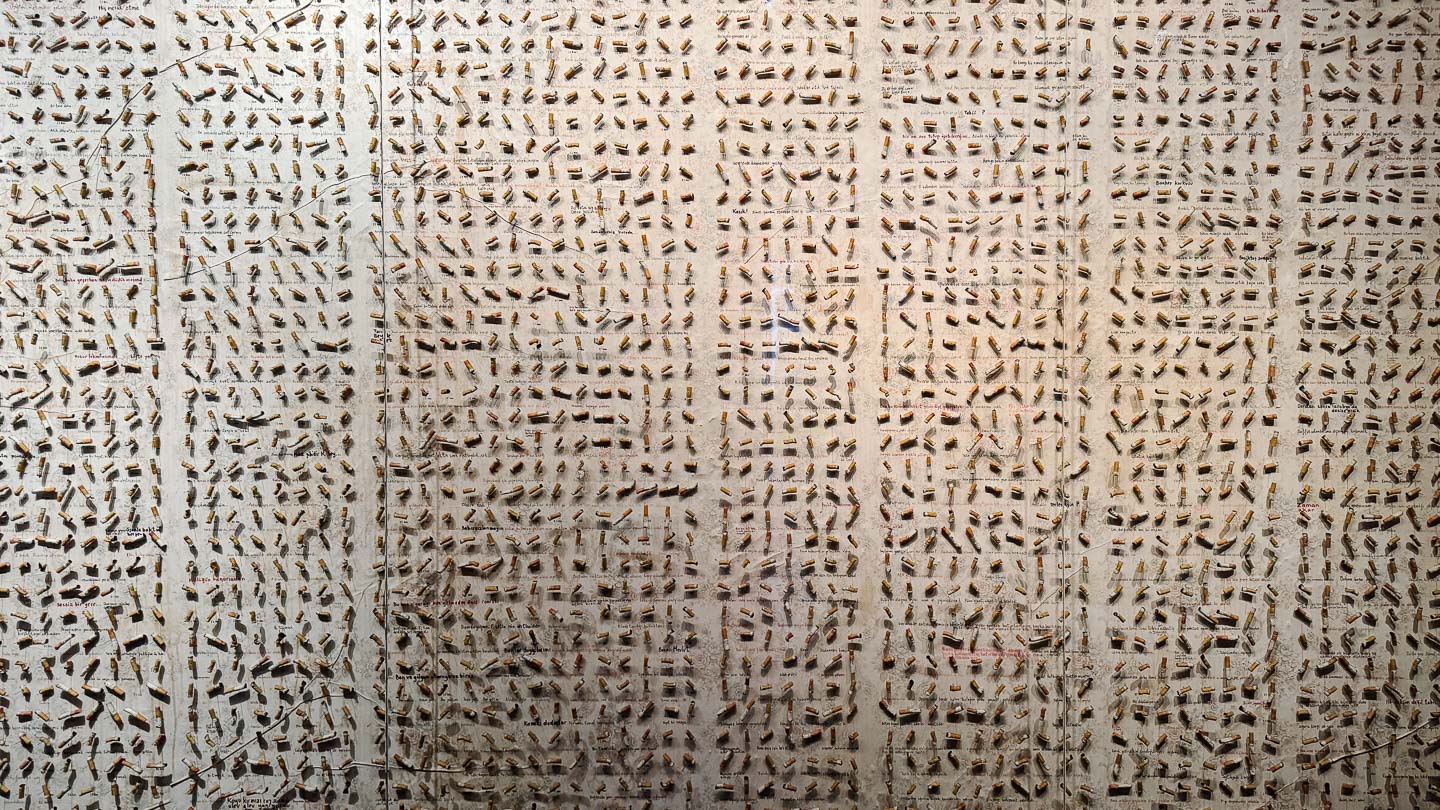
The entrance door feels narrow, precisely as it should be for a museum/book based on a lost love story. On the ground, you will see a painted maze that resembles how one should navigate in the book’s timeline and the trip down memory lane. On the ground floor, you will see one of the most emblematic showcases of the entire museum: the wall featuring 4,213 cigarette butts with short lines and remarks serving as a unique diary. That’s from chapter 68 and actually is the only exhibit that doesn’t follow a chronological order. However, it gives a direct impression of the narrator’s love for Füsun.
Then, you climb the (equally) narrow staircase to the first floor. The order from now on follows the book’s chapters.
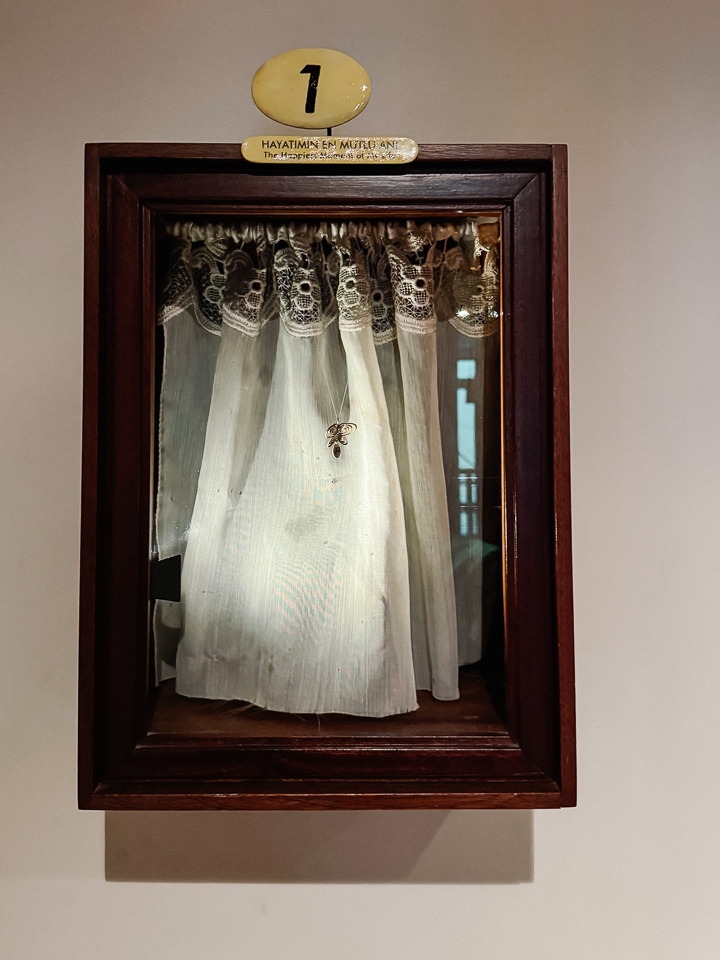
The first thing you will see is a small cabinet with a curtain moving in the wind and an earring. That’s directly from the first chapter and the first incident we learn about the two lovers.
On the first floor, you will also find copies of the book (in Turkish and English) that you can read to get a better impression of the novel if you haven’t read it or to remember scenes that you might have forgotten.
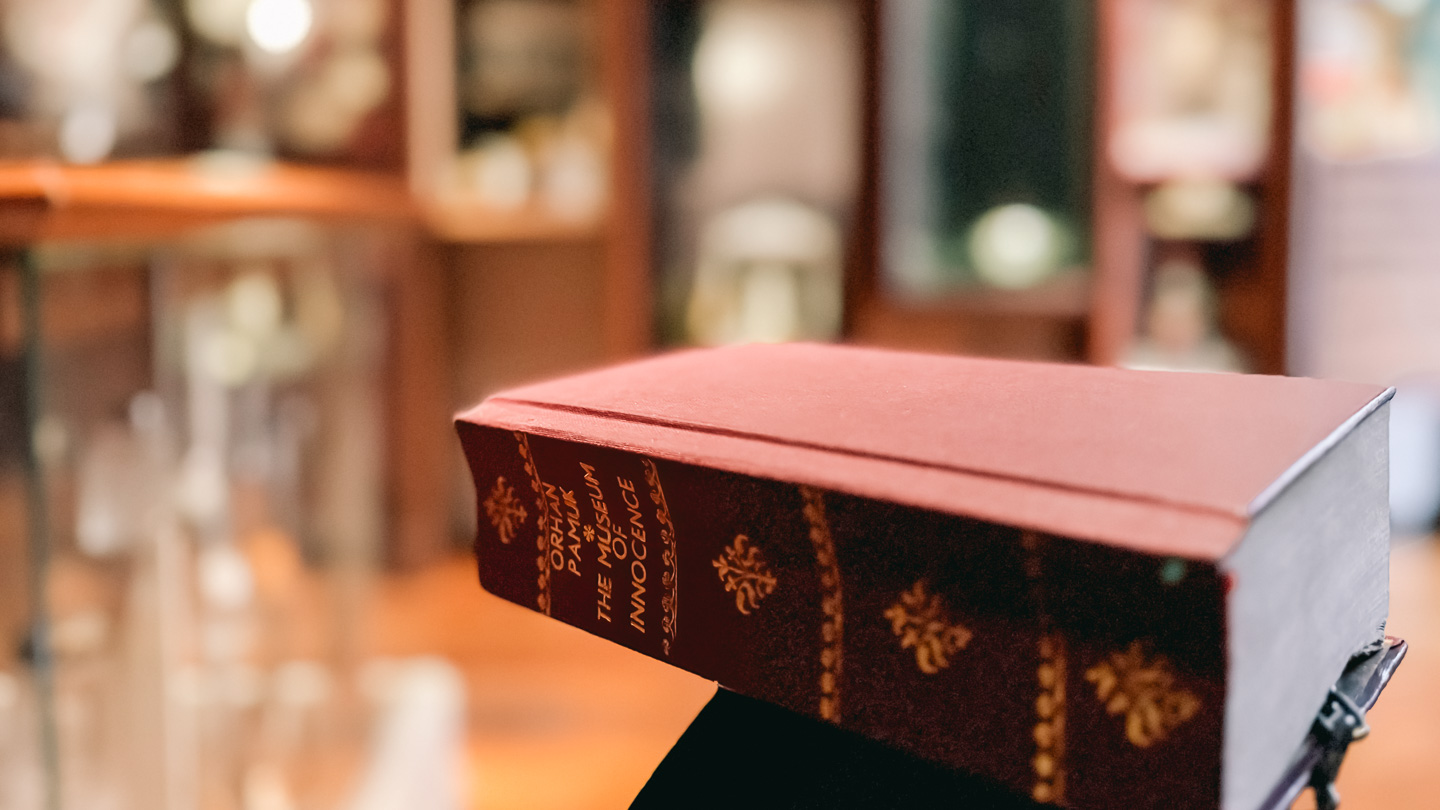
While the ideal time to visit the museum is a few days after completing the novel, I know this is not easy to time. Therefore, even if you have read the book several years ago, it still deserves a visit to the museum and seeing it up close, how Orhan Pamuk envisioned it.
Even if you feel that you don’t remember that much from its pages, the vitrines will trigger your memory. The cabinets showcase a lot, and while they might sometimes feel “too heavy,” they serve their purpose.
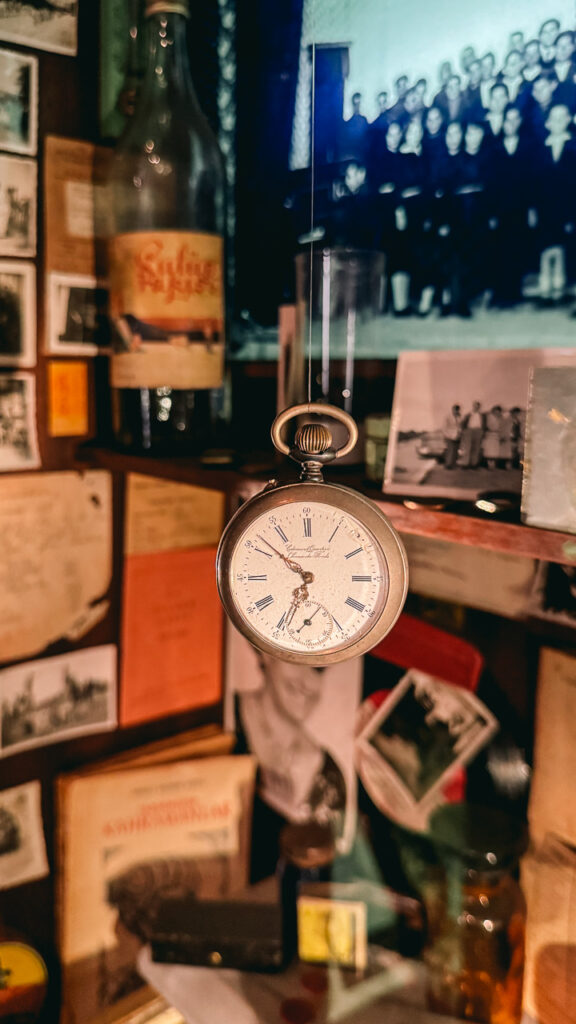
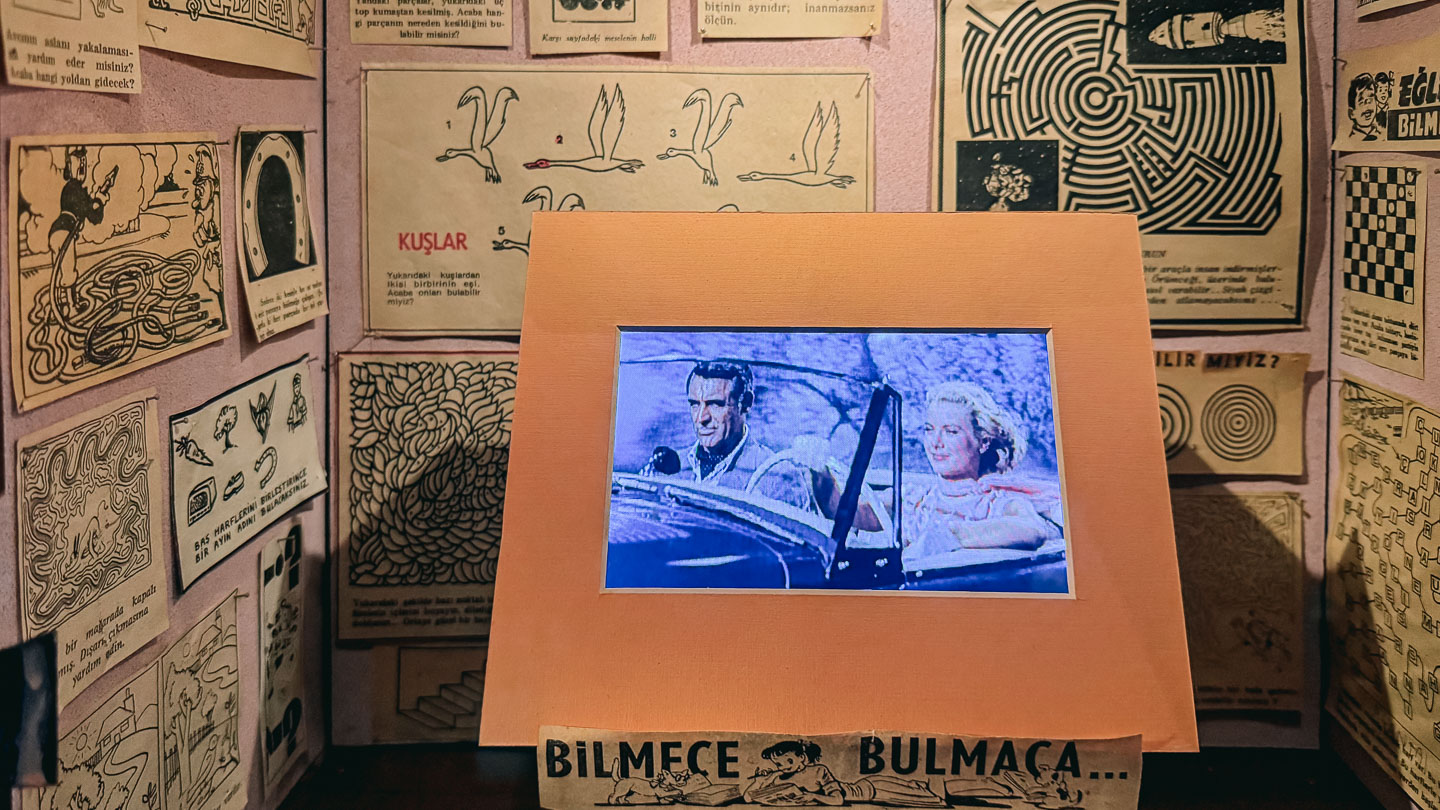
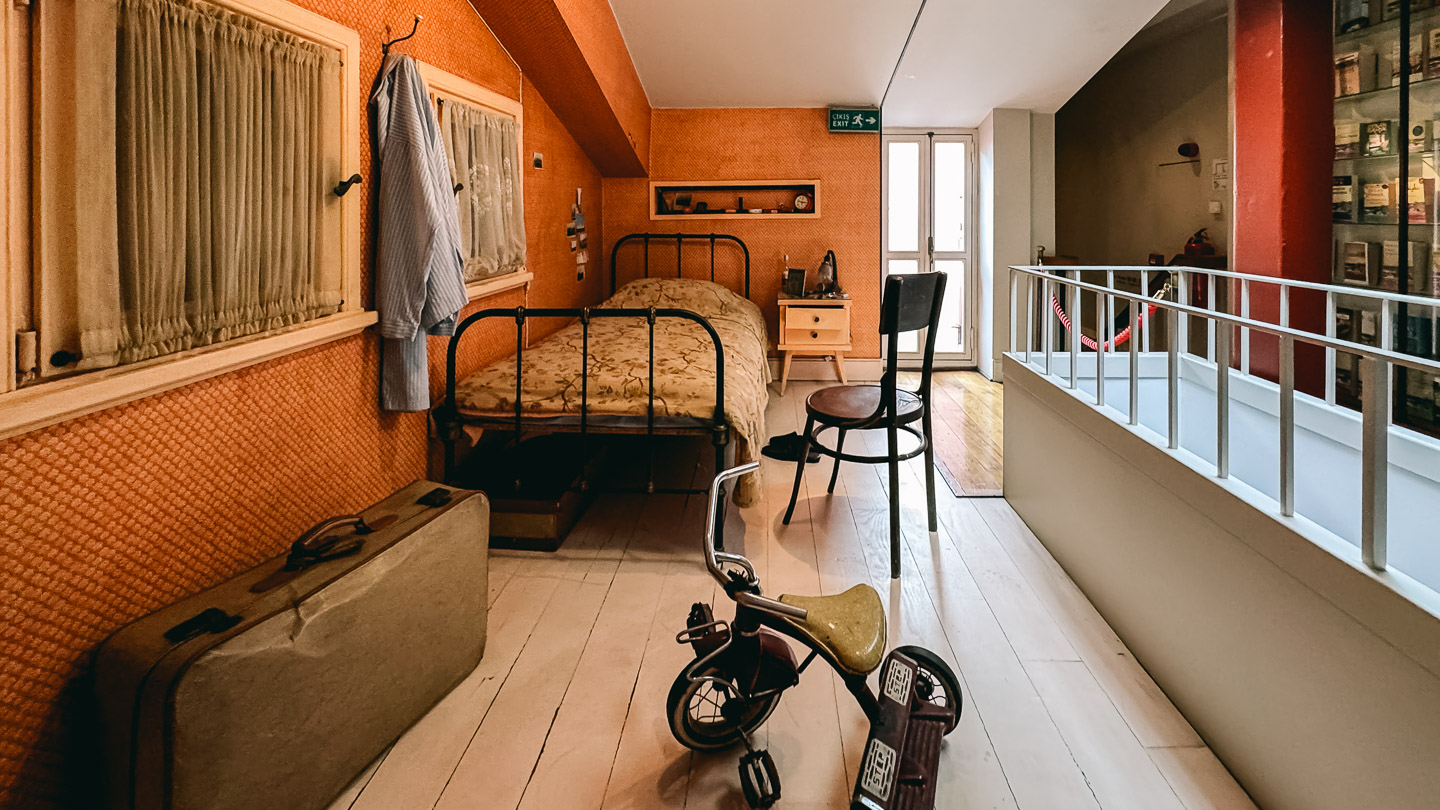
From my side, I enjoyed the more subtle ones, cabinets that felt more minimal in their approach. However, I fully understand the case when you will see lots of old photographs or bottles included. They are a portrayal not only of a lost love but also of a forgotten era that struggles to be remembered, and thus they are included in the premises of a museum.
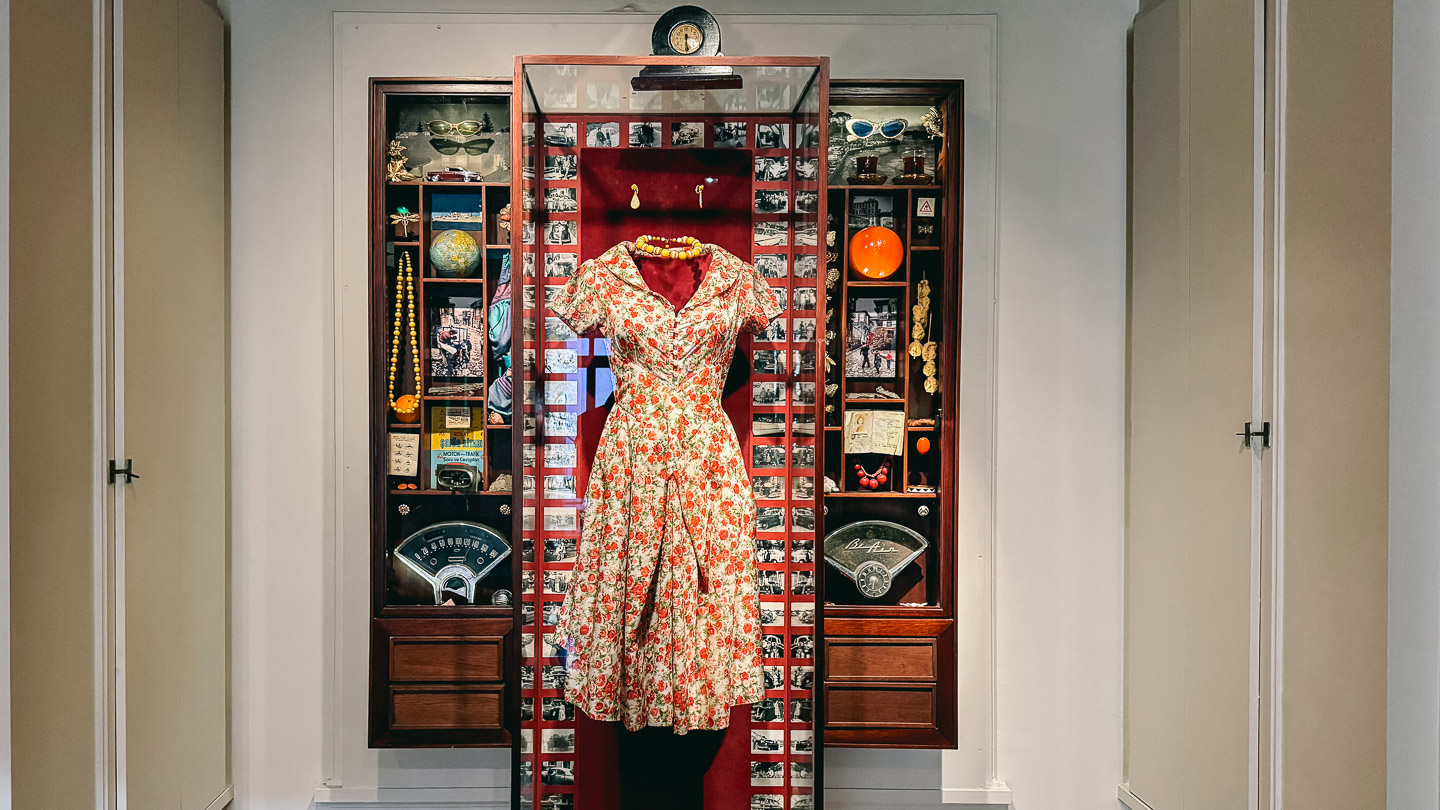
Very impressive was Füsun’s dress. Somehow, you could feel its presence throughout the novel, and to me, this was a powerful impression while strolling around the museums. The floor’s cracking noises added an extra layer to the experience, because that’s how memories sometimes feel to us.
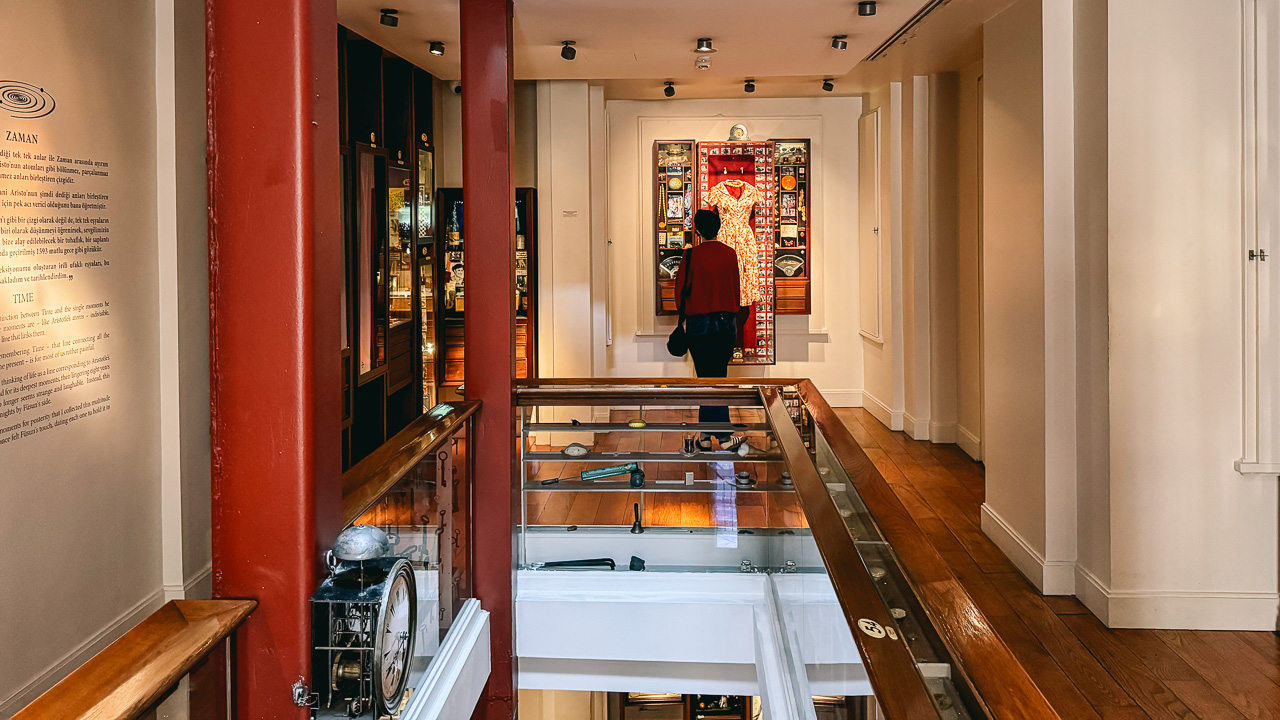
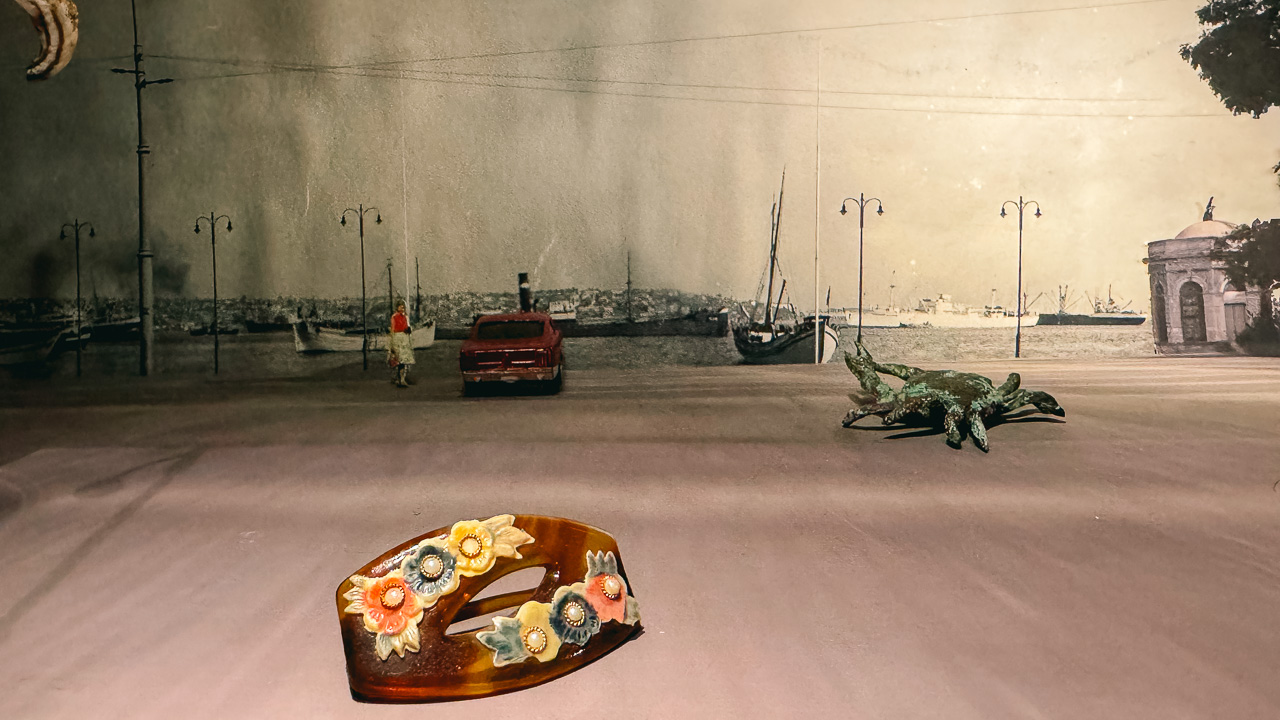
In the end, looking at these cabinets of The Museum of Innocence felt like looking at somebody’s shelves. The way this lost era has developed hand in hand with a lost love story was touching. The fact that most cabinets have photographic backgrounds to associate them with former times made the entire experience highly nostalgic.
At the end of the visit, after going exhaustively through every object on the museum’s three floors, I questioned not why we archive objects, but which objects we should archive to narrate somebody’s life.
It’s not about hoarding anymore, but mainly about keeping alive the people who matter to us and about how these objects can tell a story, fully or elliptically.
Practical Notes: How to Visit the Museum of Innocence in Istanbul
In this section, you will find some practical notes about the Museum of Innocence (Masumiyet Müzesi).
Opening days & hours
The museum is currently open Tuesday–Sunday from 10:00 to 18:00. It remains closed on Mondays and on certain public holidays. Please check the official website here before visiting.
Tickets
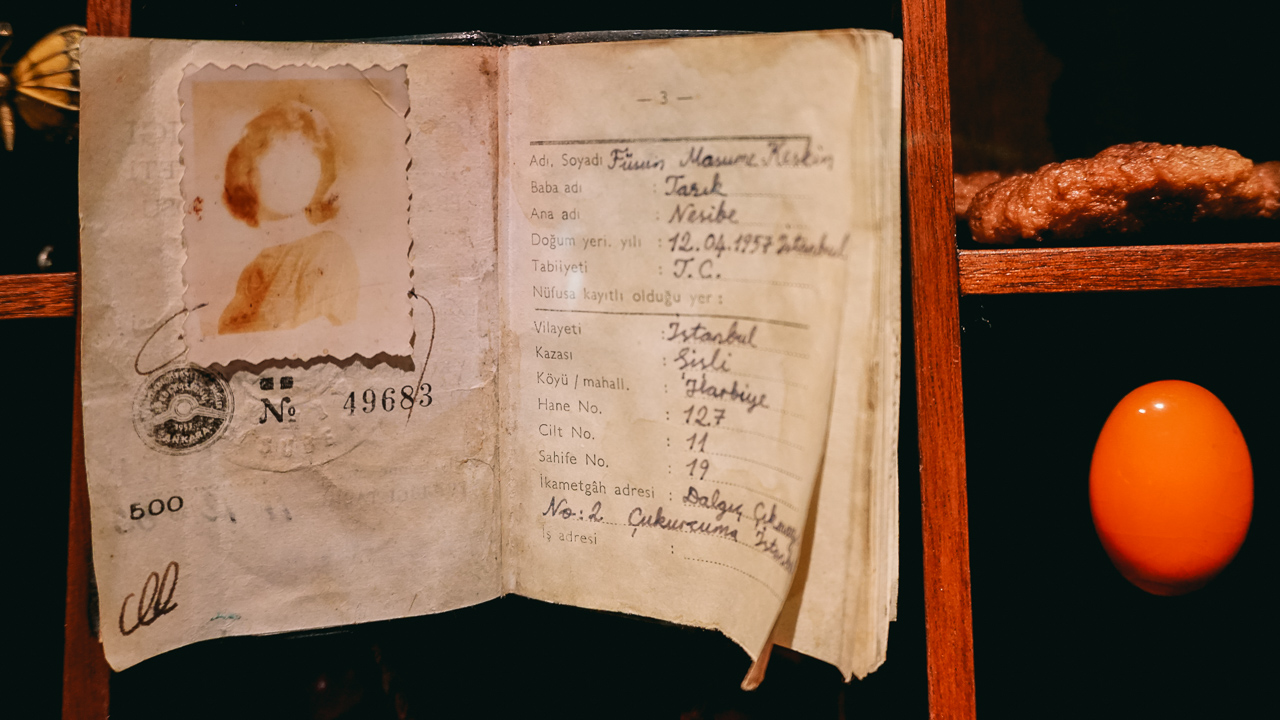
The ticket to the Museum of Innocence costs 650 liras. However, if you have brought the book with you, you can enter for free: the personnel will stamp your book on the page where a printed ticket is.
Where is The Museum of Innocence
The museum is in Çukurcuma, in Beyoğlu. The exact address is Çukurcuma Caddesi, Firuzağa, Dalgıç Çk. No:2, 34425 Beyoğlu/İstanbul. It’s an easy walk from Taksim Square and from Galata Tower as well. Please keep in mind that Istanbul is hilly, so check the exact route beforehand.
You can see the museum on Google Maps here.
How much time do you need?

To fully enjoy the museum and stroll around with your audio guide, allow 1.5 to 2 hours. I can only encourage you to take your time and enjoy it as much as possible, as this is one of the most interesting museums you will visit. If you are an Orhan Pamuk fan, please don’t stress to get it finished quickly.
What’s the best way to experience the Museum of Innocence?
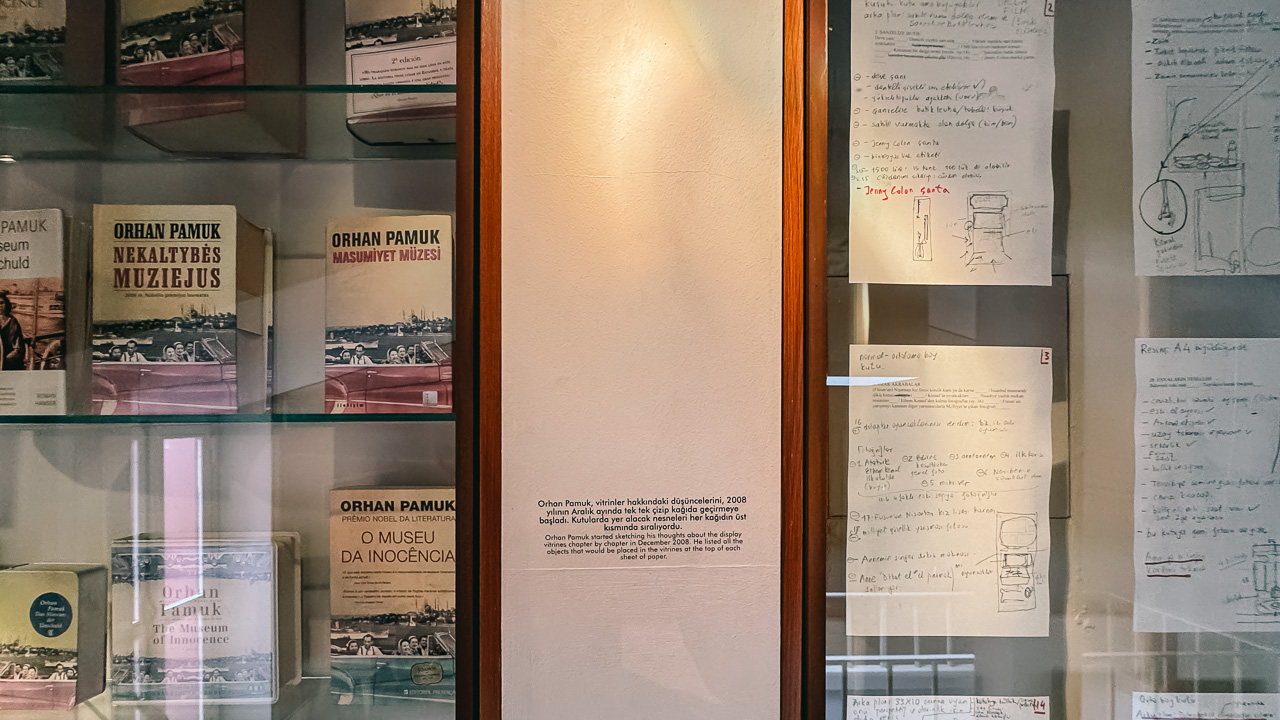
While it’s, of course, better to have read the book before visiting it, don’t be discouraged if you haven’t read the novel yet. The museum is highly engaging, and the audioguide will enhance your experience.
As I wrote earlier, the optimal way to enjoy the museum is to finish the book a few days before your visit, so you have everything fresh in your memory. However, the available copies will refresh your memory, and certain parts of the book will definitely be revealed through the cabinets and all the information provided on the museum’s walls.
Bonus tip: Luckily, I stayed 20 meters from the Museum of Innocence, and it was a perfect base for visiting many of the city’s major attractions on foot. I stayed at the Hammamhane Hotel and was delighted with the rooms and hospitality. If you’re searching for a place to stay in the city’s heart, make sure to check it out.
Can you take photos?
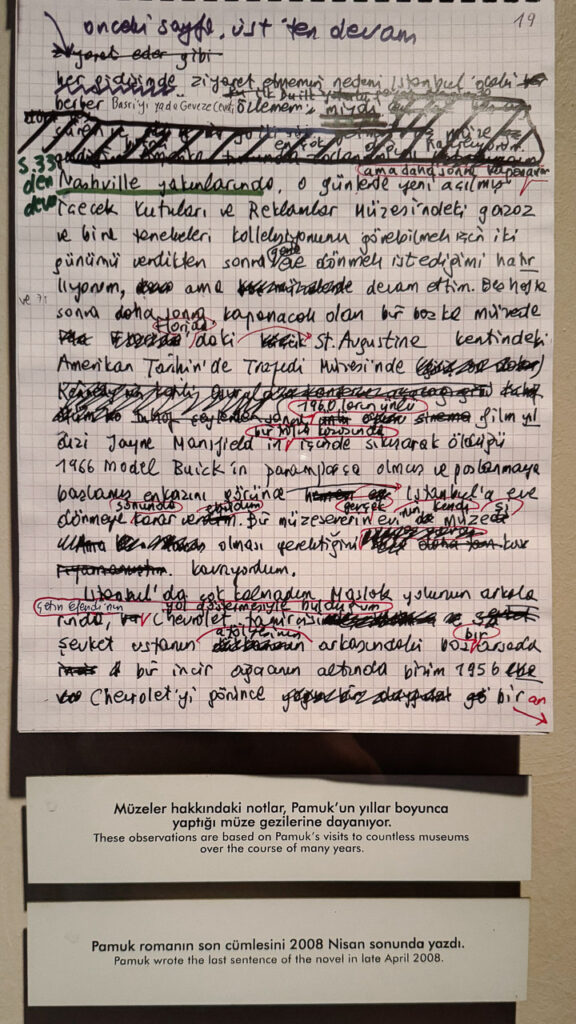
Yes, you can shoot photos in the Museum of Innocence in Istanbul. It would actually be somewhat ironic not to be able to create memories of what you see in a place dedicated to memory, after all. I had my camera with me, but I found myself mostly shooting with my iPhone, which I’ve been using lately for travel photography.
So, yes, you can shoot photos in the museum. However, as a fellow traveler’s advice, don’t let excessive photo-taking ruin the overall experience. While it’s nice to have images to remember, it’s also great to enjoy the moment you stroll around the museum and come across the various exhibits.
The Museum of Innocence in Istanbul: Final Thoughts
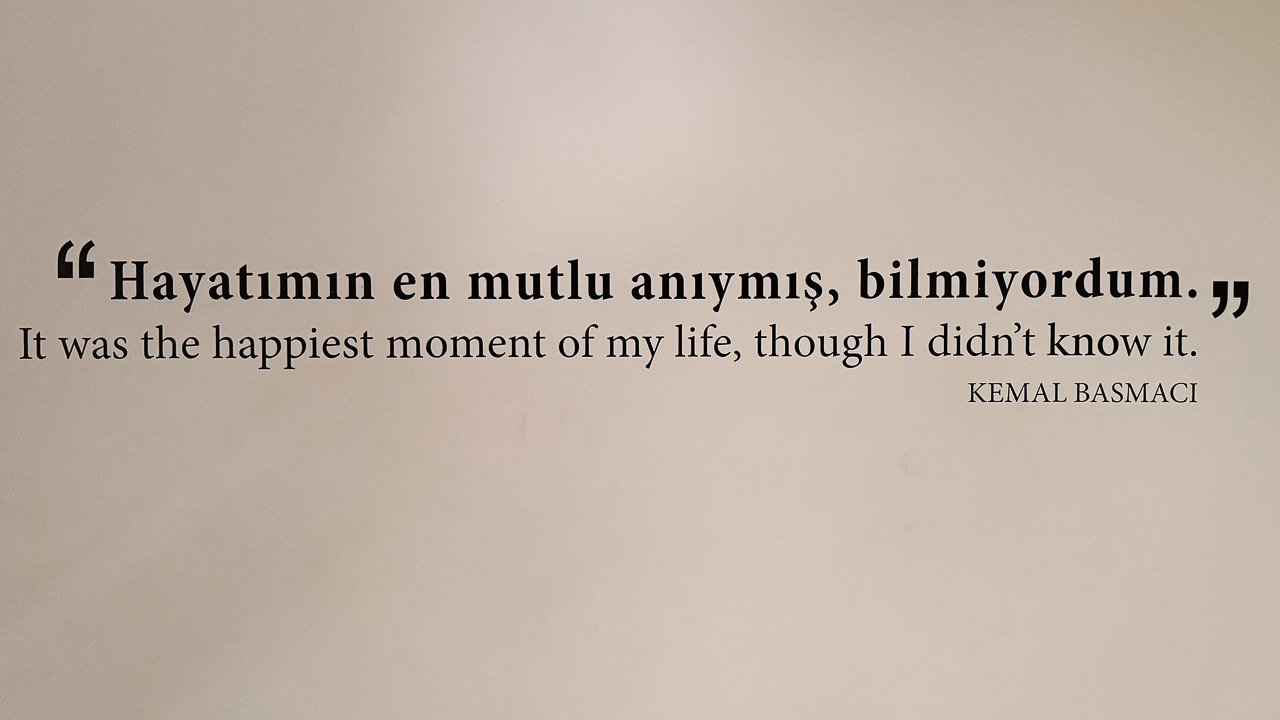
The Museum of Innocence in Istanbul impressed me with how well it handled its material. It felt like an ambitious project of one of the most well-known writers of our time, Orhan Pamuk. On such extensive dual projects, success can never be guaranteed, but what I experienced in this tiny museum exceeded my expectations.
Straight after leaving the museum behind, I thought a lot about its usage and its purpose. It also made me reflect upon the concept of memory itself and how it can be preserved. The idea of dedicating a museum to a person (fictional or not) is always interesting, but walking through a building and feeling like you’re strolling through an open book was truly fascinating.
As I stated earlier, this might not be one of the best things to do in Istanbul for lots of people. Additionally, it might not be the most obvious if you don’t have an interest in literature. However, I genuinely believe that this museum goes beyond literature and sightseeing. Conceptualizing a book and turning it into a museum while presenting a lost love story and a bygone era is one of the most interesting things I’ve seen.
If you’ve been following my travel blog for long enough, you probably remember that I have a thing for lesser-known places and bizarre stories. However, I can assure you that this doesn’t fall into any of these categories. The Museum of Innocence in Istanbul is a truly unique location, and I intend to keep it uncategorized yet greatly enjoyable.
More about Istanbul: At the Istanbul Biennale
Pin it for later

Sharing is caring. Share this article about The Museum of Innocence in Istanbul with your friends.