

Last Updated on December 2, 2022 by George Pavlopoulos
Buying the Polaroid Onestep+ camera
I’ve been shooting instant photos for more than seven years. Actually, I even thought of starting a travel blog where all the images would be polaroids. However, such a plan sounded too ambitious, and it would have been tough to keep it going. Nonetheless, my attraction for instant photography never faded away, and buying the Polaroid Onestep Plus was the natural evolution of that passion. And after using it for a couple of months, I thought of writing an extensive Polaroid OneStep+ review.
For many years I’ve been using the Fuji Instax Wide (you can read an article here). The camera could take really good polaroids, but the fact that it was really bulky pushed me to search for another camera. I loved the wide format; therefore, I didn’t consider buying the Instax Mini. Despite being good-looking, I feared the format would be too small. That’s when I started looking at Polaroid Originals and decided on the Onestep+ camera.
And in the end, I bought one. I have also introduced a new section on my travel blog, called Polaroid Diaries, where I present polaroid photography. I actually have had the camera with me on many journeys since August 2019. Am I satisfied? Well, since you can never reply with a yes or a no, I thought of writing a comprehensive OneStep+ review. It turned out that this is probably the most comprehensive Polaroid Onestep+ review that you can find online.
At the middle of this post, you will also find a video with 20 of my favorite polaroids. So, make yourself comfortable and read this Polaroid OneStep+ review.
*Some of the links are affiliate links. It means that if you buy something, I might earn a small commission at no additional cost to you.
What I love about the Polaroid Onestep+ camera

As I wrote, I used a couple of instant cameras in the past. However, last year, I kept searching for a new polaroid camera, and that’s how I bought the Polaroid Onestep+. Here’s what I love about the camera.
1. Polaroid OneStep+ has manual control
Yes, you read that right. The Polaroid Onestep+ has a manual mode. This is uncommon with polaroid cameras since most have just some basic dials. Actually, you can usually set only the distance (close-up or infinity), and you have three options for exposure: dark, light, and normal.
But with OneStep+, the company took a step further and introduced a manual mode. For that, you’ll need to download the Polaroid Originals app, though. Here is the iPhone App, and here is the Android one.
After downloading the Polaroid Originals App for your smartphone, you can turn on the built-in Bluetooth of the OneStep+ and pair it with your phone. This will open up a new world of polaroid possibilities. Although there are features like Light Painting and remote shutter, the truth is that nothing compares to the manual mode.
You see, if you know the basics of photography, you can have complete control of your camera. In other words, you can set the Aperture and the Shutter Speed and be more creative with your photos. Of course, you can’t change the ISO like in digital cameras. This is a film camera, and the ISO is already set. For the i-Type film that the Onestep+ uses, the ISO is 640.
The manual mode was the decisive factor for buying the Onestep+. I wanted to be more creative with my polaroid photography and didn’t want to rely on the camera’s exposure meter. Sometimes the meter might pick the wrong settings, and I wanted to avoid that. However, I must admit that most of the time, the meter is accurate.
2. Double exposure
Another cool feature of the OneStep cameras is the double exposure. What is double exposure? Well, double exposure is a technique that combines two exposures to create a single image. Imagine it like taking two photos, but they are both printed on the same shot. This can create exciting effects and will let your creativity flow. Of course, this is not an easy task with a polaroid film, and you’ll probably end up having too many bad shots before seeing good results.
The OneStep series can take double exposures, but the OneStep+ lets you handle this through the app. Despite being a minor improvement, it’s still a very welcome one. That way, you can control the camera via the app. I didn’t experiment that much with the double exposure on my Polaroid Onestep+, but I’ll definitely will within the next couple of weeks.
3. Size and weight of the Polaroid Onestep+
Although it doesn’t compare in size with the Fuji Instax Mini series, the truth is that the OneStep+ feels significantly smaller than Instax Wide. I’d say that the camera feels good in my hand, and it fits easily in my bag. Sure, the Polaroid SX-70 looks better (read my SX-70 review), and the fact that it’s foldable means that you can carry it with ease, but keep in mind that a functioning (or refurbished) SX-70 costs way much more.
That said, for me, the OneStep Plus is a significant improvement from my bulky Instax Wide. I wouldn’t call it lightweight, but the OneStep+ feels good in the hand, and it’s definitely easy to carry around. It also comes with a neckstrap, so you don’t have to hold it always in hand.
4. Quality of the polaroids

Well, I’m also going to talk more about the quality of the polaroids in the following sections, but I must say that I’m satisfied with them. The polaroids are usually well-balanced, and the colors have this nostalgic polaroid look. Of course, there is room for improvement, but you should always remember that the original Polaroid factory shut down about a decade ago. The current polaroid film is developed from scratch; therefore, imitating 100% of the old polaroid feel is challenging.
The hard work seems to give good results, and as far as I know, the guys at Polaroid Originals are still developing and improving the quality of the film.
So, what do I really mean about the quality of the polaroids?
First of all, the polaroids don’t seem to fade away. Sure, I have had the camera for a few months now, and there are no signs of fading. Maybe there will be such signs in ten or twenty years, but for that, I’ll have to update you in the distant future. For the time being, the photos look good. A week after taking the photos (I believe they need quite some time to fully develop, although, after 15 minutes, you have a clear image), I scan the photos. In the comparison I do after a couple of months, there’s no sign of fading.
Second, I mean the colors. As I said, the colors are vibrant and have that distinctive polaroid look. Of course, there’s a difference from old polaroids, but as I wrote, that’s a different factory and production line.
Third, I’m talking about sharpness. I’ll write more about the sharpness later, but I’m impressed by the images’ sharpness. Especially the close-ups look really sharp, and I have taken some beautiful portraits with the OneStep+.

5. The price of the Polaroid Onestep+
The Polaroid Onestep+ comes at a fair price. At the time of writing of the Polaroid Onestep+, the camera costs about 130 euros/dollars. The price seems pretty stable -I also bought it for 130 euros- and it’s a camera that won’t kill your budget. You can check the current price of the camera on Amazon here.
The price is great for a camera with excellent battery life and a crystal clear viewfinder (among other features).
Check the current Polaroid OneStep+ prices on the official Polaroid websites:
The US store, The EU store, The UK store
6. The dual-lens
One significant improvement from the previous models is also the dual-lens. It might sound a bit confusing, so let me explain that. The OneStep+ has a switch on the top of the body. Moving it to the left side becomes a landscape lens, while switching it to the right gives you a portrait lens. Both lenses perform really well, but if I had to pick one, the portrait lens is better and sharper.
Previous models would have a similar feature, but only one lens existed. The camera would focus either close or to infinity by pressing a button. But the Polaroid OneStep+ has two lenses, which is indeed a significant improvement.
7. The flash
Don’t underestimate this one. The flash of the Polaroid Onestep+ does an impressive job 95% of the time. For a camera that isn’t as advanced as the DLRS or the expensive film cameras, having an accurate flash can be a big help. Polaroids need sunlight to perform, but you’ll often want to take photos at night or indoors. You don’t stand a chance for a decent picture without a good flash, and you’ll probably get a pure black image. The flash of the Polaroid Onestep+ performs very well, and without it, half of my photos would have been a failure.
Moreover, on the back of the camera, there’s also a flash override button. If you hold it down while taking a photo, it will prevent the flash from firing. This is particularly useful when you use the camera’s manual mode via the App. Also, when you think there’s adequate light and you don’t need the flash, it’ll save you from overexposing the image.
After shooting dozens of polaroid rolls, I must admit that I’m still impressed by its performance. So, kudos to Polaroid Originals for creating a powerful feature that it’s often underestimated.
What I don’t like about the OneStep+ camera

There are, of course, things that I don’t like about the camera. While none of them is a deal-breaker, the truth is that I could easily imagine some improvements. Some of them might sound insignificant, while others could be improved. So, let’s see what I don’t like in the Polaroid OneStep+ -and what could be improved.
1. The price of the film
I know: polaroid film was never cheap. And as I stated previously, this is a new brand creating the film from scratch. However, I find the i-Type film for the OneStep+ really expensive. It currently costs almost 16 euros for a film roll. The film roll itself has 8 shots. That said, it’s nearly 2 euros per photo. The old Polaroid film rolls had 10 photos inside, which is also a downgrade.
Polaroids were always expensive, and this won’t change anytime soon. However, with such a costly film, one can never really take as many photos as they want. Of course, as I wrote in Traveling with an instant camera, polaroid cameras can make us thoughtful. We don’t shoot pictures like crazy as we do with a smartphone or a DSLR, but the truth is that polaroid photography can quickly turn into a costly hobby. If you also add on top that you have to buy several film rolls until you feel confident with the camera, it adds extra pressure to the polaroid-lovers.
In my case, when I first bought the Polaroid OneStep+, I ordered eight packs of film. It sounds a lot, but it was just 64 photos in total. I decided to use the first two on day one in order to get to know the camera. Then, I traveled to Anafi and shot the first installment of my Polaroid Diaries. I used four films, plus one more in Santorini, on my way back to Athens. Therefore, until I got to know the camera and shot some photos, the film’s cost was almost identical to the cost of the camera.
I could, therefore, imagine a fairer price for the film. I recognize that it’s a brand new effort; however, looking at the Fuji Instax film, I can see a significant price difference. The Fuji Instax Wide Film costs approx. 18 euros for 20 photos. If you ask me, it sounds more rational.
2. The quality of the film
Yes, I wrote earlier about the quality of the polaroids and that I was satisfied. However, there is room for improvement with the film, and I’m mainly talking about that blue tint that seems to be present in many photos. There are instructions on storing your polaroids or letting them develop (I’ll write more in the polaroid tips section), but most images have a noticeable blue tint. While this is not bad per se, the truth is that sometimes I wish it was absent. Polaroid film is not easy to handle, of course, but there are times when there’s nothing blue around me, and I still get that blue tint.
I’m sure the HQ of Polaroid Originals is aware of that issue. The guys had moved a long way forward from when they introduced the Impossible Project (it was later rebranded and became Polaroid Originals), so I’m optimistic for the future. The films’ quality is continuously developing, and I’m sure such issues will soon be a thing of the past.
3. The plastic body of the OneStep Plus
Yes, this is a relatively cheap camera. But, on the other hand, it doesn’t have to feel cheap. The OneStep+ camera body is made of plastic and feels relatively cheap. Of course, I wouldn’t expect a metal or leather body within this price range, but I would also imagine some nice touches here and there to make the camera feel better optically. The camera’s shape is lovely and nostalgic, reminding me of the old series, but I would like to see some improvements since this is a modern camera.
I’m not a designer, and I can only judge by what I see, but minor improvements on the camera body will be welcome. After all, Polaroid is a legendary brand that deserves perfect styling and excellent photos.
Pros and cons of the Polaroid Onestep+

Before moving forward to the next sections of the Polaroid Onestep+ review, I thought of adding a short list of pros and cons.
Polaroid OneStep+ Review pros & cons
Pros
- The camera has a manual mode (via the smartphone app); therefore, you can fully control it.
- The OneStep+ has an excellent viewfinder.
- It also has excellent battery life. The integrated battery can shoot loads of films without recharging.
- The price of the OneStep+ is moderate.
- It has two lenses: one for landscape and one for portraits.
- The photos are sharp, and the colors look good.
- It’s average both in size and weight. It won’t tire you.
- The Onestep+ has an excellent flash. Plus, there’s a flash override button.
Cons
- The film is rather expensive.
- Old Polaroids had 10 shots; here, you have 8.
- There’s a blue tint sometimes in the photos. This could be improved.
- The camera’s body is made of plastic and feels cheap sometimes.
For whom the Polaroid Onestep+ is

Many people ask me if the camera would suit them, and that’s how I ended up writing this long Polaroid OneStep+ review. But who would enjoy this camera?
First of all, this is a camera for you if you are a newbie in the Polaroid world. The OneStep+ is not bulky; therefore, it will never prevent you from taking it with you. The camera’s cool features (like double exposure, light painting, etc.) might inspire and motivate you to shoot more photos. If you add on top that the camera is relatively cheap, then you have an unbeatable combination. As I wrote earlier, you should only be thoughtful while shooting polaroids because this could become a rather expensive hobby.
Advanced photographers can also enjoy the OneStep+ camera. Since there’s a manual mode and you have complete control over the camera, this Polaroid model can increase your creativity. Sure, the SX-70s are brilliant cameras, but they also cost 3-4 times more if you buy them refurbished. I enjoy taking photos with the camera, and the manual mode is something I’ve been waiting for for a long time. Even though I thought of buying an SX-70, I decided on this one, and money was not the issue. On the contrary, I could spend the extra cash, but in the end, I preferred a camera that would give me the freedom to choose aperture and shutter speed. And so far, I don’t regret it.
So, this is an excellent Polaroid camera for the complete newbies or advanced photographers if you want to be introduced to the instant photography universe. Of course, many other polaroid cameras are out there, but you should keep in mind that some of them might not be supported in the future. For example, a few weeks ago, the Spectra film was discontinued. It practically means that the Polaroid Spectra owners won’t be able to use their cameras after the film runs out of stock…
For people willing to switch from other instant camera brands to a Polaroid one, the OneStep+ is also a good start. You should, however, keep in mind that the cost of the film is significantly higher. As for the quality, well, I have shot tons of Fuji Instax Wide photos, and while sometimes the colors feel a bit more vibrant, the truth is that the sharpness of the portrait lens is unbeatable.

Polaroid OneStep+ Accessories
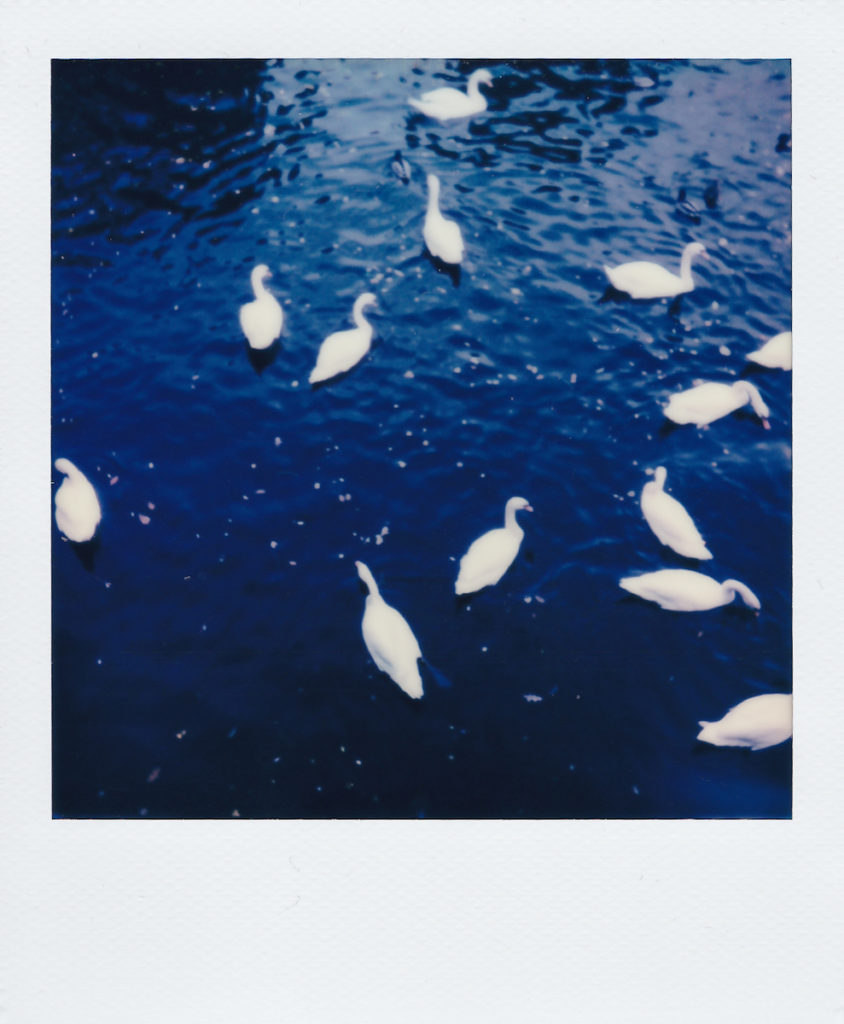
There are many accessories for the Polaroid Onestep+, and one of them can potentially solve the blue tint issue. I’m currently using all of them, so I’m adding a few sentences as side reviews. Before continuing to the list, I must say that you don’t probably need any of them as a newbie (apart from the film, of course). However, some of them might make your life easier. So, the Polaroid OneStep+ accessories are:
- Film. Okay, this is not an accessory but a must-have. The recommended polaroid film for the OneStep+ is the i-Type. This is a newly developed film by Polaroid Originals. The typical white-framed one is always available, but you can also buy some of their special editions. The films come in color and black and white. You can buy the i-Type color film here, and you’ll find the i-Type B&W film here. You can also buy films directly from Polaroid Originals here: they guarantee to ship you the freshest film they produce but keep an eye on shipping costs.
- Box Camera Bag. A handy accessory because it helps you store your Polaroid camera when you’re outside walking. Developed straight from Polaroid Originals, it fits perfectly your OneStep+ and also one-two packs of film. I always have it with me (sometimes in my backpack), and I’m delighted. I thought it might get dirty quickly due to its white color, but there’s nothing on it so far. Buy the Polaroid bag here.
- Polaroid Photo Box. A convenient way to store your polaroids. The box is pretty small, and you can have it with you while taking photos. You can buy the Polaroid Photo Box here.
- OneStep Lens Filter Set. Now, that’s what I discussed above about manipulating the blue tint issue. This is a set of five lenses you can attach to your OneStep+ camera lens (it works with the previous OneStep, too). Three are colorful (yellow, orange, and red), one creates a kaleidoscopic view, and the last will turn any light into a starburst. I mainly use the color ones, and I think they work great. However, don’t overdo it because sometimes everything might seem too red or too orange. Check the light and what you’ll have in focus, and pick one if you need one. You can buy the OneStep Lens Filter Set here.
*I didn’t use any lens filters for the photos you see in this Polaroid OneStep+ review.
Polaroid OneStep+ photography tips

I’m also adding here some helpful Polaroid OneStep Plus photography tips. This is exactly how I use the camera, and that’s how I also shoot my polaroids. I’m often discovering new tips and techniques, and I will add them in the future here. If you want to have every polaroid photography tip (as well as updates from my Polaroid Diaries), feel free to subscribe below. You will then receive polaroid photography updates periodically in your inbox.
So, here are some of my polaroid tips and techniques:
- Polaroids need light. You won’t get any memorable photos without an adequate amount of light. For low light or indoor shots, the flash of the OneStep+ performs excellently; therefore, you should use it. As a rule of thumb, you should always have a light source (sun, light, etc.) behind you. This will guarantee that you’ll have a usable image. If you shoot against the sun, you will probably have an overexposed image. For such occasions, better use the manual mode and balance the exposure by moving the Aperture and Shutter Speed dials.
- The fastest shutter speed you can get with the Polaroid OneStep+ is 1/125. While this is okay, it’s usually not enough for photographing fast-moving subjects. However, don’t let this fact discourage you. You might get some arty blurry shots -but use it with caution and common sense. And for sure, even if you shoot with 1/125, don’t even think of walking and taking photos. Stand still.
- Polaroid cameras are made for portraits. Start with your family and friends and shoot several photos. I think it’s the easiest way to learn your camera and have some beautiful pictures from the beginning. See what works and what doesn’t, and keep practicing. Repeat the things that work and improve the ones that don’t. Don’t forget to set the camera on the portrait lens.
- Shooting under harsh light might create unwanted vignetting. For example, I had vignetting while taking polaroids under the strong sunlight of Santorini. If you want to shoot polaroids under harsh light, you can’t do that much about it. Accept the fact and try to compose the photo so that you’ll only lose negative space (ex., the sky) and not faces.
- Don’t forget to clean your camera rollers often! Polaroid says you should do it after every film pack, but I usually do it after two packs. Sometimes I’m outside, and I can’t bother with it. If you can afford to do it every time you finish a roll, it’s optimal. See how to do it in this video.
- Don’t shake your polaroids. No, they won’t develop better. In fact, you’ll make things worse. The chemicals are sensitive, and you might get a lower-quality photo if you shake them.
- Polaroids develop better in the darkness, so put them straight in your pocket after shooting a photo. Keeping them close to your body temperature makes sure that polaroids develop under the best conditions. Of course, you must keep them at a normal temperature when it’s cold outside. The color film takes approximately 15 minutes to develop (the BNW needs slightly less). I usually leave them for 30 minutes before checking them, and I let the photos surprise me.
- You can’t have two identical polaroids, but you can have two similar ones. Shoot two photos if you want to have a picture from a specific spot but are confused about the settings. I know: you sacrifice some cash. But it’s better to have one usable image than have none. I do it sometimes -but not all the time. Using the best settings comes by experience, but even then, you might have unusable images. Shooting two images with different settings can sometimes give you an excellent photo. Just don’t shoot everything twice because you’ll need a bank loan to afford your passion.
- Scan your polaroid photos. If you do, you’ll have some images to share on Social Media, but you will also have a digital archive. You can also print scanned polaroids in case you need prints. Leave them a minimum of one week before scanning them. Don’t believe the hype: although a professional scanner will give you better results, you can scan polaroids in every flatbed scanner. Use high resolution (I go for 600 dpi) and scan them as TIFF. For me, that’s the best way to get the exact colors on screen.
- Don’t overdo it with filters. If you scan your polaroids, don’t alter them. The beauty of Polaroids is that they have these beautiful colors. By changing them, you somehow kill the Polaroid spirit. The only thing I usually do to my scanned Polaroids is to add a +20 sharpness in Lightroom. This way, the polaroids look better on smartphones and laptops. It won’t change anything on the photo itself; it’s just for web optimization.
- Last but not least, store your polaroid photos in closed boxes. This will guarantee that the polaroids won’t fade away and that you’ll let them develop further. Sometimes polaroids need up to 30 days to fully develop. By storing them in safe and dark places, you maximize their life. Polaroids can fade away after years. If you leave them in direct sunlight, they will fade much faster.
Do you want to see more? Subscribe below -and then move forward to the last two sections of the Polaroid OneStep+ review.
Polaroid Originals Customer Support
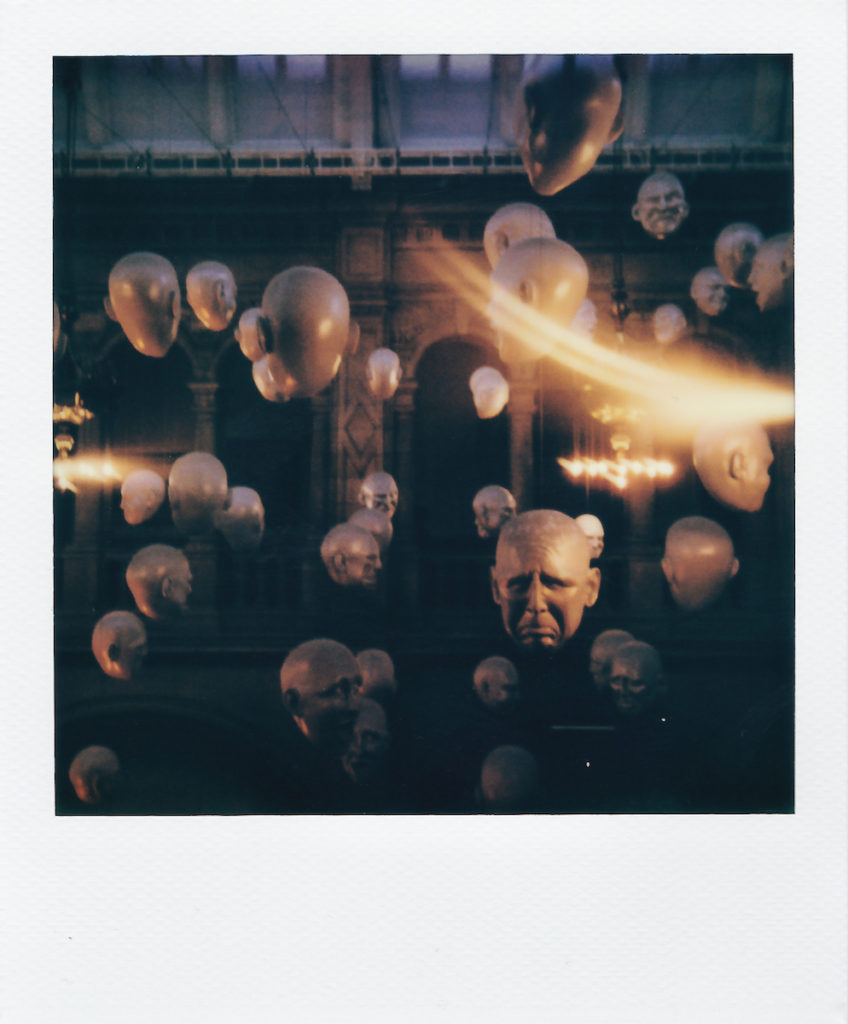
Now, I know that this is not the most relevant topic. Still, before moving forward to my final verdict on this long Polaroid OneStep+ review, I thought of adding a small section about the customer support of Polaroid Originals. You see, the first camera delivered to me was defective. I know such things happen, but one cannot always take for granted that customer support will accept a complaint and replace the item.
When I realized the camera was defective, I contacted customer support. I wrote a detailed e-mail explaining the problem and received an answer in less than 12 hours. The employee (in case you read this, thanks, Roslyn) provided me with instructions on fixing the issue. I followed the instructions, but the issue remained (it had to do with the exposure and a problem with the flash). Then, the employee said they would replace my camera, which is what happened. Yes, as simple as that.
In my initial e-mail, I also mentioned losing almost two films while shooting photos. But the images wouldn’t eject, and when they did, I had a white image: it was as if I was shooting multiple exposures. Roslyn was kind enough to give me a voucher for two free polaroid films on my next order.
Customer support is vital, and Polaroid Originals get a 10/10 from me. The issue was solved within hours, they replaced my camera, and I even got (somehow) back the films I lost. Excellent!
Polaroid OneStep+ review: The verdict

It’s unfair to compare a new camera with an old one. For example, the Fuji Instax is almost six years old, while my OneStep+ is a new camera. However, it is a significant upgrade for me, and that’s what I tried to explain in this long Polaroid OneStep+ Review.
During the last few years, I took photos with other cameras, but the truth is that Polaroid OneStep+ is the best instant camera I have owned. Although the film is expensive and there’s room for improvement, I’m always impressed by the photos’ sharpness. Of course, landscapes are never that stunning when you shoot instant photos, but on the Polaroid OneStep+, they look really good too.
I can highly recommend the camera to people starting now with instant photography, and they don’t want to spend too much money. The Polaroid OneStep+ is cheap (check its price on Amazon), has a great portrait lens, and produces sharp images. Advanced photographers will find liberating the manual mode. If you are thoughtful when shooting polaroids, you can have many beautiful photos without spending too much money.
Overall, I’m delighted with the camera and look forward to taking it with me on my next journey. Running the Polaroid Diaries for a few months refreshed the blog and gave me even more motivation. And, to be honest, if the film was not that expensive, I might consider going on a journey with just my Polaroid OneStep+. I guess that’s enough proof of how much I enjoy using the camera.
Check the current Polaroid OneStep+ prices on the official Polaroid websites:
The US store, The EU store, The UK store
Have you ever used a polaroid camera? Would you like to buy the OneStep+? Share your thoughts in the comments.
More Polaroids: The full Polaroid diaries
More Polaroid reviews: My SX-70 Review, My Now+ Plus review, My Polaroid GO Review
More gear reviews: Ricoh GR ii, Osmo Pocket
*Get my FREE Travel Writing Course*
Pin it for later
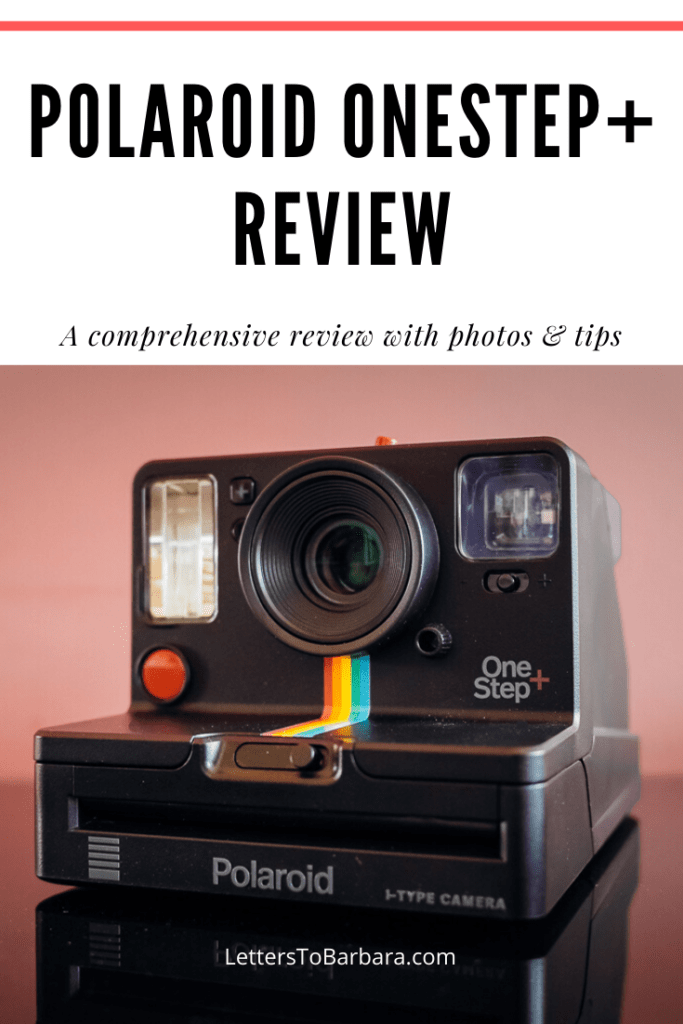
Sharing is caring. Please share this Polaroid OneStep+ Review with your friends.
Hey! How do you feel about using the camera and the app at the same time? Do you use a tripod? I am thinking of buying an OneStep+, but it seems a bit weird to me to have both the camera and phone in my hands to take a picture. Would be nice if the camera could ‘remember’ the feature you want to use (double exposure for example), or ‘remember’ te settings in manual mode and then just press the button on the camera. You know what I mean?
Hello Hein. So, I’m using the Onestep+ for quite some time now and to be honest I got used to taking polaroids holding both the smartphone and the camera. I won’t lie: it feels a bit odd. I don’t use a tripod 99% of the time. I consider it only if I’m about to shoot with a shutter speed of 1 second or slower. Most of the time I don’t have a tripod with me anyway, unless if I’m going to shoot a polaroid under low light on purpose. It will be definitely nice for the OneStep+ to remember the settings. Do you own any other Polaroid cameras or will this be your first one? If it’s your first polaroid camera then it won’t let you down. If you, however, have used other polaroids in the past then you might also consider other options. Even with this bizarre manual mode, I still find the OneStep+ a great option -and the manual mode is for sure a big plus. I plan to upload in a couple of weeks a new post with polaroids.
Ευχαριστώ πολύ γι’αυτό το άρθρο! Την παράγγειλα πριν λίγες ώρες! Έχω ήδη την 635 CL και την SX70, αλλά βλέπω πως όλο και πιο ενδιαφέροντα φιλμ βγαίνουν σε i type (ειδικά τα black frames) οπότε είπα να το τολμήσω! Υπάρχει κάποιο λινκ να δω polaroids από ταξίδια στην Ελλάδα;
Και πάλι σ’ευχαριστώ και καλή συνέχεια!
Γεια σου Μαρία! Χαίρομαι που σε βοήθησε το άρθρο. Πιστεύω ότι για τα χρήματα που κοστίζει είναι μια πολύ καλή μηχανή. Νομίζω ότι δεν συγκρίνεται με την SX-70 (την 635 CL δεν την έχω χρησιμοποιήσει) ωστόσο είναι αξιοπρεπέστατη. Το i-type είναι σε πολύ καλό δρόμο, νομίζω ότι θα βελτιώνεται συνεχώς όσο περνάει ο καιρός. Ξέρω ότι η εταιρεία το δουλεύει συνεχώς. Έχει ένα blue tint στο σκληρό φως, ωστόσο όταν το φως είναι “σωστό” οι περισσότερες βγαίνουν καλές. Πολύ σημαντικό το manual mode μέσω bluetooth κινητού, να κατεβάσεις οπωσδήποτε την εφαρμογή στο κινητό σου. Έχω βγάλει μόνο δύο φιλμ στην Ελλάδα, ένα στην Ανάφη κι ένα -πολύ βιαστικά- στη Σαντορίνη. Εδώ οι polaroids της Ανάφης κι εδώ της Σαντορίνης. Το λινκ για όλα τα polaroid diaries είναι εδώ.
Ελπίζω να την ευχαριστηθείς τη μηχανή! Αν ήταν και πιο φτηνό το φιλμ θα ήθελα να ταξιδέψω μια φορά μόνο με πολαρόιντ και να δω τι θα μπορούσα να βγάλω. Όταν με το καλό τελείωσει η καραντίνα στο Βερολίνο και επιστρέψω στην Ελλάδα, έχω σκοπό να βγάλω κι ένα φιλμ στην Αθήνα.
Πολλούς χαιρετισμούς,
Γιώργος
ΥΓ: Είναι η πρώτη φορά που απαντώ στο μπλογκ στα ελληνικά κι η γραμματοσειρά είναι “κάπως”. Θα πρέπει να το διορθώσω, οπότε ζητώ προκαταβολικά συγγνώμη για την εμφάνιση.
Σ΄ευχαριστώ για την απάντηση! Τα βρήκα τα λινκ, πολύ όμορφες εικόνες! Ούτε κι εγώ ζω Ελλάδα πια γι αυτό και μ’αρέσει να βλέπω polaroids από τα νησιά που τα αγαπώ ιδιαίτερα. Συμπτωματικά κι εγώ πέρσι Ανάφη ήμουν, έβγαλα μερικές Polaroid, καθώς και στη Σαντορίνη, τη Μύκονο, το Κουφονήσι… όπου πάω. Τη μηχανή την παραλαμβάνω αύριο, το app το έχω ήδη…ανυπομονώ! Αυτό που λες περί κόστους φιλμ και πόσο ωραία θα ήταν να έβγαζες περισσότερες σε ταξίδια, το καταλαβαίνω απόλυτα καθότι κι εγώ φωτογραφίζω με φιλμ πολλά χρόνια και ξέρω τον…πόνο!
Σ’ευχαριστώ και πάλι, καλά ταξίδια να έχουμε!
Χαίρομαι που σου άρεσαν οι φωτογραφίες, Μαρία! Καλορίζικη λοιπόν η OneStep+, εύχομαι να την ευχαριστηθείς και να βγάλεις άπειρες polaroid 🙂 Κι εγώ τα αγαπώ πολύ τα νησιά -και νομίζω ότι μετά τη φετινή καραντίνα θα τ’ αγαπώ λίγο παραπάνω. Είναι γοητευτικές οι polaroid, κατά μία έννοια κουβαλούν όλη την ιστορία της φωτογραφίας σε μια συσκευή (κάδρο, κλικ, εκτύπωση). Αν ανεβάζεις τις φωτογραφίες σου κάπου, άφησε ένα λινκ να τις δω -ή τάγκαρέ με στο instagram απευθείας αν τις έχεις εκεί. Καλά να είμαστε και σύντομα να ταξιδέψουμε ξανά παντού!
Καλησπέρα!
Τα φιλμάκια τα ανεβάζω στο Instagram (@fisheyemary_analog), θα ψάξω και τη δική σου σελίδα!
Καλά ταξίδια να έχουμε!!
Έγινε, θα βρω το λογαριασμό σου αργότερα. Καλά ταξίδια!
I was just thinking about a polaroid onestep+ camera and couldn’t decide on one, but completely trust your opinion so this makes the decision easier. Thanks for a sharing amazing Information.
You are very welcome. The Polaroid OneStep+ is a great camera, especially if you are a beginner in the instant photography world. Let me know how did you like it.
George