

Last Updated on February 20, 2021 by George Pavlopoulos
The Coronavirus Chronicles were born out of necessity. Earlier this week, I wrote that I canceled all my travel plans -and I didn’t take that decision out of fear. Instead, I decided to stay put in Berlin. Soon enough, though, Berlin started implementing a shutdown. The schools were the first to shut and then the bars, the cafes, and the clubs. So, the first question that came into my mind was: now what? For a travel writer, staying put doesn’t only affect the way he/she lives. It also affects the working habits, income, and his sanity.
Staying at home during the Coronavirus outbreak is the right thing to do. It’s the only way to flatten the curve. In other words, it’s the only way that not everybody gets sick at the same time. If this happens, the healthcare system will collapse. On the other hand, staying at home means that I have plenty of time to work. Instead of uploading travel-related articles these days, I decided to write my thoughts and my observations from the Coronavirus outbreak. Maybe some people will be interested in reading them; perhaps they will have some value for future readers. But mainly, I’ll write the Coronavirus Chronicles to keep myself sane during these tough times of isolation.
I will try to upload every day a couple of lines within the very same post. I will write about what happens in the city, what happens at home and I’ll share my thoughts about the situation. Some of the photos will be from my Ricoh, others from my smartphone. So, here is how it feels to be in quarantine in Berlin during the Coronavirus outbreak as a healthy individual.
The Coronavirus Chronicles
The number of the daily cases that I add at the end of every section are from the Berliner Morgenpost and the Robert Koch Institute. Due to the different times that they update their databases, the numbers might vary slightly.
March 14: Why did the EU governments act late?
Germany is slow in decisions. Each one of the 16 partly
But late action seems to be an EU characteristic. I think that Europe has accepted the virus and came in terms with it. What does it mean? Well, there seems to be a pattern in the actions of the Europeans. As far as I know, most countries didn’t implement any measures before they reached 100 cases nationwide. Somebody would ask: why didn’t they take measures when the first Coronavirus case appeared? Or, even better, why were there no measures when every country had no incidents?
I firmly believe that this is part of the acceptance. It seems that now that the Coronavirus is here, the governments decide to allow some spread in the population. According to the herd immunity theory, if 60% of the population gets the virus, then the whole society becomes slowly immune to it. That’s a dubious theory for sure and it’s followed by Boris Johnson in the UK. I don’t appreciate him at all and I don’t support this theory either. So, while the European countries would have to face a short-term healthcare crisis, the real vaccine for the Coronavirus is -according to the actions of most governments- time. Or at least that’s how I interpret the measures and the advice.
In most countries, the measures are introduced gradually. First, they shut down schools; then they sent people to work from home. In the second stage, they will shut down cafes and stores; afterward, they introduce even stricter measures (lockdown, closed borders, etc.). In other words, in order to survive the Coronavirus, the governments decided (or even: preferred) to have casualties.
So, this brings us to the question: why didn’t the European countries take the measures before having the first case? That’s an easy one: they preferred to risk some human lives instead of risking their economy. Sad but true.
Coronavirus Cases in Germany: 4585
Coronavirus Chronicles Movie of the day: Little Miss Sunshine
March 15: My personal quarantine is over (but I still stay inside)
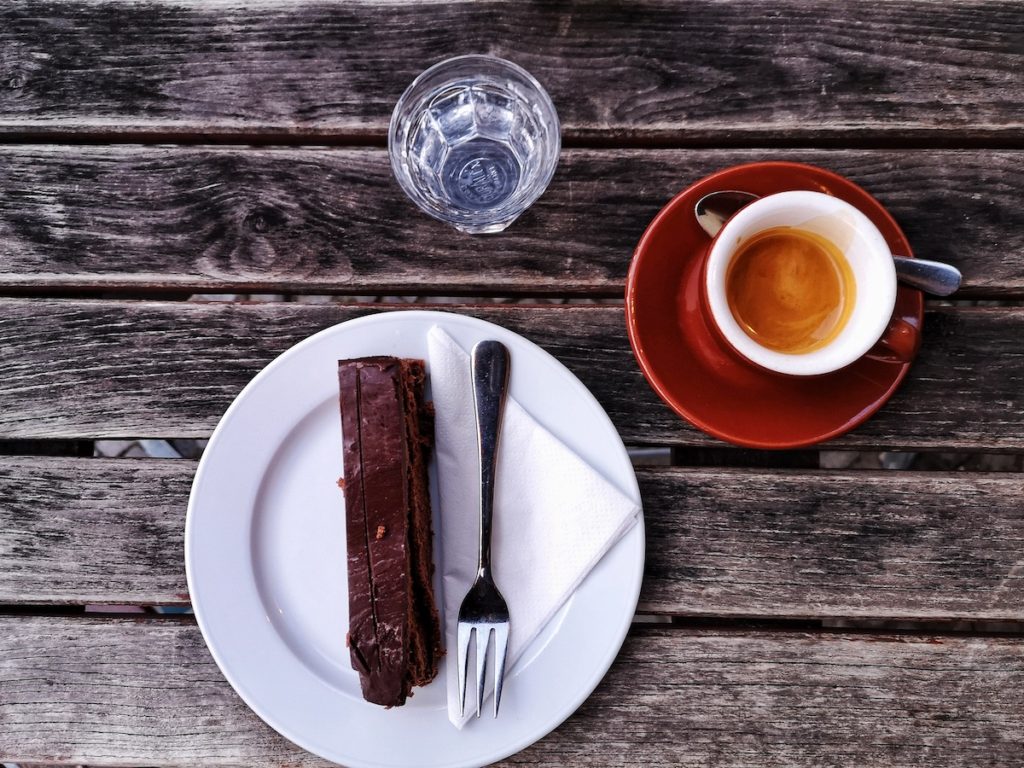
After the end of this year’s Berlinale, I decided to spend two weeks away from people. This wasn’t, of course, out of misanthropy. But attending the Film Festival in the era of Coronavirus was a (somehow) risky thing to do. To be honest, I was surprised that there was a Festival this year and that it didn’t get canceled. What probably saved the Berlinale 2020 was the fact that Berlin had no incidents till the end of the Festival.
I watched the last movie on February 29, and I laughed non-stop. It was great to watch again A Fish called Wanda. On March 1, though, Berlin announced its first Coronavirus case. Since I have been a regular in the Berlinale, I decided to isolate myself. It wouldn’t have been a surprise if I already had the virus: the cinemas were full, and staying inside with people from all over the globe for two hours meant that an infection was possible. I didn’t have any symptoms at all: no fever, no dry cough, no difficulties to breathe. And yet, I decided to avoid all contacts for -initially- a week.
I’ve been following the Coronavirus news since mid-January. Risking other people’s lives is unacceptable and irresponsible. On the other hand, I could easily see that if the Coronavirus hit Europe, some sort of quarantine would be inevitable sooner or later. I did it as a mental test: could I skip social life everything for a week? The only thing I decided to do was to walk outside. No cafes, no more cinemas, no public transport. I’d be some sort of a dystopian flaneur in Berlin for seven days. No, I didn’t stay inside 24/7 in this initial phase. But I wouldn’t also go to places that there were lots of people. One person can infect many others, and this was something to avoid.
As the days went by, Berlin started having more infections. The first advice appeared: if you contacted anyone with Coronavirus symptoms, you should self-isolate for two weeks. But how should I know if I contacted anyone while attending the Berlinale? Soon, I decided to extend my self-isolation to two weeks.
Social distancing is not an easy task. Today, it’s March 15, and my two weeks of self-isolation are over. But I didn’t plan to celebrate it that much: I just found a cafe, I sat outside, and ordered a cake and an espresso. I won’t also go to a shopping center or anywhere where people gather. Yes, I didn’t have Coronavirus, but this doesn’t mean that I’m going to risk getting it. I’m still not afraid of having the Coronavirus, but this doesn’t mean that I will chase my luck.
Coronavirus cases in Germany: 5813
Coronavirus Chronicles movie of the day: Green Book
March 16: Spending time with my new book (without reading it)
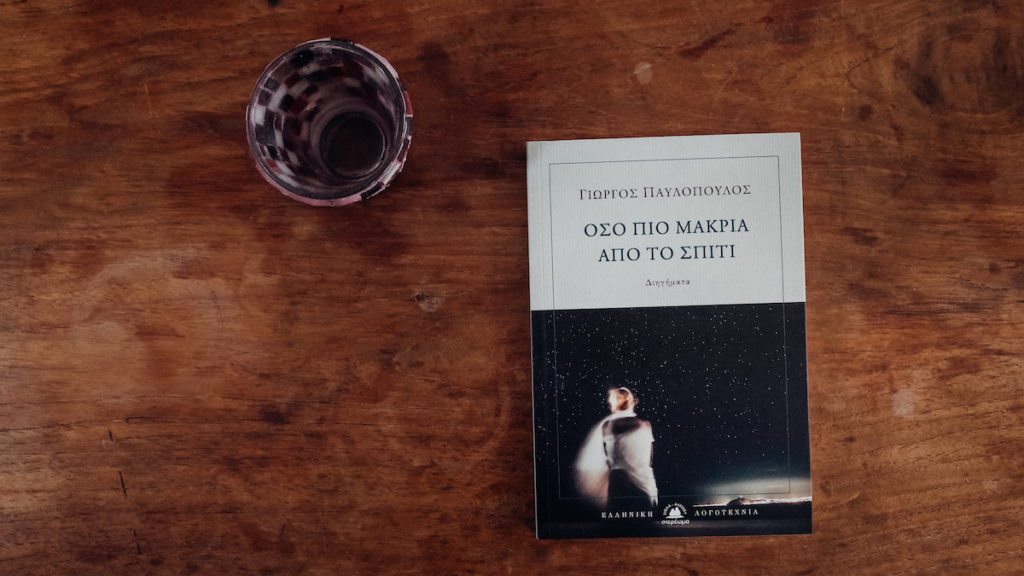
Ten days ago my new book was published in Greece (see the Όσο πιο μακριά από το σπίτι here). But being in Berlin also means that I won’t be able to see it any time soon in the bookstores of Athens. I received it a couple of days ago, and since I’m spending the biggest part of the day at home, I thought of taking some photos.
What an irony though. The book is a short-story collection, and the topic is imaginary hotels. These are all hotels that I imagined in a period of my life that I couldn’t travel. The financial crisis was out of control in Greece, and my income became inexistent. I was stuck. I daydreamed of journeys and hotels all the time, and that’s how I started writing it. Now, the book hit the bookstores on March 5h, and the coincidence is odd: I can’t travel again, this time because of the outbreak. I tried to think about what sort of coincidence is this, but I couldn’t decide. It seems like an odd joke to be honest.
As always, I didn’t read a single page. I have an old fear: that everything will seem wrong, and the letters will start dropping out of the pages. Stupid, invalid fears. But I think writers should never read their own books. Whatever is inside there, it doesn’t belong to them anymore.
The rest of the day, I kept reading the news. Late in the afternoon, I went outside for a walk. It’s bizarre in Berlin: everything is empty. It’s spring, it’s 17 degrees today, and yet there’s just a bunch of people outside. Things start to be serious, and I’m sure that the Coronavirus Chronicles will have even more bizarre moments. For example, on Saturday night, the police went from bar to bar and asked them to shut down.
Maybe a ban on every outdoor activity is not far away. I try to walk as much as possible these days without being in contact with others. The chain of infections must break. I walk and walk and walk. Maybe tomorrow or the day after, we won’t even be able to do that.
Coronavirus cases in Germany: 7029
Coronavirus Chronicles book of the day: Robert Frank: New York to Nova Scotia
March 17: The websites I check and my longing for Greece
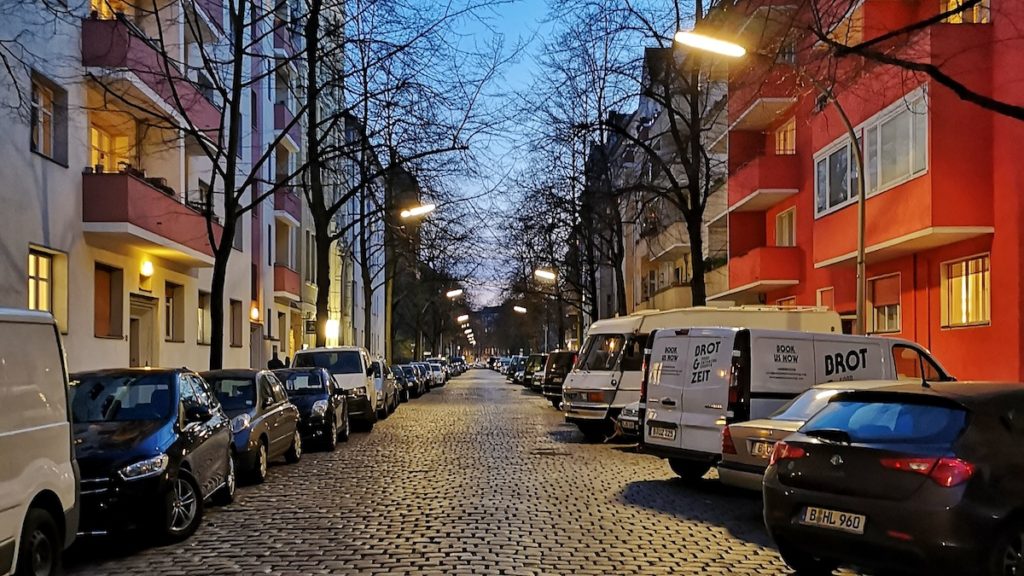
The more I stay at home these days, the more online I am. One of the things I do daily before starting the Coronavirus Chronicles installment of the day is to check The Atlantic. I’ve been reading it for years, but lately, due to expenses, I cannot afford a subscription. The magazine allows only a certain number of free articles -from then on, one should buy a subscription. However, I find it a great gesture that all their Coronavirus-related articles are free. You can read those free articles of the Atlantic here.
Apart from The Atlantic, there are also two more online mediums that I spent time these days. The first one is Twitter. I must say that I’m not an avid user of Twitter (you can follow me here), and I use it mainly for sharing my posts and some photos. It’s only rarely that I engage in conversations. But when it comes to breaking news, Twitter seems to be the medium for following the events. People from all over the globe participate in news-sharing, and I find useful info. Of course, one should also pay attention to fake news…
The other source I lately use a lot is Google News. Again, you’ll get a lot of things irrelevant to your reading habits, but if you start filtering out the articles, you’ll get decent updates. Just make sure to hit the “thumb down” button for the things that don’t interest you. Hide also websites that are totally irrelevant to what you want to read (who’s still reading astrology?). The amount of information can be overwhelming, though. I need less news, actually, and more opinion articles. Google News AI has a long way to go…
And in between, I think when I could possibly return to Greece. Initially, I wanted to spend a couple of days around Easter time in Athens. But things get complicated with the Coronavirus. Since yesterday, Greece said that whoever is visiting Greece should be in a 14-days quarantine. I’d do that anyway, but the way the situation develops, I think that they will shut the airports as well. So, I must be spontaneous and decide depending on the situation. But this doesn’t prevent me from daydreaming long, lazy, Greek summer nights.
Coronavirus cases in Germany: 9367
Coronavirus Chronicles movie of the day: Charlie Wilson’s War
March 18: Is this the toilet paper crisis?

I hate supermarkets. They somehow remind me of our mortality. We have to buy food and products if we want to remain alive. But these days I have to go often to the supermarket, sometimes even every day. There’s no panic in the faces, but the empty shelves narrate that the fear is real.
The hand sanitizers have disappeared. I haven’t seen one in more than two weeks. Let alone toilet paper: the piles disappear in no time. Practically, if you don’t go to the supermarket when it opens, you won’t probably find what you need. Today the potatoes were sold out. A few days ago, people were almost ready to trade gold for pasta.
This afternoon, somebody sneezed while I was shopping. A man started shouting milliseconds later: “Hand vor!”, which means “Put your hand in front.” The man was furious -and the lady thunderstruck. I stood behind that man in the queue waiting to pay. He was still red in the face, and the veins of his neck were still irritated. He bought the last pack of toilet paper. Everybody is going crazy about toilet paper. The Coronavirus outbreak could easily be dubbed as the toilet paper crisis.
On the way back home, I stopped at the Späti to buy cigarettes. There, in the very corner and almost hidden from plain sight, I saw a lonely packet of toilet paper. Not a large pack, it just had two inside. “Well, I’ll buy it.” You understand that a crisis has destroyed your brain when you snob what everybody else does, and in the end, you do the same thing too. Six euros for the cigarettes, and almost three for the toilet paper. I could also call it the “black market of the white rolls” as well.
“On the other hand,” said the owner of the Späti, “condoms are not sold out.”
“In nine months, we will have a new generation, the Coronials,” I replied. The joke is not mine; I read it online. In general, most of my talks are from things that I read online lately. I stockpile cigarettes, I snob the white rolls (but I occasionally buy them), and I spend time online. The day this whole hysteria is over, I swear to throw my stock of toilet paper out of the window.
Coronavirus cases in Germany: 12327
Coronavirus Chronicles movie of the day: Inside Llewyn Davis
March 19: Greek mass media spreading FAKE NEWS but no one apologizes
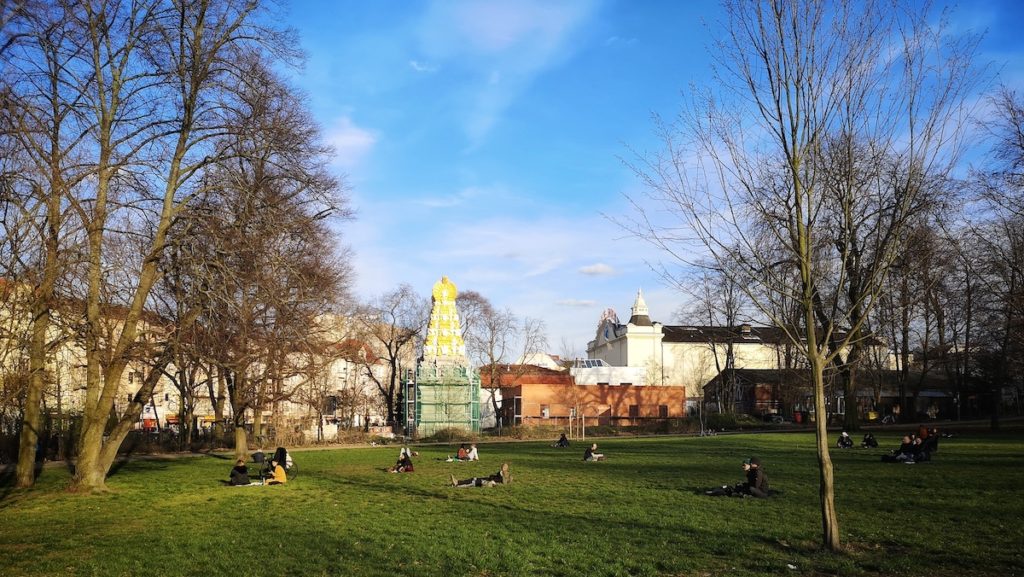
The news started circulating early in the morning: Greece is closing its airports. The report didn’t appear in some odd portals dedicated to conspiracy theories. On the contrary, it was in the headlines of every major Greek website. Supposedly, the Greek Prime Minister would announce tonight that Greece is terminating all flights to and from Greece within 72 hours.
As I wrote yesterday, I’ve been looking forward to some easy-going days in Greece around Easter. But after reading the news this morning, I started thinking if I should leave Berlin tomorrow. I checked the flights. There was one flight with Aegean Airlines tomorrow afternoon. I kept staring at the screen, and that’s probably what I do best in the last couple of weeks.
I went out for a walk, and I wondered what I should do. Should I leave Berlin within less than 24 hours, or should I stay here until the whole situation is over? I couldn’t decide. Emotional insecurity hit me: it’s better to isolate yourself close to your family. If the airports stopped serving passengers’ flights, when could I possibly go back to Greece? So, here’s what I did: I booked a ticket for tomorrow’s flight just to be on the safe side. If the Prime Minister announces that airports are shutting down, I will fly tomorrow. If not, I’d stay in Berlin until further notice.
I booked the ticket with Aegean, and I waited. The news reached even the German radio. It seemed somehow official. Then, about an hour before the Prime Minister’s speech on the television, the news about the airports disappeared. You couldn’t find anywhere online the news articles that created this sort of insecurity to the Greeks living and working abroad. No articles at all about the airports and the borders. Nothing, nada, nichts.
Prime Minister Mitsotakis talked at 18:30 German time on the Greek television. He didn’t announce that the Greek airports are shutting down. Apart from explaining the importance of staying at home, he didn’t mention anything about Greeks being abroad right now. After the speech came to an end, I rechecked the Greek websites—nothing about the airports. Today’s headlines were buried somewhere deep in the cesspit of the news portals.
So, what’s the moral of the story? Well, Greek mass media spread FAKE NEWS today (yes, with capital letters and pun intended). Greek news portals didn’t apologize so far for the FAKE NEWS and all the insecurity they caused to thousands of people. They just buried the whole thing like it’s another day at work. Well, it probably is. Each one has its expertise in life. Thanks for your FAKE NEWS, idiots.
Coronavirus cases in Germany: 15161
Coronavirus Chronicles book of the day: Saul Leiter: In my room
March 20: Can you change your plane ticket for free because of the Coronavirus outbreak?
The parks are still open in Berlin. Every day I try to take a long walk outside, always keeping a distance from the others. It’s unbelievable that we are living such a dystopian version of society. And we haven’t seen anything so far.
Yesterday, after being completely pissed off with the fake news in Greece, I thought of taking a long walk outside. I ended up at the Hasenheide. Volkspark Hasenheide is one of the most beautiful parks in Berlin. Even though it covers 50 hectares and it’s located on the border between Neukölln and Kreuzberg, it never feels packed. It’s rather odd, especially if you think that it’s close to Hermannplatz, one of the busiest spots in the city.
As you remember from yesterday’s entry, I had a ticket to Athens today. But I decided not to fly. It didn’t feel right to obey the shitty Fake News, and also I didn’t want to leave everything behind in a pure panic. I changed the ticket and pushed it to Christmas. I will, of course, return earlier to Athens, but I’ll choose on my own terms the exact date.
And a short note before I let you watch today’s video from Hasenheide Park. The airlines are tremendously affected by the Coronavirus Outbreak. Most of them will advertise that you can change your ticket for free. In most cases, though, this is not true. What you skip is the rebooking fee, i.e., the penalty you pay when you change your ticket. Yes, you don’t have to pay for this. But if there’s a price difference, you’ll have to pay it. For example, let’s say that you bought a ticket for 100 euros and your new one costs 250. Now, let’s assume that the rebooking fee is 40 euros. You won’t pay the 40 euros penalty, but you’ll still pay the extra 150 euros (250-100).
Coronavirus cases in Germany: 19848
Coronavirus Chronicles book of the day: Molly’s Game
March 21: What you can buy in a cafe in Berlin
It’s actually the last day that you can have a cup of coffee outside. From tomorrow on, the remaining restaurants and cafes have to shut down. Berlin is one step before the complete lockdown. The conservative party (CDU) pushes towards this direction: for three weeks, everybody should stay at home, they say.
Despite being sunny today, the weather changed significantly. It felt rather cold, and tonight the temperature will be below zero. Given that social life is not allowed anymore, it’s going to be a miserable Saturday night. I think that Berlin hasn’t seen such a dead Saturday night since the War.
After walking a lot again, I discovered a cafe that its terrace enjoyed some sunshine. I decided to have one last cup of coffee. Honestly, I have no idea how long I stayed there; when I decided that it’s time to pay, the sun was already behind a cluster of buildings.
I went inside to pay, and I saw the woman running the cafe placing -what else- toilet paper rolls on a shelve. When she finished, she added a small note: “We are shutting down today, you can buy the remaining toilet paper for 0,50 euros per roll.” I never thought I’d step into a cafe to buy toilet paper. But since we now live in a dystopia, I bought one. I don’t need: it’s just a shitty memory (literally).
Before going back home, I stopped at the supermarket. Hermannplatz is always a busy spot, but today it was almost empty. There’s a shopping center straight at the square, Karstadt, which seems to be there forever. Karstadt shut down earlier this week, and the doors -as you can see in the video- are locked. It makes sense: the main entrances serve the shopping center. However, in the basement, there’s a supermarket, and since I needed oranges, I thought of stopping by. I tried to see where the entrance is. On one of the doors, it said that you could reach the supermarket through the parking lot.
I walked around, searching for the parking lot. At first, I missed the door: it looked like an emergency exit. Then, I saw a note pointing to the door, I opened it, and I went downstairs. I really felt like a rat searching for food. When I opened the last door, well, the supermarket was there. “Is this a dystopia?” I wondered. I just reached a supermarket in the basement of a shut building via the emergency exit, and I bought toilet paper in a cafe. What the hell.
Coronavirus cases in Germany: 22213
Coronavirus Chronicles book of the day: The Bourne Legacy
March 23: The homeless of Berlin & the new Capitalism
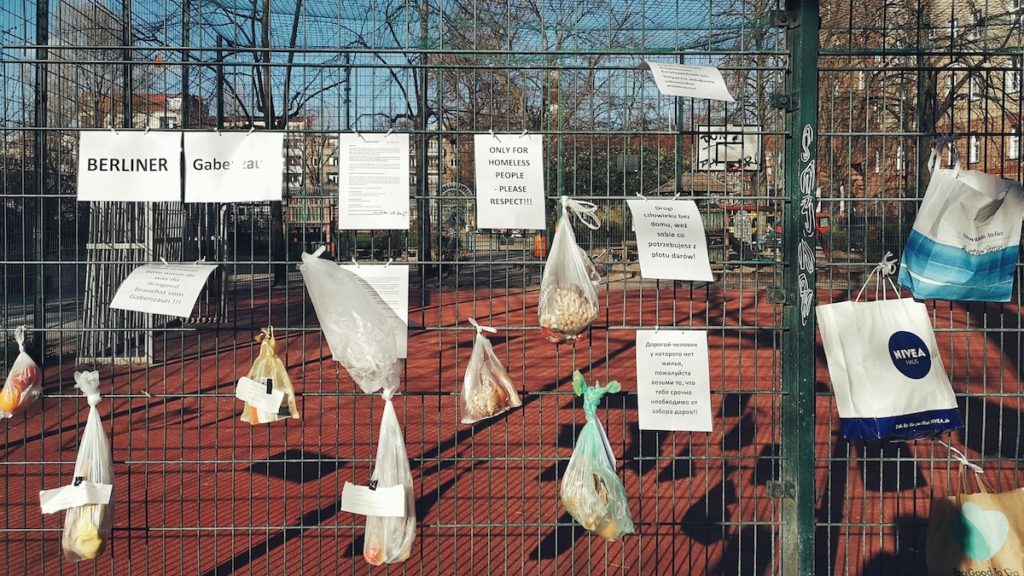
I was feeling down all day long yesterday. For the first time in months, I didn’t turn on the laptop. I think the last day I kept my laptop shut was in Anafi back in September: it was out of joy, though.
Berlin also feels down. The remaining cafes are closed, and fewer people walk down the streets. The city feels empty all of a sudden. From today on, there is an Ausgangssperre: it means that you are not freely allowed to leave your house. If you do so, it should be only for work, for going to the doctor, or for buying food. It’s still possible to walk outside but only in groups of two. Despite the sunshine, the parks were almost empty today. Social distancing is the new trend.
According to various sources, there are approximately one billion people in quarantine around the globe. Germany is slowly moving towards a complete lockdown, and it seems irreversible right now. Berlin is dead. A global quarantine that no one knows for how long it will last. It honestly feels like a dictatorship.
There was one street scene, though, that cheered me up a bit. The photo that you see is from a playground at Neukölln. Some Berliners thought of people living continuously under more tough situations: the homeless. Berlin, like any other Metropole, has lots of homeless, and the locals here thought of hanging some provisions for them. It’s usually food, but there are also a few clothes. The notes hanging on the fence say clearly that these are provided exclusively for the homeless. I never saw a state talking about personal responsibility when it comes to homeless people.
So, from today on, it’s okay to cross the whole city to work together with 20 strangers, but you can’t hang out with a couple of friends in a park. New Capitalism at its finest. It’s a cold day, but it doesn’t compare in cruelty to what is yet to come.
Coronavirus cases in Germany: 28480
Coronavirus Chronicles book of the day: The heart is a lonely hunter
March 24: Die Decke beginnt auf den Kopf zu fallen

It’s actually the moment that the ceiling starts falling on your head (that’s what the title means). We are bombed with information, and still, we don’t have enough knowledge. Time is accelerating, and we try to cope with it. Meanwhile, democracy is also a patient of the Coronavirus crisis -but it’ll get this title retrospectively (if ever).
Long ago, after the 2004 Indian Ocean earthquake and tsunami, I decided not to watch any television when a disaster happened. The footage from such events causes extreme stress, and it’s hard to digest and process it. I keep myself away from such images. Plus, I keep myself away from the journalists’ approach. I’d instead read the news now and watch the videos years later. Moving images are powerful, and often the presentation of the news is actually the news.
Unfortunately, we live in a very conservative Europe and a weak European Union. The financial crisis was not a success story for the EU, and the health crisis of the Coronavirus won’t be one either. Every country deals with it on its own. To this day, I’m still not convinced that herd immunity is not the solution that Europe chose to deal with the outbreak. The conservative leaders that talked about “war” implemented the strictest measures. But they did something else: they talked heavily about personal responsibility. And they took advantage of it.
Personal responsibility is a cornerstone term in the Coronavirus Crisis. And up to some point, it also makes sense. It’s up to the individual to follow the rules and social distancing measures. However, in countries like France or Greece, the whole concept went a step further. It became the makeup of a state’s inadequacy. This also translates to pointing the finger to the few irresponsible that don’t follow the rules in order to punish everyone else. And this goes on continuously. The ones staying inside and following the so-called #StayHome are having only one way to be heard: the cheesy clapping on the balconies.
But let me say that: personal responsibility cannot be the makeup of a state’s inadequacy. States pointing the finger to the citizens and saying, “It’s your fault” reminds me of the financial crisis years. The countries didn’t punish their decision-makers; they punished the citizens and made them pay for politicians’ faults. The middle class paid a high cost, and it got either poorer or even evaporated in some EU countries. We paid for the financial crisis, we won’t pay for the health crisis too. We spend way too much money on taxes and health insurance, it’s time to see where they go.
On the other hand, I hear that in Greece you have to send an SMS to the state if you want to go out. Then you receive an automatic message back granting you permission. Practically, you ask permission from yourself. Let’s see how far they’ll push the concept of personal responsibility. Horrible times. I wish George Orwell were still alive. He could finally use the original title of “1984“: The Last Man in Europe. What a novel he would write.
Meanwhile, it’s still -surprisingly- sunny in Berlin. We can still walk outside but only in groups of two. Well, now I get what “three is a crowd” really means.
Coronavirus cases in Germany: 32991
Coronavirus Chronicles movie of the day: Awakenings
March 25: That Koyote cigarette
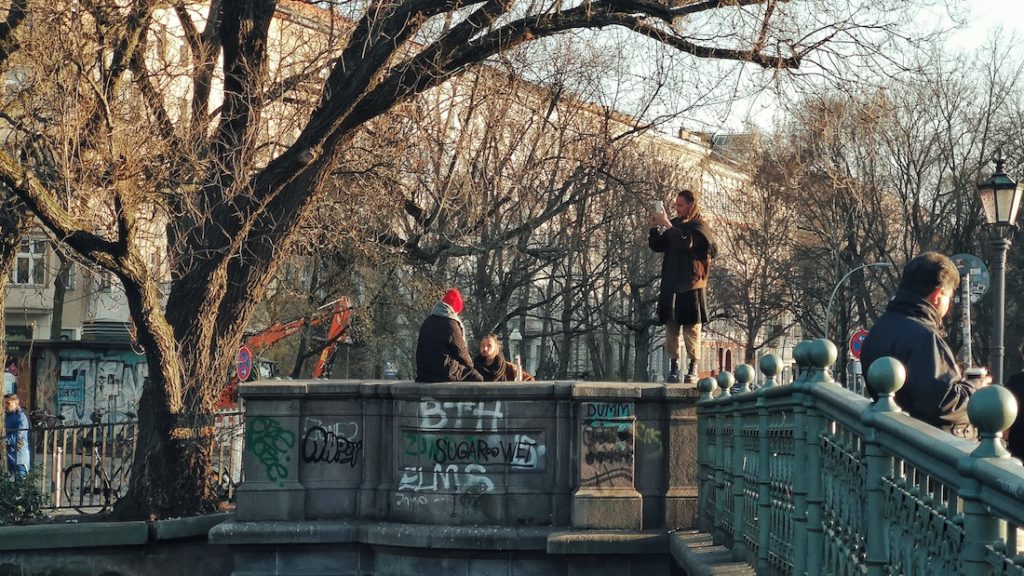
The days start looking dangerously the same. Nothing breaks the routine anymore, and my mood depends a lot on the weather. Luckily, it’s sunny these days in Berlin. Cold but at least sunny. I wake up late in the morning, I make breakfast, and I turn on the laptop. I work for a couple of hours, and around 4 pm, I force myself to shut it down. It’s time to leave the house.
The walls are closing in. I know that I have to escape now; this might not be possible in the next couple of weeks. A month ago I was watching films in the Berlinale among loads of people. Now the cinemas are closed, and we can only walk in groups of two outside. All I do after shutting down the laptop for the day is to run out in the sunshine. I put my shoes on, I put the IQOS in my pocket, and I’m off.
There’s this long walk I take every late afternoon through Neukölln and Kreuzberg. All along the Landwehrkanal and then crossing to the other side of the hood. I don’t want to walk the same streets over and over, but soon I might run out of new walks. I draw some random maps with my steps, Coronamaps maybe, and I carry on walking. The sun is always on my face, and the light often blinds me. After the darkness of winter, this Coronaspring is proof that nothing good happens in March.
No matter where I walk, I always end up at Koyote. That’s a cafe in Kreuzberg, next to Admiralbrücke. I’ve been visiting this place for quite some time: it has one of the most prime spots to get sunshine. A cluster of uncomfortable chairs and tables crammed on the pavement. Koyote’s food was always decent, and its service was clumsy and somewhat lazy. It was so Berlin. But Koyote shut down a couple of months ago. I don’t know when did it close precisely, but I remember I headed there one Sunday with Barbara and it was gone. “Pity,” we both said. The sandwiches were generous.
But Koyote, probably because it’s so Berlinesque, never stored the chairs and tables after shutting down. They are still out there, on the sunny pavement just off Admiralbrücke. Every late afternoon, I stop there for a cigarette. I smoke, and I observe life at Admiralbrücke. I remember it always full of people and beer, but nowadays it’s all about social distancing. The spirit has evaporated into thin air, but at least you can still enjoy the sun.
Soon after the end of the Corona-Paranoia, a new cafe or restaurant will occupy this spot. It’s too prime to remain like this for a long time. Under normal circumstances, Koyote would be just another cafe that didn’t live that long in Berlin. But the Coronavirus pandemic brings everything under a new perspective. I’ll never forget that even if it closed down, it still hosted me every day, for ten minutes on its chairs during these tough times.
Lobbyists, modern ethics, or anything in between will call smoking harmful and a bad habit. True, it probably is. But for loners who can get along with themselves, smoking is often the only vacation they have. Sometimes, when I wait for somebody late, I smoke a cigarette. If I’m the one arriving early I might have a smoke as well. Or, I might smoke when I want to enjoy a moment. From now on, there’s a name for all the cigarettes I might have in moments where life slows down. I’ll think that I’m about to have a Koyote cigarette.
Coronavirus cases in Germany: 37323
Coronavirus Chronicles book of the day: Hot Water Music, by Charles Bukowski
March 26: Three books for the coronavirus times
We all need some distance from the news, otherwise, we’ll go crazy. Today, I’m reading all day long. I just dream of better days: actually, I daydream of times that we can travel again. So, instead of new impressions (if there are any), I placed on top an irrelevant summer video from Anafi; I’m also adding three books that will help your mind escape a bit.
- In Patagonia, by Bruce Chatwin
- The great railway bazaar: by train through Asia, by Paul Theroux
- On the road, by Jack Kerouac
Coronavirus cases in Germany: 43,938
Coronavirus Chronicles movie of the day: Marriage Story
March 28: It’s all about the numbers

The landmarks are dead. I see photos from the Brandenburg Gate, and just one person walking. Then, I see an image from Alexanderplatz, and there’s one biker; even the Grillwalkers have disappeared. And yesterday, I saw a photo from Kudamm: one homeless in front of the closed Karstadt. Will we ever count the people dying from hunger? Or is this just a virus of the system, and we, therefore, have to ignore it?
Today, I try to reach a landmark and see if the media present the real thing. In other words, if this is true or just a side-call for staying at home. Yes, we do stay at home, but we don’t want to be reminded all the time of the collective depression we’re all going through.
I walk down the Sonnenallee, and I cross the Landwehrkanal. There are people on the sunny side of the Kanal -in the shadow is still too cold to hang out. And I carry on walking. A lot of pedestrians, but almost no cars. Sometimes I think that I could gather ten people and play football at Kottbusser Damm. We could even eat döner afterward -they’re still open.
Berlin has more than 2,000 patients from the Coronavirus; Greece just crossed the 1,000 patients benchmark. Germany, in total, has more than 50,000 right now. I don’t know what to make out of it. It’s all about numbers these days, but we still miss an interpretation of the info. Numbers, numbers, numbers: after ten years of a severe financial crisis, I’m sick of numbers. I’d rather have facts and a path leading to better days.
I finally reach Schlesisches Tor. I walk past the famous burger joint, “Burgermeister,” and I cross the street. There, I see Tante Emma, and I remember that not so long ago, I was sitting there with my friends from Greece. We had breakfast, and I even shot some polaroids in this area. Now, everything is shut and depressing. I walk a few more meters, and I reach the river. From there, I can see the Oberbaumbrücke.
The Oberbaum Bridge is one of the most iconic spots of Berlin. The bridge runs over the River Spree and connects two neighborhoods, Friedrichshain and Kreuzberg. During the years of the Berlin Wall, the two boroughs were divided. There’s always traffic at this spot, and the famous East Side Gallery is also next to the bridge. Today I just see a couple of cars. I’m too far away to recognize if any people are walking. But I know that I can have “a Koyote cigarette” and wait for the U-Bahn to cross the bridge and shoot a photo. This usually happens every 3-4 minutes. What a cliché photo though: the yellow wagons crossing the Oberbaumbrücke. And yet, it’s through these clichés that we recall the pre-Coronavirus world.
But today, I have to wait for more than 3-4 minutes. The metro is running every 10 minutes because of the Coronavirus. I also see 5 cars. There’s one biker. And the yellow U-Bahn appears after 12 minutes. It’s all about the numbers, I know. So, how many days till a proper summer evening in Athens? Hopefully, not more than 30. I sigh in despair.
Coronavirus cases in Germany: 57,695
Coronavirus Chronicles book of the day: Cathedral
March 30: It snows
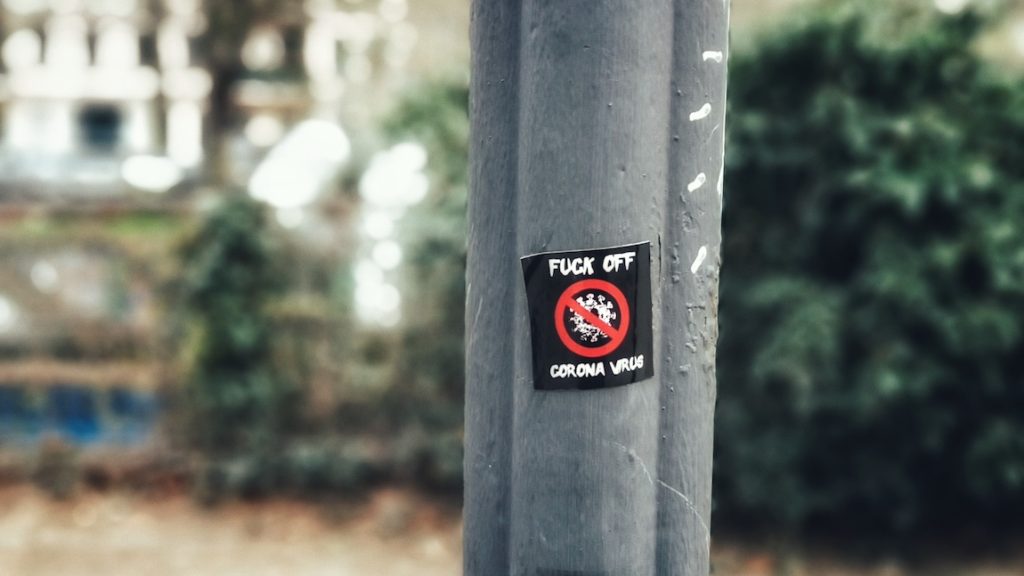
As if everything wasn’t already enough, today it snows in Berlin. I guess the aliens are just around the corner. I’m taking the day off.
Coronavirus cases in Germany: 66,885
Coronavirus Chronicles book of the day: Spy Game
April 1: Supporting local shops
The idea is pretty simple. Almost every shop in Berlin (and, of course, elsewhere) is closed. So far, there’s no overview when the places that we love will open again. But the cafes, restaurants, etc., have expenses: rent, salaries, monthly bills. That said, while we are looking forward to enjoying meals or coffees, the truth is that some of the places might not survive the Coronavirus crisis. There are a couple of initiatives out there, though, that can help those places to survive.
Here’s how: you can buy a voucher now and redeem it when the stores are open again. It might sound too simple, but it’s actually vital. You can choose to pay today a fixed amount of money (ex. 25 euros), and you can redeem the voucher when the store is open again. Why is this helpful? Well, the money will go straight to the shop that you want to support and, therefore, they can cover current expenses. That said, you give now some breathing space to the place that you love in times that it’s not generating any revenue.
I know, of course, that for each one of us, it’s tough right now. However, this is a gentle move and substantial help to the places that hosted us for years. There are several initiatives out there for supporting the local economy during the Coronavirus crisis. I have bought a voucher for one of my favorite restaurants through the Helfen Berlin website. Just choose a neighborhood and navigate through the stores.
Coronavirus cases in Germany: 77,981
Coronavirus Chronicles book of the day: The Plague, by Albert Camus
April 2: When will we travel again?
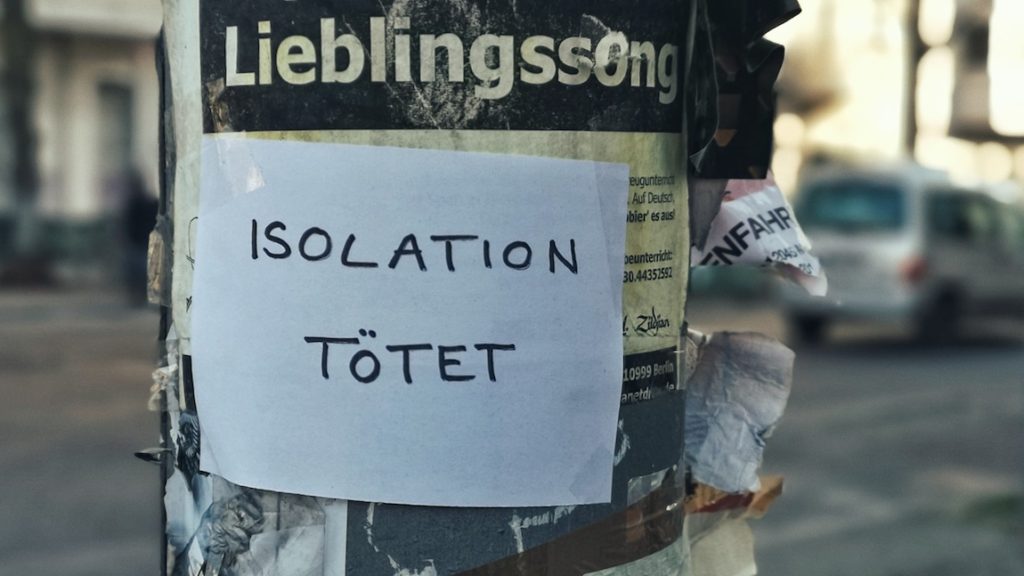
There’s no easy answer to that. What I learned after a decade of Greek financial crisis drama is that tons of “experts” will appear out of the blue in the media. The audience is perpetually hungry when it comes to crises: everybody needs more info. Some “experts” will return in the shadow, others will remain in the public sphere, and some might even search for active political roles. But after a decade of financial crisis, who was really right and who was really wrong? We heard forecasts and nothing more. Economists turned into meteorologists.
The same happens now with the Coronavirus crisis. That invisible enemy has already locked our societies and send into quarantine half of the planet. More than 3 billion people stay under quarantine, and we are about to forget how we used to live a month ago. It bothers me a lot when I could possibly travel again. And I know that it bothers a lot of people out there as well.
Right now, I’m collecting articles and forecasts by “experts.” I will remove the speech marks when the time seems right. But I’ve been following the English and German-speaking online portals (the Greek as well), and I’m trying to figure out when we could possibly return to some degree of normality. Judging by the situation today, it seems that we could return slowly to a version of normality no sooner than the end of May. Most likely, business travel will take off first, and then people will start to book leisure journeys as well.
I’m pretty sure that long-haul leisure journeys will not be the rule for a while. Insecurity struck each one of us: no one wants to get stuck for months in a foreign country. There are expenses back home that we have to pay and there will be even bigger expenses for the time we’ll have to stay abroad. I guess that people will start touring their own countries this summer. For example, I have canceled all my travel plans, and my only goal is to travel at some point back to Greece. If my financial situation allows it (I doubt it), I might spend some days on a Greek island.
And still, even that is quite uncertain. I think that until the end of the year -and only under some good scenarios- the travel industry won’t recover. I have no idea how this whole thing will change our approach to traveling because I don’t want to sound like an “expert.” But I’m hoping for the best, and I’m waiting for this horrifying Corona-thing to be over.
Coronavirus cases in Germany: 84,794
Coronavirus Chronicles movie of the day: The Stieg Larsson Trilogy
April 4: The Corona-terms are multiplying like a virus

At first, it was just the Coronavirus term. In the beginning, it wasn’t even written with a capital “C.” I guess this happened at a later stage when it became apparent that this will be a historical event, and it will need proper spelling. Then we started listening to terms like Coronavirus Outbreak or Coronavirus Pandemic. Slowly, the terms became stronger and transformed -exactly like the virus did- to more societal descriptions: for example, the Coronabond.
The Coronabond is what the people in the south of Europe ask from the EU. In brief, the Coronabonds will act like “a shared debt instrument to finance borrowing, where the money can be directed to the countries that need it most.” Countries like Italy or Spain that are severely hit by the Coronavirus Outbreak could use this money to recover. However, once again, Germany and the countries of northern Europe reject them (so far). Exactly like during the financial crisis of the last decade, this stubbornness is problematic, and it can cause the EU to collapse. This is not a debt crisis to justify such a decision; it’s an unforeseen event that causes significant troubles.
But apart from the global terms about the virus, there are also more local ones. For example, in Berlin, we had the Corona-parties: people would mock the situation and gather to party. Nowadays, there’s a new one: Berlin’s public transport isn’t running that often during the last couple of weeks. The reason is that the traffic is at a historical low and people are afraid to use the metro and the buses. However, there are still people that have to go to work, and the result is that at certain times the U-Bahn is full. Inventive as they are, Berliners found already a nickname for the packed U-Bahns of the Coronavirus times: they call them Corona-Express. I guess that there’s no further explanation needed.
Sooner or later, we will start having verbs about the Coronavirus (maybe we do have already, but I’m not aware of them). I often think that a noun that reaches the status of a verb is introducing a new societal norm. For example, the word Uber is now used as a verb: “I’ll uber to restaurant X.” Let’s see what the variation of Coronavirus will be. When it’s over, we might even make fun of it.
Coronavirus cases in Germany: 96,092
Coronavirus Chronicles movie of the day: The Motorcycle Diaries
April 6: So will the European airports shut down due to the Coronavirus?
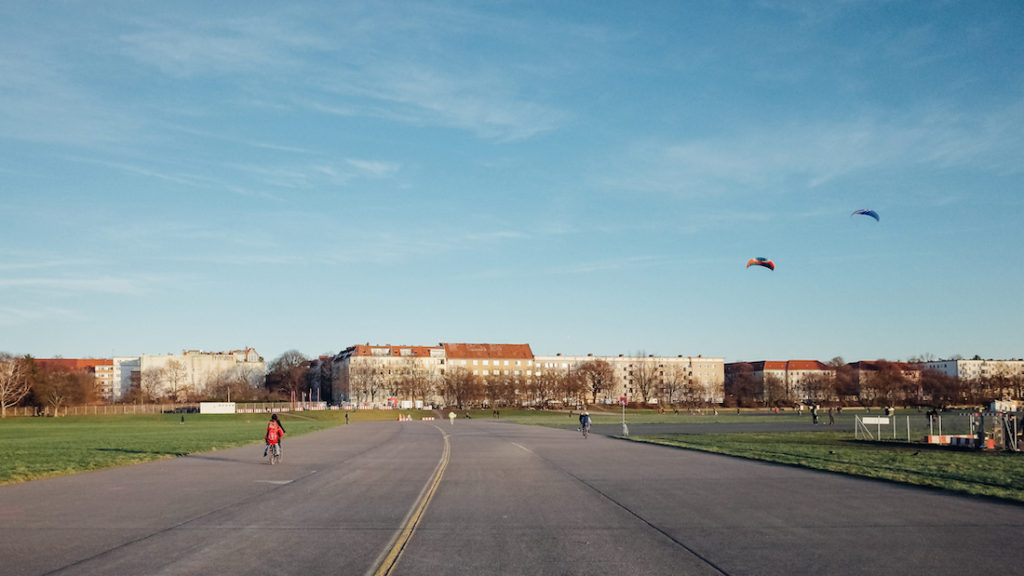
A couple of weeks ago, I complained in my Coronavirus Chronicles about fake news. Some Greek portals insisted that the airports were about to shut down in Greece. This didn’t happen, but I never saw anyone apologizing or correcting the misinformation. For the people living and working abroad (myself included), this caused significant insecurity. It’s almost three months since I last saw my family and friends, and it’ll be even more until I see them again. The Coronavirus crisis is affecting us, and nothing is normal right now.
In the meantime, Aegean Airlines decided to pause all operations until April 30. No one knows if this will last for longer or not. That said, I have no idea when I could possibly fly to Greece again. Ryanair and Easyjet canceled all flights for two months. More airlines will follow for sure. But to this day, April 6, the airports are still open in most of the European countries. There are disruptions in the itineraries, there are closed borders between some countries, but most of the airports remain open. This, of course, doesn’t mean that they might not close at a later stage. The Coronavirus is spreading, and the situation remains very dynamic.
So, will the European airports shut down due to the Coronavirus? That’s not an easy question. Even though the situation with the pandemic seems to be stabilizing in Europe, there’s no guarantee that the development will continue this way. However, in my opinion, there’s a key factor: summer. For most of the European countries, the summer holidays are some sort of heavy industry (and for Greece, it’s probably the only industry that still performs). If the airports shut down right now, on the threshold of the summer period, it means one thing: the tourist season is lost. Countries that depend on tourism will send a strong signal that the summer period is dead.
As I said, I’m not an expert, and these are just my thoughts. Even though that’s not convenient at all for me, I think that the airports should have closed weeks ago. Now, it’s somehow too late, and the virus is everywhere in Europe. On top of all that, the airlines have serious troubles to cope with the situation. Most of them are on the verge of bankruptcy. The air traffic is down by 90% as well. By shutting down the airports, the governments will admit that, indeed, the summer season is dead. Plus, no one will be willing to travel abroad if they know that a) the airports could close anytime and b) they could get trapped for weeks somewhere far away.
Oddly enough, there’s only one thing that can save the summer season: summer. It’s not a typo. Scientists hope that higher temperatures will slow down the spread of the Coronavirus -or even kill it. This is a longshot based on the fact that other viruses don’t survive the summer heat. So far, these are just guesses. But right now, the only thing that can save the summer season is some early summer temperatures. We have to cope with this horrible April -and May will tell us. Let’s hope for the best.
Coronavirus cases in Germany: 103,375
Coronavirus Chronicles book of the day: House of Leaves
April 7: Some sort of compensation
For the past five years, I’ve been complaining about the weather in Berlin. And I complained a lot. When I moved to Berlin back in 2010, the winter was brilliant: lots of snow but also several sunny days. It was cold, yes, but it was not that dark all the time. Then, around 2014-15, this changed significantly. The winters in Berlin started being dark and rainy. I mean really rainy: it will start pouring down in late October, and it’ll just keep raining until June.
It’s not a surprise that I blame climate change for that. I haven’t seen snow for years in Berlin -all I remember is rain. Winter never bothered me; in fact, I was a fan of it. But what we have for the past 5-6 years is an endless November. The sky is dark, and the clouds cover everything.
Oddly enough, from the moment that the lockdown was implemented in Berlin, the city enjoys sunny days. It’s proper spring, and in the last couple of days, the temperature is above 20 degrees. For a country that temperatures can be in the lower 10’s even in July, it feels like almost summer. In terms of weather, the days of the lockdown are beautiful. It feels like compensation for the past five dark years. Unfortunately, the sunny days came in the worst period: the bars and cafes are shut because of the Coronavirus.
As you know, I take long walks every afternoon for one or two hours, always keeping a distance. Berliners adapted to the social distancing with ease. I’m just afraid of Murphy’s law: it’s not unlikely that the day the lockdown will be lifted and the cafes will open again, to rain cats and dogs for days.
Coronavirus cases in Germany: 107,663
Coronavirus Chronicles album of the day: The Rising
April 8: Norway’s hazmat booksellers
Today’s Coronavirus Chronicles will be about Norway. I stumbled upon that video earlier today. I watched it as if it was a dystopian sci-fi film and not our daily life currently. The description from Guardian’s video is: “Two Oslo bookshop owners choose to go delivery-only to keep their business afloat at the start of lockdown. Pil Cappelen Smith and Anders Cappelen deliver books wearing full hazmat suits and gas masks in order to raise local awareness of the seriousness of the situation. But as the global crisis worsens, they embark on one last delivery run before deciding to shut up shop completely.”
Coronavirus cases in Germany: 113,296
Coronavirus Chronicles movie of the day: 8 1/2, by Federico Fellini
April 10: The two-weeks strategy
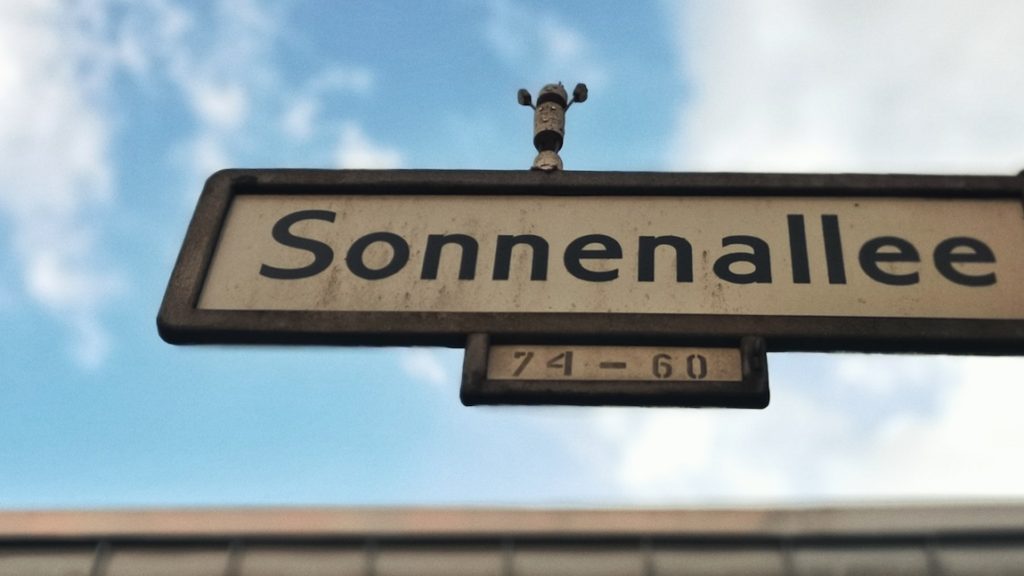
With societies on the verge of a collective mental breakdown, governments decided to communicate using a dubious approach. From the beginning of the Coronavirus crisis, all we hear is that “the next two weeks are crucial.” It would have been okay to listen to that -but we keep listening to it for the past 40 days. That’s definitely more than two weeks.
What we probably get right now is some sort of “massage.” No one wants to tell us the whole truth. The part of the truth that we get is that everything is shit, and we have to wait. We must obey, we must be patient, and we should stay home. Okay. We do that. Governments are probably too worried that a declaration of “stay home for three months” won’t be easily digested. The idea won’t amuse anyone. No work, no salaries, no vacation, no fun.
So, they decided on the slow process, for the massage. Every day, one “expert” will state that “the next two weeks are crucial.” And this is going to be prolonged for as long as it takes. Understandable, to a certain degree. But, on the other hand, seeing politicians and businessmen stating, for example, that the holiday season will still take place is ridiculous. The holiday season is lost. How can somebody even think of going on vacation when we are not allowed to drink a cup of coffee or go to the bakery? Most of the airports are still open, but nowadays, they look like metal graveyards. Traffic is down by 98% -holidays, honestly?
As for me, I feel right now like in that scene from Interstellar: the others went to the sea while I’m stuck for twenty years in outer space.
Coronavirus cases in Germany: 122,171
Coronavirus Chronicles movie of the day: Interstellar (apparently)
April 12: Corona-Easter

Of all the Easters I remember, this is the most miserable one. Everything is still shut in Berlin, and it seems that the city is waiting anxiously for the 17th of April. While the measures will remain intact until the 20th of April, there’s a big meeting on the 17th to decide further actions. It seems unlikely that the bans will be lifted after the 20th. All we can hope for is an exit-strategy from that prison.
It’s Easter today, but it’s awfully quiet. Outside it’s remarkably warm, more than 23 C. For Berlin’s standards, that’s almost summer. I can see from the balcony a few people hanging out in the parks. Day by day, I observe fewer people outside. The optimism of the first days turned quickly into discomfort.
Late at night, I find myself checking travel websites. Sooner or later, I end up at the websites of the airlines. Lufthansa, Aegean, all the companies that I could potentially book a ticket to Athens. It seems to be an illusion that I could travel in May back to Athens. The EU described today summer vacations to be -more or less- “not a very good idea.” Supposedly, from the 4th of May, the flight industry will start slowly to warm up. No one is expecting a return to the pre-Coronavirus standards; this will take years. But maybe a flight here and there will start to appear. We are all holding our breaths for the 17th.
Whenever I wanted to describe the long lazy summer of Athens, I would stretch the length of the months. For example, the 10th of September was the 41st of August, or even the 5th of October was the 66th of August. Now, trapped in this Corona-jail, it doesn’t feel like the 12th of April. It’s just the 43rd of March.
Happy Easter, everyone, and I hope that we will soon be out of the Corona-jail.
Coronavirus cases in Germany: 127,854
Coronavirus Chronicles movie of the day: The Ides of March
April 17: Whatever makes life bearable
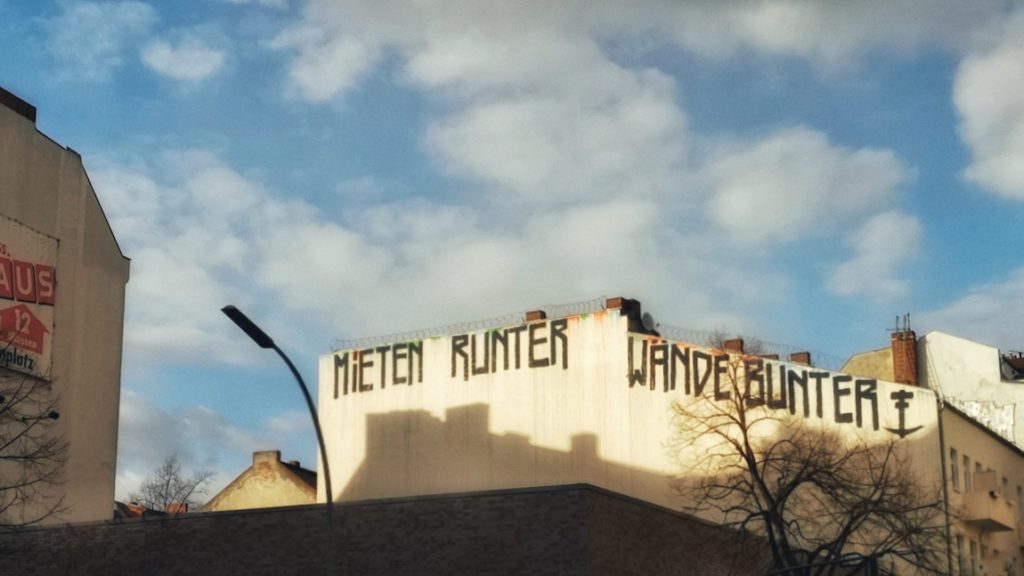
There’s no easy way back. Everything is at a standstill, and the Coronavirus doesn’t leave Europe. We are trapped in this post-modern dictatorship, and no one really knows if there’s a way out.
Yesterday it was decided that in less than a week, the first stores will open in Berlin. They said that the rules would be strict. I’m holding my breath -and it’s not just me. Society is on the verge of a mental breakdown, and the whole situation affects everyone. The flights are canceled until the 15th of May, and this means that I won’t be able to go any time soon back to Greece. The airports are still open, but they receive just a couple of flights. The good case scenario is that I will fly mid-May to Athens. The worst-case? No one can tell.
Meanwhile, the cafes, the restaurants, the cinemas, they will all remain closed. Whatever makes life bearable has to be suspended.
Coronavirus cases in Germany: 141,397
Coronavirus Chronicles movie of the day: On the road
April 20: The highway to freedom

There’s no way back to normality right now, but it’s the last day I’m writing this diary. Today, some of the shops are opening again after several weeks. It should have been a reason for celebration if everybody wasn’t that tired. But Berlin is tired and so are its inhabitants.
I feel exhausted. I haven’t slept well in days, and I can’t wait to sit in a cafe for an espresso. But this won’t happen anytime soon. As I wrote in the previous entry, whatever makes life bearable will remain shut.
However, the 20th of April marks the first day that some of the bans will be lifted. Nothing is going to be easy. Writing won’t be easy either: I read most of the things I wrote the last days, and they are pessimistic and fragmented. I think I’d better write about journeys or fiction.
Let’s hope that there’s still a tiny bit of summer in front of us. I won’t celebrate today. But I might feel a bit freer. Who knows. Nobody knows anything right now. And yet, we shall overcome. Hopefully, we are on the road of recovery, on the highway to freedom.
Coronavirus cases in Germany: 147,065
Coronavirus Chronicles movie of the day: Jules et Jim
The End.
*If you made it all the way down here, I guess you deserve a quick update. I finally took my flight to Athens, the first after the lockdown, at the end of June. Here’s how it felt to be up in the air again.
More about Berlin: The Bleibtreustrasse, Leaving my old flat in Berlin, Polaroids from Berlin,
Festival of Lights, 2020: From A to Z
*Get my FREE Travel Writing Course*
Pin it for later
Please share, tweet, and pin if you enjoyed reading about The Coronavirus Chronicles. Your support keeps this website running and all the info up-to-date. 🙂